1.8 Getting Good Advice

Site: OpenLearn Create
Course: College and Career Readiness (For Myanmar Youth)
Book: 1.8 Getting Good Advice
Printed by: Guest user
Date: Thursday, 26 November 2026, 1:08 AM

1. Getting Good Advice from Others (Pg1/3)

Navigation Tips
Click the arrow, top left, to go to the previous page
Click the arrow, top right, to go to the next page
Click the link below the image to view it in full screen
Click your browser's back button, top left, to exit full screen

You have now reflected on your own values, strengths and ambitions. It is good also to get advice from others and this can be done in a range of ways.

✍️

Your Thoughts First

Firstly, note down your own thoughts on how you can get good advice. What are the sources you can think of, and why do you think they could be useful?

Lets now explore a few options:            (click the titles to expand)
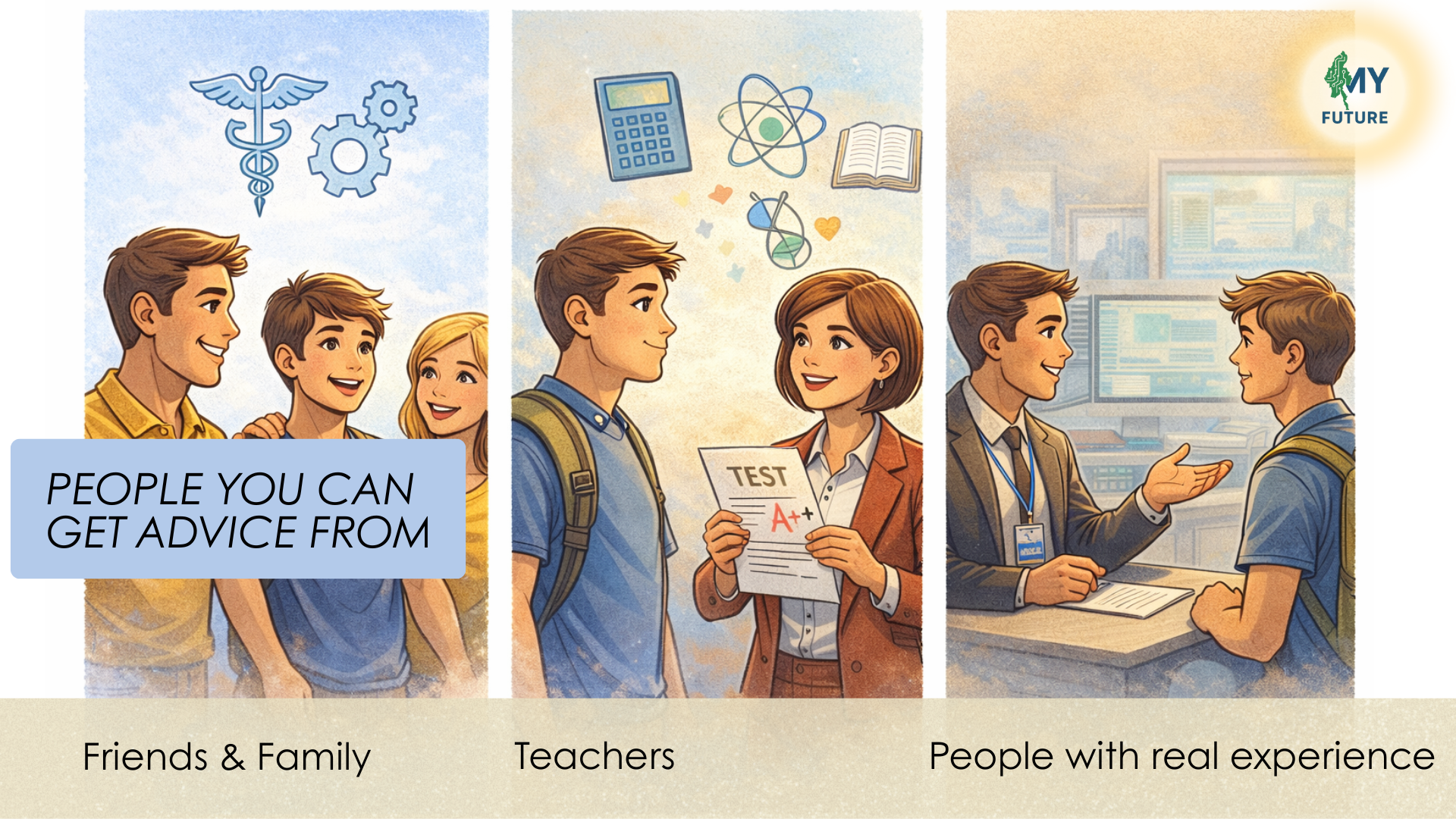
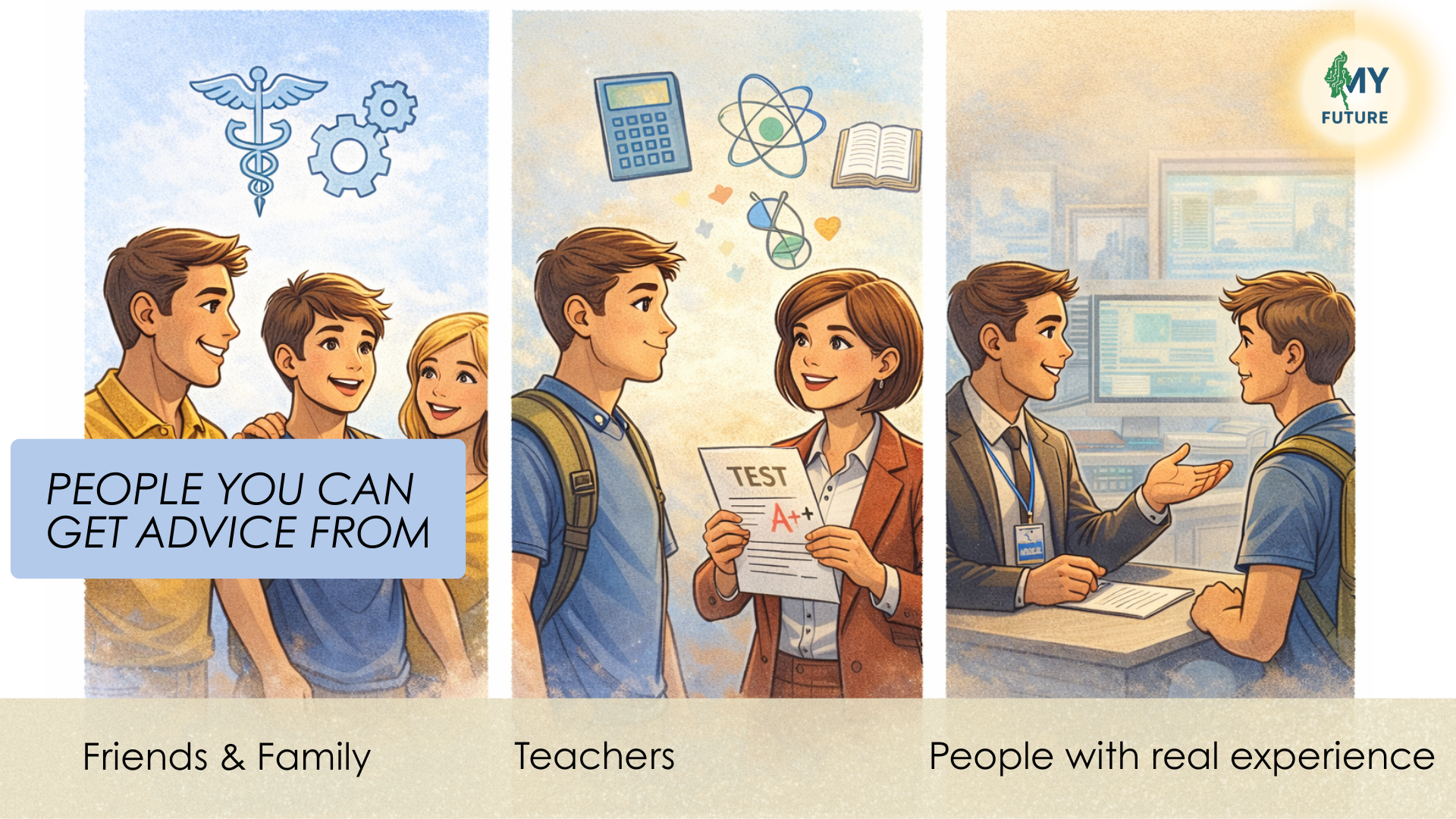
👥 Friends and Family +

They may know you well, and understand what you do and dont find fulfilling. But be cautious, and assesss whether they are just telling you what you want to hear, or placing their own aspirations on you. For example your father may have always wanted to be a Doctor or Engineering, and now he is hoping that you might achieve what he couldnt

🎓 Teachers +

They will have a sense of your academic achievements and abilities and this can be helpful information that may enable them to give you good advice on careers that you could succeed in. However they may not have direct experience of the jobs they are talking about and may be particularly keen to point you towards or away from a career direction that relates to their own subject area based on whether they think you are good at it or not

💼 People with experience in a role that is of potential interest to you +

Those with their own direct experience of a sector can tell you more about the realities of working in that sector. They may have had good or bad experiences but this can give you useful insight. In particular they may help you to understand trends in that sector, and how jobs and education requirements within the sector could change in the future.

Click to review the image in full screen

2. Exploring Career Opportunities (Pg 2/3)

Navigation Tips
Click the arrow, top left, to go to the previous page
Click the arrow, top right, to go to the next page
Click the link below the image to view it in full screen
Click your browser's back button, top left, to exit full screen


Exploring Career Opportunities

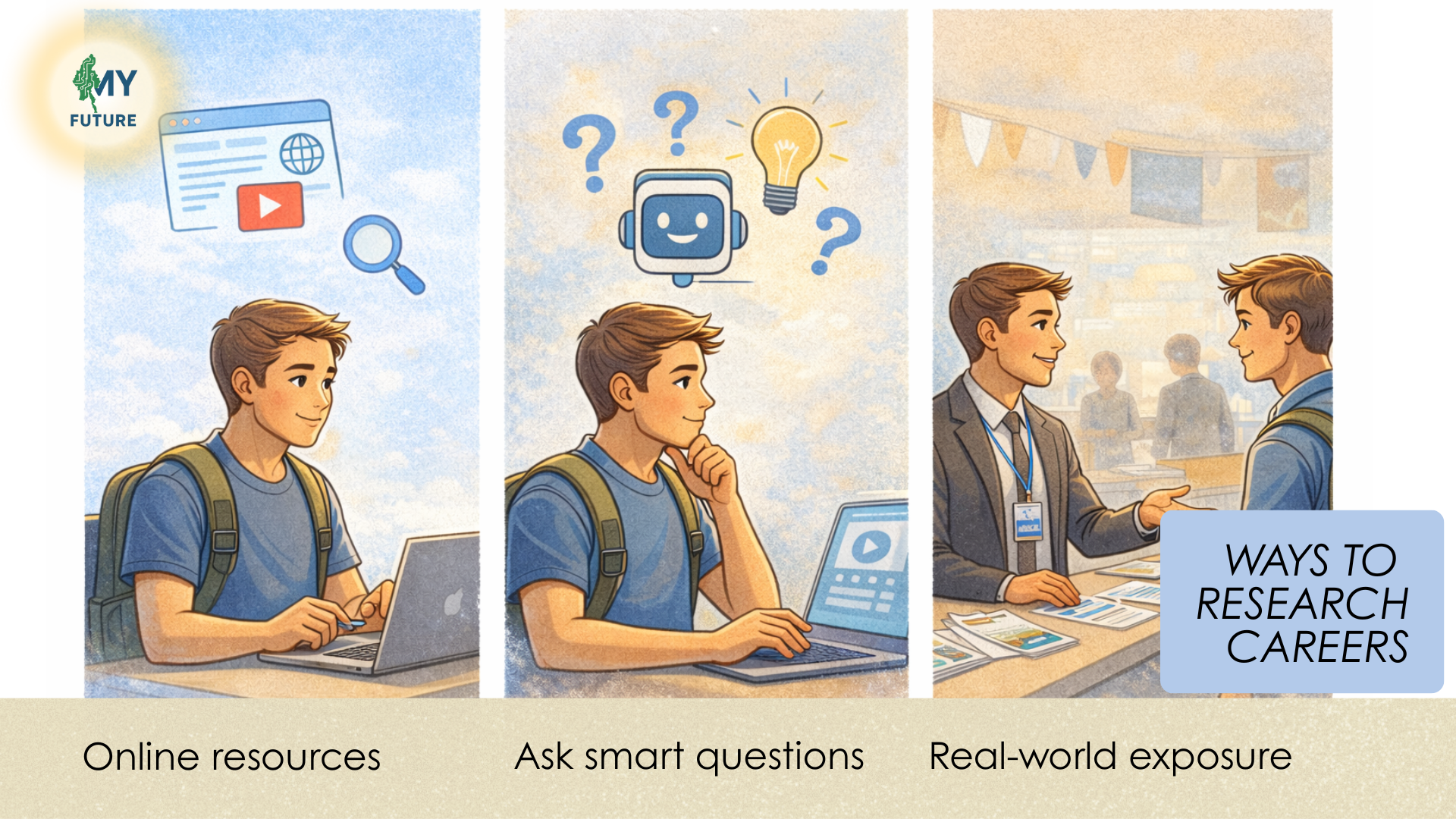
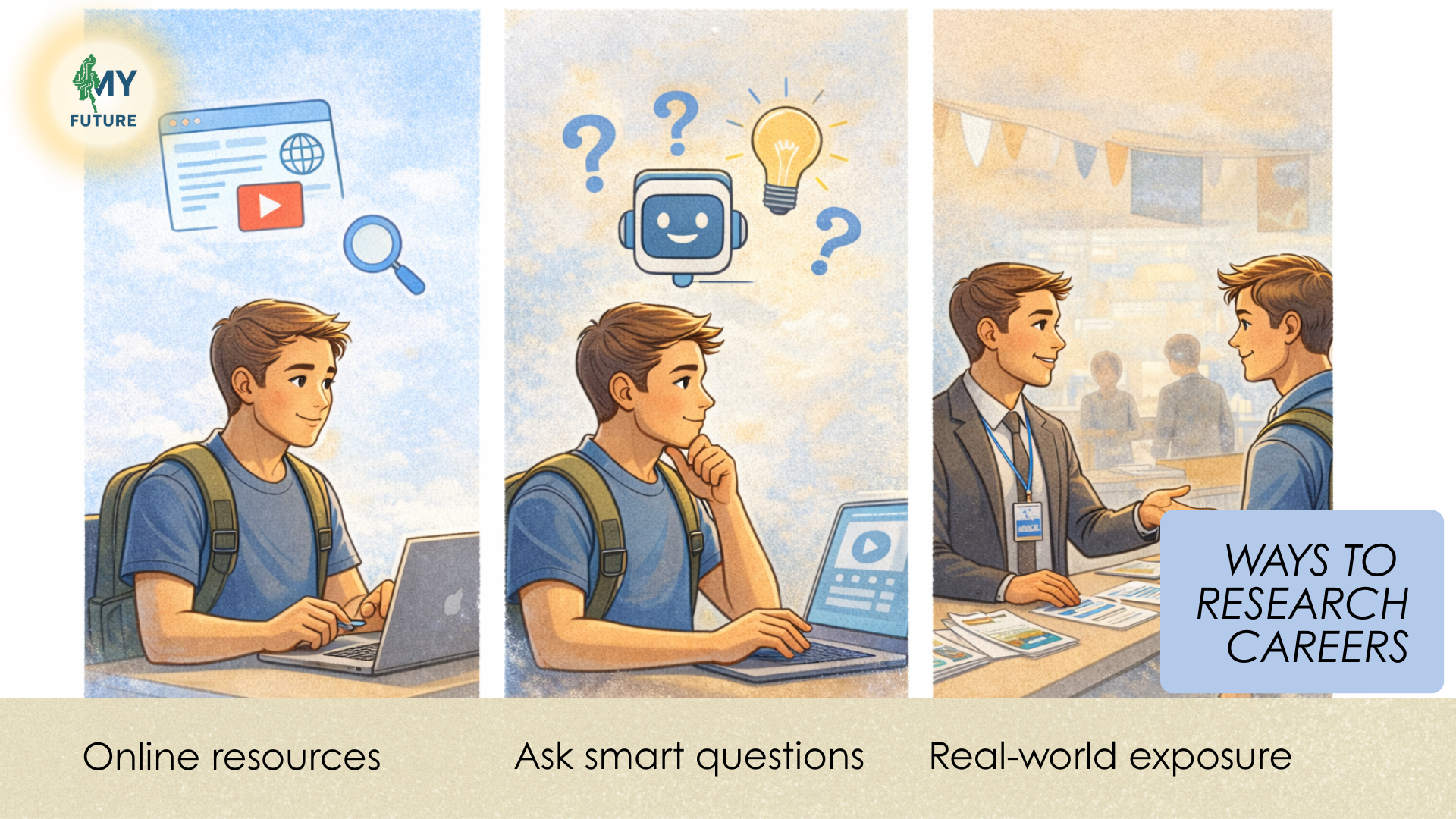
You can also find out more about career and work opportunities and the skills needed, in the following ways
(click on each to find out more):

🌐 Identifying useful Websites and Youtube videos +

Identifying useful Websites and Youtube videos that tell you more about the nature of different jobs

🤖 Using AI tools +

Using AI tools to ask questions about different jobs and gather further information.

⚠️ Caution: Be careful though as AI can produce biased results, so you have to ask your questions in a well designed manner. For example it could completely ignore gender factors, or give misleading advice based on lack of relevant training data which is uses to make recommendations
🤝 Seeking opportunities for voluntary work or internships +

Seeking opportunities for voluntary work or internships with an employer (possibly during school or college holidays) in order to gain first hand knowledge of different types of jobs and associated workplace environments

🏢 Visiting careers advice centres +

Visiting in person or online careers advice centres

🎓 Attending Education fairs +

Attending Education fairs, where you can talk to people from Universities about career options and associated education pathways. Organisations such as British Council run these types of events in many countries and can be a source of contacts and useful information

🧭

Mentorship & Your Path

You may find someone who can mentor you through this process, and act as a sounding board, helping you to figure out your own best answers to the questions you have. It is certainly worth talking to different people, particularly if you dont feel clear on which direction is best for you.

Dont just follow what someone else tells you will be best for you, as it is your life and responsibility to choose your own path. There will naturally be constraints, and over time your own preferences may change, and doors could open in the future to opportunities that are not available to you right now.


Click to view the image in full screen

3. Self Assessment On Getting Good Advice (Pg 3/3)

Navigation Tips
Click the arrow, top left, to go to the previous page
Click the arrow, top right, to go to the next page 


Now try out the quiz questions that follow to test your understanding of the ways to get good career advice: 

Career Advice Quiz

Self-Check Practice

Multiple Response Questions

(Read the questions and note down your answers somewhere. Then click 'Check Answer' to reveal the correct answers.)

1️⃣ Finding Reliable Career Advice

Which of the following are usually reliable sources of career advice?

  • A. Qualified career counsellors, teachers, or academic advisors
  • B. Official university guidance websites
  • C. Random strangers on social media
  • D. People promising “secret job shortcuts”
▼ Check Answer

Correct Answers: A, B

Feedback: Correct — Qualified advisors and official websites are strong sources because they provide accurate, research-based information. (Avoid random strangers or those making unrealistic promises).

2️⃣ Using Advice from Friends and Family

How should you approach career advice from friends or family

  • A. Listen to their advice but make your own decision based on your goals
  • B. Ask questions to understand their perspective
  • C. Follow their advice exactly, even if it doesn’t feel right
  • D. Consider their advice but check facts independently
▼ Check Answer

Correct Answers: A, B, D

Feedback: Correct — These options encourage balanced decision-making. Following advice exactly (Option C) is not ideal, as career decisions should be your own.

3️⃣ Spotting Unreliable Career Advice

Which of the following are signs that career advice might be unreliable

  • A. Someone promises guaranteed success with no effort
  • B. The advisor discourages you from doing research
  • C. The advice is based only on stereotypes
  • D. The advisor shares accurate job data and labour market information
▼ Check Answer

Correct Answers: A, B, C

Feedback: Correct — Unrealistic promises, discouraging research, or using stereotypes are major red flags. Sharing accurate data (Option D) is a sign of reliable advice.

4️⃣ Using Online Resources Safely

Which online resources are generally safe and useful for career exploration?

  • A. Official university and government websites
  • B. Recognised job platforms (e.g., LinkedIn, Indeed)
  • C. Anonymous social media accounts promising easy jobs
  • D. Websites asking for money before showing information
▼ Check Answer

Correct Answers: A, B

Feedback: Correct — Official sites and trusted job platforms are reliable. Anonymous accounts and sites requiring payment for basic info (C & D) are often unsafe.

5️⃣ Learning from Professionals

Which of the following are good ways to learn about a career you’re interested in?

  • A. Talk to someone already working in that field
  • B. Attend webinars, workshops, or career fairs
  • C. Base your understanding only on films or TV shows
  • D. Read official job descriptions or skills profiles
▼ Check Answer

Correct Answers: A, B, D

Feedback: Correct — Speaking to professionals and doing research gives accurate insight. Media portrayals (Option C) are often unrealistic.

6️⃣ Advice from Social Media

When using social media for career advice, which actions are sensible?

  • A. Check whether the creator has real experience or qualifications
  • B. Compare the advice with information from other sources
  • C. Believe everything because the creator has many followers
  • D. Treat the advice as one perspective, not absolute truth
▼ Check Answer

Correct Answers: A, B, D

Feedback: Correct — Always evaluate the source. Popularity (Option C) does not guarantee accuracy.

7️⃣ Dealing With Conflicting Advice

If you receive conflicting advice from different sources, what should you do?

  • A. Compare the advice and research the topic further
  • B. Reflect on which option fits your skills and values
  • C. Follow whichever advice is easier
  • D. Ask a trained advisor for clarification
▼ Check Answer

Correct Answers: A, B, D

Feedback: Correct — Research, reflection, and professional guidance help navigate conflicting advice. The "easy" option (C) isn't always right.

8️⃣ Professional vs. Peer Advice

Why might professional career advice be more reliable than advice from classmates?

  • A. Professionals use research, labour market data, and experience
  • B. Professionals are trained in guidance and counselling
  • C. Classmates may only know about a few career paths
  • D. Classmates always give poor advice
▼ Check Answer

Correct Answers: A, B, C

Feedback: Correct — Professionals have training and broad data, whereas classmates may have limited scope. Option D is incorrect; classmates can be helpful, just less comprehensive.

Click here to go to the next page