2.3 Global Job Markets and Changing Prospects
| Site: | OpenLearn Create |
| Course: | College and Career Readiness (For Myanmar Youth) |
| Book: | 2.3 Global Job Markets and Changing Prospects |
| Printed by: | Guest user |
| Date: | Thursday, 26 November 2026, 1:08 AM |
1. Forces Shaping the Global Job Market (Pg 1/2)
We continue our course by taking a look at the changing global job market which in turn influences career opportunities and the education qualifications most needed.
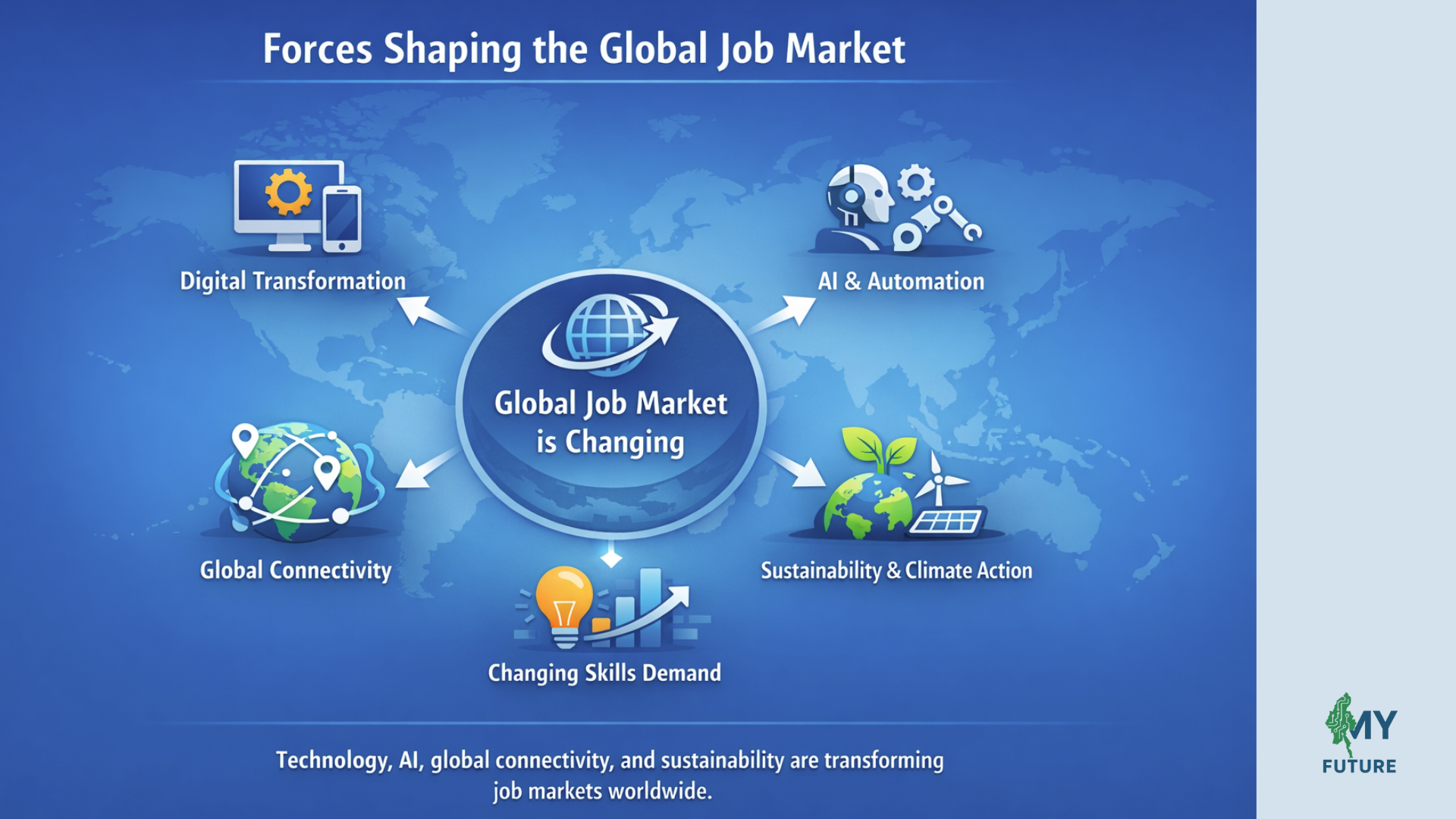
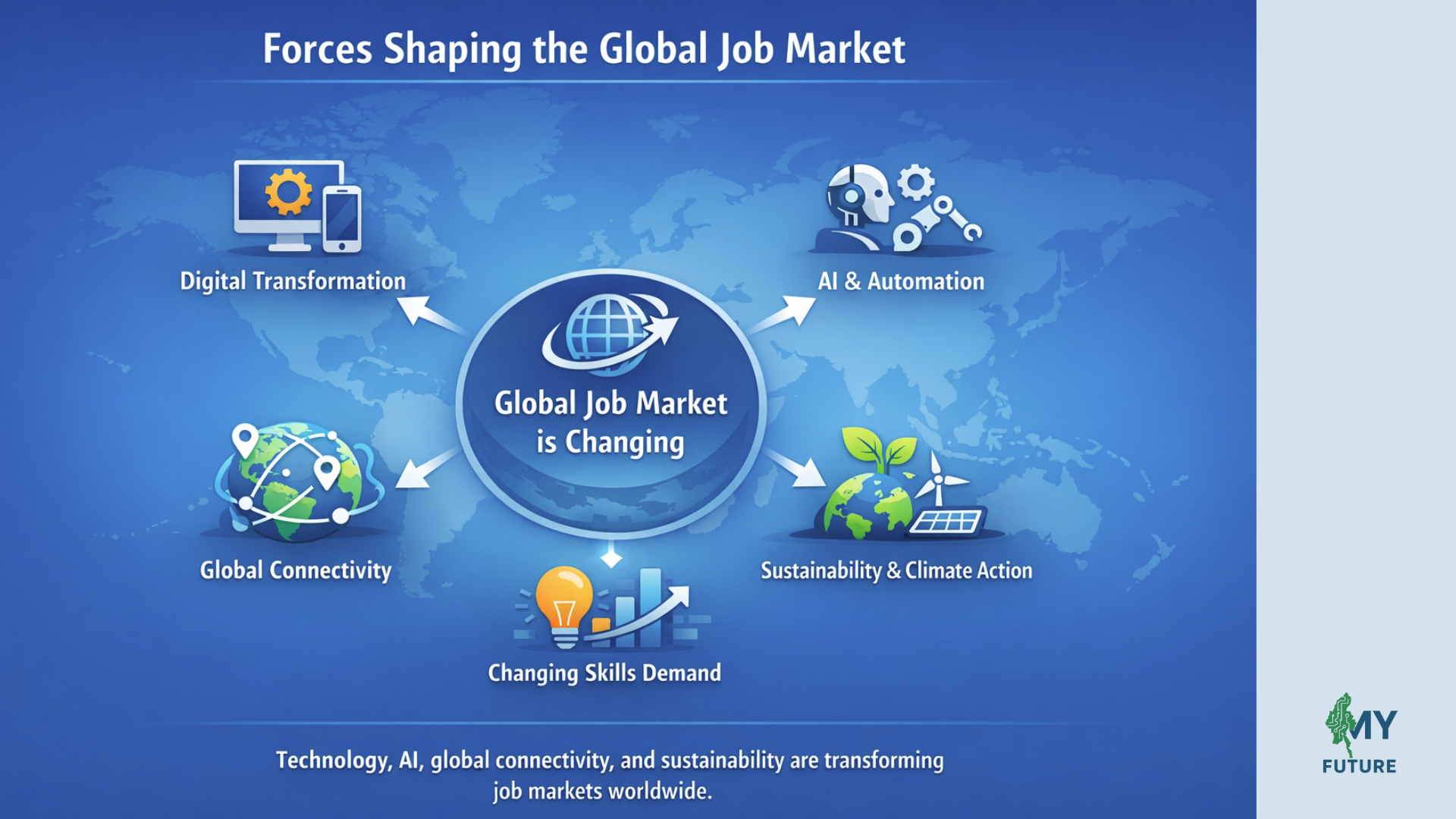
The image below illustrates some of the major forces influencing the global job market:
Click to view the image in full screen
Global Job Market Shifts
Around the world, the job market is shifting quickly. Some sectors are growing rapidly, while others are slowly reducing their workforce. Technology, automation, artificial intelligence, and global connectivity are reshaping how work is done and what skills employers value. Understanding these trends can help you make smarter choices about your higher-education pathway and better understand what kinds of job sectors and roles may grow in the future. It also helps you think more clearly about what skills will remain relevant as the world of work continues to change.
The adoption of AI, robotics, and digital platforms is transforming jobs across Southeast Asia. Routine. low-skilled roles, and also some traditionally high-skilled job (such as data entry analysis, basic programming, translation, and administrative professional work) may be displaced, as these are increasingly supported or partially automated by AI systems. But new opportunities are also emerging in roles such as AI support, data management, automation, and digital operations.
Future Prediction: 2030
By 2030, up to 72% of the skills needed in the workforce are expected to change, creating strong demand for digital, technical, and socio-emotional skills. Young professionals who upskill in these areas will be best positioned to take advantage of these growing opportunities.
According to the World Economic Forum’s Future of Jobs Report 2025, the biggest changes in employment are driven by digital transformation, AI adoption, and the global shift toward sustainability. These trends are expected to continue over the next decade and will influence job markets across all regions, including Southeast Asia and Myanmar.
Navigation Tips- Click the arrow on the top right to go to the next page
2. Sectors with Growing Global Demand (Pg 2/2)
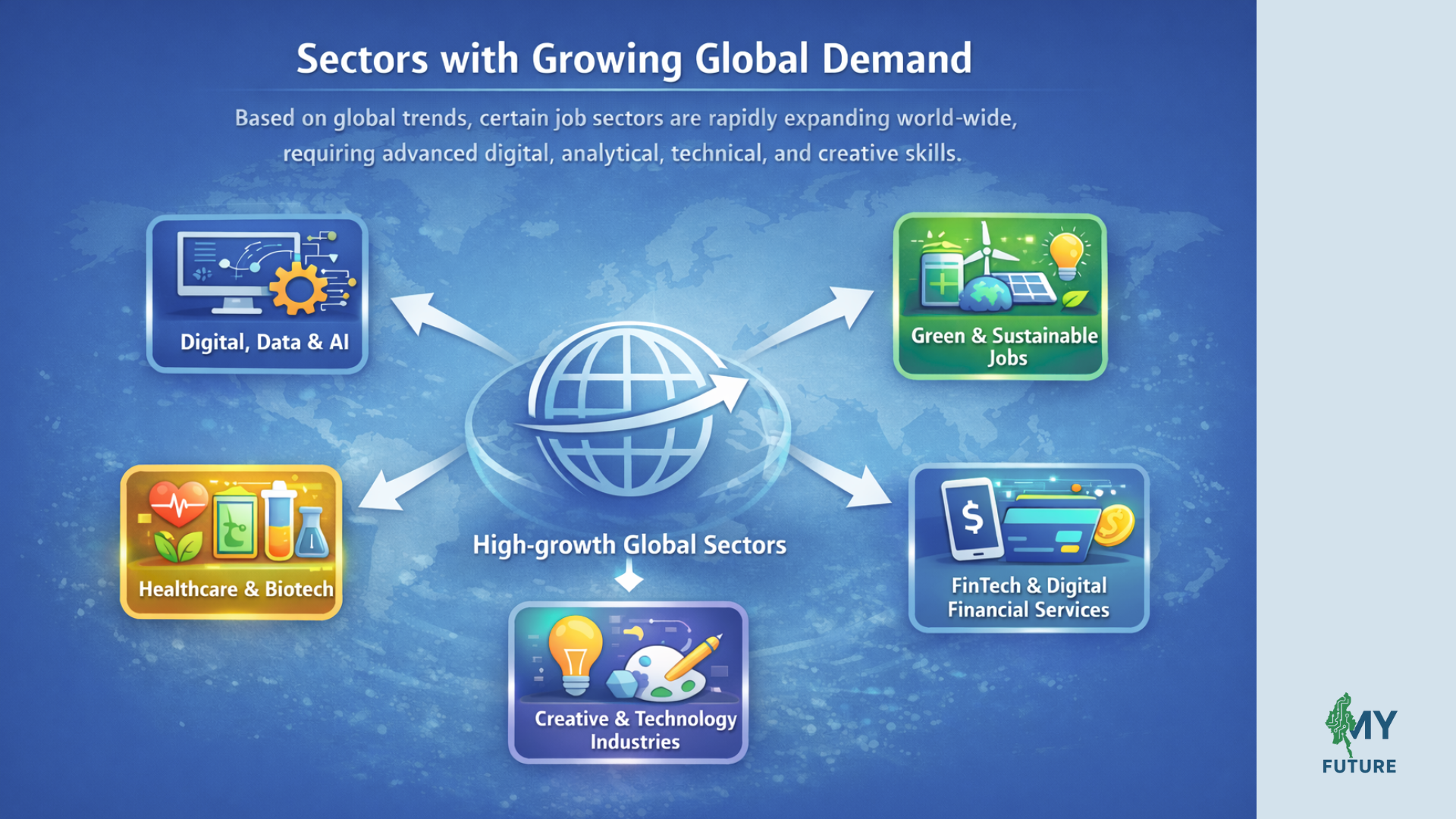
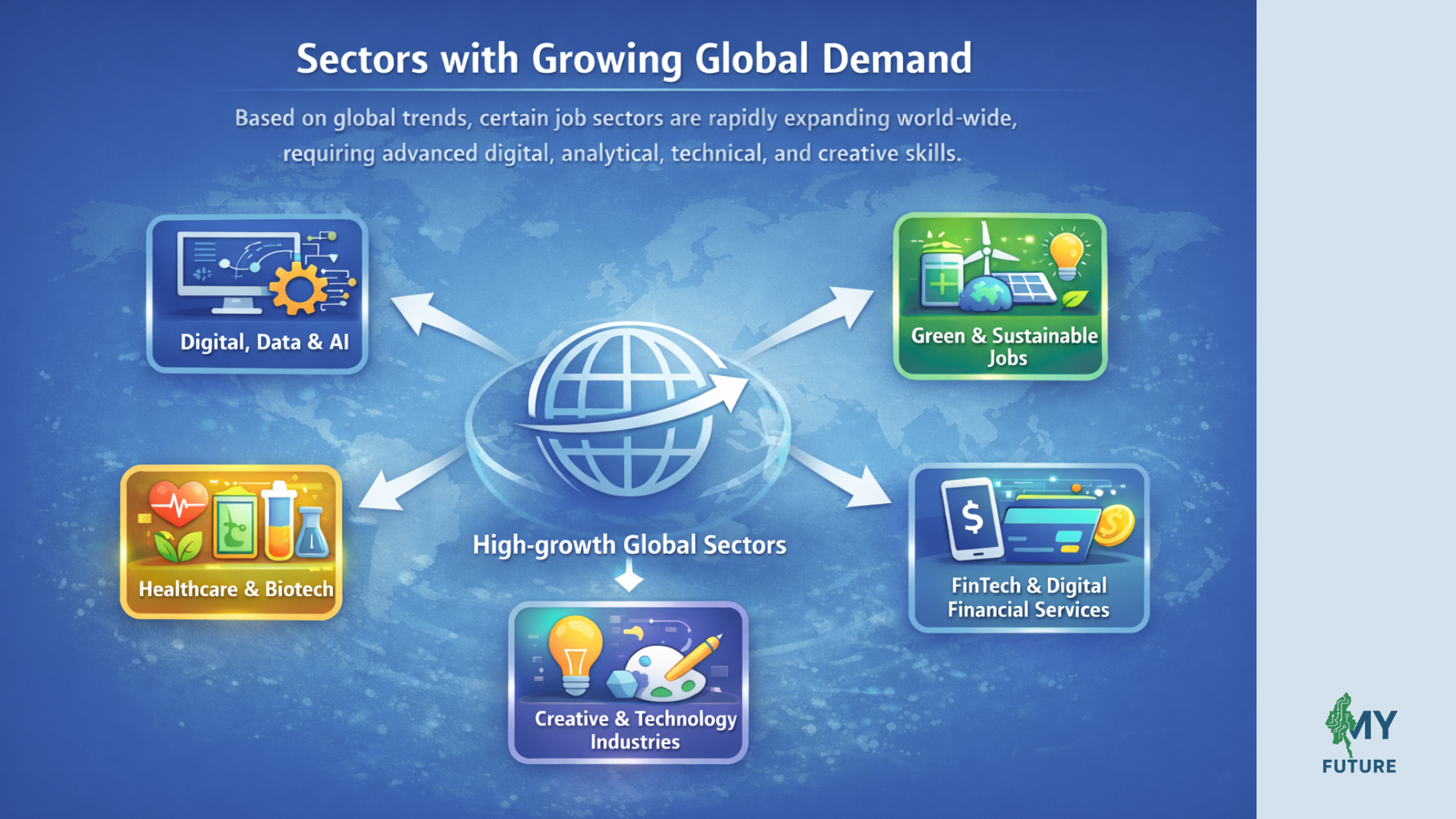
Over the passage of time, as the global job market changes, sectors are impacted differently with some experiencing growth and others diminishing. The image below highlights sectors currently experiencing growth: !
Click to view the image in full screen
Sectors with Growing Global Demand
Growth and change within job sectors also leads to the need for employees with new skills. Global trends show strong growth in roles that require advanced digital, analytical, technical, and creative skills. Based on the World Economic Forum’s Future of Jobs Report 2025, several job categories are among the fastest-growing worldwide.