2.4 Roles Under Pressure and What this Means for You
| Site: | OpenLearn Create |
| Course: | College and Career Readiness (For Myanmar Youth) |
| Book: | 2.4 Roles Under Pressure and What this Means for You |
| Printed by: | Guest user |
| Date: | Friday, 27 November 2026, 2:22 AM |
1. Fastest Growing and Declining Jobs (Pg 1/5)
Whilst there are significant new career opportunities emerging in recent years at the same time some roles are seeing decreasing demand or significant change. Routine administrative and clerical work, traditional finance and record-keeping roles, and low-skill retail or customer service jobs are increasingly automated by digital tools and AI systems. Basic creative production roles are also changing as AI-assisted tools take over simpler tasks.
This does not mean these sectors will disappear completely, but the nature of work within them is evolving. Many roles now require workers to use technology, adapt to new tools, and take on more complex or creative responsibilities.
For young people, the key lesson is not to avoid certain sectors, but to focus on adaptable and future-ready skills. Digital literacy, problem-solving, communication, and the ability to work with technology are becoming essential across almost all industries.
Many high-growth global trends already align with current interests among young people in Myanmar, particularly in digital technology, User Interface (UI/UX) design, and creative digital services.
This global perspective helps set the foundation for understanding how these trends play out more specifically in Southeast Asia, and within Myanmar’s local context. We will now move on to explore these contexts, before looking more at some important growth sectors for work, and then discussing the importance of researching sectors you are interested in as a starting point for thinking realistically about your future career path and related education needs.
The following table from WEF reports will give you insights into what the experts around the world are expecting about the rise and fall of jobs in the next 5 years
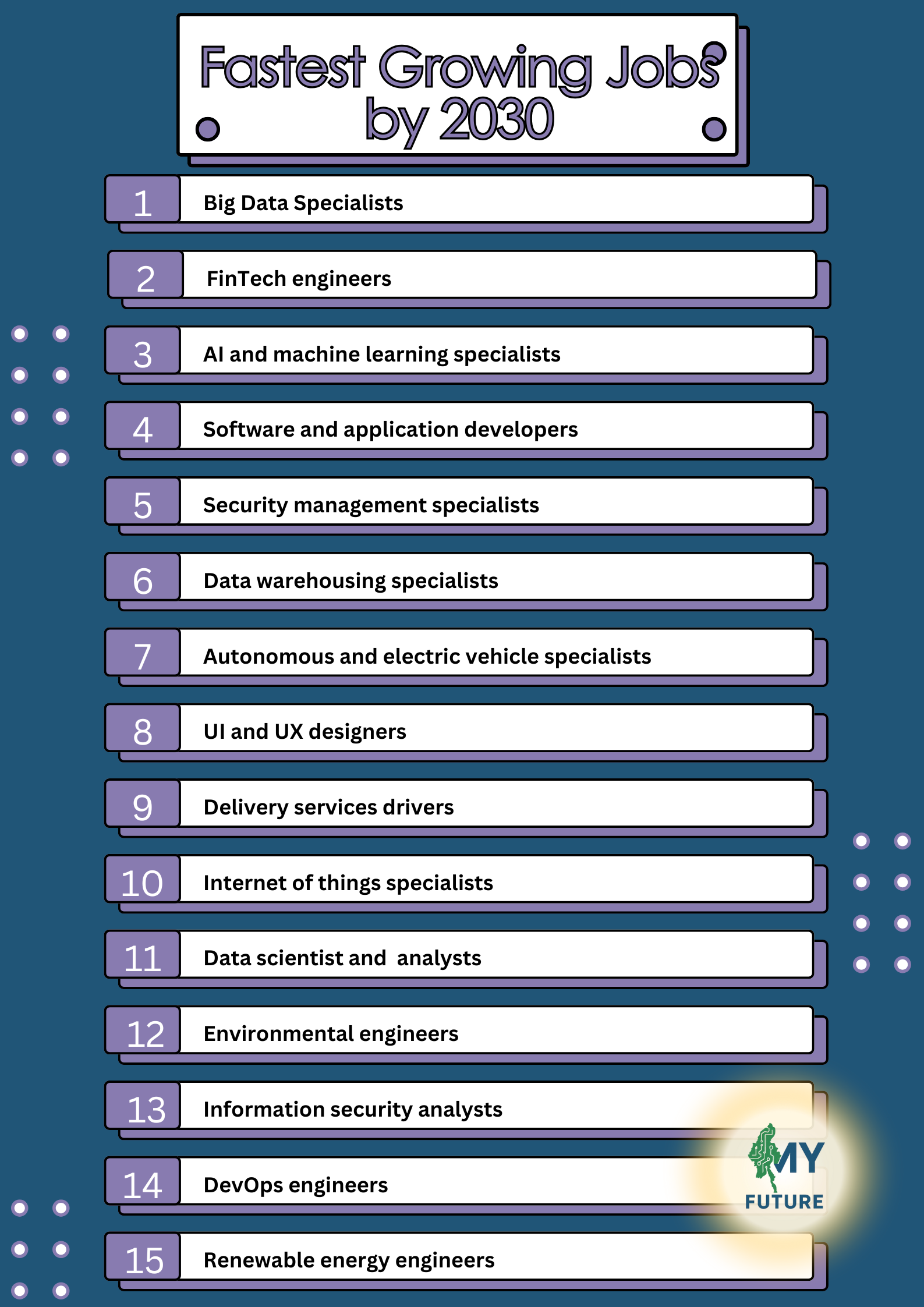
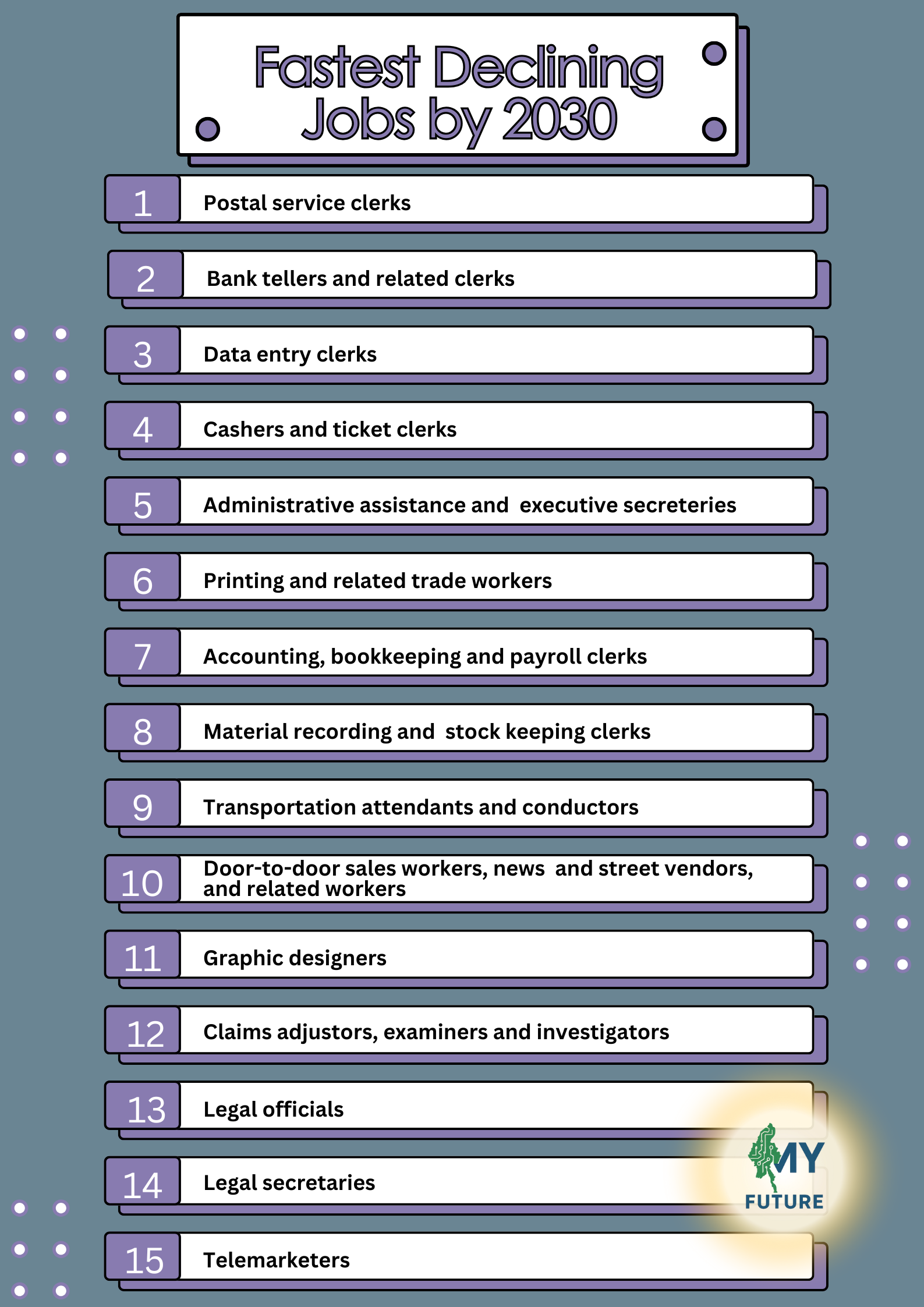
Remember
Global job markets are shifting fast, and sectors that require digital, analytical, and technical skills are growing the most. Many traditional and routine roles are declining because of automation and AI.
Reflect
Think about whether your current skills or study plans align with the rising sectors . Consider how global trends and remote work opportunities could open new pathways for Myanmar youth, including you.
2. Regional Trends in Southeast Asia (Pg 2/5)
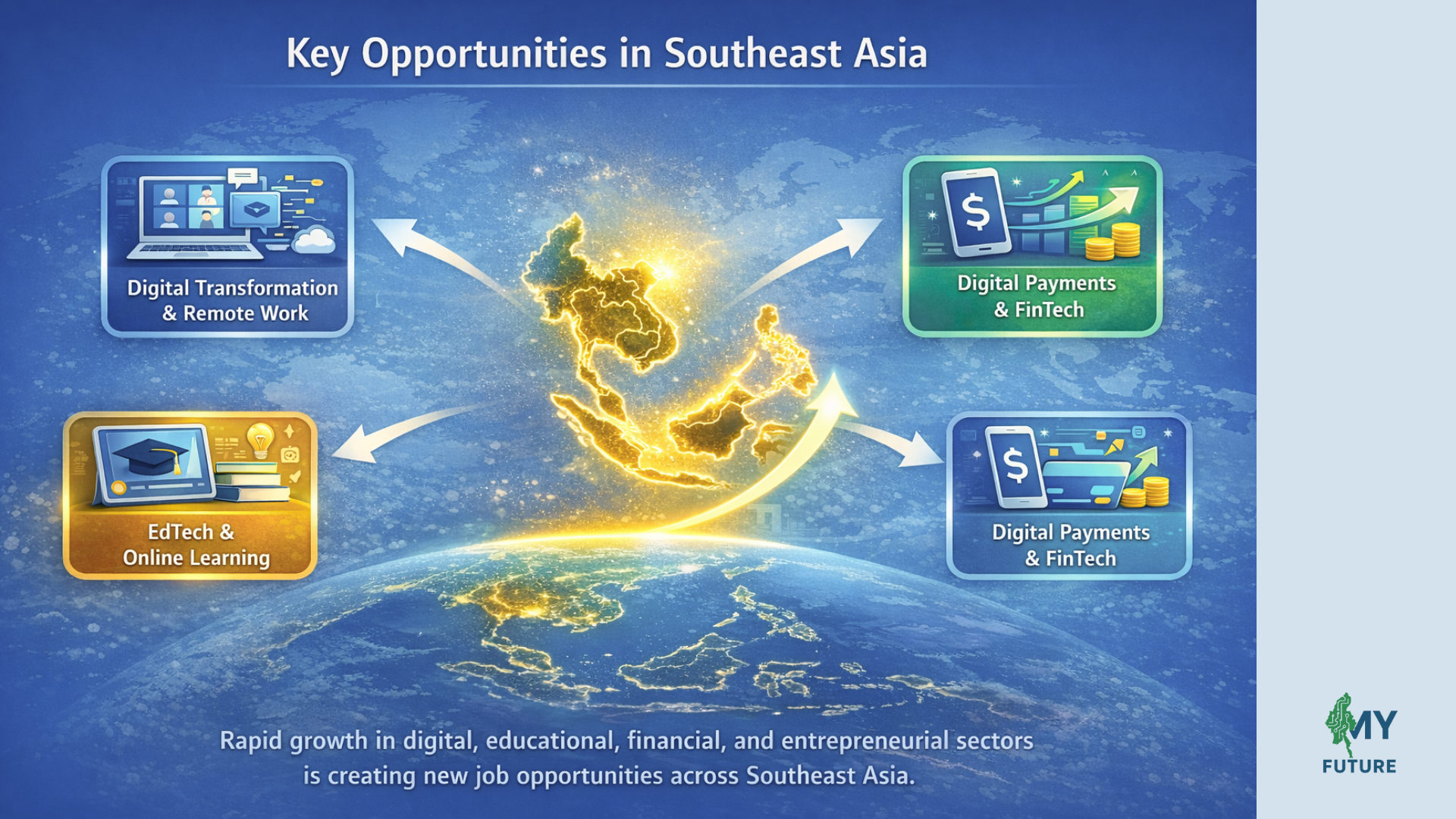
Let's now explore the key opportunities in the next 5-10 years in Southeast Asia:
Click to view the image in full screen
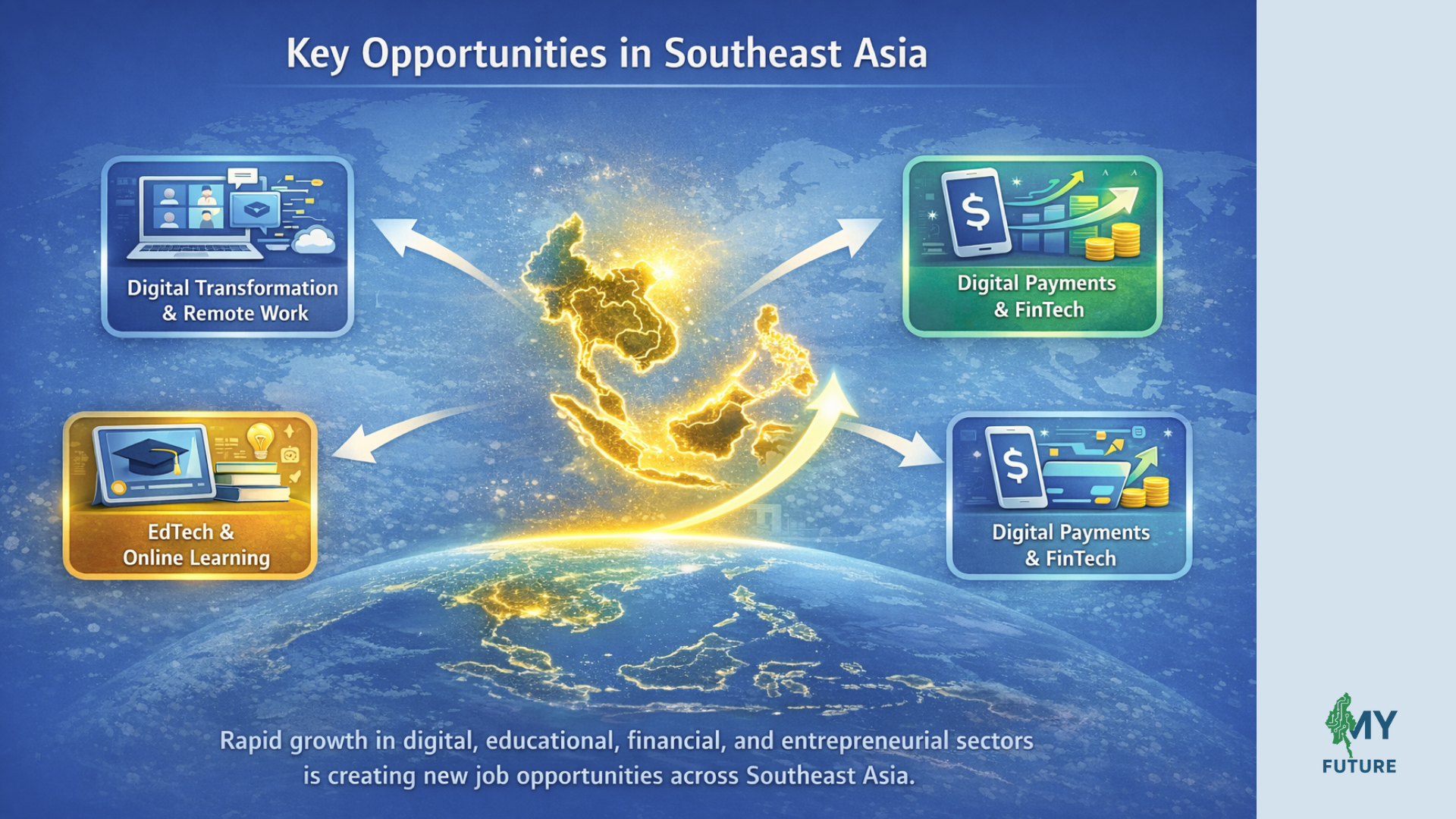
Southeast Asia is one of the fastest-growing regions in the world, with young populations and rapidly changing economies. Across the region, the job market is being shaped by technological advancement, demographic shifts, and globalisation. While some countries face high youth unemployment and skills mismatches, regional trends suggest significant opportunities in digital work, IT, entrepreneurship, and service-oriented sectors. Click on each of the following to read a bit more about changing roles in the sectors illustrated in the diagram above:
▶Digital transformation and remote work
-
Digital adoption across ASEAN countries is accelerating. By 2030, the regional digital economy is projected to reach over USD 1 trillion, and remote freelance work is expanding in sectors like IT services, e-commerce support, digital marketing, and content creation. Many roles do not require advanced degrees, making digital work an accessible entry point for youth.
-
▶EdTech & Online Learning
Southeast Asia’s EdTech market is expected to grow by 14–16% annually until 2030, driven by online schools, tutoring platforms, and skill-training apps. This creates demand for online teachers, course designers, learning facilitators, and content creators. These roles allow young people to quickly gain employable skills, often through short, affordable training programs rather than full degrees.
-
▶Digital Payments & Fintech
Fintech adoption is surging across the region. Over 60% of ASEAN consumers use fintech solutions as a recent report shows. This growth is creating roles in financial technology, data analytics, credit risk management, and payment security. As digital finance becomes more widespread, youth with skills in technology, finance, or digital literacy can access well-paying, high-growth opportunities.
-
▶Small & Micro-entrepreneurship
Across developing Asian economies, over 70% of new jobs are created by micro and small enterprises. The growth of social media commerce and digital payments has enabled thousands of young people to launch online shops, niche services, or small social enterprises. These ventures typically have low start-up costs (often less than USD 50–100) and can grow steadily with digital skills and community networks.
Remember
ASEAN’s job market is expanding across digital work, EdTech, entrepreneurship, fintech, AI, and other tech-driven roles, requiring up-to-date digital and socio-emotional skills.
Reflect
Which sectors or technology-driven roles interest you most, what can you do now to start developing the skills needed for future opportunities, and are you thinking about working abroad?
3. Myanmar Context (Pg 3/5)
Myanmar: Context & Challenges
Since the significant changes to the political context in Myanmar in 2021, the country has faced a range of challenges that have taken a toll on the job market and the wider economy. It is important to acknowledge the decline in job quality and the rise in youth unemployment during these years.
1 in 4 Youth
(Nearly 4 million) are not employed.
1 in 5 Youth
(Around 3 million) are NEET (Neither in work, education, nor training).
🔗 Source: UNDP Data
Yet, as is true in any society facing hardship, people continue to strive for better conditions. In doing so, they have created small bubbles of sectors and communities that are still managing to grow in their own way.
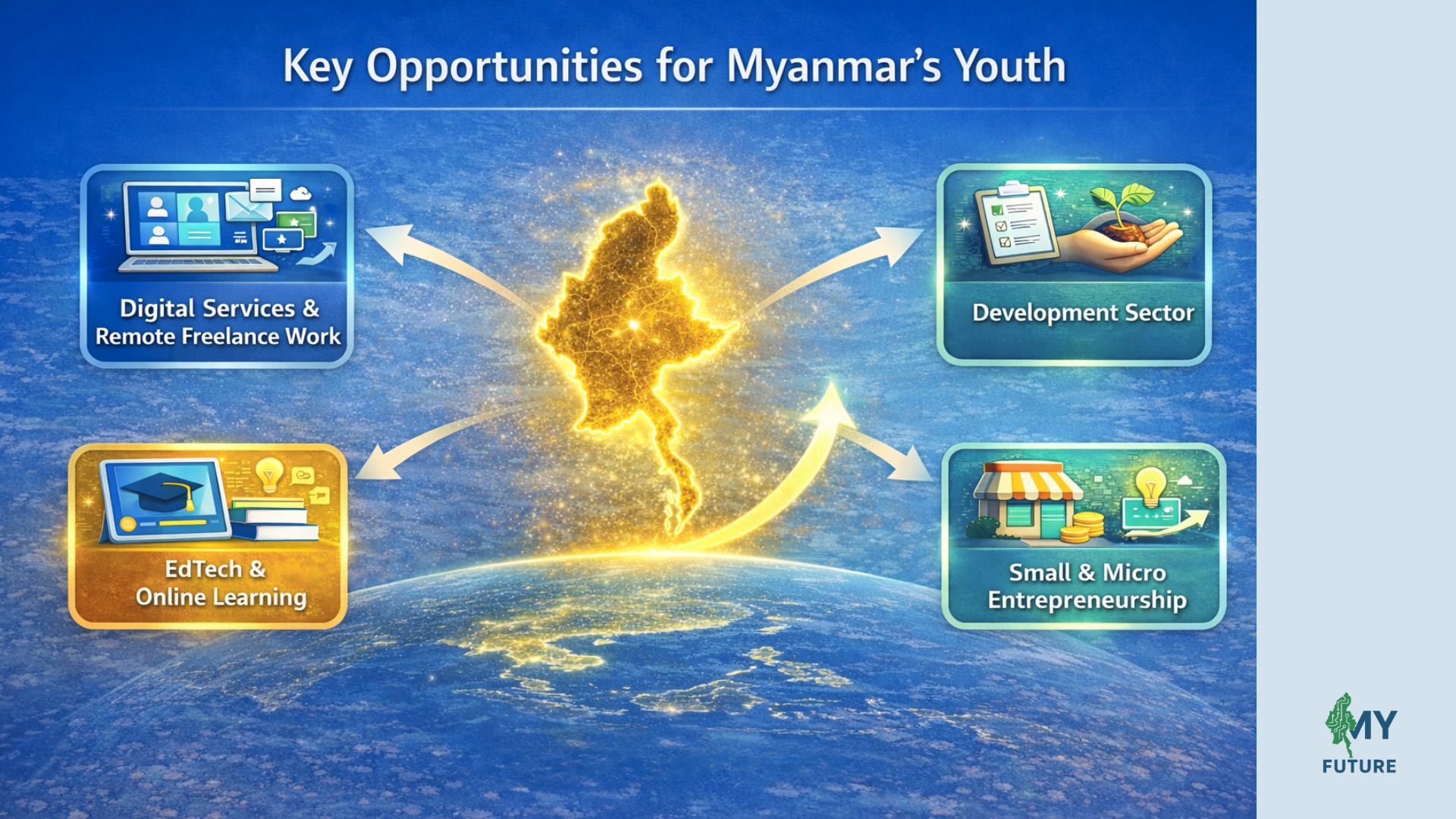
Key Opportunities in 5–10 Years
Click to view the image in full screen
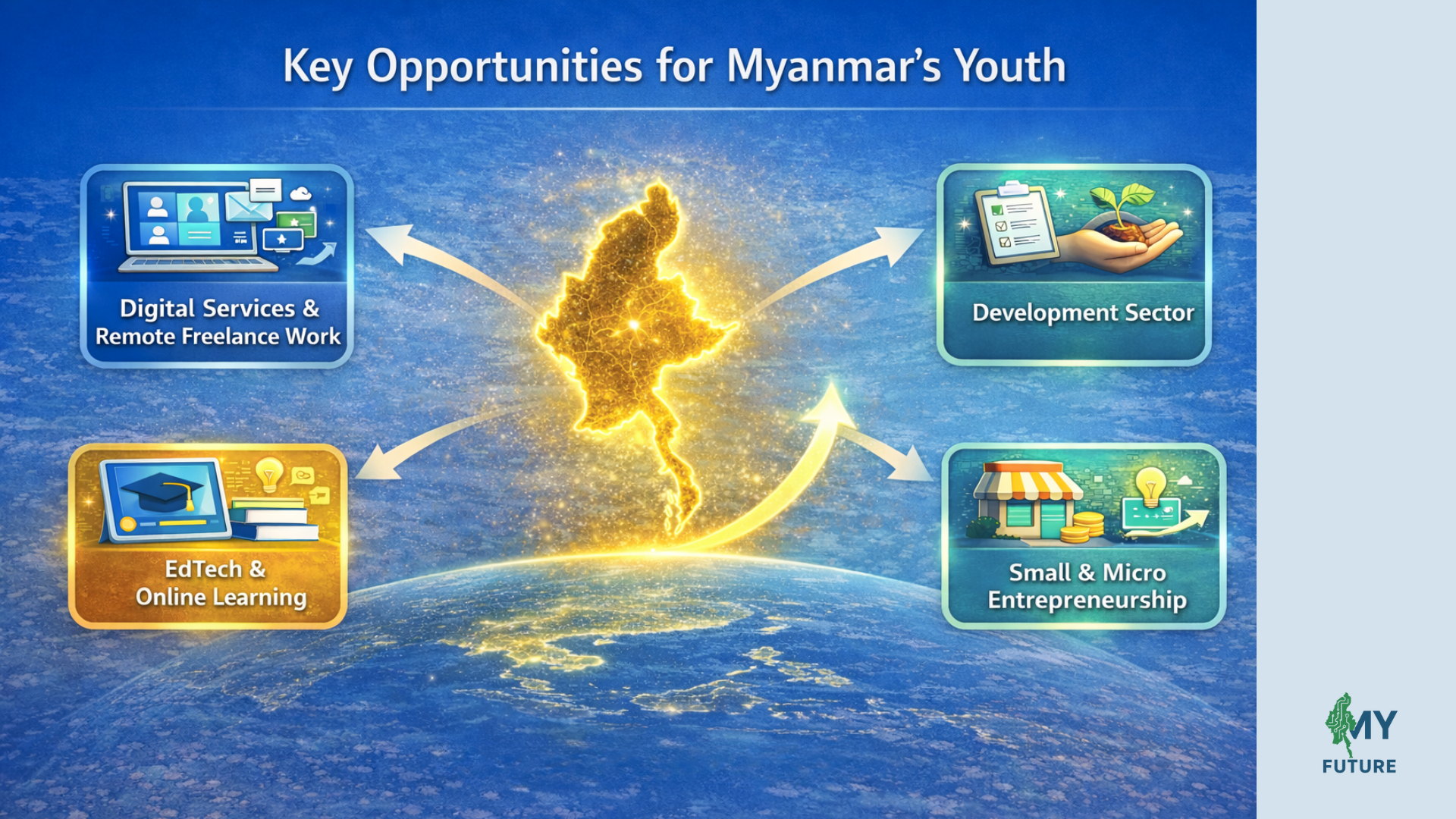
Click on each of the cards below to read more about the different areas of opportunity:
Youth unemployment in Myanmar is high, and many young people are neither in work nor education. Emerging sectors like digital services, EdTech, small businesses, and development offer real opportunities for skill-building and income.
Reflect
Which of these opportunities could best fit your skills and interests? What steps could you take to prepare for work or learning in these sectors?
4. Subject Areas to Explore for Growing Sectors (Pg 4/5)
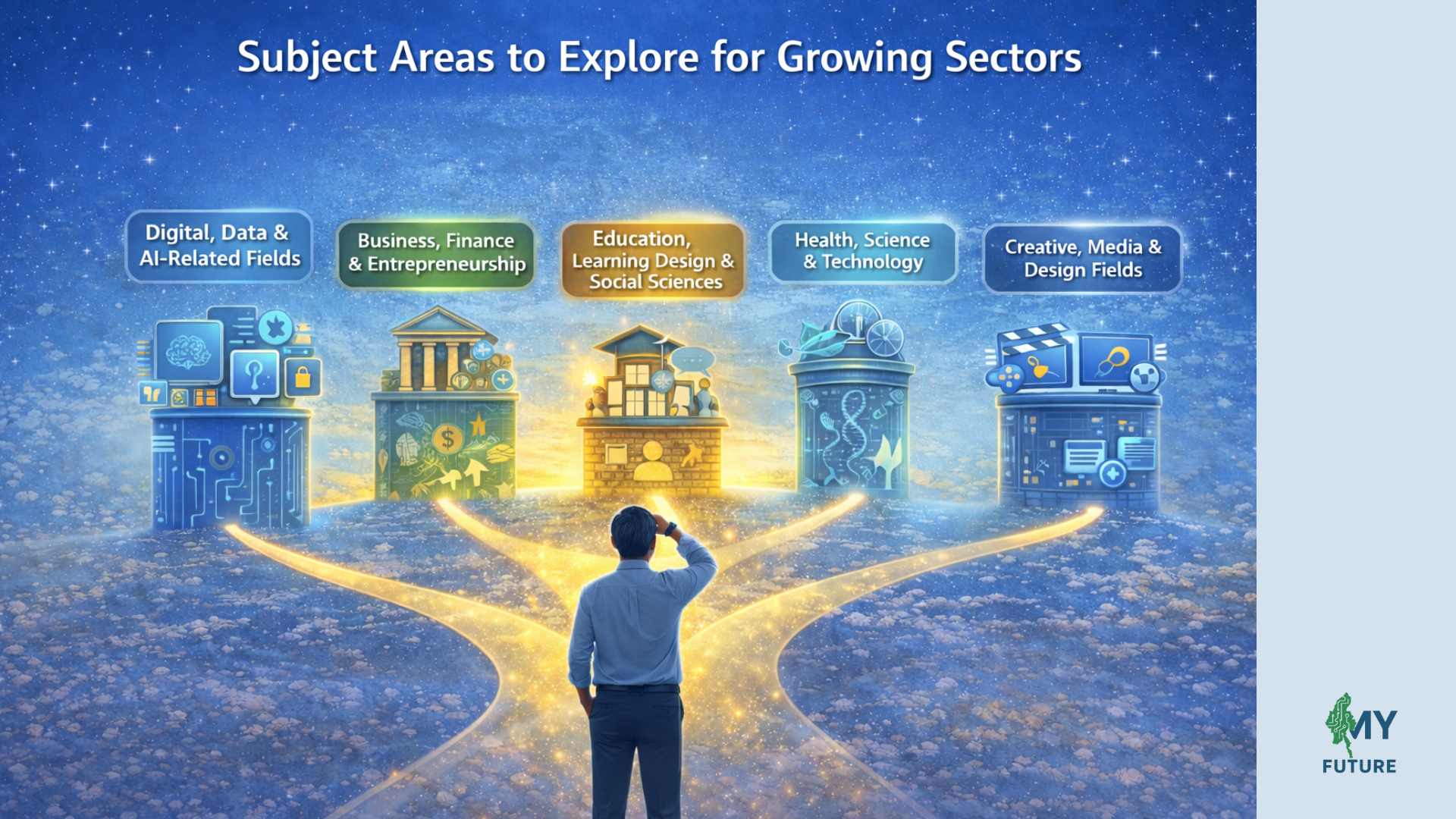
Click to view the image in full screen
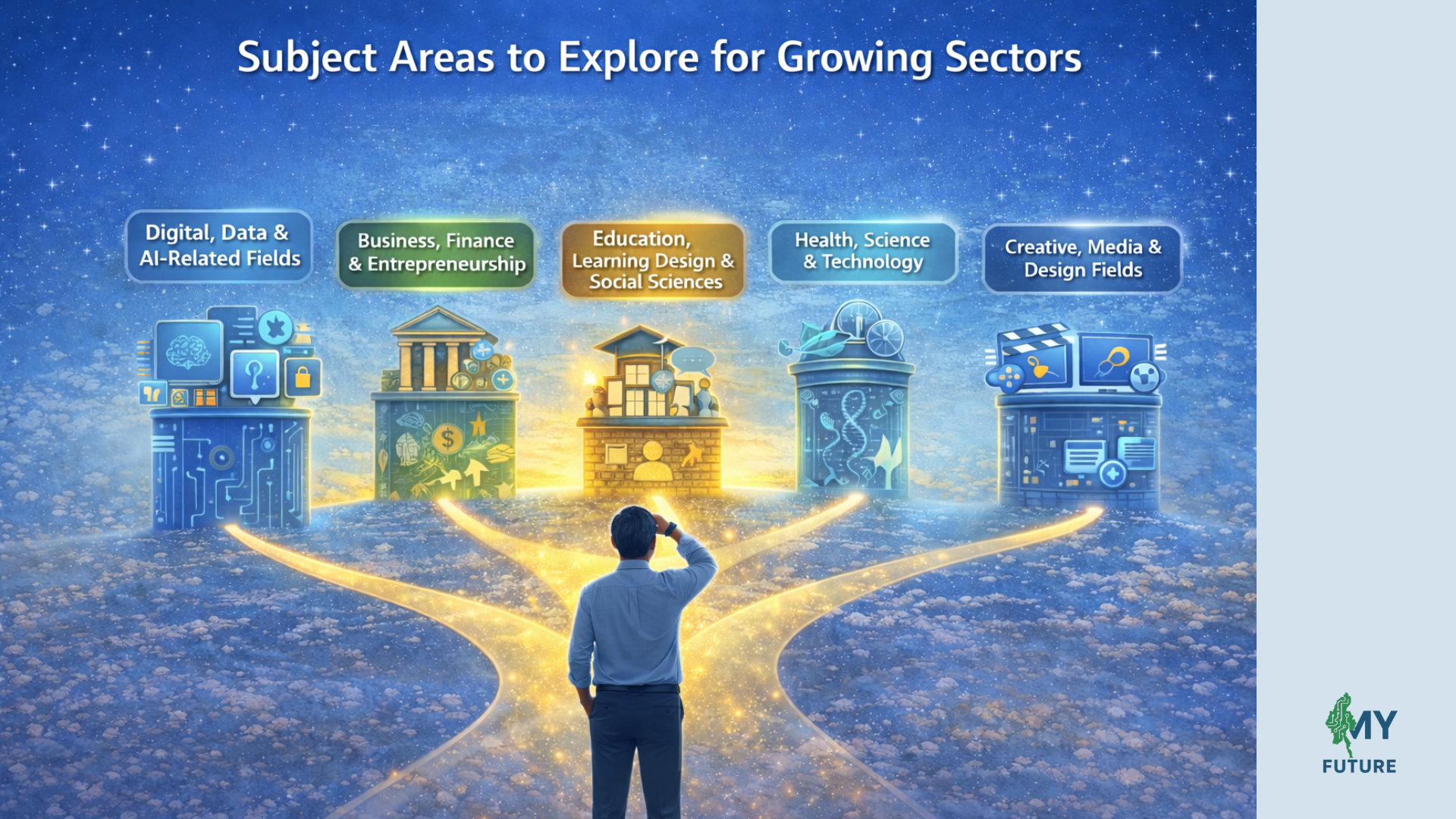
Linking Study Areas to Future Job Sectors
For learners who are planning to enter higher education, understanding how different subject areas connect to future job sectors can help support more confident study decisions. This section is not about telling you what to choose, but about showing how certain fields of study link to growing opportunities in Southeast Asia, Myanmar, and beyond.
Many high-growth sectors are connected to broad subject areas rather than one specific degree or qualification. These subjects can be studied through diplomas, bachelor’s degrees, short courses, or blended pathways depending on your goals and access.
Click on the titles below to expand
5. Researching Sectors (Pg 5/5)
Building Confidence in Career Information Gathering
This activity gives you a chance to look more closely at one sector of your own interest. The goal is not to make a final decision, but to build your confidence in finding, understanding, and comparing professional information.
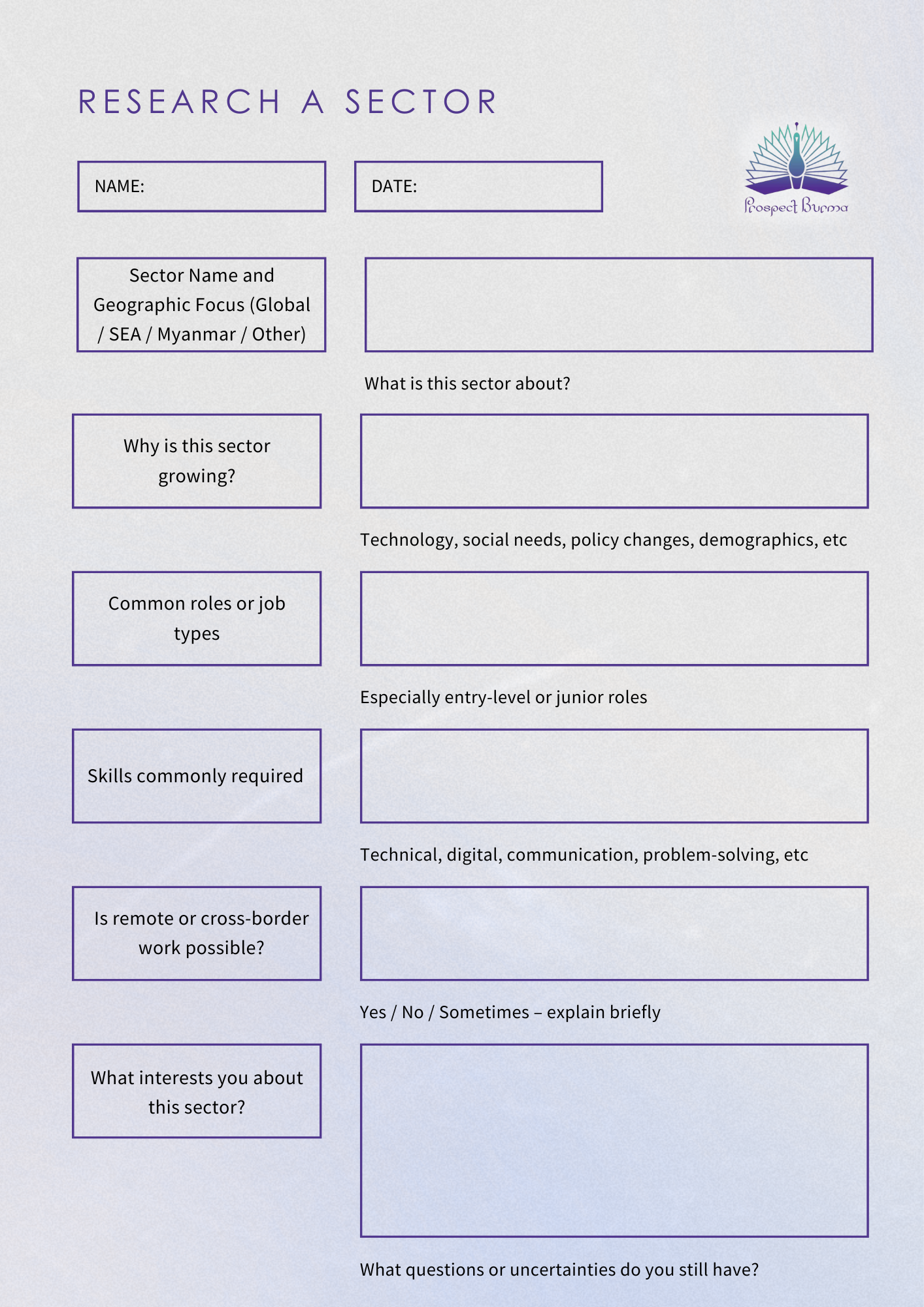
Click to view the image in full screen
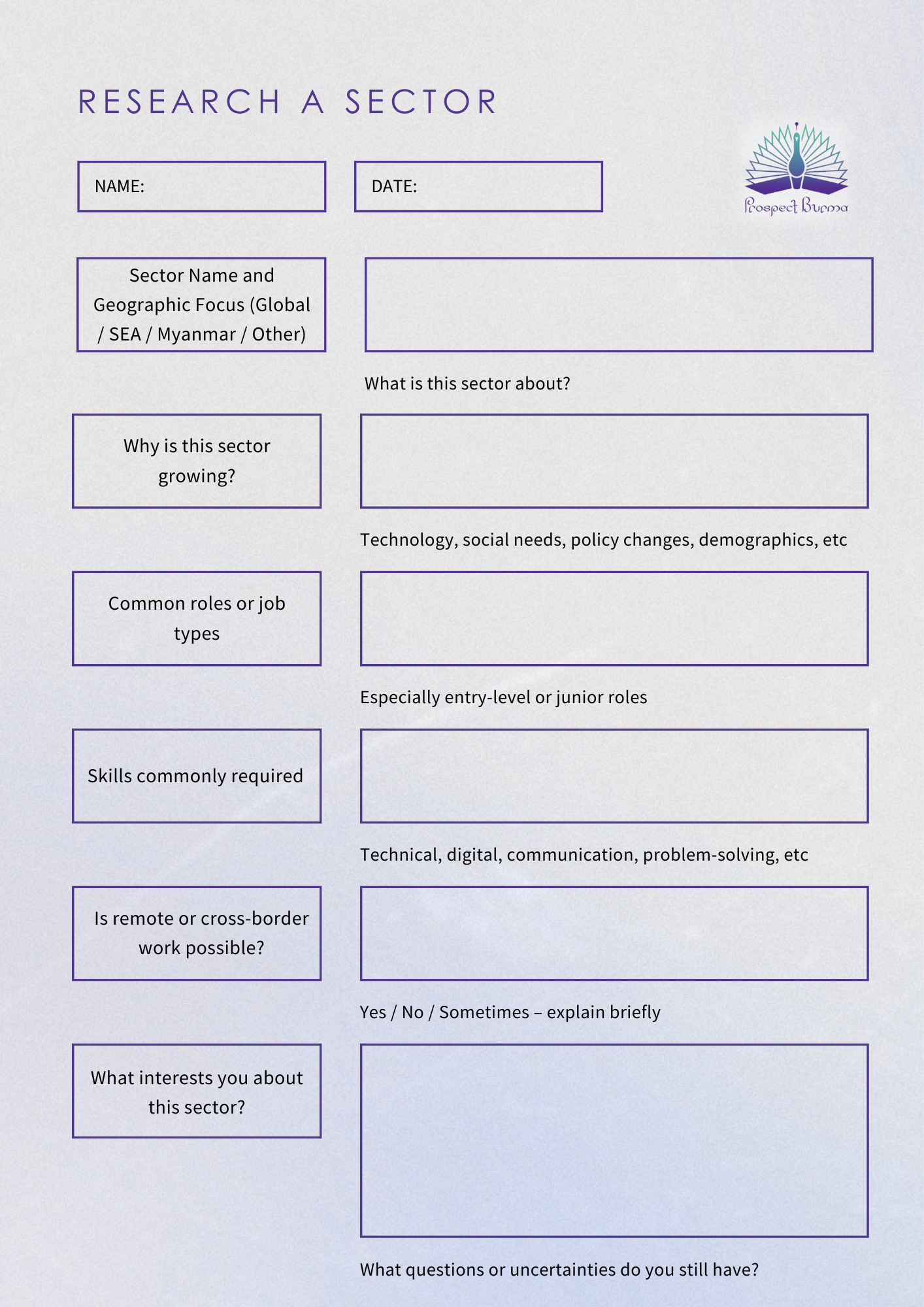
Click here to go to the next page