3.9 Competency Development
| Site: | OpenLearn Create |
| Course: | College and Career Readiness (For Myanmar Youth) |
| Book: | 3.9 Competency Development |
| Printed by: | Guest user |
| Date: | Thursday, 26 November 2026, 1:08 AM |
1. Understanding Competencies (Pg 1/2)
Skills, knowledge, and capabilities that shape your career development
What do we mean by competencies?
Competencies are essentially skills and knowledge that you have or develop, in order to be able to be effective in different tasks. You could acquire these through education, training and life experiences.
Within the context of employment, different careers and professions require different sets of competencies depending on the task and role you are engaged in. These can be developed over time and help you to become more recognised in your chosen field of work.
Ability to speak French, ability to ride a bicycle, knowledge of how to cook a particular type of meal.
Navigation Tips- Click the arrow on the top right to go to the next page
2. Exploring Competencies in depth (Pg 2/2)
Understanding Competencies for Career Development
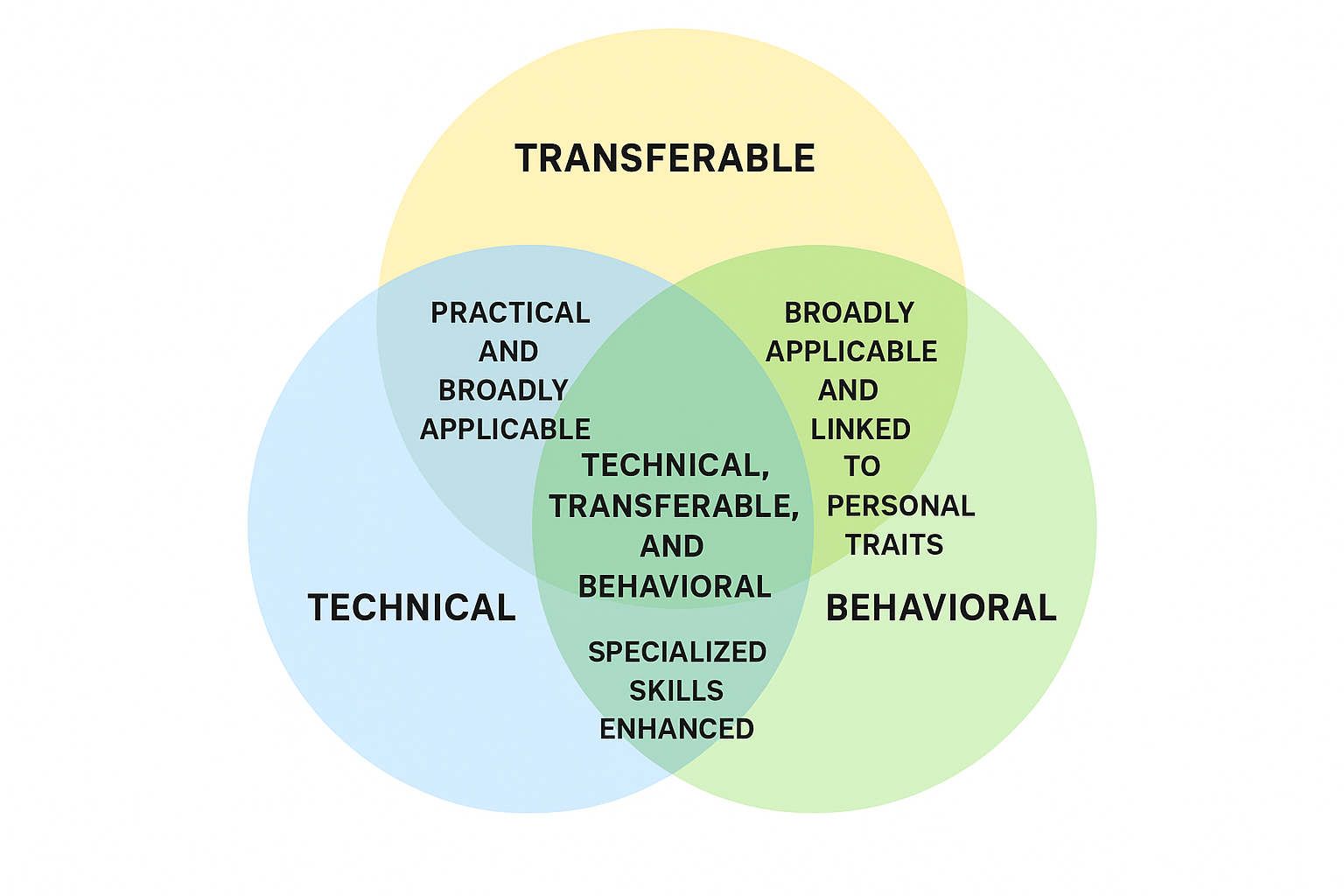
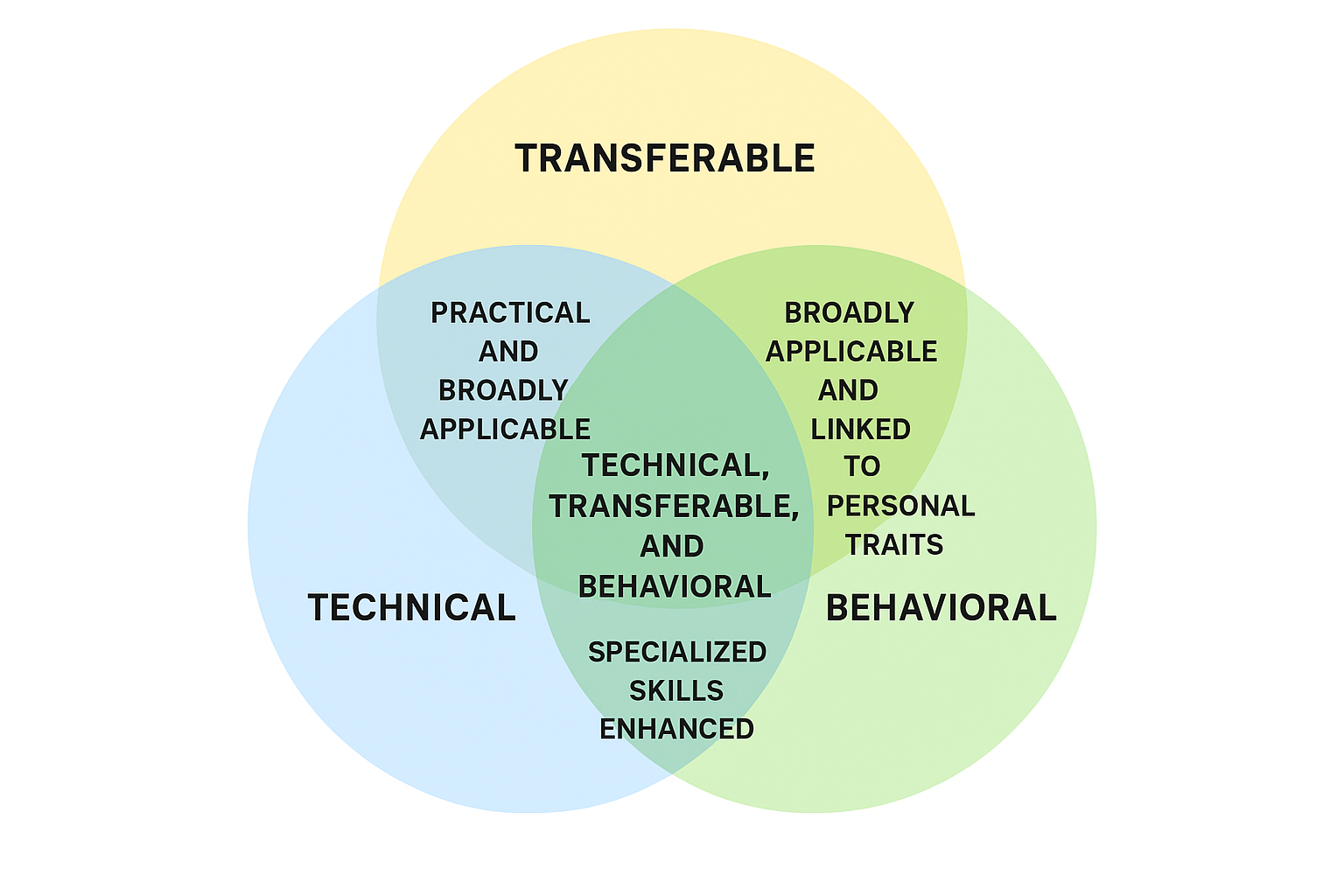
Developing a clear understanding of your competencies is important because it guides your career growth, makes you adaptable to change, and helps you stand out in the workplace. Competencies can be broadly divided into three types: technical, transferable, and behavioral, and as illustrated below its possible for a competency to include both technical and behavioural aspects. Recognizing each type and how they overlap (as illustrated below) can help you focus on building the skills that will support both your studies and your future career.
Click to view the image in full screen
Types of Competencies
Technical, behavioral, and transferable skills explained
These three main types are now briefly described:
Whether for yourself or helping students develop these competencies, it is important to be familiar with 21st century skills, which are key competencies many employers now look for when recruiting new employees.