
4.3 Making University Application

Site: OpenLearn Create
Course: College and Career Readiness (For Myanmar Youth)
Book: 4.3 Making University Application
Printed by: Guest user
Date: Friday, 27 November 2026, 2:22 AM

1. The Application Process (Pg 1/4)

Navigation Tips
Click the arrow, top left, to go to the previous page
Click the arrow, top right, to go to the next page 

Making University Applications

Lets assume you have now made some decisions about your future career focus and the types of courses that you need to pursue at the higher education level, and you are now ready to make applications to some different Universities. Note down at this point what courses you are interested in, and identify the countries and mode of study that you are willing to consider.

⚠️ Important Consideration:

Note that when considering countries be aware of the latest geopolitical situation which may constrain your options for studying inside certain countries, for example currently USA has a travel ban for Myanmar, and there is currently little chance of getting a visa to study in Australia except if you are applying to do a PhD.

Online Tools for Discovery

You can now look for relevant Universities and courses that are of most interest, and commence the application process. There are some great online tools that can help you. An example of this is Studyportals illustrated below, which has a huge database of courses in different countries, that you can search by subject, and that also indicates fee level. For UK Universities see also Discoveruni .
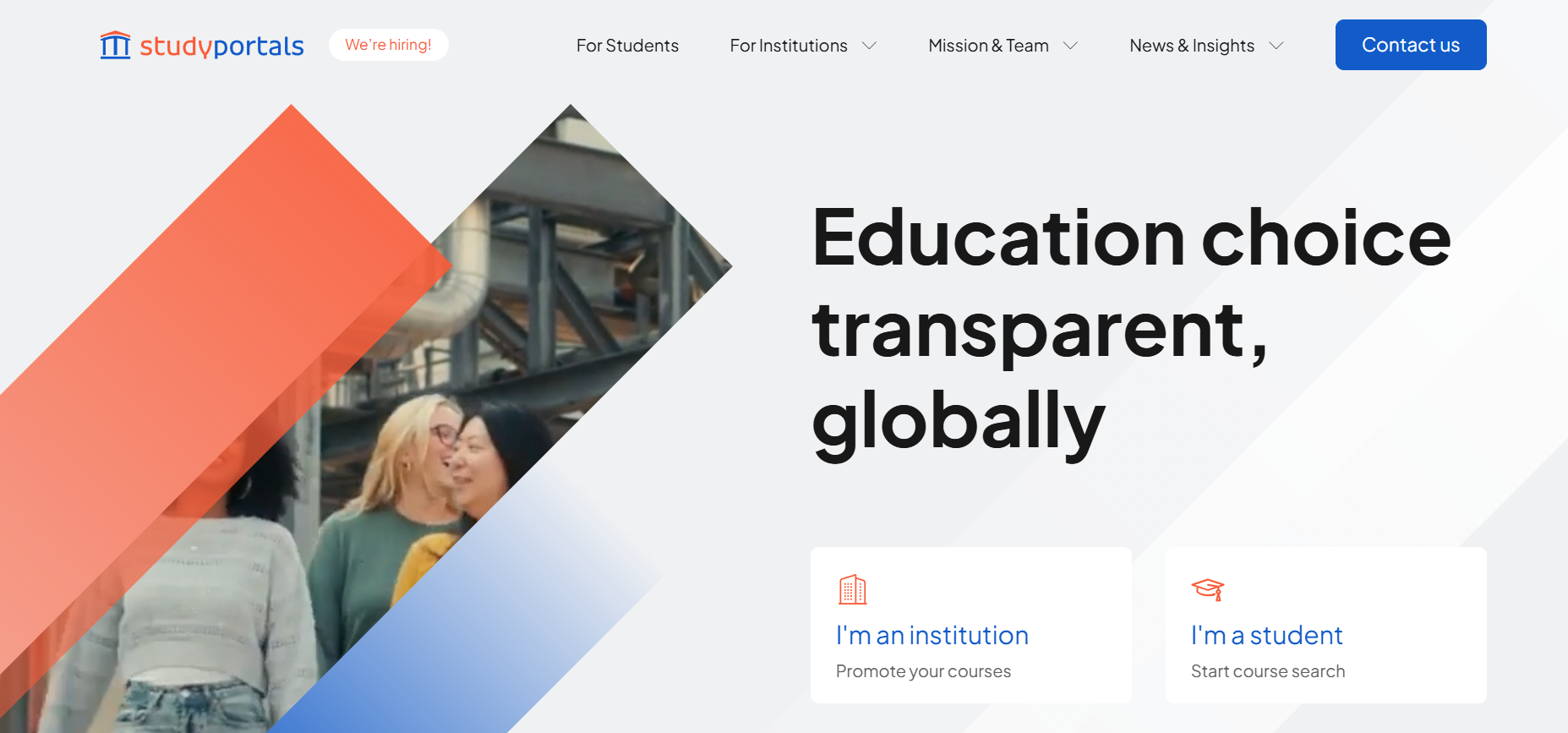
AI is also increasingly useful for finding information on courses, and applications like coursefinder.ai  are emerging that support discovery of different international course options.
Prospect Burma Partnerships with Universities

🏛️ In-Person Scholarships

Prospect Burma itself currently has partnerships with the following Universities for in person scholarships, so these Universities are useful to find out about particularly if you are exploring scholarship opportunities through Prospect Burma:

  • Wilfrid Laurier (Canada)
  • Mahidol, Thailand

💻 Online Study Scholarships

If you are applying for an Online Study Scholarship from Prospect Burma you will be interested to know that PB currently has partnerships with the following international Universities:

  • UMASS (Lowell), USA
  • Open University of Mauritius


2. What Institutions Expect

Navigation Tips
Click the arrow, top left, to go to the previous page
Click the arrow, top right, to go to the next page 

Institutional Standards 

Finding the Right Match for Your Future

Institutions aren't just looking for any student—they are looking for a good match. They want to ensure your interests and qualifications align perfectly with what they offer.

Before you submit your application, ask yourself: "Am I checking these boxes?"

🎯 Purpose & Passion

  • ☐ Have I chosen this course for the right reasons?
  • ☐ Can I demonstrate a real depth of interest in this subject?
  • ☐ Do I appear genuinely motivated and committed to finishing?

🧠 Skills & Resilience

  • ☐ Have I shown that I can study independently?
  • ☐ Do I have the numeracy and literacy skills required?
  • ☐ Can I adapt and achieve in a new learning environment?

💡 The "Challenge" Reflection

Universities value students who can overcome obstacles. When writing your personal statement, try to answer these two questions:

1. Looking Back: What is the biggest challenge I have overcome, and what did I learn?
2. Looking Forward: What challenges do I expect in this subject, and what is my strategic plan to tackle them?

When putting together your application these are some of the things you need to think about.

Take your time to prepare. A well-addressed application creates a lasting impression.


3. Using an Agent (Pg 4/4)

Navigation Tips
Click the arrow, top left, to go to the previous page
Click the arrow, top right, to go to the next page
Click the link below the image to view it in full screen
Click your browser's back button, top left, to exit full screen

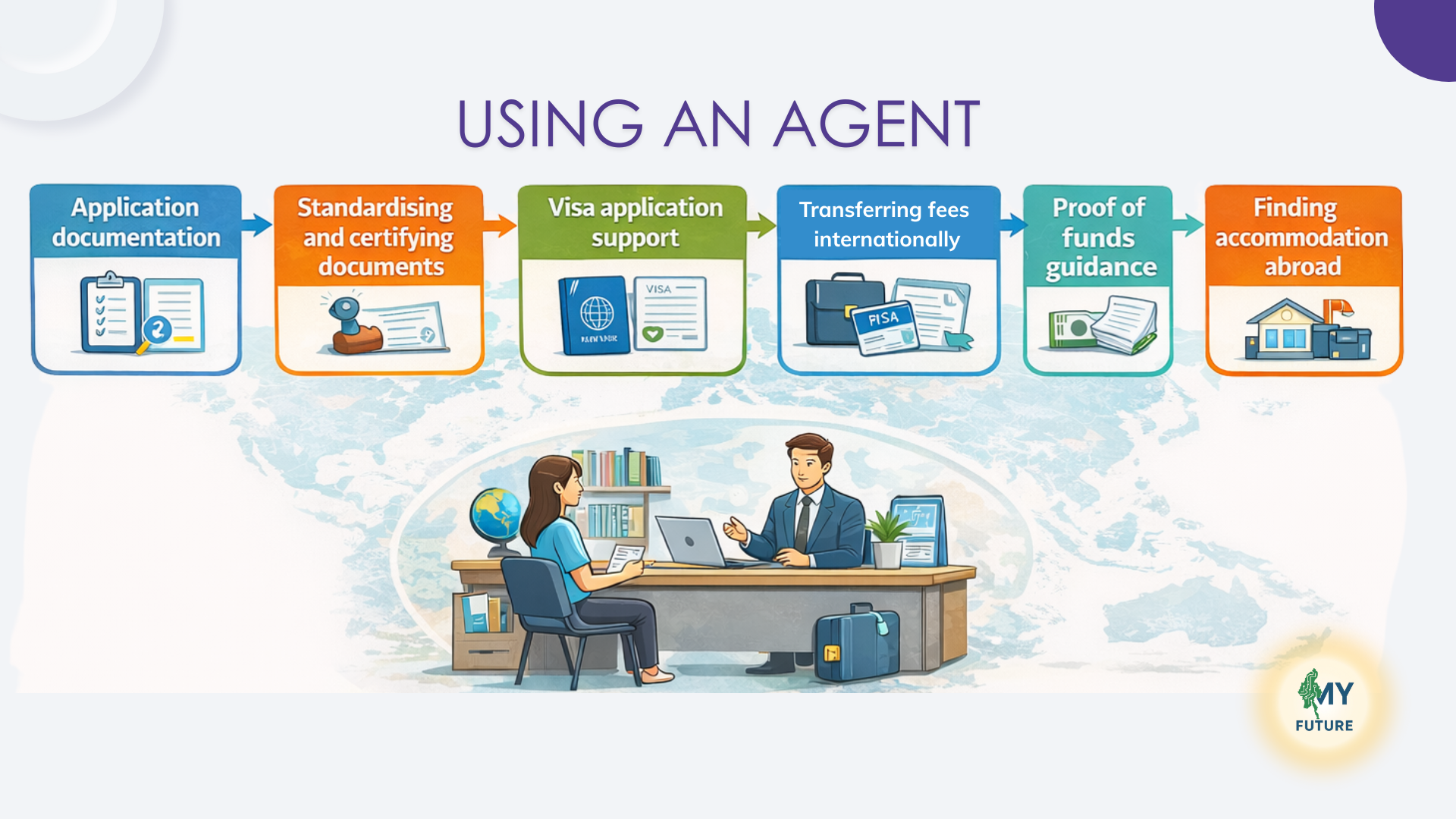
Many students consider using an education agent when exploring study opportunities abroad. Agents may offer support with university applications, visas, and practical arrangements such as accommodation. For some students, especially those applying for the first time or facing language, financial, or administrative barriers, agents can be helpful.

However, using an agent also comes with risks. It is important to understand what agents can help with, what they cannot guarantee, and how to avoid problems or scams.
Click to view the image in full screen
Click the titles below to expand

📋 Why Some Students Use Agents +

Students may choose to work with agents to help with:

  • Application documentation: Support with preparing university application forms, personal statements, and required documents.
  • Standardising and certifying documents: Assistance with notarisation, translations, or approvals (for example, MOFA endorsement or certified copies), which can be confusing or time-consuming.
  • Visa application support: Guidance on visa forms, checklists, and interview preparation (though agents do not make visa decisions).
  • Proof of funds guidance: Explaining financial requirements for visas and helping students understand how to present bank statements or sponsor letters correctly.
  • Accommodation booking: Helping to secure housing before arrival, especially in unfamiliar countries.
  • Transferring fees internationally: Supporting payment of application or tuition fees when students face difficulties transferring money abroad.
✅ Potential Benefits +

The potential benefits of using an agent include:

  • Saves time and reduces stress, especially for first-time applicants
  • Provides step-by-step guidance through complex processes
  • Can be helpful when language or access to information is limited
⚠️ Risks and Challenges to Be Aware Of +

However there are risks, and these are some of the main ones to be aware of:

  • High or hidden fees: Some agents charge very high fees or add unexpected costs later in the process.
  • Scams and fake promises: Some agents may promise “guaranteed visas” or “100% admission success” — these claims are not realistic.
  • Limited choice or bias: Agents may push students toward universities they partner with, rather than those that best suit the student’s goals.
  • Poor advice or outdated information: Immigration rules and university requirements change often. Incorrect advice can lead to visa refusals or wasted time and money.
  • Lack of accountability: If something goes wrong, it may be difficult to recover fees or hold the agent responsible.
🔍 How to Choose an Agent Carefully +

If you decide to use an agent:

  • Research their reputation (reviews, referrals, student experiences)
  • Ask whether they are officially partnered with universities or recognised bodies, and if possible check this with the related institution
  • Request a clear breakdown of fees in writing
  • Avoid agents who guarantee visas or pressure you to decide quickly
  • Keep copies of all documents and submissions
  • Remember: you are the applicant, not the agent

⚖️ A Balanced Approach

Using an agent is not required to study abroad. Many students successfully apply on their own using official university websites, embassy guidance, and online tools. Others benefit from limited agent support for specific steps only.

The key is to remain informed, ask questions, and make decisions that are right for your situation, resources, and confidence level.


4. More University Application Guides (Pg 3/4)

Navigation Tips
Click the arrow, top left, to go to the previous page
Click the arrow, top right, to go to the next page
  After clicking the Download button, click your browser's  back button to return to the course.


Additional Reading: University Application Guides

In this page, you will find documents that provide more detailed guidance on university applications. You can download these resources and keep them for future reference. As you continue your education journey and begin preparing your own university applications, you may find it helpful to revisit these guides whenever you need a reminder of the process or important deadlines.

(Click the titles below to expand)

🎓 Starting Your Application +

Most universities around the world can be applied to directly online through the university website. Students are expected to complete an online application form, upload required documents, and write personal statements as part of the process.

This guide introduces the key steps involved when starting a university application and highlights the types of information and documents that universities commonly require.

PDF document Starting your application-pdf 191.7 KB

📅 University Application Timelines +

Most universities require applications to be submitted about a year in advance. Application deadlines may vary depending on whether the programme is undergraduate or postgraduate, the type of course, the institution, and the country.

This guide provides a general overview of application timelines for universities in different regions. While the timelines give a helpful reference point, you should always check the official university website for the most accurate and up-to-date information.

PDF document University Application Timelines.pdf 82.6 KB

🇬🇧 Using UCAS for UK University Applications +

(We acknowledge that recent changes to UK visa regulations may make the details in this document less relevant for students at this time. However, the information is included so that you may revisit it if regulations change in the future.)

Unlike many other countries, universities in the UK require undergraduate applicants to apply through the Universities and Colleges Admissions Service (UCAS) Hub.

UCAS allows students from more than 200 countries to apply to multiple universities through a single application system. It also provides guidance on course options, requirements, and application timelines.

This guide explains how the UCAS application process works and outlines the typical stages involved when applying to UK universities.

Applying to a UK university-PDF.pdf


Click here to go to the next page