5.6 Working Internationally
| Site: | OpenLearn Create |
| Course: | College and Career Readiness (For Myanmar Youth) |
| Book: | 5.6 Working Internationally |
| Printed by: | Guest user |
| Date: | Thursday, 26 November 2026, 1:08 AM |
1. Different Types of International Work Opportunities (Pg1/3)
🌍 Working Internationally
As you think about your future, you may feel that you are not yet ready or able to return to Myanmar. This can be for many reasons: personal, professional, family, or safety-related. This section explores what it means to work internationally, the opportunities available, and the practical realities you need to consider.
Working in another country can open up valuable learning and career opportunities, but it also requires careful planning and realistic expectations. Some of the topics below may overlap with earlier sections on living abroad, but they are worth revisiting from a career and employment perspective.
Types of International Work Opportunities
There are several pathways to working internationally, depending on your qualifications, experience, and circumstances. Here we briefly explore a few of the options:
International organisations and NGOs
United Nations agencies, international NGOs (INGOs), and development organisations often operate across multiple countries. These organisations may offer clearer visa pathways, short-term contracts, or regional roles.
Commercial and private-sector organisations
Multinational companies in areas such as technology, manufacturing, logistics, and services may recruit internationally, particularly for roles requiring specific skills.
Tourism and hospitality
Hotels, airlines, cruise ships, and tourism companies often employ international staff. These roles may not directly match your academic qualification but can provide income, international experience, and transferable skills.
Shipping and maritime industries
Roles related to shipping, logistics, and port services can offer structured international employment, often with defined contracts and mobility.
Education and training
Teaching, training, or support roles both in-person and online can provide relatively accessible routes into international work, particularly for those with language or subject expertise.
2. Case Study: Working Internationally (Pg 2/3)
💡 Aye's Journey
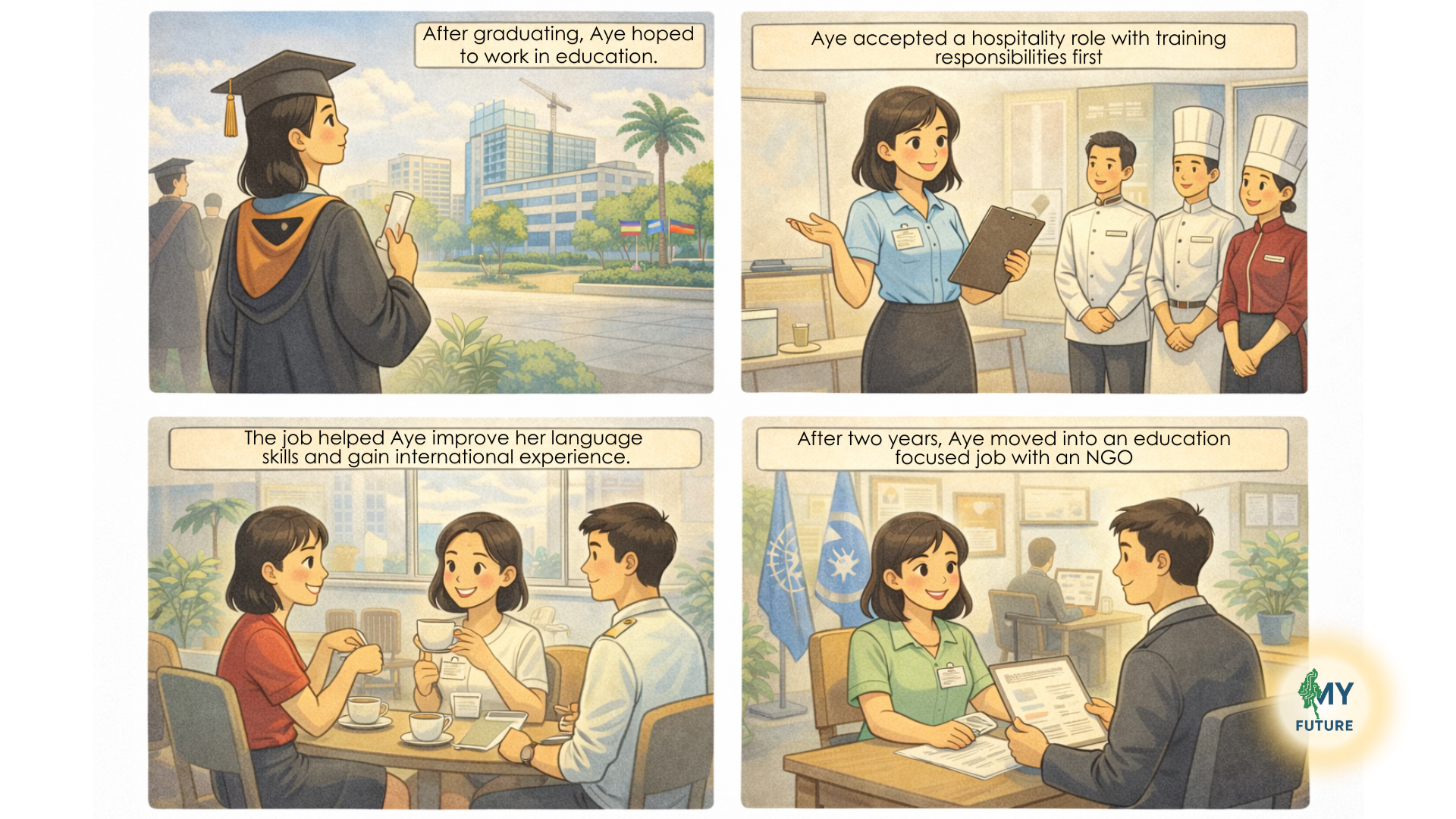
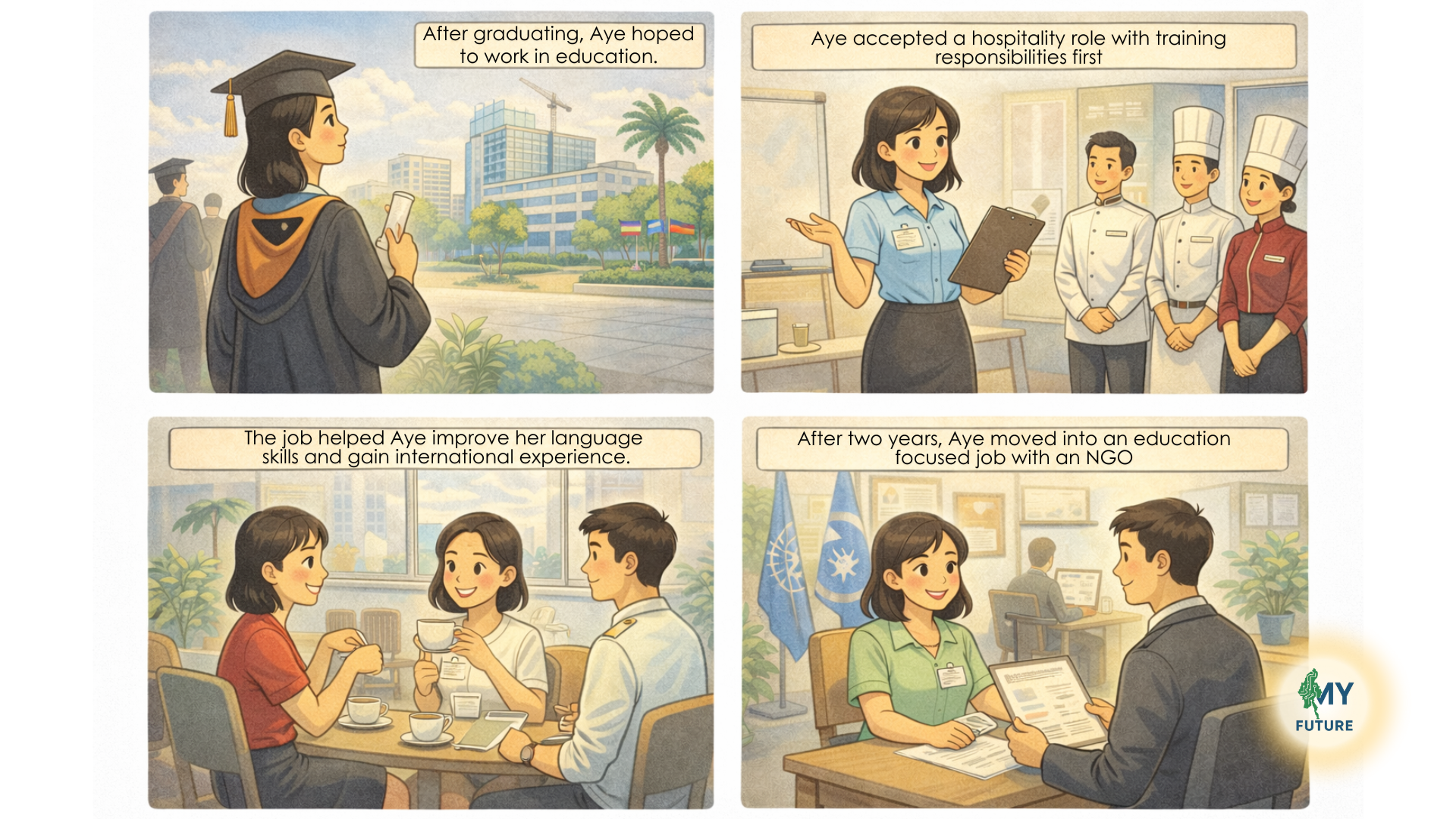
Aye, a graduate with a background in education, hoped to work in her field immediately after finishing her studies. However, due to visa and labour market constraints, she first accepted a role in the hospitality sector which has something to do with training employees. While the job was not her long-term goal, it allowed her to remain legally in the country, improve her language skills, and build international work experience. After two years, she successfully transitioned into an education focused role with an international NGO which let her use her skills to the fullest.
 Click to view the image in full screen
It’s essential to acknowledge that securing the perfect job immediately after graduation isn’t always feasible. Often, taking an initial role, even if it’s not the ideal position, can provide crucial financial support and practical experience. This approach not only helps maintain legal status and build skills but also sets the stage for future opportunities in the desired career path.
3. Practical Considerations: Working Internationally (Pg 3/3)
📘 Going Deeper
The content on this page goes beyond what is covered in the main course material. It is here for students who want a deeper understanding —
particularly those who are actively planning their career or further education.
This is optional reading. Skip it for now if you prefer, and come back when the time feels right.
Practical Considerations
Before deciding to work internationally, it is important to think carefully about the practical realities:
(Click on the titles below to expand)
Making Trade-offs and Long-Term Planning
Working internationally sometimes involves trade-offs. You may need to accept roles that are not directly related to your qualifications or long-term career goals, especially in the short term. At the same time, opportunities in Myanmar to use your skills may be limited or unavailable at certain points in your life.
The key is to think strategically:
- What skills and experience can this role help you build?
- How might this position support your future career, either internationally or back in Myanmar?
- Is this a short-term step or a longer-term pathway?
Key Reflection
There is no single "right" decision. Working internationally can be a temporary solution, a stepping stone, or a long-term career choice. What matters most is making informed decisions that balance opportunity, legality, wellbeing, and long-term goals.