Part 1 - Building Shared Understanding in Digital Forensic Evidence.
| Site: | OpenLearn Create |
| Course: | Digital Detectives: Understanding Communication in Digital Forensic Evidence |
| Book: | Part 1 - Building Shared Understanding in Digital Forensic Evidence. |
| Printed by: | Guest user |
| Date: | Wednesday, 28 October 2026, 1:28 AM |
1. Why Words Matter
Throughout this course, we have explored how communication plays a crucial role in digital investigations. We have seen that misunderstandings can arise when different people interpret information in different ways, use specialist terminology, or make assumptions about what others know.
In this module, you will explore one of the tools developed through the Clarus project to help address these challenges: the Clarus Multi-Lingual Lexicon for Digital Forensics.
The Lexicon was created to support clearer communication by providing agreed definitions for key digital evidence and digital forensic terms across multiple languages and professional contexts.
Learning outcomes
By the end of this module, you should be able to:
-
Explain why shared terminology is important in digital investigations.
-
Recognise how common terms can have different meanings in different contexts.
-
Describe the purpose of the Clarus Multi-Lingual Lexicon for Digital Forensics.
-
Understand how the Lexicon supports communication across professional and language boundaries.
-
Explore how the Lexicon can be used by different audiences.
Why Words Matter
Sharing words does not always mean sharing meaning
Communication is something most of us do every day without giving it much thought. We speak to colleagues, send messages to friends, read news articles and share information online. As communication is such a normal part of everyday life, it can be easy to assume that understanding of that information flows naturally.
In reality, communication is about more than simply sharing words. It is also about sharing meaning.
Imagine two people using the same word but understanding it in different ways. They may both believe they are talking about the same thing, yet leave the conversation with completely different interpretations.
In situations where decisions need to be made or actions need to be taken, these misunderstandings may have significant consequences.
The same word, different meanings
This challenge is not unique to digital forensic investigations. It can happen in many areas of life.
Different professions, communities and groups often develop their own specialist language. Words that seem straightforward to one group may be unfamiliar or have a different meaning to another.
A high level example of this would be if someone mentions a "bug":
-
a software developer may think of an error in computer code
-
a biologist may think of an insect
Neither interpretation is incorrect, but without additional context, confusion can arise.
What does this mean for digital evidence?
The same principle applies to digital evidence and digital forensic work.
Many of the terms used in digital investigations have specific meanings that may not be obvious to those outside the field. Some terms sound familiar because they are also used in everyday life, but their technical meaning may be quite different.
Consider the word "image":
-
In everyday conversation, most people would think of a photograph or picture.
-
In digital forensic work, an image can also refer to a complete copy of the data stored on a digital device.
These two meanings are very different, yet both are commonly used.
Similarly, words such as "copy", "extraction", and "authentication" may carry different meanings depending on who is using them and in what context.
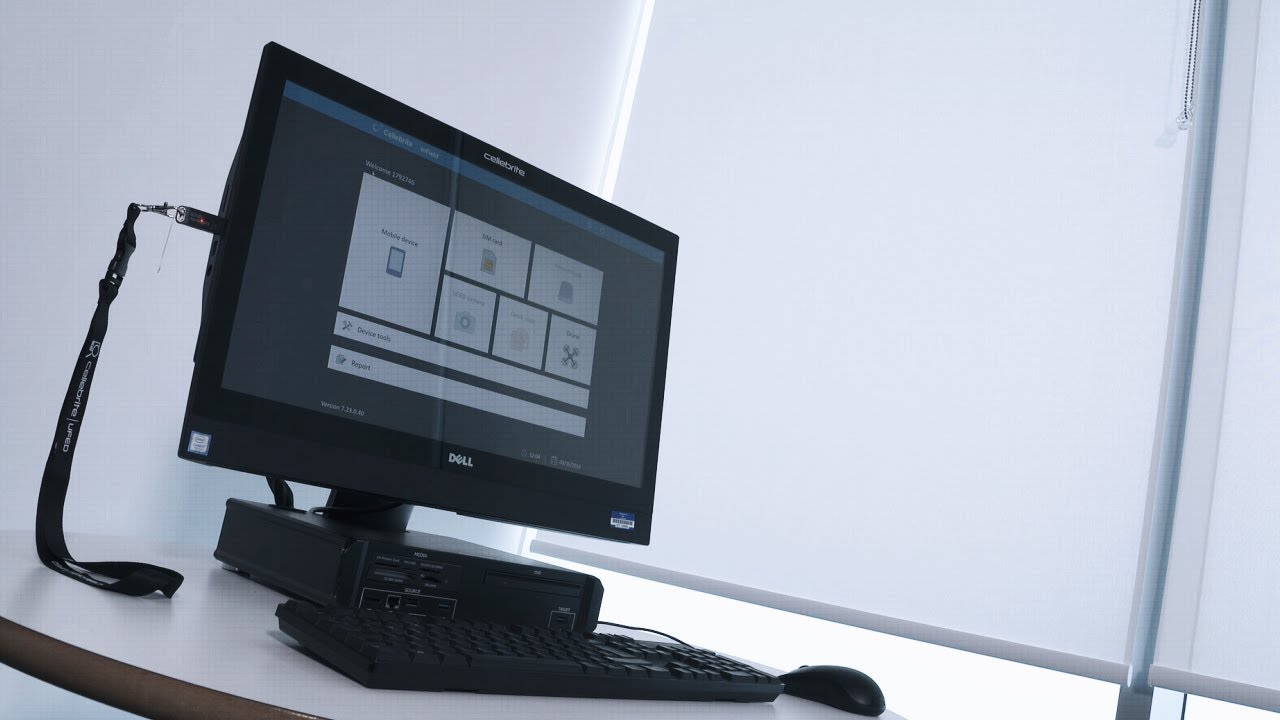
Example of a Cyber Kios from Scotland
Different people bring different knowledge
This matters because digital investigations involve many different people working together.
Information may pass between:
-
police officers
-
digital forensic practitioners
-
lawyers
-
judges
-
journalists
-
researchers
Each person brings different expertise, experiences and assumptions.
Communication challenges do not always arise because people fail to communicate. Sometimes they arise because people assume they understand one another when they do not.
What did Clarus find?
Research carried out through the Clarus project found that terminology and language can create challenges in digital evidence work.
Participants described situations where:
-
technical language was not always understood consistently
-
assumptions were made about what others knew
-
misunderstandings could arise when people interpreted terminology differently
As digital investigations increasingly involve collaboration across organisations, professions and countries, the need for shared understanding becomes even more important.
In this module, we will explore how language influences understanding, why terminology matters, and how the Multi-Lingual Lexicon for Digital Forensics was developed to support clearer communication across different professional and linguistic contexts.
What Does This Word Mean?
Words which seem straightforward can have specialised meanings depending on who is using them and in what context.
This creates the need for shared definitions.
Reflection
Before moving on, consider the following question:
Can you think of a word or phrase that has a specific meaning within your job, studies or hobbies that might be understood differently by someone outside that area?
What might happen if two people used that word while assuming they both meant the same thing?
Move to the next page by clicking the arrow on the top right to move to the next page in this section.
2. Why Shared Understanding Matters
Digital investigations involve many different people
Digital investigations rarely involve just one person. Instead, they often involve multiple individuals and organisations working together, each with different responsibilities, expertise and perspectives.
These may include:
-
Police officers
-
Digital forensic practitioners
-
Investigators
-
Lawyers
-
Prosecutors
-
Judges
-
Witnesses
-
Defendants
Each of these groups plays a different role in the investigation process. They may also have different priorities, levels of technical knowledge and ways of communicating.
Different roles, different perspectives
For example:
-
A digital forensic practitioner may focus on recovering and analysing data from a device.
-
An investigator may be interested in how that information relates to the wider case.
-
A lawyer may need to understand how the evidence was obtained and whether it can be presented in court.
Although these individuals may all be discussing the same evidence, they may not always approach it in the same way. The language that feels clear and precise to one person may be unfamiliar or confusing to another.
What do we mean by shared understanding?
Shared understanding does not mean that everyone must become an expert in digital forensics. Nor does it mean that everyone must use exactly the same words in exactly the same way.
Instead, it means having enough common understanding that information can be communicated accurately and interpreted as intended.
When technical language creates a barrier
Imagine a digital forensic practitioner describing a device as having undergone a "forensic acquisition".
To another specialist, this term may be completely clear. However, someone with no background in digital forensics may not immediately understand:
-
what this process involves
-
why it is important
-
how it differs from simply copying files from a device
Now imagine this challenge occurring repeatedly throughout an investigation, involving dozens of technical terms and multiple organisations.
Small misunderstandings can begin to accumulate, making communication more difficult and increasing the risk that important information is interpreted differently by different people.
Across organisations, professions and countries
The challenge becomes even greater when investigations cross organisational, professional or national boundaries.
Different agencies may have their own terminology, procedures and working practices. Different countries may use different terms for similar concepts. Even when people are communicating in the same language, they may attach different meanings to particular words.
What did Clarus find?
Research carried out through the Clarus project found that terminology and communication challenges can arise throughout digital evidence processes.
Participants highlighted situations where:
-
technical language was not always understood consistently
-
assumptions were made about what others knew
-
differences in understanding could create barriers to effective communication
Clear communication is therefore not simply about speaking or writing well. It is also about ensuring that the people involved share a common understanding of what is being discussed.
Creating a shared reference point
This is one reason why resources such as the Multi-Lingual Lexicon for Digital Forensics can be valuable.
By providing agreed definitions and explanations of key terms, the lexicon helps create a shared reference point that can support communication between different groups.
Shared Understanding
Shared understanding also supports fairness
Shared understanding is not only important for efficiency. It is also important for fairness.
Decisions made during an investigation can have significant consequences for individuals, organisations and communities. If information is misunderstood or interpreted differently by different people, this may affect how evidence is evaluated or communicated.
While terminology alone cannot eliminate misunderstandings, greater clarity can help reduce confusion and support more informed decision-making.
Reflection
Move to the next page by clicking the arrow on the top right to move to the next page in this section.
3. Different Meanings in Different Contexts
One word can have several meanings
Many digital forensic terms have multiple meanings.
For example, the word "image" may mean:
- A photograph.
- A screenshot.
- A forensic image of a device.
What is a forensic image?
A forensic image is not simply a picture. It is a copy of digital data created using specialised methods designed to preserve evidence.
Other familiar words can have technical meanings
Similarly, words such as:
- Copy
- Extraction
- Authentication
- Storage
have specific technical meanings within digital forensic work.
Why does this matter?
Understanding these distinctions helps reduce confusion and improve communication.
Hover over the definitions below for the full sentence.
Move to the next page by clicking the arrow on the top right to move to the next page in this section.
4. Communication Across Borders
Digital investigations increasingly involve cooperation across countries.
People working on the same investigation may:
- speak different languages
- work within different legal systems
Even when direct translations exist, terminology may not always carry exactly the same meaning.
This creates additional communication challenges.
How did Clarus address this?
To address these issues, the Clarus project explored how key terminology is used across multiple countries and languages.
Reflection
This is the end of Part 1. From the drop-down menu on the left of the screen, select Module D Part 2.