Managing your supervisors and other professional relationships
| Site: | OpenLearn Create |
| Course: | Becoming a professional researcher |
| Book: | Managing your supervisors and other professional relationships |
| Printed by: | Guest user |
| Date: | Friday, 20 November 2026, 11:50 AM |
1. Introduction

Research degrees are built on relationships. Throughout your research degree, you will work closely with supervisors, fellow researchers, professional services staff, and members of the wider research community. These relationships can provide intellectual challenge, practical support, professional opportunities and a sense of belonging, but they can also be a source of uncertainty and difficulty, particularly when expectations are unclear or circumstances change.
This unit invites you to think critically about your professional relationships as a researcher. You will reflect on how supervisory relationships compare with other professional relationships, consider how to build productive working relationships with your supervisors, and explore ways of navigating common difficulties. You will also identify sources of support beyond your supervisory team and consider how to develop professional networks within and beyond your institution.
Effective researchers do not simply conduct research- they learn how to build, maintain and draw on professional relationships. This unit will help you begin that process, and to build skills that you will draw on throughout your career.
The content in this unit relates to the following domains and descriptors of the Vitae Researcher Development Framework:
Researcher: 1.5; Research communities: 5.2 Teamworking; 5.4 Supervision and people management; 5.6 Networking
After completing this unit, you should be able to:
- Compare supervisory relationships with other professional relationships.
- Explain the roles and responsibilities involved in student–supervisor relationships.
- Identify appropriate responses to common challenges and disruptions in supervisory relationships.
- Identify and develop strategies for building professional relationships and networks during your research degree.
Estimated study time for this unit: 3 hours and 15 minutes
2. Reflecting on your professional relationships

As you begin your research degree, you may be feeling unsure about what your relationships with your supervisors are likely to entail, and how you will relate to them. The aim of this section of the unit is to help you to think about and prepare for a set of relationships that are likely to have similarities to, yet be distinct from, professional relationships that you have had before- including those with your university lecturers.
Activity 1 gives you the opportunity to reflect on these similarities and differences.
Activity 1: Similarities and Differences
Allow approximately 15 minutes for this activity.
Reflect on each question below. Make a separate note of your responses. Once you have answered the questions, select 'View Comment' to reveal possible responses and considerations.
Question 1: In what ways do you think your relationships with your supervisory team will be similar to professional relationships you have had already?
Question 2: In what ways do you think these relationships will be different from other professional relationships you have had?
View Comment
Your answers to Activity 1 will depend on your individual career stage and experiences. You will probably find that your relationship with your supervisory team might feel similar to some of the relationships you may have had with your managers at work or your lecturers during your previous degrees. You will probably be acutely aware of the power imbalance between yourself and your supervisors and notice significant differences when compared with other professional relationships.
In the next section you will consider these differences in more detail.
2.1. Relationships in themselves and relationships for themselves
Before you think about your supervisor relationship in more detail, consider the difference between two kinds of relationships.
There are some relationships in our lives whose rules and conventions remain mostly unspoken. Think of these as ‘relationships in themselves’. These are the kinds of relationship where it usually wouldn’t feel natural or appropriate to sit down together and talk about what’s going well or badly in the relationship, or how you might improve it. For example, many of your working relationships and friendships are likely to be relationships in themselves, as are the loose social ties that you have with someone like a barista at your regular coffee shop or someone you see at the gym.
Other relationships can be thought of as ‘relationships for themselves’. These are the kinds of relationships that are carefully considered and negotiated, and where it feels more normal and natural to talk about how things are going and what could be better. Many people are used to having ‘relationship talks’ with their romantic partners or with close friends and family members. For example, if you are working closely with someone on a shared project, it can be helpful to have a conversation with your colleague about how you both work best.
The point here is that you are encouraged to think of your relationships with your supervisory team as belonging in this second category of relationships – the kind that need to be engaged in consciously and co-operatively.
Activity 2 will help you to get started with this by considering how your relationship with your supervisors began and what expectations you have of it.
Activity 2: How it all started
Allow approximately 5 minutes for this activity.
Reflect on each question below. Make a separate note of your responses. Once you have answered each question, select 'View Comment' to reveal possible responses and considerations.
Question 1
How did your relationship with your supervisors start? Did you choose them or did they choose you?
View Comment
Supervisory relationships can start in a number of ways. In some cases students approach prospective supervisors personally, and the student and supervisors work together to develop the research proposal and seek funding for the project. In other cases (and especially in STEM subjects) the supervisory team have successfully bid for funding on a project and then recruit a student to carry it out.
A third possibility is that a student successfully applies for a departmental scholarship and is then allocated a supervisory team. In some circumstances a student may have the opportunity to select their supervisory team, meeting informally with several potential supervisors at different institutions before applying. But it’s also common for students to have no say at all in the supervisory team they are allocated to.
Question 2
What are your supervisors supposed to do for you?
View Comment
The main role of your supervisors is to support and guide you through the process of completing a PhD. They should meet with you regularly, provide feedback on your written work, and support you through the various academic and administrative milestones on the way to getting a PhD.
They should also support you to develop professional research skills and help you to build a network of useful contacts.
3. Understanding the supervisory relationship
In their book The Unwritten Rules of PhD Research, Gordon Rugg and Marian Petre observe that as a research student your relationship with your supervisors will most likely be quite different from your previous academic relationships, because of the far greater amount of your supervisors’ attention and time you will take up.
As a student on a taught course, you can go about your studies quite inconspicuously, but research students are visible as individuals. It’s likely that your PhD (or Professional Doctorate/PD) supervisors will be much more significant to you than your dissertation supervisor because the work you will be doing together will be more long term, and because both of you have a professional stake in its success (Rugg and Petre, 2004, p. 22).
Rugg and Petre move on to caution their readers that most research students do not spend enough time thinking through their relationships with their supervisors and that as a result they encounter predictable and avoidable problems. This can have serious consequences because, as they observe drily ‘Most PhD horror stories have their origin in the supervisory relationship rather than the research topic or external examiner’ (Rugg and Petre, 2004, p. 22).
Fortunately, as Rugg and Petre are at pains to point out, the vast majority of these problems can be avoided or mitigated with a reasonable degree of thought and discussion. In the rest of this section, you’ll focus on how to manage your relationships with your supervisors in order to maximise your chances of working productively and harmoniously together throughout your research degree and beyond.
3.1. Roles and Responsibilities

In order to build a good working relationship with your supervisory team, it’s useful to be clear on exactly what you can expect from one another.
Your university’s research degree regulations, supervision policies and student handbooks will generally set out baseline requirements for postgraduate research students (PGRs) and their supervisors, for example specifying a minimum number and/or frequency of meetings, supervisor responsibilities, review processes, training requirements and dispute resolution procedures.
The University of Liverpool, for example, has a detailed Postgraduate Code of Practice that details responsibilities and procedures for each stage of a research degree. For example, Appendix 2 of the Code specifies that:
- Students must be supervised by at least two suitably qualified academic staff.
- One of the supervisors will be designated the primary supervisor and will be their main point of contact.
It’s worth familiarising yourself with the formal expectations for supervisors and students at your own institution as this will give you a baseline set of expectations to work with as you start to negotiate your relationships with your supervisory team.
3.2. ‘Being stuck with each other’
In Activity 2 you considered some of the different ways students end up with a particular supervisory team. According to Petre and Rugg, when you begin a research degree you enter into an intense professional and personal relationship ‘that is about as close as many marriages, and lasts about as long as many marriages’ (2004, p. 33). This is an analogy that has its limits of course – let’s be clear, you absolutely must not enter into any kind of romantic or sexual relationship with your supervisor! But, it is nevertheless the case that when you embark on a research degree, you enter into a set of long-term relationships with your supervisors which will hopefully last at least until you graduate, and may well endure for the rest of your lives.
In some disciplinary areas supervisory lineage is valued and you may hear people talk about their ‘supervisory grandparents’ (their supervisor’s supervisors). What’s clear is that supervisors and their students are often bound in a similar way to the way we can feel bound with our families.
Petre and Rugg go on to explore this sense of being ‘stuck with each other’ a bit further, suggesting another analogy for the relationships between supervisors and students:
"A closer analogy for this situation is two or three survivors shipwrecked on a desert island and having to learn not just to get along with each other but also to work constructively together, regardless of whether they would have chosen each other as companions if they had had a choice. Sitting on the beach complaining that the other survivors aren’t perfect human beings isn’t going to get a fire lit; similarly, sitting at your desk expecting your supervisor to be perfect isn’t going to get your dissertation written. You have to make the most of what you’ve got, unless the situation is completely pathological (…). Note that this is an active process, not a passive one; you don’t simply put up with the situation that you first encounter, but instead you identify the resources you’ve got and then put them to the best use you can."
(Petre and Rugg, 2004, p. 33)
3.3. First, know thyself

An important first step in identifying the resources you’ve got is reflecting on what you bring to the table. Think about your strengths and weaknesses as a student and as a colleague.
- What foibles and idiosyncrasies do you have that might make you difficult for some people to supervise?
- How much technical support are you likely to need?
- How strong is your grasp of the key theories and approaches in your research area? What gaps in your expertise are you aware of?
- Do you tend to lie low when you are finding things difficult, or do you find it easy to seek support?
- Are you someone who needs a lot of structure and short deadlines or do you work best when self-directed?
- How do you respond to criticism and praise?
It can be really useful to reflect on these things and, where comfortable and appropriate, to discuss them with your supervisors.
Activity 3: Care and Feeding
Allow approximately 20 minutes for this activity.
This activity is designed to help you think through what you’re likely to want and need from your supervisors. Have a go at answering each of the questions. You don’t necessarily need to share your answers with your supervisors- just articulating your wants and needs to yourself can be really useful.
Reflect on each question below. Make a separate note of your responses. Once you have answered all of the questions, select 'View Comment' to reveal possible responses and considerations.
Question 1:
About how often would you ideally like to meet formally with your supervisors?
Question 2:
How long would you like formal supervision meetings to be?
Question 3:
How would you like to contact them between meetings?
Question 4:
How much guidance and structure do you usually need from managers, supervisors, etc.?
Question 5:
Do you usually prefer to work independently or more collaboratively?
Question 6:
Do you work best to longer or shorter deadlines?
Question 7:
How good are you at estimating how long tasks will take and meeting deadlines?
Question 8:
How are you with receiving constructive criticism? Would you prefer to receive written feedback on your work before a supervision, so that you have time to take it in?
Question 9:
How confident are you with using IT systems, especially when it comes to getting to know a new application? How much support are you likely to need? Do you know where to find help?
View Comment
Hopefully, answering the questions above has given you a chance to think through what you are like as a student and colleague. It can be enormously helpful to have as open and frank a conversation as you can about your wants and needs in your early supervision. It’s also a good idea to ask your supervisors some questions about how they usually like to supervise:
- Do they prefer to work as a team or separately?
- How often do they like to meet with students and for how long?
- How do they like to be contacted between meetings?
- What’s the best way for you to contact them if you just have a quick query?
- If you email them and don’t hear back, how long would they like you to leave it before following up with them?
Having conversations like these is a really good step towards building a relationship for itself – one you work on together consciously and co-operatively, and with the understanding that you can re-visit and re-negotiate things as you go along.
3.4. Disclosing Additional Needs
In 2022 a research team at The Open University looked at how disabled students’ experiences of doing a research degree can be improved. The team interviewed PGRs and supervisors about their experiences, and worked with Disabled Students UK to produce a report setting out ways in which universities could improve disabled students’ access to and experience of doctoral study (O’Dell et al 2026).
Please note that disabled students in the above paragraph is shorthand for ‘students with disabilities, long-term health conditions and/or additional study needs’.
One of the strongest messages from this research is that supervisors (as well as other university staff) are best able to provide students with meaningful advice and support when they are made aware of any additional needs a student has. Here are some examples of the kinds of situation where disclosing additional needs can really help your supervisory team support you more effectively.
Example One: Samira
Samira has severe seasonal affective disorder (SAD). During the winter months, she finds doing cognitively demanding work very draining. Samira shares this during the application process and arranges to start her PhD in February rather than October. She and her supervisors collaborate to produce a work plan that allocates the most difficult conceptual work to the summer months as far as possible. They also plan for Samira to take a couple of months’ study break during the darkest part of each winter.
Example Two: James
James has anxiety and finds receiving feedback on his written work particularly difficult. He sometimes cannot sleep for several nights before a supervision and often vomits before the meeting. James and his supervisors discuss which ways of receiving feedback work best for him. James decides that it would be easier for him to receive feedback via email in advance of supervision but this turns out to make him just as anxious and he finds it difficult to open the email. James talks about his situation with another PGR, who suggests that they could open the emails and look through the feedback together. Although James continues to experience anxiety around feedback, he finds that having a trusted friend look over the feedback with him really helps. James continues to work with his supervisors and wider support circle to find ways of completing his PhD while experiencing anxiety.
Example Three: Lewis
Lewis is autistic. He prefers to work alone and finds the social aspects of PGR study very difficult. He finds attending conferences, giving presentations and engaging in unstructured small talk extremely draining. Lewis decides to focus on building his academic network virtually, via LinkedIn, rather than in person. He attends conferences online instead of in-person to reduce social performance demands, and looks particularly for conferences that accept pre-recorded video submissions as well as live papers. Lewis also works with his supervisors to arrange appropriate adjustments for his oral upgrade examination. He is given indicative questions in advance, breaks are factored into the schedule, and his exam is conducted online instead of in-person. He is allowed to have his camera off during the assessment as long as his supervisor or an agreed observer is present in the room.
We hope the above examples encourage you to make your supervisors aware of any disabilities, long-term health conditions and additional study needs you have, so that you can negotiate any required adjustments to your study arrangements. It is likely that in addition to your supervisors, your university will have a central disability support team who will be able to advise you of any additional support you may be entitled to.
3.5. Understanding your supervisors
Now that you’ve thought about your own wants and needs, it’s useful to give some consideration to what your supervisors are likely to want and expect from your relationship. Activity 4 will help you to get started with this.
Activity 4: What's in it for them?
Allow approximately 10 minutes for this activity.
Reflect on each question below. Make a separate note of your responses. Once you have answered each question, select 'View Comment' to reveal possible responses and considerations.
Question 1:
What expectations do you think your supervisors are likely to have of your relationship? What are these likely to be based on?
View Comment
Your supervisors’ expectations of your relationship should be influenced by their formal responsibilities towards you but they are also likely to have been formed by their own experiences:
- As a PhD student.
- Of mentoring and being mentored in the workplace.
- With other PhD students.
- Of working with the colleagues in this particular supervisory team.
It can be useful to remember that each of your supervisors, like you, is likely to be bringing a lot of unspoken (and perhaps unconscious) experiences and expectations to your relationship. It can be really useful to ask your supervisors about their previous experiences supervising PhD students.
As you get to know them, you might want to ask them what their own PhD supervisors were like and what the PhD process was like for them? How do they usually like to supervise? What are the most common mistakes that they see students making? What do they find most difficult and most rewarding about supervision?
Question 2:
Academics are generally not obliged to supervise PGRs. Why do you think they choose to do so?
View Comment
When thinking about your relationship with your supervisor, it can be useful to try and think about the relationship from their perspective. There are a number of reasons why academics choose to supervise PhD students, here are just a few:
- There is a professional expectation that most research-active academics will be involved in PhD supervision.
- The number of PhD students that an academic has supervised and examined is one way to demonstrate academic seniority.
- Academics are expected to demonstrate their ability to bring funding into the University by successfully acquiring research funding. Getting PhD studentships funded is one way of doing this.
- Supervision is one of the major ways that early-career academics gain skills and experience in management.
- Joint publications with students count towards a supervisor’s research output.
- Supervision allows academics to extend their research networks via their students.
- Supervisors do not have time to carry out all the research they would like to. Taking on PhD students means that academics can benefit vicariously from the students’ ability to undertake time-consuming reading and data collection.
- Supervision is intellectually stimulating, engaging and often fun for the supervisor. A supervision meeting often represents a chance to think and talk about research in new and interesting ways.
- Supervision can give supervisors a sense that they are building a legacy in their field by supporting the next generation of scholars.
There are many more reasons why supervisors choose to work with PhD students although you can find an interesting and informal international discussion of supervisors’ motivations on Academia Stack Exchange. Thinking about your supervisors’ reasons for engaging in supervision (and asking them about them, if it feels comfortable and appropriate to do so) can help you gain insight into their motivations that will help you build good working relationships with them.
Question 3:
Why do you think that your supervisors chose to supervise your project in particular?
View Comment
In addition to having their own reasons for choosing to supervise PGRs in general, your supervisors will have made an active decision to supervise you, and it can be useful to think about what might have influenced their decision to do so. If you have been recruited to an existing project, you probably received feedback about what made you the most suitable candidate, and this will give you some indication of your supervisors’ motivations. If you have designed your own project, it can be useful to reflect on what it was about you, or the research, that made your supervisors want to get involved- perhaps your work touches on an area that they would like to expand their knowledge of, or where they feel their existing expertise could be usefully applied, or perhaps you have a methodological approach they find interesting. It can be really useful to think these questions through and, as you get to know your supervisors better, to ask them for their perspectives, so that you have a clear idea of your supervisors’ motivations, and their aspirations for your professional relationship.
3.6. From apprentice to intellectual equal

Section 1 of this unit started with an activity that encouraged you to reflect on the similarities and differences between your relationship with your supervisors and other professional relationships you have had. In this section of the unit you have considered the:
- Formal roles and responsibilities of supervisors and their students.
- Long-term nature of the relationship.
- Expectations and experiences that you and your supervisors are bringing to your work together.
It is likely that your relationship with your supervisors will have different parameters and boundaries to other formal professional and educational relationships you have experienced. As Churchill and Sanders note:
The relationship, while being framed by the seriousness of getting the business done, usually takes on an element of personal mentoring, mutual respect, and the kind of familiarity that can be considered professional friendship.
(Churchill and Sanders, 2007, p. 48)
The most central feature of the relationship between a research student and their supervisors is probably change. Churchill and Sanders (2007, p. 47) point out that the relationship between a lecturer and a student on a taught course is fixed, with the lecturer always in charge. In contrast, the relationship between a PhD or PD supervisor and their student is more akin to the relationship between a master craftsperson and an apprentice. At the beginning of the relationship, the supervisor is the senior partner and- while they’ll always be more experienced- it is hoped that by the time they have completed the PhD/PD the student will have emerged as an intellectual equal.
4. Navigating the supervisory relationship

All relationships have their ups and downs, and your relationship with your supervisors will be one that is constantly evolving and transforming. It is likely that from time to time you and your supervisors will need to navigate changes in your relationship and address any problems that arise.
4.1. Managing difficulties in your relationship with your supervisors
Blips and hiccups
Supervisor–student relationships rarely work completely smoothly and you will probably experience what Churchill and Sanders (2007, p. 48) call ‘blips’ or ‘hiccups’. These are temporary and usually trivial disturbances in the relationship that arise as a result of miscommunications and unclear expectations. They can usually be resolved by having an informal meeting where you raise your worries and listen to your supervisors’ responses. This is the kind of ‘relationship talk’ mentioned in Section 1.1 that is good practice in ‘relationships for themselves’. As you’ll know from your other professional and personal relationships, clearing the air is usually all that is needed in order to move forward productively.
As well as talking things through with your supervisors, it can really help to talk things through with other colleagues. Many universities allocate PGRs an independent advisor (sometimes called a PGR tutor, graduate tutor, academic advisor or mentor), so that they have someone outside of their supervisory team they can bring queries and concerns to. If this is the case in your institution, it’s a good idea to cultivate a positive working relationship with this person early on, so that if you do need to use them as a sounding board, they are already well-briefed about your project and circumstances. You might also want to talk to the academic in charge of PGRs in your School or Faculty, or another academic with whom you have a good working relationship.
Your supervisors’ other research students are another source of potentially useful information about how to negotiate your relationship with them. It can be a good idea to compare notes with other students about how they find your supervisor’s style and what approaches work best.
Culture gaps
Another source of (usually minor) difficulties in relationships between students and supervisors has to do with culture gaps. These can arise when the student and their supervisors are approaching their relationship with differing sets of expectations about how educational relationships should work. If this is the case for you, it may be useful to spend a bit of time reading and thinking about cultural intelligence (see Ang and Van Dyne, 2015; Livermore, 2011).
A useful concept in this literature that may be helpful as you navigate your relationship with your supervisors is power distance. This concept describes the different ways that cultures organise relationships between people in hierarchical systems. For example, many UK supervisors are from cultures with low power distance. This means that they are uncomfortable with overt expressions of hierarchy and authority and are most at ease when relationships are kept informal – it is almost universal in the UK that PhD supervisors expect their students to call them by their first name rather than by their title. They may be happy to socialise with their students and with informal methods of communication such as text or instant message.
In contrast, many students are from cultures with high power distance. This means that they are most comfortable keeping a fairly formal relationship with authority figures such as supervisors. They may feel uncomfortable being on first-name terms with their supervisors and may prefer a more formal approach to supervision and communication, for example addressing their supervisors as ‘Dr’/‘Professor’. Obviously these differences in expectations and approaches aren’t anyone’s fault and are unlikely to change, but having the language to describe them can really help with navigating them effectively, so reading up on cultural intelligence is recommended if you’re finding that culture gaps are causing awkwardness in your relationships with your supervisors.
Disruption
You may find that your relationship with your supervisor is disrupted by events in their life that may interfere with their ability to supervise you. They may take parental leave, experience long-term sickness, or move to a different institution. If this happens, the rest of your supervisory team and your faculty will usually liaise to appoint you a temporary or permanent replacement supervisor. You will usually be consulted during this process, and you may wish to suggest academics who you think would make good replacement supervisors.
Serious concerns
Most issues in student–supervisor relationships fall into the above categories of ‘blips and hiccups’ and ‘disruptions’, but sometimes a relationship deteriorates to the point where the student has serious concerns. If you feel that you are not being appropriately supported or that your relationship with your supervisor(s) has become difficult, then there are various ways to move forward with this.
In the first instance an informal approach is recommended which involves speaking to your supervisory team themselves, perhaps to their other students and to your independent advisor. If this approach doesn’t yield results, then you may need to take more formal action via formal complaint procedures.
Now that you have considered some common issues in student–supervisor relationships, Activity 5 will help you think about the kinds of action you might advise a peer to take in different situations.
Activity 5: Relationship case studies
Allow approximately 30 minutes for this activity.
The scenarios below describe some problems arising in the relationships between PGRs and their supervisors.
Example 1: Annika
Annika gets on well with her supervisor Mick, but Mick is very busy, travels a lot internationally and isn’t good at responding to emails. Annika sent Mick a chapter of her thesis to read six weeks ago but hasn’t heard anything back from him despite chasing him several times.
When she does hear back from him, she finds that he has only commented on the first and last few pages of her chapter, leaving very little feedback on the pages in between.
What would you advise Annika to do?
View Comment
Annika has several options here. Since she gets on well with Mick it would probably be a good idea to arrange a meeting with him to talk through how things are going. She could raise the issue of his scant feedback on her chapter and talk to him about how the delays in getting feedback are affecting her ability to work to schedule.
Annika could also seek out Mick’s other students and ask them how they are finding working with him. It may be that other students have tips for getting the best out of Mick – he might not be responsive to emails, but happy to receive prompts by text, for example. Her independent advisor will be another good source of advice and will be able to help Annika decide whether this is an issue that she can resolve herself or whether she needs to take more formal action.
Example 2: Ben
Ben has three supervisors. One of them, Kathryn, is an expert in the particular analytic techniques Ben is taking to his research, while the other two have expertise more broadly related to his topic.
Towards the end of his first year, Kathryn leaves the university and a new supervisor is appointed to replace her. The new supervisor, Andrew, has similar technical expertise to Kathryn but takes a very different theoretical approach. He wants Ben to redesign his study to reflect his theoretical and methodological preferences as he thinks this will result in a better outcome. Ben doesn’t want to do this as he is currently preparing for his upgrade assessment and would rather focus on this important milestone.
What would you advise Ben to do?
View Comment
This is a difficult situation for Ben and we’d recommend that he starts by asking all three supervisors to meet with him to discuss Andrew’s proposed changes to his project. He could prepare for this meeting by talking through his concerns with his independent advisor. If he feels it’s appropriate, he may have a private chat with one of his existing supervisors to raise his concerns in a more informal setting and get a sense of whether the other supervisor shares his view or is able to offer some reassurance.
At the meeting with the supervisors, Ben should set out how the proposed changes will affect the project timeline and his ability to complete the upgrade process. The fact that his upgrade assessment is looming is actually an advantage here, as the process is designed to ensure that projects are well-designed and likely to be completed on time. He could write up his current methodological dilemma in his upgrade report and seek advice from the assessors about how to move forward. It may be that Andrew has a good point and that his revisions would improve the project so substantially that it is worth any ensuing delay. Or it might be that the team need to persuade Andrew that it is best for Ben to complete the project as planned.
Reflecting on the ‘road not taken’ will in either case provide Ben with the basis of an interesting discussion chapter for his thesis. In the meantime, getting the opinion of other experts will help Ben and his supervisors to work out the best thing to do.
5. Other important professional relationships

In Section 2.2 you read Petre and Rugg’s (2004, p. 33) advice about supervisory relationships. They stressed the importance of identifying the resources available to you and putting them to the best possible use.
In addition to your supervisory team, your relationships with other professionals will be an important source of advice and support during your research degree. In this section you are reminded of some of the key professional relationships you should seek to establish during your research degree, with people directly connected to your research degree (Section 4.1), and with the wider research community (Section 4.2).
5.1. Key professional relationships as a PGR
Professional services staff in your faculty or school
Your school and faculty research managers and administrators will usually be the best source of information on many day-to-day procedural matters from room bookings to expenses claims to conference funding. If you are an international student, the staff who perform statutory document checks for UKVI purposes will also be an important point of contact.
Professional services staff will be the people with the best understanding of systems, processes, resources and internal politics, and will be able to advise you on the best ways to navigate them.
Independent Advisor
As mentioned in Section 3.1, your independent advisor can also be an invaluable source of informal support and advice. As noted previously, it’s worth cultivating your relationship with them early in your research degree.
PGR convenor or tutor
There will usually be at least one academic in your school or department who is assigned to oversee the welfare, progress and training of its postgraduate researchers. This role has a variety of names, such PGR or graduate convenor, co-ordinator or tutor. Academics in these roles often have a responsibility for pastoral support as well as advising students and signposting university procedures.
They may often be relatively early-career academics and, in addition to their formal role, can be a great source of advice and information about the post-graduate researcher process.
Director of Research Degrees
The head of research degrees in your faculty is another important point of contact. They are often known as the Director of Postgraduate Research or Director of Research Degrees. They will be a senior academic who will have formal oversight of your progress, like signing off your upgrade and progress reports.
They often work closely with their students and hold regular surgeries for research students and supervisors where questions can be asked and issues raised.
Other Research Students
You will probably find no more valuable source of support than your fellow research students. Invest in building relationships with your peers early in your research degree. Remember that proximity and regularity are the best predictors of friendship and make sure that you spend time with your peers regularly, whether in person or online.
5.2. Networking beyond your immediate contacts
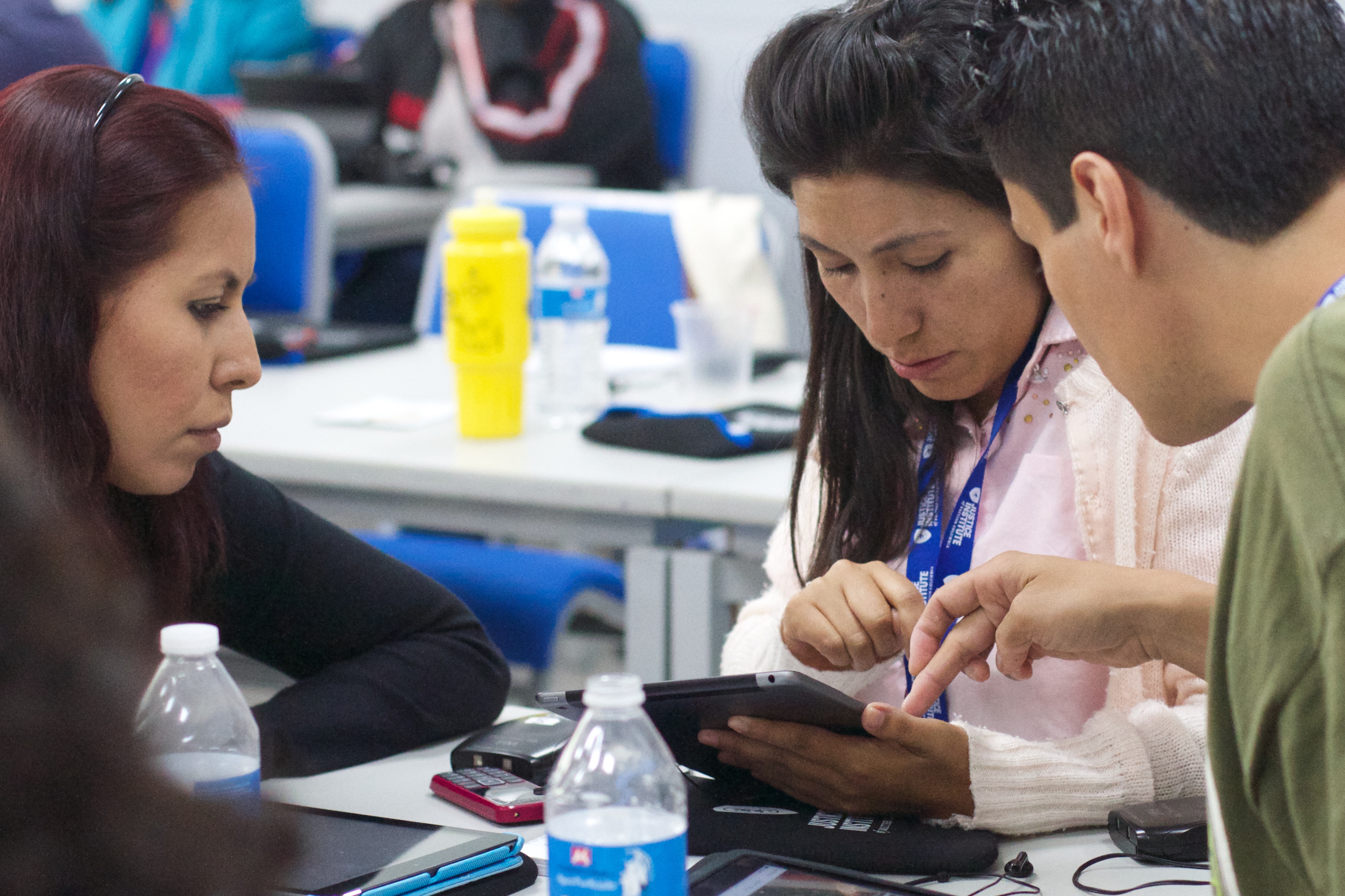 Section 4.1 reminded you of the importance of building good working relationships with your fellow research students, and with staff directly involved with your PGR journey. However, as with most other careers, networking beyond your immediate contacts is an important skill to build. In this section, you’ll consider some of the avenues available to you to develop networks across and outside your own institution. These networks will be particularly valuable to you as you seek to progress beyond your research degree, and to explore career opportunities.
5.3. Building networks across your institution
In addition to getting to know staff and students in your own Faculty, it can be really useful to look out for opportunities to network across your institution. Look out for interesting sounding research seminars and events happening in different Faculties. Although it’s tempting to focus on attending events that are of direct relevance to your research project, it is often surprising how useful it can be to hear about research taking place in a different disciplinary context- hearing from different perspectives can really enrich your work, and you will often pick up useful readings that you might not otherwise have come across. In addition, you will make professional contacts that may be useful to you in the future.
Activity 6: Building your support network
Allow approximately 10 minutes for this activity.
This activity will help you identify the people who might be able to support you during different stages of your research degree:
Question 1: Think about the people and roles described in this section. For each of the situations below, identify one or two people you would be most likely to approach for help.
| Situation | Who could help? |
| I need advice about funding. | |
| I'm worried about my relationship with a supervisor. | |
| I want advice from someone who has recently completed a similar milestone. | |
| I need to understand how a university process works. | |
| I would like feedback on whether my concerns are reasonable. | |
| I want opportunities to meet other postgraduates. |
Once you have completed the table, consider:
Question 2: Who would you be most comfortable approaching at the moment?
Question 3: Are there any particular kinds of relationship that you might want to put time and energy into developing over the next few months?
View Comment
There are no fixed answers to this activity, but you might have identified:
- Professional services staff for procedural questions.
- An independent advisor for concerns about supervision
- A PGR tutor/convenor or Director of Research Degrees for advice about progression, regulation or support routes.
- Fellow PGRs for informal advice and reassurance.
- Your supervisors for most day-to-day academic matters.
Many new researchers focus almost exclusively on their supervisory team. However, successful postgraduate researchers usually build a wider network of support. Developing relationships with people in different roles means that when challenges arise, you already know where to go for advice, and you’ve built good working relationships with the people in the best position to support you.
5.4. Networking outside your institution
As you develop your research career, you will increasingly need to demonstrate that your work is impactful and respected outside of your own institution. Developing an external network of contacts is also essential for keeping track of developments across your research area. As Gavin Brown (2021) points out:
“A very important part of research is getting to know the other researchers who also work in your area- your research community. And I don’t mean the other students in your office. I mean students and professors who might be on the other side of the world. Why is this important? Because these are people you can learn from. They will write papers very close to your interests, and thus you can learn something about how to solve your own problems, or find new directions for your work. Because these are the people who will be reviewing the papers you submit- so you should know their mindset, and predict the sort of criticisms they might make of your work. Because these are the people who are just as excited about the ideas as you are, and it’s fun to talk."
(Brown 2021, p.39-40)
So, how do you go about networking outside of your institution? Here are a couple of quick pointers to get you started:
Join learned societies
A great way to network in your wider subject area is to join one or more learned societies connected to your subject area. Your supervisors and other academic colleagues will probably have suggestions about the best ones to join.
Engaging with PGRs and supporting the next generation of researchers is a key focus for many of these organisations. You will usually find that they have a lot of opportunities for voluntary work that will help you to make good contacts in your research area and build your CV- getting involved with conference organising, joining committees, and attending events are all ways in which you can become part of the research community surrounding your topics of interest.
Attend conferences and seminars
Attending conferences and seminars, in person or virtually, is another good way of building your network. Your supervisors should be able to suggest conferences that would be good places to share your work, and to advise on potential sources of funding for in-person attendance.
5.5. Keeping track of your network
As you build your internal and external networks, you’ll want to keep track of your new contacts, build relationships and stay abreast of new developments. Professional social media is very useful here. Which platforms are in use varies significantly by subject area and national context, and over time. At the time of writing, the following networks are all popular with UK researchers:
- LinkedIn is probably the most important general-purpose networking site for UK researchers, and its importance has grown considerably as universities have become more focused on impact, employability and external engagement. It is useful for establishing and maintaining professional visibility, connecting with researchers, funders and stakeholders, publicising publications and grants, and engaging with non-academic partners.
- BlueSky is an increasingly important social media platform for many UK academics. It is mainly used for informal academic discussion, conference networking, sharing publications, and finding disciplinary communities. Adoption various enormously by discipline, but humanities, social sciences, PGR and early career researcher (ECR) communities are particularly visible at the time of writing.
- ResearchGate is also widely used, particularly in STEM, though often passively- many academics maintain a profile because publishers and repositories feed material into it, although relatively few seem to regard it as their primary networking space.
- Academia.edu is similar to ResearchGate, and is most commonly used for sharing papers, following scholars and discovering publications, most commonly in the humanities, arts and social sciences.
In many fields, discipline-specific networks are more important than generic platforms. These include learned-society and disciplinary mailing lists, Jiscmail lists and professional society forums. Once again, your supervisors and departmental colleagues will usually have a good sense of the platforms, lists and sites currently in use in your subject area.
Activity 7: Building your professional network
Allow approximately 15 minutes for this activity.
This activity will help you think strategically about your professional network and identify practical next steps to help you expand it.
Think about your current professional network. For each category below, list at least one person, group, organisation or community that belongs in that category.
| Category | Current contact(s) |
| Fellow post-graduate researchers. | |
| Academic staff outside your supervisory team. | |
| Researchers at another institution. | |
| Learned societies or professional associations. | |
| People working outside academia who may be interested in your research. |
Now consider the following questions:
- Which category is currently strongest?
- Which category is currently weakest?
- Which single new connection would be most helpful for your development over the next few months?
- What is one realistic action you could take over the next month to strengthen your network?
View Comment
There is no ideal network structure, and your answer will depend on your discipline, career stage and aspirations.
Many postgraduate researchers discover that their networks are concentrated around their supervisors and immediate peers. While these relationships are important, it is also valuable to:
- Build connections across your institution.
- Engage with researchers at other institutions.
- Participate in learned societies and conferences.
- Connect with people outside academia who may be interested in your research.
Professional networking works best when approached as relationships-building rather than self-promotion. Small, consistent actions, such as attending a seminar, joining a learned society, introducing yourself to another researcher after a talk, or connecting with colleagues on a professional platform, often have a greater long-term impact than intensive networking efforts carried out only occasionally.
6. Conclusion
This unit has encouraged you to reflect on your previous professional relationships and consider how your relationship with your supervisors will differ.
You have considered the roles and responsibilities involved in student–supervisor relationships and thought about how to navigate changes, disruptions and difficulties with these relationships. You have also considered the importance of building other professional and peer relationships during your research degree.
Now let's move onto Unit 4: Intellectual Property and Copyright for Researchers.
7. References
- Brown, G (ed.) 2021, How to Get Your PhD: A Handbook for the Journey, Oxford: Oxford University Press. Available from: ProQuest Ebook Central. [12 August 2026].
- Churchill, H. and Sanders, T. (2007) Getting Your PhD: A Practical Insiders Guide. London: SAGE
- O’Dell, L., Alvarez Puente, I., Bowes-Catton, H., O’Connor, G., and Tipi, N. (2026) 7 steps to equity for disabled doctoral students: recommendations from Disabled Students UK and The Open University. Available at: https://ukcge.ac.uk/resources/resource-library/7-steps-to-equity-for-disabled-doctoral-students-recommendations-from-disabled-students-uk-and-the-open-university(Accessed: 11 August 2026).
- Rugg, G. and Petre, M. (2004) Unwritten Rules of PhD Research. Berkshire: McGraw-Hill Education.
- University of Liverpool (n.d.) Postgraduate Research Code of Practice Available at: https://www.liverpool.ac.uk/study/academic-quality-and-standards-division/academic-codes-of-practice/postgraduate-research-code-of-practice/ (Accessed: 11 August 2026)
- University of Liverpool (n.d.) Postgraduate Research Code of Practice- Appendix 2. Available at: https://www.liverpool.ac.uk/media/livacuk/tqsd/code-of-practice-on-assessment/appendix-2-PGR-CoP.pdf (Accessed: 11 August 2026)