Intellectual property and copyright for researchers
| Site: | OpenLearn Create |
| Course: | Becoming a professional researcher |
| Book: | Intellectual property and copyright for researchers |
| Printed by: | Guest user |
| Date: | Friday, 20 November 2026, 12:50 PM |
1. Introduction
This unit addresses issues of intellectual property and copyright as they relate to your research degree. Sections 1–4 are concerned with identifying, protecting and exploiting your own intellectual property. Sections 5–8 are aimed at helping you to understand how and when you can use third-party content in your research.
The content of this unit relates to skill descriptor 3.5 (Research integrity and ethics) of the Vitae Researcher Development Framework (RDF).
After completing this unit, you should be able to:
- Explain what intellectual property is, how ownership and assignment work, and how the main forms of protection differ.
- Identify the main provisions of UK copyright law under the Copyright, Designs and Patents Act 1988, also known as the CDPA, and the limits of copyright protection.
- Apply copyright and licensing principles when preparing a thesis or other research outputs for publication.
Estimated study time for this unit: 3 hours and 15 minutes.
2. What is intellectual property?
Intellectual property (IP) is the generic term given to something unique that has been physically produced through intellectual creation. It is important to note that an idea alone does not create IP; you must express that idea in a fixed form- for example, in a book, a film or a product.
Examples of research outputs that are considered IP include:
- Inventions (patentable or not)
- Know-how (new knowledge)
- Methodologies
- Research data
- Educational/training materials and tools
- Databases
- Questionnaires
- Modelling tools
- Solutions to technical problems
- Design/artistic products
- Software.
The IP can belong to people, organisations or businesses and it can be licensed, sold or transferred. In some cases, IP may be owned by more than one party.
Activity 1: Your research outputs and IP
Allow approximately 5 minutes for this activity.
Can you think of any examples of IP you have already created or will plan to create? What form will they take? Do you think it is important to identify and manage your research IP?
View Comment
You may have already gathered some research data, planned some questionnaires, or you may even have ideas for an invention that could be patented. Whatever made your list of IP examples, it is important to think about what you have already, what you will have in the future and how they can be managed.
2.1. Ownership of IP
Postgraduate researchers (PGRs) may be asked, upon registration, to assign any IP generated during the course of their research to their university, and there is a very good reason for doing this.
Institutions can only allocate resources to IP that it owns and controls. For IP that can be exploited commercially, assigning your IP to your university gives you and your research university support. Technology with a commercial opportunity will be protected, where applicable, and the cost of exploitation underwritten by your university. Inventors of IP will share in the income that is generated after direct costs. If your university decides that it cannot exploit your technology or continue to maintain a patent, the researcher may request a ‘release of invention’.
It should be noted that copyright in your scholarly work, such as journal articles, personal notes, books and monographs is owned by you, the researcher. However, the copyright materials directly related to your research, such as laboratory notebooks, will belong to your university. Any IP generated outside of the university in a personal capacity, without the use of their equipment or facilities, is also owned by the researcher.
Arrangements vary between institutions, so always check your own university’s research degree regulations and intellectual property policy for the position that applies to you.
2.2. The importance of identifying and managing your research IP
Why is the identification and management of IP important?
Let’s look at some frequently asked questions regarding identification and management of your research IP.
Why is the identification and management of IP important?
As a researcher, you will be expected to disseminate the new knowledge you generate during your research and potentially exploit appropriate IP for social and economic benefit where there is an opportunity to do so. Here we will look at some of the things you will need to consider.
What contractual obligations does the university have in relation to research IP connected to my project?
Your university may be subject to legal obligations connected to research funding which dictate ownership and rights to use the IP. You need to be aware of any such obligations and how they affect how you can use the outputs both during and after the research. Your university IP team will be able to advise if your research is subject to any such conditions.
What type of licences will I need to use?
The licences you use will depend upon the type of research IP you have generated. In general, open-source licences are required for any software-related IP and Creative Commons licences should be used for non-computer-based IP. If your research is funded, for example, by UK Research and Innovation (UKRI), check before choosing the most appropriate licence to ensure you are compliant with your funder’s policies. It is equally important to check the licences for any material you intend to incorporate into your research to ensure you have the necessary permission to use them.
What issues related to confidentiality will I need to consider?
There are various reasons you may be required to maintain confidentiality in relation to your research, for example if your research involves collaboration with an industry partner, they may expect you to agree to conditions restricting you from sharing any commercially sensitive information. In addition, you will need to ensure that confidentiality agreements are in place before you reveal any details of your research to a third party, or to any fellow researchers in other institutions.
How can I ensure regulatory compliance?
When sharing and using your research, you will need to ensure that you are complying with applicable regulations such as Subsidy Control and Export Control. Subsidy Control relates to a specific party gaining an unfair competitive advantage through access to IP generated from publicly funded research. Export Control relates to possible risks of research (including materials, technologies or information) being transferred outside of the UK. Your university IP team will be able to advise you regarding compliance.
2.3. Research innovation and IP support for researchers
Your university may have a department or team dedicated to supporting business innovation, IP and commercialisation of research. They may be able to support you if your research will generate IP of commercial value by:
- Ensuring appropriate arrangements for IP are set out in research and commercial contracts.
- Early identification of potential opportunities and issues.
- Identifying background (IP existing prior to the commencement of a project) and foreground IP (new IP generated from a current project).
- Protecting patentable technologies before disclosure.
2.4. Commercial exploitation of IP
Your university will assess the commercial opportunities for IP by considering costs, return on investment and timescales.
In some cases, institutions may impose confidentiality obligations on the researcher if they are involved with the creation of an invention that could be patented or if there is commercially sensitive information involved. This is to protect the university and the inventor as the early disclosure of information could potentially stop the project from progressing.
IP can be commercialised in the following ways by:
- Licensing the IP to an external organisation in return for payment. This can be an exclusive or non-exclusive licence, and the payment could be in the form of royalties or other payment arrangements.
- Assigning, transferring ownership of the IP to a beneficiary for a lump sum payment, or a combination of a lump sum and royalties.
- Creating a ‘spin-out’ company. This is where an external company is set up to exploit the IP.
Activity 2 - Is commercialisation for you?
Allow approximately 10 minutes for this activity.
This activity invites you to think through the commercial potential of your research IP.
Question 1: Make a copy of the table below. Try to list three to five stakeholders who would value, or could benefit from the results of your research. Say how they would benefit from it, and what the commercial gains might be.
Table 1: Commercial potential of your research IP
| Stakeholder | Value/benefit | Possible commercial gains |
Question 2: Having completed the exercise above, do you think that your research is likely to produce IP with the potential to be commercialised?
View Comment
If you think that your research may have commercial potential, think about discussing your ideas for commercialisation with your supervisor and contact your University IP team for support.
Researchers in the arts, humanities and social sciences sometimes assume that commercialising IP is something that only applies to STEM researchers, and that their own IP will not be of commercial interest. However, this isn’t always the case. Arts, humanities and social science researchers should be encouraged to think through the possible applications of their findings. For these researchers, commercialisation may take the form of ‘knowledge exchange activities’ where your work may be beneficial to other research organisations, charitable bodies, the general public, hospitals and more.
Commercial benefit may come through patenting an invention or leveraging trade secrets through confidential discussions with industry.
3. Protecting IP
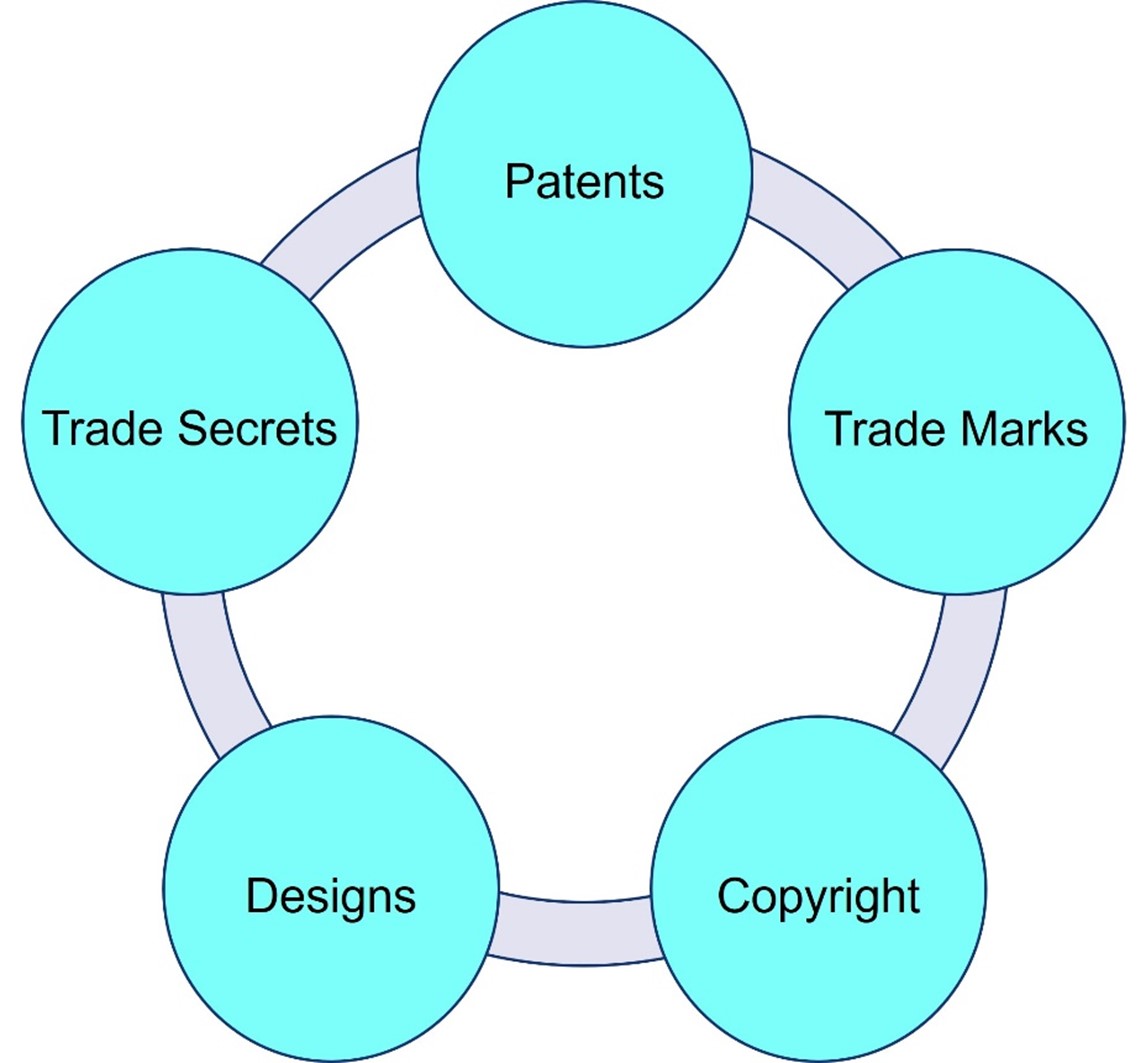
How can we protect research IP? There are several mechanisms to use for the protection of IP in the UK. These are patents, trade marks, copyright, designs, and trade secrets. One or more of these protections may apply to your research IP. In the UK there are two main laws that govern matters relating to IP- the Copyright, Designs and Patents Act 1988 (CDPA) and the Patents Act 1977. These acts outline the legal rights of IP owners and help to define the ways in which an IP owner can control the use of their creations.
Patents: Patents protect inventions and a formal process of registration is required. These protections last for a duration of 20 years (see section 3 for further details).
Trademarks: Trade marks cover items such as logos, slogans, themes by colour or shape (an example of this is the well-known and distinctive product shape and coloured labelling of a cola bottle), domain names and music. These are signs that will distinguish certain goods or services from one another. An example of this would be your university’s logo. Like patents, registration of trade marks are required and have a duration of 10 years in the UK before they must be renewed to ensure the registration stays enforced.
Copyright: No formal registration is required for copyright. Once an item has transferred from an idea to a physical format, the copyright will belong to that creator. For example, this can be:
- A book.
- A report.
- Architectural plans.
- Music.
- Video.
- A play.
- A photograph.
As copyright protection is territorial, the UK has different copyright laws to other countries in the world. In general, copyright protection will last for 70 years after the death of the last author of a work, but this varies depending on the type of work it is.
Designs: Registered designs would cover shapes or configurations in 3D and/or patterns or ornamentation in 2D. Designs must be registered and are protected for a minimum period of 5 years up to a maximum of 25 years.
Trade Secrets or 'Know How': As this is related to IP that is unpublished, classified or secret, no formal registration of this knowledge is needed to protect it and is unlimited duration. The onus will be upon the IP owner(s) to keep this knowledge safe and to ensure confidentiality.
Activity 3: Which IP protection is right for your research?
Allow approximately 10 minutes for this activity.
Patents, trade marks, copyright, designs and trade secrets can help to protect different elements of your research. Can you think what each element may protect in your research? Make a copy of the table below and consider each protection in turn.
Table 2: Protecting your research
| Protection | Example of how this might protect my research IP |
| Patents | |
| Trademarks | |
| Copyright | |
| Designs | |
| Trade secrets |
View Comment
You may have listed items such as:
- Copyright – literature, art, sound recordings, broadcasts, software, multimedia.
- Patents – inventions.
- Trade marks – brands, names, logos, colours.
- Designs – product appearance.
- Trade secrets – know-how
As you have seen in this section, there are several ways of protecting your IP. In the next section, you will learn more about how to protect your IP using patents.
4. Patents: What are they?
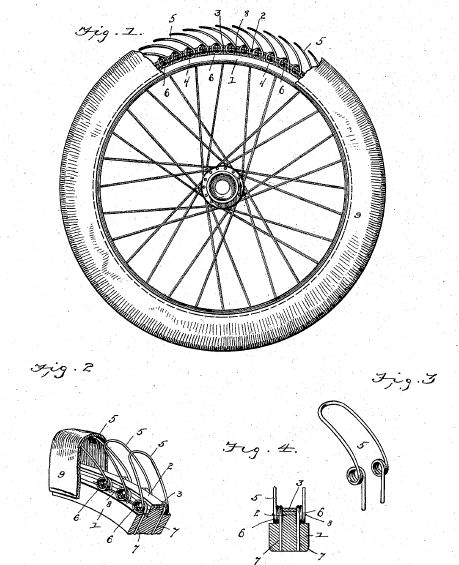
A patent is a legal document that protects inventions. It protects both the features of an invention and the processes that go into creating it; how it works, and why, the materials used to make it, and how it is made.
To obtain a patent, fees must be paid to the Intellectual Property Office in each territory where protection is sought. The cost of a patent can vary depending on how many territories you wish to register your patent in. A patent can be registered to the UK-only, or other countries around the world. Patents are also subject to annual renewal fees.
Once a patent is granted, it provides the inventor with the ability to use legal action to stop others from stealing the invention. They will not be able to make it, use it, distribute it or sell it without permission (by licence) from the inventor. This protection lasts for a period of 20 years from the date of filing the patent application, also known as the priority date, as along as annual renewal fees are paid.
4.1. Patent criteria and filing
We know that patents are for inventions and technological innovation, but what are the criteria for a patent to be viable?
Firstly, inventions must be ‘novel’. They must be completely new and not known anywhere in the world prior to the date you file for a patent. The invention must also have an ‘inventive step’ that is not obvious to either the casual observer or anyone that may have some knowledge in the subject area. Additionally, the invention must also have a ‘technical effect’, where there is a capability for it to be applied to industry.
Activity 4: To patent or not to patent?
Allow approximately 10 minutes for this activity. Make a separate note of your response to the following question. You should then View Comment.
Question:
Now that you know what a patent is, can you think of any items that cannot be patented?
View Comment
Patents cannot be granted for:
- A scientific or mathematical discovery, theory or method.
- A literary, dramatic, musical or artistic work.
- A way of performing a mental act, playing a game or doing business.
- The presentation of information, or some computer programs
- An animal or plant variety.
- A method of medical treatment or diagnosis.
- Anything which is against public policy or morality.
5. Intellectual Property Summary
The first half of this unit has introduced you to some key ideas about intellectual property (IP) as it relates to your research as a postgraduate research student. You should now have the basic knowledge you need to understand if your research will require the support of your university IP team to exploit your IP. You will now understand what patents are, how IP protections work, and the importance of managing and identifying IP within your research.
So far, you have been thinking about how to protect and exploit your own IP. You will now move on to consider the issues of copyright that arise when you make use of other people’s content in your work.
6. An introduction to copyright
Copyright is one of the five main intellectual property rights covered in this unit. The others are patents, trade marks, designs, and trade secrets, as introduced in Section 2. Copyright law in the UK is mainly guided by the Copyright, Designs and Patents Act 1988 (CDPA).
Copyright protection applies automatically as soon as an original work is created and recorded in some fixed form, such as written down, filmed, or saved to a file. There is no formal process or registration system, and the work does not need to have been published. Additionally, there is no quality threshold. The work protected by copyright simply needs to be original, it does not need to be a masterpiece. Copyright is owned by the author in the first instance, although it can be contractually reassigned to another person or a company in some circumstances. Essentially, copyright is an economic right giving the owner exclusive control over the use of their work and how others can use it, including any commercial benefits that may result in the sharing of their work.
You may be wondering how this relates to you and your thesis. When you submit your completed thesis to your university’s institutional repository, you will have full responsibility for all the content contained within your thesis. This may be content you own, for example images or audio recordings you have taken in the field, or content that other people own, sometimes referred to as third-party content. You may be expected to sign a declaration that you have all necessary copyright permissions in place before you publish your thesis in your institutional repository.
It is likely your university has an open access policy that mandates all theses to be published open access either immediately, or after an embargo period to allow all to read, access and download your research. With open access in mind, it is important to think about the copyrighted content you will use and how to properly acknowledge copyright holders to avoid infringement. If you do not seek permission from copyright owners or use openly available content (such as works released under a Creative Commons licence), your thesis might be published incomplete, with all affected content redacted; this may affect how your work is read and understood.
6.1. What is protected by copyright?
There are several different types of work that can be protected by copyright law, all of which must be original:
- Literary works – prose, poetry, tables, compilations, songs, computer programmes, databases.
- Musical works – musical notation.
- Dramatic works – plays, scripts, screen plays, mime, choreography.
- Artistic works – painting, drawing, sculpture, jewellery, graphics, architectural designs, buildings, maps, charts, carvings, photography.
Some works may include elements that are not original but include one or more original protected forms of work in them, such as:
- Films
- Sound recordings, including songs
- Broadcasts
- Typographical arrangements
- Performances
- Databases.
Activity 5: Layers of Copyright
Allow approximately 10 minutes for this activity.
Think of your favourite film or TV programme. How many kinds of copyrighted work do you think is contained within it? Make a note of all the different kinds of work you can.
View Comment
You may have listed sound recordings and songs from the film or programme’s soundtrack, the script, photographs, paintings, choreography, poetry, or perhaps another film being shown in the background! Works such as films and programmes can have layers of copyright protection to support each of the original works involved, as well as content the film makers do not own the copyright to.
6.2. Duration of copyright protection
The duration of copyright protection is different for each kind of copyrighted work. The duration also differs geographically. Only when the duration of copyright expires can a work be considered ‘out of copyright’ or in the public domain. The following durations apply to copyright in the United Kingdom:
- Original literary, dramatic, musical and artistic works: the life of the author plus 70 years.
- Sound recordings: 70 years from the year of release.
- Films: the life of the last four authors plus 70 years. The four authors are the director, the author of the screenplay, the author of the dialogue, and the composer of any original soundtrack.
- Broadcasts: 50 years.
- Typographical arrangements: 25 years.
Some other intellectual property rights have their own separate durations. Registered designs last up to 25 years, and the database right, which is distinct from copyright in a database, lasts 15 years.
Note the term runs from the author’s life rather than the owner’s. Someone who acquires copyright by assignment does not extend the term by outliving the author.
Activity 6: Working out when copyright will expire
Allow approximately 10 minutes for this activity.
Question:
Now you know the duration of copyright protection for the various types of work, when do you think the rights will expire for Elvis Presley’s song ‘Suspicious Minds’?
View Comment
Even though the King of Rock and Roll died many years ago, copyright in musical recordings lasts for 70 years after the year of release (1968), so the recording rights expire at the end of 2038.
There are separate rights in the music and the lyrics, which have protection until 70 years after the author’s death, so these will need to be cleared with the respective rights holders – usually the music publisher, agent or estate.
Elvis died on 16 August 1977 but he did not write the song, Mark James did. This American songwriter died on 8 June 2024 and his work will continue to have copyright protection until 2094, 70 years after his death.
6.3. Out of copyright
Copyrighted works that have expired the duration of protection are sometimes referred to as public domain works. As copyright law is territorial and differs from country to country, works classified as public domain in one country may be in copyright in another. The copyright law you apply to a work is generally the country you are creating that work in. For the purposes of your research at a UK university, UK copyright law applies.
It may be the case, for example, that you find copyrighted works you wish to use on a USA-based website tagged as public domain. It may be so in the US, but the work could still be in copyright in the UK. In this instance you will need to apply UK copyright law and seek permission to use it if required.
Activity 7: Terms and Conditions
Allow approximately 10 minutes for this activity.
Go to a website of your choice and navigate to their terms and conditions covering permissions and copyright, or explore one of the following suggestions:
What have you discovered?
View Comment
Finding the terms and conditions of websites, and copyright terms specifically, can be difficult. However, websites that primarily host content to licence tend to make links easier to find.
If any content is available under a Creative Commons licence, there is a requirement to attribute and information about this should be in the terms and alongside the item itself or in an Acknowledgements statement or similar. This is very common for content in online museum and archive collections. You may also find free stock photo libraries have their own bespoke licences allowing the use of their content for free and without the need to credit the photographer, although it is good practice to include a credit.
Websites hosting content outside of the UK will be following the copyright law applicable to that country. For example, you may find websites stating certain items are in the public domain, but this may not be the case the UK. Always apply UK copyright law guidance to determine if your use will require permission or not. The onus is on you to decide.
6.4. Restricted acts and infringement
Copyright law can protect your work, but what does it protect your work from?
Restricted acts are the things you can do to someone’s work that could potentially infringe copyright law and cause harm or loss (financially or otherwise) to the owner if you do not have permission to use it. The most basic of restricted acts is copying. Other acts include:
- Issuing copies to the public, renting and lending.
- Performing, showing, or playing to the public, and the provision of premises or apparatus for infringing performances.
- Broadcasting.
- Adapting or translating.
- Storing in any electronic medium.
- Altering or removing rights management data.
- Overriding security systems.
- Dealing and importing infringing copies or providing the means to make infringing copies.
- Authorising infringement.
The list of restricted acts suggests it may be difficult to use someone else’s copyrighted protected work legally! However, copyright law does allow you to seek permission where possible and to utilise exceptions.
Activity 8: Using Photographs
Allow approximately 10 minutes for this activity.
You have taken a photograph of someone who contributed to your research by taking part in an interview.
Question:
Do you own the copyright in the image, and can you use it?
View Comment
As the creator of the work, you own the copyright in the photo you have taken. However, you cannot reproduce the image without obtaining the consent of the interviewee. They will need to grant you the right to use it by signing a release form or by providing you with another form of written permission. If your research is being funded, you may also need to consider their terms and conditions as they may expect certain rights to be assigned to them, rather than you.
6.5. Exceptions and fair dealing
Fair dealing applies to exceptions in UK copyright law that allow you, under certain specific circumstances, to use copyrighted works without the need to seek permission from the owner. It’s important to know what these limitations are and how your thesis will be subject to more stringent restrictions as it will be published on an institutional repository. Here are some of the exceptions:
- Personal copying for private use.
- Non-commercial research or private study.
- Text and data mining for non-commercial research.
- Reporting current events.
- Quotation, criticism or review.
- Parody, caricature and pastiche.
- Illustration for instruction.
- Instruction in film making and sound recording.
- Artwork on permanent public display.
Fair dealing can relate to a whole copyright work or part of one and is tested by asking whether your use of that work would be fair. A whole work or large part of a work may be considered ‘substantial’ and a small part of a work ‘insubstantial’. The concept of ‘insubstantial use’ will be vitally important to your thesis and will support the non-commercial research element of the available exceptions. As your thesis will likely be openly accessible worldwide, all other exceptions should not be relied upon for your thesis due to the variations in type and application from country to country. If you feel your use of a work risks infringement, always check with your university’s copyright specialist if you are unsure.
If you are using a substantial part of a copyrighted work, you must seek permission. But what does substantial mean in this context?
An example of a substantial use would be the reproduction of whole images, articles and poems. Using short extracts or quotes that do not constitute a substantial part of a longer work may be copied. It is important to note that substance is down to quality and quantity; for example, you must not give away the essence of the work. Some institutions and publishers use rules of thumb to help judge whether an extract is likely to be insubstantial. These figures have no legal force, since UK fair dealing has no fixed word limits and every use is judged on whether it is fair in the circumstances, but they give a sense of the scale usually considered reasonable. Your own institution may publish different figures, and you should always check with your university’s copyright specialist rather than relying on these alone:
- Around 400 words of continuous prose from a book.
- 800 words of discontinuous prose from a book, providing no extract is more than 300 words.
- No more than two lines of poetry – with caution.
- Around 10% from a journal article or newspaper article, or a shorter work that is no longer than 300 words in total.
Check with your university’s copyright specialist for guidance and always ask yourself if your use will be fair. If your use of a copyrighted work has the potential to impact the copyright owner financially, or you have used more than you need to illustrate an academic point, your use may be considered substantial.
Activity 9: Substantial or insubstantial?
Allow approximately 10 minutes for this activity.
In your thesis you have decided to reproduce several extracts from Edith Hall’s 1999 translation of the play, Antigone, written by Sophocles c. 442 BCE.
Is this permitted?
View Comment
Edith Hall’s translation is a contemporary literary work and in copyright, even though the original Greek play is in the public domain. However, extracts can be reproduced if they are an insubstantial part of the copyrighted work. Be cautious about what you use and remember that the substance is in the content of the extracts as well as the length of the extracts.
7. Open Access content and how to find it
There are plenty of websites out there that offer openly accessible third-party content, free of charge. Your institution may provide a list of commonly used or institutionally-approved websites. As postgraduate researchers are not generally expected to pay for any content used in a thesis, it is recommended to use free content wherever possible. Terms and conditions of use vary, so check the terms of the website you are using and adhere to any licensing terms and conditions. Some websites have their own terms and conditions of use, or even a bespoke licence. Some older websites may only have a simple copyright statement. More commonly though, you will find websites using Creative Commons licences to manage the reuse and sharing of their content. Do make sure that the terms of use are compatible with the work you are producing and any funder requirements you may have.
Having so many openly available third-party resources to choose from can be very helpful. However, some caution should be exercised. One example is Wikipedia. This is a well-known resource, but before using content from sites that host content provided by users worldwide, you should try to verify the source of the content and check any licences attached. It is not uncommon to find copyright-infringed content on sites like this. Using a tool such as TinEye, or your browser’s reverse image search engine, may help you to discover the actual source of the content and help you to avoid infringement. Always apply a common sense approach.
7.1. Creative Commons
Creative Commons (CC) licensing is a relatively recent innovation in the field of copyright. It represents an attempt to find a middle ground between copyright and public domain status; one which protects authors and inventors, while also allowing people to make use of their creations.
A CC licence is an internationally recognised and legal suite of copyright licences which aims to allow the free flow of creative ideas whilst giving the author greater control over how their work is reused by others.
So, what does this mean for you as a researcher? It means that you have access to substantial amounts of material of all kinds that you are free to re-use, re-purpose or re-version without fear of infringing copyright, if you follow the terms of the licence.
Having a good understanding of CC licences will help you when applying them to your published work and will help you to know how to use third-party copyrighted content licensed in this way. There are six main types of CC licence, ranging from the most permissive (CC BY), to the least permissive (CC BY-NC-ND). Each licence begins with ‘CC BY’ – ‘CC’ stands for Creative Commons, and ‘BY’ stands for ‘attribution’ – meaning that the user of the CC licensed work must provide an appropriate credit to the copyright holder.
When using content licensed by CC, it is important to always follow the terms and conditions found on the licence. In addition to crediting the copyright holder, always include a URL (weblink) to the source of the content, and a URL to the licence itself. For licences that permit modification of a work, you must also indicate if you have made any changes to the original.
7.2. The Licenses
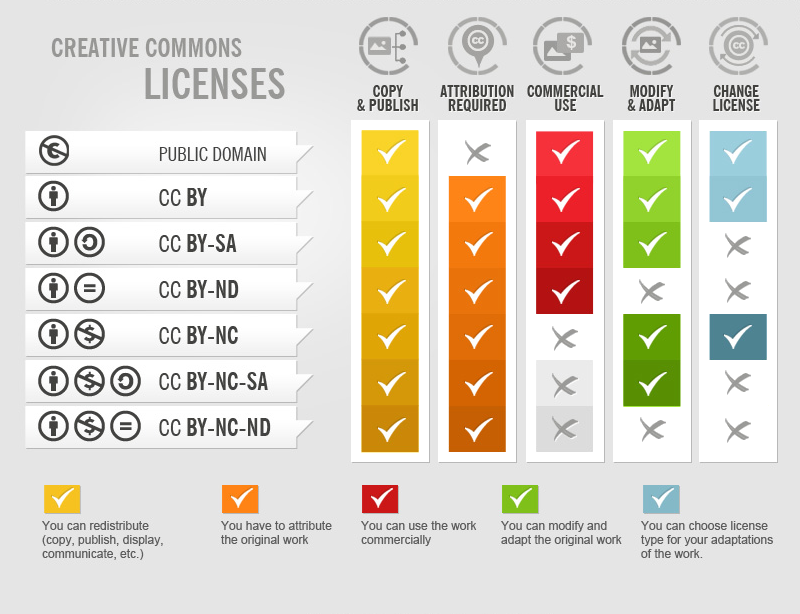
In addition to the six licences, there is also a tool (CC0) which enables you to put your creations into the Public Domain. This is a ‘no-rights reserved’ tool and not considered to be part of the main suite of CC licences. It is unlikely that you will be required to apply CC0 to your publications. However, knowledge of this licence may be useful should you wish to reuse third-party content released under this licence. Crediting the copyright holder is not a requirement of this licence. But it is recommended that you do so to protect yourself from any potential copyright infringement and to adhere to UK copyright law.
The CC BY ‘attribution’ licence allows you to use the licensed work, as long as you credit the creator of that work. You can copy the work, publish it, use it for commercial purposes, modify and adapt it, as well as change the licence type when you share it.
SA means ‘ShareAlike’. The CC BY-SA licence allows you to build upon an existing work, modify it, adapt it and share it, even for commercial purposes. Whatever you create and publish as a result of any modifications you make must be shared by you under the same licence terms. For example, you cannot modify an image under this licence and upon publication restrict it with a non-commercial licence.
The ND ‘NoDerivatives’ element of the CC BY-ND licence prohibits you from modifying and adapting a work and sharing that adaptation. This includes modifications such as resizing images and removing text, watermarks and logos from documents. The work can only be shared in its original form. You are permitted to share for commercial purposes.
A work licensed CC BY-NC cannot be shared, modified or adapted for commercial purposes. This is the ‘NonCommercial’ element. You can modify the work and change the licence when you share it for non-commercial purposes only.
The CC BY-NC-SA licence is more restrictive as it combines both the non-commercial and ‘ShareAlike’ elements of the CC licences. Works under this licence cannot be used for commercial purposes and can only be shared under the same licence. You can make modifications and adapt the work.
Finally, CC BY-NC-ND is the least permissive of all available licences. Modification is not permitted and works cannot be shared for commercial purposes. Sharing works under this licence must be under the same licence type, it cannot be changed.
7.3. How to find Creative Commons-licensed content
One of the ways to find CC-licensed content is via the Creative Commons search portal, which allows you to search for content with the specific licence type you need via a number of different platforms.
Activity 10: Searching for CC Content
Allow approximately 15 minutes for this activity.
Using the CC search portal, browse for some audio, video or image content that matches your research topic or current general interest. Look at the licence type applied and the terms and conditions – what do you need to consider when using and referencing these works in your research?
View Comment
When using CC content in your research, you need to be mindful of the type of licence that applies to that particular piece of content and ensure that you are using it in ways that comply with any restrictions, like:
- If and how you can modify and adapt the content.
- Whether it is suitable for commercial use.
- The requirement to attribute all CC licensed content.
You should ensure that you include the title, author, source and license (with a link to the license deed) in the attribution for any CC licensed content that you use in your work.
In this section you have learned about the different types of open access content available to you and have begun to explore potential sources for this material. You know what Creative Commons licensing is and how the licences work, and you have thought about sources of open access content. Your university may have an approved list of resources to explore to help you find what you need; ask for their guidance if required.
8. Moral rights, ethics and sensitive subjects
In the context of UK copyright law, moral rights refer to a set of rights granted to creators of original works to protect non-economic interests in their creations. These rights are separate from the economic rights granted under copyright law. They are designed to safeguard the integrity of the work and to recognise the personal and reputational interests of the author. In the UK, moral rights are recognised in the Copyright, Designs and Patents Act 1988 (CDPA).
Moral rights cannot be assigned or transferred, and they persist after the death of the author, usually for the same period as copyright, i.e. 70 years. However, authors can choose to waive or not assert their moral rights if they wish to do so.
These rights are protected by statute, and this means the risk arising from a potential breach of moral rights is different to a breach of copyright law. Infringement is a breach of statutory duty and may result in the award of damages or even an injunction.
Moral rights apply to literary, dramatic, musical and artistic works, attributed to the author. They can also apply to film, but only to the director.
8.1. The four moral rights
There are four main moral rights. They are listed here with their relevant section numbers of the CDPA 1988:
S77-79 Attribution: This right allows the author to be identified as the creator of the work whenever it is published, exhibited or performed. The author has the right to be acknowledged by name or pseudonym.
S80-83 Integrity: This right safeguards the author’s right to object to any derogatory treatment of their work. This may be manifest in a distortion, modification or mutilation of their work that could be detrimental to their honour or reputation. It ensures that the work is presented as intended by the author, and it allows the author to prevent any alterations that may damage the integrity of the work.
S84 False Attribution: This right protects authors from having their name falsely attributed to a work they did not create. It allows the author to object if someone falsely claims authorship of their work, protecting their reputation and preventing any misattribution.
S85 Privacy: This right protects those who have specially commissioned work, such as wedding photographs or films created for private purposes, giving them the right to prevent the photographer from sharing those photos widely without express permission.
8.2. Ethics and sensitive subjects
When you are using materials you have sourced online in your work, you need to consider the ethics of what you are doing, particularly if you are using the material in relation to a sensitive subject.
Activity 11: To use or not to use...
Allow approximately 5 minutes for this activity.
A fellow postgraduate researcher is preparing a conference paper and has decided to use an image of a person they found using Google Search in their presentation. The image is not released under a Creative Commons licence, and the source of the image is from a blog post. The topic of their paper is drug use and rehabilitation.
Should they use it? What factors lead you to this conclusion?
View Comment
The researcher is at risk of infringement here. The owner of the image could object to the derogatory treatment of their image in relation to a sensitive subject which may portray them as a drug user, with the potential of causing harm to their reputation. This is turn may have an impact on the researcher’s academic output and reputation if they are forced to remove the offending material.
9. Your thesis
When you complete your thesis, in most circumstances you will be expected to upload your thesis to your university’s institutional repository. Your thesis might become publicly available and released under a Creative Commons licence. If your thesis has any underlying data, these might also be made available in a repository provided by your institution.
It is your responsibility to obtain permission to use third-party content in your thesis.
The types of third-party content you are likely to use in your research (i.e. an image) will mostly be straightforward with a singular layer of copyright protection. You should ensure that you have the necessary permissions in place in advance of your submission to publish your thesis. It is highly recommended to plan and seek permission early to avoid the need to redact any content. Log your progress and think about the open access nature of your research from the start as it will help to make the process easier.
9.1. When is permission not required?
Copyright permission is not required if:
- You are using an insubstantial amount of a work (see Exceptions and fair dealing).
- The work is out of copyright.
- The copyrighted work is released under a Creative Commons licence.
- The work is released as Open Access content in another way, e.g. an Open Government Licence (OGL) or a GNU licence (sometimes used for software and data).
- The terms and conditions or copyright statement declares the content is released for anyone to use.
Did you know that data does not have copyright protection? However, there is copyright protection in the way that data is presented.
You may not need to seek permission to use a table, chart or illustration if you are able to redraw and adapt it, for example, by transferring the data from a table into a pie chart. The adaptation you make must be sufficiently different to the original version. Simply changing colours, fonts or size is not an acceptable adaptation. You should always acknowledge the source of the data and indicate that you have redrawn it. The acknowledgement could begin ‘Adapted from…’.
9.2. When is permission required?
If you intend to use content that is not available in the ways described above, you will need to seek permission from the copyright holder. If we take the example of a substantial copyright work, such as image files, there will be a variety of sources for researchers, from physical books and journals, online articles and books, galleries, libraries and archives (online and physical collections) to private collections.
To obtain permission, you may need to contact the copyright holder, agent, publisher or estate directly by email or post. Seeking permission early is important as response times will vary greatly. Some publishers can take months to reply to requests. Make use of the Copyright Clearance Center (aka CCC or RightsLink) where you can as this will help to speed up the process. For journal articles you may see a link to this website on the article page. You may also see RightsLink on book publisher webpages. If you have to send an email or a letter directly to a copyright holder, consult with your university’s copyright specialist to ensure you ask for the correct level of rights your need for your thesis.
For sources of information relating to text-based and artistic content, the following websites may help you:
- Writers Artists and Their Copyright Holders (WATCH)
- The Society of Authors
- The Design and Artists Copyright Society (DACS).
It is not always easy to find out who to contact for permission. For instance, what if the author of that poem or artwork you want to use has died but it is still in copyright? Who do you contact? Sometimes the publisher may help you. Sometimes you may have to contact the author's estate, and sometimes you may not be able to find any details at all. You may need to become a detective to track down that source!
9.3. When permission is denied
If you are unable to obtain permission, all is not lost. Can you find a suitable alternative or can it be removed completely? If the third-party content is essential to your thesis, your university may give you an option to submit two versions of your thesis :
- A redacted version that will be publicly available.
You will be asked to confirm you have all necessary permissions in place before submission, which indicates you have done all you can to clear copyright permissions and you have not knowingly infringed the rights of any copyright holders. If you do need to redact material from your thesis, seek guidance from your university’s copyright specialist or library team. Make your best effort to clear copyright permissions as early as possible and always be prepared to redact if necessary.
9.4. Considerations for researchers: A checklist
Before you use any third-party content, especially if you intend to write a section of your work around a specific item, use the following prompts as a checklist. Remember, using a third-party copyrighted-protected item without permission or without the necessary licences in place is poor academic practice and can lead to problems in the future.
- Ignorantia legis neminem excusat!: Ignorance of the law does not excuse!
- Budget: if the copyrighted work you want to use costs money and you do not have funding to cover these kinds of expenses, can you find a cheaper or free alternative? Do you need the item at all? Can you create your own image? Use only what you need to demonstrate your academic point.
- Permissions and timescales: it can take time to obtain permission from copyright holders. You can expect responses from a couple of days to a few months depending on the copyright owner. Publishers can be notoriously slow to respond. Work this into your plans.
- Repository processes: review your university’s repository and Open Access policies. Find out if your thesis will need to be made available under a Creative Commons licence. Can your chosen third-party content be shared under a Creative Commons licence?
- Layered content: are you using artwork, music or film that contains layers of copyright protection or multiple copyrighted items within? Make sure you identify the content you need to clear copyright permission for and seek permission for all of it.
- Sensitive material: if you plan to use sensitive imagery or include film, audio and transcripts that contain sensitive content, make sure you think about the ethics of what you are using and why. Ensure you have the correct permissions in place and consent forms if required.
- Wider or commercial use: are you planning to use your research beyond your degree, or considering a commercial use for your research? This might be for a conference, journal article or a book, for example. Thinking ahead and securing permissions that go beyond thesis use will save you time in the future.
- Generative Artificial Intelligence (GenAI): if you intend to use content in your thesis created by GenAI tools, check very carefully the terms and conditions of the tools you are using and most importantly, consult with your university’s copyright specialist or research team before doing so. Check any GenAI policies your university has, as you may need to declare AI use in your thesis.
10. Conclusion
Having completed this unit, you should now have a basic understanding of intellectual property and copyright law as they relate to your research degree.
The first half of the unit introduced you to key information about how to identify, protect and exploit your own research intellectual property. You should now have a good grasp of what patents are, how IP protections work, and know how to identify and manage IP within your research.
The second half of the unit was concerned with copyright. You should now have a basic understanding of copyright law, and the main provisions of the Copyright Designs and Patents Act 1988. You should understand how Creative Commons licensing seeks to balance the rights of creators with the needs of users, and where to find CC-licensed content to use in your research. You will have considered what moral rights are and how to avoid infringing them. Finally, you should be aware of when and how to seek permission to use copyrighted material, what to do if permission is denied, and how to apply copyright and licensing principles when preparing a thesis or other research outputs for publication.
Now let's move on to Unit 5: Conclusion.
11. References
- Creative Commons (2023) Creative Commons: The commons belongs to us all. Available at: www.creativecommons.org (Accessed: 16 July 2026).
- Copyright, Designs and Patents Act 1988, S77-S85. Available at: https://www.legislation.gov.uk/ukpga/1988/48/contents (Accessed: 16 July 2026)
- Opensource.org (2026) Open Source Initiative – the steward of the Open Source Definition. Available at: https://opensource.org/ (Accessed: 16 July 2026).
- Project Gutenberg (2023) Project Gutenberg. Available at: https://www.gutenberg.org/ (Accessed: 16 July 2026).
- The Design and Artists Copyright Society (2026) DACS. Available at: https://www.dacs.org.uk/(Accessed: 20 July 2026).
- The Patents Act 1977. Available at: https://www.gov.uk/government/publications/the-patents-act-1977 (Accessed: 16 July 2026).
- The Society of Authors (2026) Society of Authors. Available at: https://societyofauthors.org/(Accessed: 20 July 2026).
- TinEye (2023) TinEye Reverse Image Search. Available at: https://tineye.com/ (Accessed: 16 July 2026).
- Vitae (2025) The Vitae Researcher Development Framework. Available at: https://vitae.ac.uk/vitae-researcher-development-framework/ (Accessed: 30 August 2026)
- Writers Artists and their Copyright Holders (2026) WATCH. Available at: https://norman.hrc.utexas.edu/watch/index.cfm (Accessed: 20 July 2026).