Course review
| Site: | OpenLearn Create |
| Course: | CONTINUOUS PROFESSIONAL DEVELOPMENT (CPD) FOR MODERN CAREERS |
| Book: | Course review |
| Printed by: | Guest user |
| Date: | Monday, 23 November 2026, 6:21 AM |
1. Course summary & next steps
Purpose
Wrap up the course and guide you towards continued development.
Learning objectives
By the end of this module you will be able to:
- Summarise the key learning from the course
- Plan how to continue CPD after the course
- Use your CPD ecosystem as a living system
- Prepare for future roles
12.1 Summary of key learning
| Module | Key idea |
|---|---|
| Modules 1-2 | CPD is a continuous cycle that serves individuals, employers, professional bodies and educators |
| Module 3 | benefits are personal, professional and organisational, and strongest when evidence-based |
| Module 4 | a good log records outcomes, applications and competency links |
| Module 5 | frameworks and maturity levels give direction and a common language |
| Module 6 | evidence turns claims into credible cases |
| Module 7 | gap analysis shows where to focus |
| Module 8 | a development plan joins development, competency, CPD and evidence |
| Module 9 | CPD underpins appraisals, PDPs and showcasing achievement |
| Module 10 | small habits and regular reviews sustain CPD |
| Module 11 | your portfolio demonstrates it all |
12.2 How to continue CPD
- Keep your weekly logging slot
- Run your monthly plan review and quarterly competency check
- Re-run the gap analysis at least once a year or when your role changes
- Keep adding evidence as you work
- Share what you have learned: mentor others, present internally, write a short post
- Check your professional body's CPD requirements each year, since they change
12.3 Your CPD ecosystem
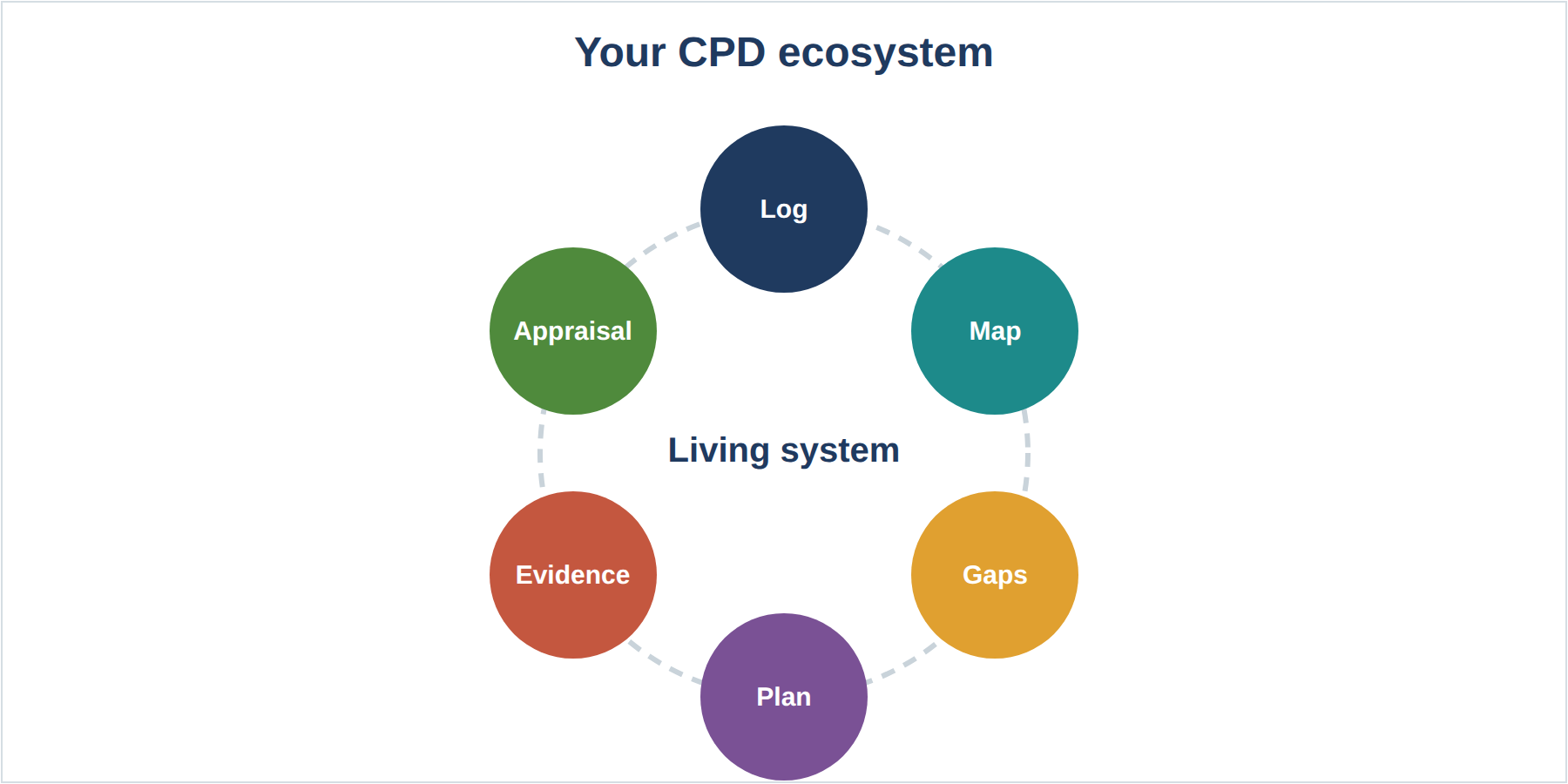
| Element | Role in the system |
|---|---|
| CPD log | records what you have done and learned |
| Competency map | shows where your capability stands |
| Gap analysis | identifies what to develop next |
| Development plan | turns gaps into scheduled action |
| Evidence vault | proves your claims |
| Appraisal pack and reflections | communicate it all to others |
12.4 Preparing for future roles
- Look ahead: read job descriptions and frameworks for roles you might want in 2-5 years
- Gap-analyse against them, even informally
- Build transferable competencies such as communication, leadership, problem-solving and data literacy
- Grow your network through professional bodies, communities and mentors
- Keep your evidence portable so it travels with you if you change employer
- Consider recognition: membership, chartership or certification when you are ready
Key takeaways
- CPD is a lifelong habit supported by a simple, connected system
- Your portfolio is a living asset; keep it current
- Planning ahead, with evidence, makes career moves more confident
Activities
Activity 12.1: Write a 12-month CPD commitment statement (30 minutes)
Write 250-400 words setting out your commitment for the next 12 months. Include:
- Your top 2-3 development goals and the competencies they support
- The types of CPD you will undertake
- Your routine for logging, evidence and review
- Who will support or hold you accountable
- How you will know you have succeeded
- A date for your first review
Sign and date it, and add it to your portfolio.
Congratulations. You have completed Continuous Professional Development (CPD) for Modern Careers. Keep your CPD ecosystem alive, review it often, and let it guide your next steps.