Use 'Print preview' to check the number of pages and printer settings.
Print functionality varies between browsers.
Printable page generated Monday, 21 September 2026, 12:43 AM
3 Supporting clients through transitioning
3 Supporting clients through transitioning
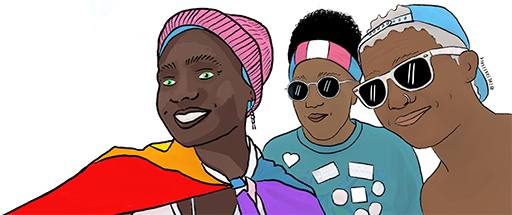
In order to support trans clients, it is important to understand ‘transitioning’. To consider this further, try the next exercise.
 Activity 3.1: What is transitioning?
a.
Accurate
b.
Inaccurate
The correct answer is b.
Discussion
In the past, stories about trans people have been overly focused on the external changes they may go through, whereas the internal experience of trans people has been largely invisible. Trans people were referred to with unhelpful phrases like ‘born in the wrong body’ or ‘sex change’, ‘used to be a girl’ or ‘wants to be a man’. These ways of thinking focus on the trans person’s body and the idea that changing their body is an integral part of being trans, and that the unhelpful notion that they ‘become’ who they are through a medical process.
a.
Accurate
b.
Inaccurate
The correct answer is a.
Discussion
It can be more helpful to understand trans as something a person just is. Accessing medical transition can be thought of as one possible accommodation for a trans person – a way for them to be able to live more congruently, comfortably and authentically. However, different trans people will need different accommodations, and not all trans people will require or want to access medical transition.
There is no one way to transition
Trans communities are diverse, and each trans person needs different accommodations in order to thrive. While UK culture might be preoccupied by a person’s genitals, trans people themselves might feel more incongruence with other aspects of their body, such as their facial hair, voice, hips, body fat, hairline, or chest, for example.
Or, they may be comfortable with their body, but experience incongruence with the identity people assume from that body. Changing their name and pronouns may be more important and meaningful to them, for example, and other people’s accommodation (or not) of this is more psychologically supportive than any medical process.
 Lesson
Don’t assume what transitioning might mean for a trans person – ask.
3.1 Supporting clients around medical transition
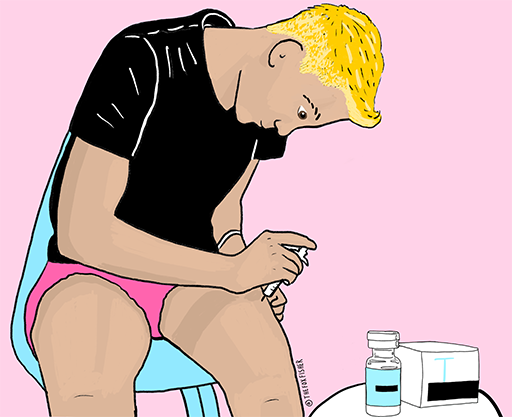
Activity 3.2: Patrick and Jake talk about hormones
In this activity you will watch a further extract from Patrick’s first session with Jake, in which he is gathering information in order to better understand Patrick’s transition experience.
As you watch the video, note down any questions you might have about what is being discussed. Also consider how Patrick talks about his experience of trying to access gender-transitioning-related hormones through the NHS.

Transcript
Were there terms used by either Jake or Patrick that you did not understand? Test your understanding by pairing the following terms with their definitions.
Two lists follow, match one item from the first with one item from the second. Each item can only be matched once. There are 3 items in each list.
Self-medicating
Bridging prescription
Bloods
Match each of the previous list items with an item from the following list:
a.Blood tests. In the context of medical gender transition, this means blood tests to establish that hormone and other biological indicators are at safe/appropriate levels
b.This allows a GP to consider giving, as a harm reduction strategy, a gender transition hormone prescription to a patient who is self-medicating while waiting to access hormones through NHS specialist services
c.Taking gender-affirming hormones without a prescription (private or NHS), e.g., accessing hormones from a friend or from an overseas pharmacy
- 1 = c,
- 2 = b,
- 3 = a
One thing that you may have noticed is that Jake is evidencing a deep understanding of Patrick‘s experience – he checks out safety aspects (e.g., is he having regular blood tests to check that there are no negative health outcomes from his self-medicating), he offers Patrick potentially useful information that might help his situation (e.g., about bridging prescriptions) and empathises from a place of understanding about the emotional distress caused by waiting. Having an understanding of what a trans client might be going through in relation to accessing trans healthcare helps them feel safe and understood.
3.2 Supporting clients who are waiting to transition
As a therapist working with a trans client, it is likely you will be supporting them through periods of ‘stuck-ness’, enforced waits, and lack of resolution. There are many reasons for waiting to transition, including feared or experienced rejection from family, work and the wider public.
But for those who want to access medical transition services and who cannot afford private care, the issue of waiting and stuck-ness is massively exacerbated by the fact that the adult waiting time just to the first (assessment) appointment for gender-affirming medical treatment on the NHS is 4–5 years. It can take months – or years – beyond that to access hormones.
Research shows that increases in waiting times for medical treatment (in general) are associated with increased anxiety, depression and poorer quality of life (Gagliardi et al., 2021) and that waiting for years for trans-affirming care causes significant distress (Grant et al., 2025; see also Zaccaro and Fagg, 2024). In order to understand more about what the ICTA project found out about the impact of waiting to access gender-affirming treatment, try the following activity.
Activity 3.3: The impact of waiting for ICTA participants
In the following activity, match the quotes with the impact of waiting.
Two lists follow, match one item from the first with one item from the second. Each item can only be matched once. There are 4 items in each list.
Feeling life is passing by
Loss of relationships
Loss of psychological resilience
Suicidality
Match each of the previous list items with an item from the following list:
a.‘I can’t form relationships, I can’t find any kind of a relationship, because I’m still in this interim if you like, this ridiculous half world that I inhabit at the moment. I’ve lost, certainly feel like I’ve lost seven years… I’ve lost two relationships because I’m not transitioned.’
b.‘Even if you consider yourself to be pretty resilient, and if you think of yourself as a resilient person and that your mental health is strong, it still gets exhausting, and the wait is just interminable…’
c.‘I’m going to be dying of old age before I actually… get my first appointment… and I’m just wanting to live, I feel like I’m in limbo waiting. Time’s running out but I’m not getting anywhere… which is really frustrating.’
d.‘[If I hadn’t been able to get private healthcare] I'd be dead. Straight up, I'd be dead… It's the underside. It's the side that people like to pick on when they're talking about transgender health, you know, these people are crazy, they're all suicidal. No. The lack of treatment for many dealing with gender dysphoria, it's abhorrent, for lack of a better term. It is absolutely abhorrent. Those feelings I had in late 2016, I never ever, ever want to experience again. If I hadn’t have gone with [private service A], I'd be dead.’
- 1 = c,
- 2 = a,
- 3 = b,
- 4 = d
Discussion
The quotes from ICTA participants suggest that the multi-year waits to access medical transition healthcare through the NHS creates a considerable mental health burden for trans people. Therapists can offer psychological support while people wait but this does not solve the problem. It may help to:
- Signpost clients to community resources that can support them while they wait.
- Support clients to get on the Gender Identity Clinic (GIC) waiting list at the earliest possible opportunity if they are considering transition (they can always change their mind later).
3.3 Patrick’s experience of waiting
Given that waiting can be such a pervasive part of the experience of transitioning, it is useful to consider how you might work with the experience of waiting in counselling. Try the next activity to explore this further.
Activity 3.4: Patrick and Jake – session 12
 Pause for reflection
It can be difficult for therapists to stay with a client’s ‘stuck-ness’ and sense of powerlessness, and if we aren’t careful, we can move away from empathising into minimising or unhelpful forms of solution-finding.
What helps you as a practitioner stay with and empathise with the impact of external factors a client cannot change?
What has helped you personally when you’ve been waiting for or impacted by things outside of your control?
3.4 Supporting clients who receive a gender dysphoria diagnosis

In the UK, a psychiatric diagnosis of ‘gender dysphoria’ (DSM-5, 2013) is necessary to access trans-related healthcare or a Gender Recognition Certificate (GRC) which provides legal recognition of gender. That a psychiatric diagnosis is required to access gender-affirming medical treatment is something that has been strongly argued to be both invalid and stigmatising of trans people (Ashley, 2021; Davy and Toze, 2018; Inch, 2016; Campbell et al., 2015; Suess et al., 2014; Drescher et al., 2012). The phenomenon of ‘gender euphoria’ – a feeling of congruence, rightness and wellbeing, related to gender affirmation, is also now being discussed as a more positive reason to facilitate transition (Beischel et al., 2021).
Therapists, might find themselves supporting trans people waiting for, attending, or after attending an NHS Gender Identity Clinic. In the ICTA study, while some participants had positive experiences of diagnosis, many more found the process of diagnosis added to their mental health burden. To find out more about this try the next activity.
Activity 3.5: The impact of diagnosis for ICTA participants
Match the quotes with the impact of waiting.
Two lists follow, match one item from the first with one item from the second. Each item can only be matched once. There are 4 items in each list.
Questioning during diagnostic process is experienced as intrusive
Repetition of questions is experienced as feeling doubted
Questions experienced as aggressive
Diagnostic process experienced as having to prove they are trans
Match each of the previous list items with an item from the following list:
a.‘It was an interview, it was a chat but obviously the questions were designed to find out am I seriously transgendered or am I just somebody that wants some, just likes putting a frock on once every, you know. Am I serious about this? Am I going to, is it flavour of the month? I’m transgendered today and I’m something else tomorrow?’
b.‘She was asking the same questions in a different way. Not entirely but, each time… I assumed it was because she wanted to check that my story stayed the same over a period of time. You know, I was describing the same symptoms, the same experiences, the same feelings when asked in different ways.’
c.‘At the beginning, they want to know everything. They want to know all about your masturbatory history and all that kind of stuff. That was deeply humiliating. That happened in the first two sessions that I had there before they put me onto the doctor to start me on hormones and stuff. I mean I don’t have a problem talking about this kind of stuff now, but it felt very invasive at the time.’
d.‘It was like coming at me really hard, questioning me, asking me why I’m doing, asking why questions, which are quite challenging questions to ask, and much more aggressive questioning than any of my previous experiences… I looked at it afterwards and I thought to myself what they’re doing is they are identifying your commitment shall we say. That’s what I felt they were doing, is identifying your commitment to doing what you’re doing by being very challenging.’
- 1 = c,
- 2 = b,
- 3 = d,
- 4 = a
Discussion
Across the ICTA data, a common theme was that the process of a gender dysphoria diagnosis was experienced as having to prove their trans identity to a hostile, typically cis clinician. Negative experience of trans-affirming care is also reported in other UK-based research e.g. White et al., 2023; Wright et al., 2021). This echoes a wider theme in our culture – the pervasive doubting of the validity of trans identities (Bettcher’s ‘denial of authenticity’, 2009) and is an example of a microaggression (Freeman and Stewart, 2019). As discussed earlier, microaggressions create a mental health burden.
Lesson
Understand that the experience of transitioning – including the experience of accessing gender-affirming medical treatment – often involves experience of discrimination and may evoke significant psychological distress – further reasons to seek psychological therapy.
3.5 Supporting clients around the impacts of transition delays
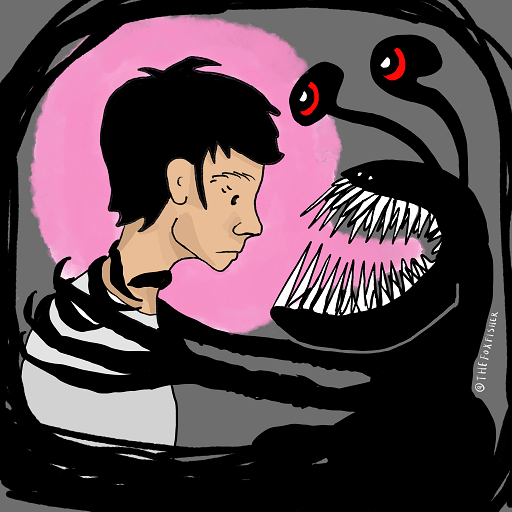
You have learned about the research that demonstrates that transitioning improves mental health (and the ICTA data supports this). However, the ICTA study highlighted the converse of this, something that is often absent from the conversation on trans issues – the negative impact of not transitioning. To consider this further, try the following activity.
Activity 3.6: Assessing risk for Patrick
There are times when support to access physical transition healthcare are more pressing than psychological interventions in reducing risk – therapists need to be aware of the limitations of therapy and ways they can signpost and advocate for clients.
It may be useful to question the underlying assumption that doing nothing in the case of an expressed trans identity is a neutral act, as the following quotes from ICTA participants suggest:
‘Over the years it just got pushed down more and more, and created a nice mask for myself, with all the usual uber macho things… It was all a mask, none of it worked. In the end something had to give. And it was either embrace what I am or just end it.’
Summary
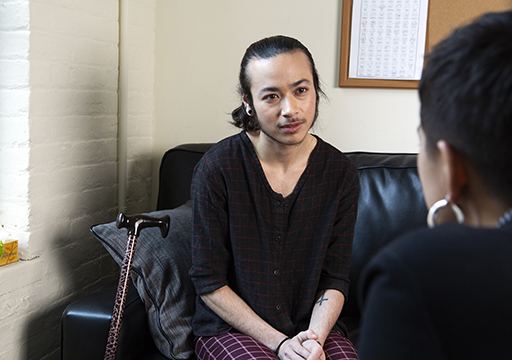
In this section, we looked mainly at the mental health impacts of medical transition and what is helpful for therapists to know in order to support clients who are waiting for, going through or have experienced medical transition. The next section further unpacks what good therapeutic support for trans clients might look like.
Now, continue to 4 Creating a safe space for trans clients.