Use 'Print preview' to check the number of pages and printer settings.
Print functionality varies between browsers.
Printable page generated Tuesday, 13 October 2026, 4:20 AM
What is safeguarding and why is it needed?
Getting started
Welcome to this short course.
Before we begin it is important to agree some key terms. Throughout the course we talk about children and adults. Children refers to anyone aged under 18 years, adults are anyone aged 18 and over.
You start the course by considering what is safeguarding and why is it needed.
Watch this video which shows a grassroots tennis club and one of the players, Felipe. As you watch the video, think about whether Felipe has been harmed or abused?
Trigger warning: The following animation contains content related to abuse in sport which some viewers may find difficult or distressing. |

Transcript
In the first part of this course, you discover:
- What safeguarding means.
- What safeguarding includes.
- Why safeguarding is so important.
 |
| Everyone has the right to play sport in a safe and supportive environment, especially children |
In this part of the course, you find out what safeguarding means, what it includes and why it is important. You will also see how you can identify risks to athletes’ or players’ wellbeing before something bad might happen. |
In the following section, you explore what safeguarding is and then consider how it applies to Felipe.
What is safeguarding?
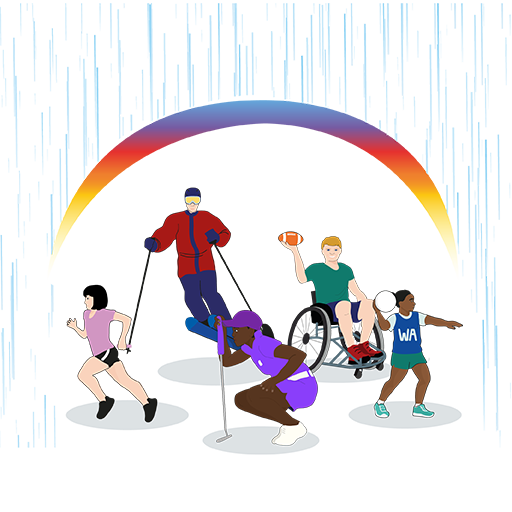
‘Safeguarding’ is sometimes used as an umbrella word: but what does it include? Let's first explore the meaning of safeguarding.
Safeguarding – in simple words
Have you heard the word safeguarding before? What do you think it means?
You may have heard ‘child protection’ used before. Safeguarding and child protection are closely linked but they mean different things.
Safeguarding means: (click on the prevention and response images for a definition)
Quite often the term ‘protection’ or ‘child protection’ is used to describe the response – the action taken when there are concerns for a child (or adult) who may be suffering harm or abuse or is at risk of suffering harm or abuse.
|
| Who is responsible for providing safe sport environments? |
Everyone in sport has a duty to make sure activities are delivered as safely as possible. This is part of our safeguarding responsibility. |
Next, we're going to look again at the grassroots tennis club featuring Felipe.
What does safeguarding mean in practice?
Has Felipe been harmed or abused?
Think about this question for a moment while watching the video again.
Trigger warning: The following animation contains content related to abuse in sport which some viewers may find difficult or distressing. |
Transcript
Click on the whistle image to find out more.
The appointment, training and management of Felipe’s coach, even if he is a volunteer, should be in line with clear safeguarding standards. For more information, visit www.safeinsport.org
Later in the course, we'll look at the importance of agreed behaviours in preventing and addressing poor practice.
|
| What is safeguarding about? |
Safeguarding is about the things we can do to prevent Felipe’s coach behaving like he does, and the way we respond if we find out an athlete or player like Felipe is at risk of harm. |
Next, we'll move on to consider ‘what does safeguarding include?’
What does safeguarding include?
Safeguarding includes much more than just addressing poor practice.
 Which of these fall under safeguarding?
a.
Proper recruitment processes are used when employing people to work with children.
b.
Ensuring all staff and volunteers agree to clear codes of conduct and ethical standards.
c.
Making sure equipment and facilities are safe to use, in line with local health and safety guidelines.
d.
Having medical or allergy information for all participants when you take them away on trips.
e.
Making sure risk assessments are carried out to provide safe transport and accommodation arrangements when travelling.
f.
Having rules about which uniform to wear for training or competitions.
g.
Making sure you have enough appropriately trained adults to supervise children.
h.
Ensuring safeguarding requirements are included in all contracts with local service providers.
i.
Not training in extreme weather conditions.
j.
Having clear rules about the use of social media and communicating with children and adults.
k.
Having clear rules on the safe use of changing rooms and showering facilities.
l.
Having a requirement for athletes or players to do three media events per year.
The correct answers are a, b, c, d, e, g, h, i, j and k.
Feedback
Safeguarding includes all of the statements above except for:
- Having rules about which uniform to wear for competitions. Although the uniform needs to be safe, the colour or design are not safeguarding issues.
- Having a requirement for athletes or players to do three media events per year. Although media appearances need to be managed well, the requirement of three per year isn’t a safeguarding issue.
|
| Did you notice that general health and safety policies are also part of safeguarding? |
This is because, if we do not follow general health and safety policies, participants’ wellbeing is put at risk. |
You've now seen how broad our safeguarding responsibility is. You're doing well and we're now halfway through the first part of the course.
Next, we'll think about why there is a call for safeguarding action in sport now.
Why is safeguarding in sport important?
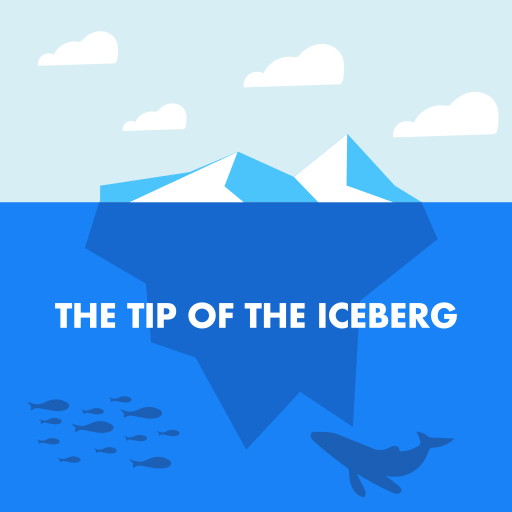
There is a saying about ‘the tip of the iceberg’ only showing a small part of what is underneath the water.
Is this true for abuse and harm in sport, and society more broadly?
Sport is an important part of daily life for many people. However, there are unfortunately many examples of where people have suffered abuse in sport.
Let's now look at three news headlines that are based on true events.
Why is safeguarding important?
Click on the image below and use the arrows to read through the headline stories. Then complete the activities that follow the headlines.
|
| Are talented athletes or players more at risk of suffering abuse or violence? |
Research shows that sport is not free from the problem of abuse or violence. It's also clear that the risk of abuse rises as a athletes or players progresses up the talent ladder and that children themselves can also cause harm to other children, especially bullying, but also peer-to-peer sexual harassment and abuse. This suggests that what we see in the news is only ‘the tip of an iceberg’. |
The failure to safeguard not only hurts individuals, but it can also undermine the growth of your sport and its integrity. We all need to think about how to put safeguarding at the centre of what we do in sport.
Can we identify risks before something bad happens?
Is identifying different risks key to safeguarding?
An important part of safeguarding is to identify risks before they happen. Once you know the risks, you can then plan how they can be prevented and managed.
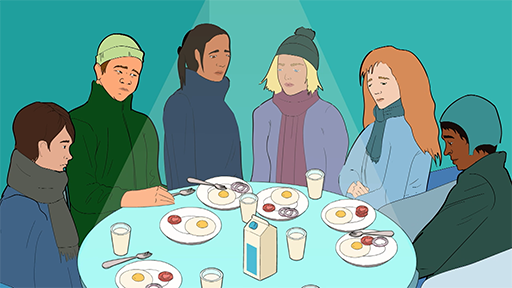
Living conditions at a youth training camp
To explore identifying and preventing risks a little more, let's watch another video scenario.
While you watch the video, think about these two questions:
- What three risks to the athletes or players at the youth training camp can you identify?
- How might these harm the athletes or players?
Trigger warning: The following animation contains content related to abuse in sport which some viewers may find difficult or distressing. |
Transcript
You may have identified many types of risks and harm that could arise at the youth training camp. Some of the risks include, but are not limited to:
These are all forms of what is called ‘neglect’ of the children in the sports club.
|
| What comes next if I identify risks? |
Once the safeguarding risks have been identified, the next step is to plan how they can be prevented or managed. The whole process is known as a safeguarding risk assessment. We will explore risk assessment in more detail later in the course. |
Working through the first part of this course might have raised some concerns for you. If you have any concerns, report them straight away to your local sports Safeguarding Lead or to your local police and child protection services. This topic will be covered in more detail in the final part of the course.
Well done, you've almost completed the first part of this course.
Closing thoughts and main messages

As we finish this first part of the course, you can see why safeguarding is needed and why we all need to act now.
|
| The four main messages to take away from this first part of the course |
|
In the next part of the course, we explore managing risks a little further.
We'll also discover how our approach to safeguarding is shaped by our life experiences. You may be surprised how this is such an important part of understanding safeguarding.
Your welfare
You may have your own lived experience of harm and abuse, and may find some of the content in this course difficult and upsetting.
Please make yourself aware of the support services that are available to you through your manager, your organisation or within your community, so that you know how to access this support if you need to.
Now go to the second part of the course.