Use 'Print preview' to check the number of pages and printer settings.
Print functionality varies between browsers.
Printable page generated Tuesday, 6 October 2026, 10:17 AM
Week 1: Introducing the autism spectrum
Introduction
By the end of this week you should be able to:
- evaluate and update your own knowledge of autism
- express a general overview of autism and why it is considered a spectrum
- understand different ways of gaining evidence and insights into autism
- appreciate some different experiences of autism
- understand key milestones in autism history.
Now watch the video in which Dr Ilona Roth introduces this week’s work.

Transcript
Please note: in order to earn the badge for this course, you will need to visit every page in the course, and pass the two badge quizzes in Weeks 4 and 8. The progress bar at the top of each page tracks your overall percentage of completion.
1 Your understanding of autism
In the following activities you will evaluate your own knowledge of autism.
Activity 1 What do you know about autism?
To start with, spend about 10 minutes writing some quick notes summarising your current knowledge and understanding of autism. Maybe you already know quite a bit, or maybe you know very little at all, but you will almost certainly come to this course with some ideas.
Activity 2 How accurate is your current knowledge?
Now take the interactive quiz at this link (open this in a separate window or tab):
‘How much do you know about autism?’
As you work through it, compare your own first ideas about autism with the questions and feedback. Some of the statements are known to be true or false, while for others the answer is uncertain even to the experts. Some information in the quiz is adapted from Roth et al., 2010.
Activity 3 Updating your knowledge
Now revise your notes from Activity 1 in light of the quiz feedback. Keep your updated notes to hand as you read the next section.
2 What is autism?
This section gives an overview of key facts about autism. Read it through, and add to your notes again where necessary.
Autism is considered to be a lifelong,
Autism is much more common than was previously thought. About one per cent (or one in a hundred) of people in the UK are thought to be on the autism spectrum. You may know someone with autism, or be on the autism spectrum yourself.
The exact causes are still unknown, but there is good evidence that subtly atypical brain function may lie behind the differences in thinking and behaviour. It is also clear that autism is highly
2.1 Main characteristics
The current framework for diagnosing autism identifies two main groups of characteristics. The first concerns
The second group of characteristics is ‘non-social’: autistic people tend to have narrow or unusual interests, such as acquiring lots of information about just one type of dinosaur. They often repeat the same activity, ranging from constantly rocking backwards and forwards or flicking the fingers, to always eating the same foods, or repeatedly watching the same video. These traits are collectively known as
While diagnosis is based on these social and non-social difficulties, many autistic people also have enhanced skills such as good attention to and memory for detail, or natural ability with numbers or IT. A very small proportion of individuals on the spectrum have outstanding talents in fields including art and music.
While social, language and sensory challenges may mean that an autistic person finds it hard to function in a mainstream school or workplace environment, with the right support they can flourish. Employers are beginning to realise the benefit to the workplace of attributes often associated with autism, such as mathematical and IT skills, persistence and attention to detail.
2.2 The autism spectrum
Because of the striking differences among individuals with autism, researchers and practitioners usually talk of the ‘
A proportion of people on the spectrum (up to about 50%) have profound social and communication difficulties often including little or no speech, markedly restricted and repetitive behaviour and interests, and intellectual disabilities. This variant of autism has sometimes been known as classic or
Another major group are those who have no obvious language problems and are intellectually capable or even exceptionally bright, while remaining inflexible, bound by routines, struggling to interact socially and communicate effectively. This variant has until recently been diagnosed as
Autism spectrum conditions can occur alongside other psychological and physical conditions (sometimes known as
Activity 4 Why is autism a spectrum?
Now that you have been introduced to some key facts about autism, write a few notes commenting on why it is considered to be a spectrum. For instance, how much does autism vary between people?
Answer
How do your notes compare with our feedback below? Have you included some of the same ideas?
Although people meeting the diagnostic criteria for autism share characteristic difficulties in social interaction, and the tendency to repetitive or restricted behaviours and interests, these are expressed in different ways and to different extents. One person may speak very little, while another speaks a lot, perhaps not taking the interests of listeners into account; one person may be particularly sensitive to loud sounds, while another has heavy metal music as a special interest. This variety in behaviour, and the genetic and biological variability which underlies it, has meant that the concept of autism has evolved from the original idea of a specific syndrome, to that of a spectrum.
Note that the concept of a spectrum derives from the physics of white light which is made up of an array of colours ordered from low frequencies (red) to higher frequencies (violet) as can be seen in a rainbow. But borrowing this concept has led to the misleading idea that autism is a linear scale with profoundly affected individuals at the 'low' end and less affected individuals at the 'high' end. In practice, a person with good intellectual and language skills, often known as

3 Sources of knowledge
How have your initial ideas about autism compared to what you have read so far? You may have been pleased to have your ideas confirmed, or surprised by what you didn’t know. As you will see, it is also important to think about where your initial ideas came from.
Activity 5 Information about autism: reliable or not?
Think now about the sources of your ideas about autism when you started studying this course. Did they come from articles or books you have read, films, the internet, or other sources? Spend a few minutes noting what your sources were, and for each source, how reliable you think the information would be.
Answer
Did you mention any of the following?
- the internet
- other media such as newspapers/radio
- fictional stories and films
- theatre
- television documentary
- factual books
- personal acquaintance
- published autobiographies and parental accounts of autism
- academic articles
- conferences and lectures.
Although ‘popular’ sources such as the internet, newspapers and radio can be useful, the claims they make are not subject to the same standards of verification that are required for claims based on research or clinical practice. Fictional sources such as the theatre, books and films can also be helpful in bringing conditions like autism to public attention. But there is no requirement to be ‘true’ to the condition, and directors may choose to emphasise or exaggerate particular aspects for dramatic effect. Knowing an autistic person is obviously an extremely good way to gain understanding, but since each autistic person is different, knowledge derived in this way may not be representative of everyone on the spectrum.
Much of the reliable information that we have about how and why autistic people differ from the ‘
In the next section you will read about the different methods used by researchers and clinicians to derive evidence about autism. Following that there will be some personal testimonies from autistic people and from parents.
4 Methods for understanding autism
Claims about autism should be based on the careful and balanced evaluation of evidence derived from reliable sources. There are many different ways of obtaining evidence, and no one method can provide all the answers. Key methods, as discussed in this section, typically involve studying autism from an ‘
4.1 Case studies and observational methods
The
In a typical investigation, observations of a group of autistic individuals will be compared with observations of a comparable group of neurotypical people (people without autism). The neurotypical comparison group, known as a
Other means to avoid observational bias may include an agreed observation schedule to avoid the researcher picking out just what appear to be the most significant behaviours, and ‘
4.2 Experiments
The
Say that a researcher sets out to explore memory ability in autistic people. Firstly a
The same basic framework can also help determine whether or not an intervention (treatment) is useful, by comparing changes in a group of autistic children receiving the intervention with an age- and intellectually-matched group of children also with autism, but not receiving the intervention.
4.3 Brain imaging
Much of the evidence for differences in the brain in autistic people comes from
4.4 Longitudinal studies
All the methods mentioned so far – case studies, observational studies, experiments and brain imaging – can be repeated at intervals. So, for instance, behaviours in a particular group of children may be tracked over a number of months or years. Following the progress of individuals or groups over a time period like this is called a
4.5 Twin studies
Another important method for autism research is the
4.6 Surveys and questionnaires
5 Personal testimonies
While not everyone with autism is able to describe their experiences, an increasing number of personal accounts provide insights which both complement and differ from ‘outsider’ insights. Parents may also provide deep insights which are not available without these close bonds. Remember, though, that individual accounts of autism are just that. For instance, some autistic individuals describe their thinking style as highly visual. But this does not necessarily mean that visual thinking is a general trait in autism. Next you will consider some parental and personal accounts.
Activity 6 Learning from personal accounts
Read these two passages and listen to the interview extract. Make a few notes on similarities and differences between the accounts. For instance, are the accounts given by autistic individuals or by parents? What interests and difficulties do they talk about?
Jessy’s social understanding remained, and remains, radically incomplete. Such simple lessons. ‘We can’t ask them to move because they were there first.’ The difference between irritation and hurt feelings. Making sense of people, ‘grasping the general significance of situations’. What the autistic adult, like the autistic child, finds hardest of all.
What is it like to have a mind that picks ‘remembrance’ out of the newspaper yet must struggle to comprehend the most ordinary vocabulary of social experience? What is it like to have to learn the myriad rules of human interaction by rote, one by one? By rote, because the criterion of ‘how would I feel if’ is unavailable, since so much of what pleases (or distresses) her, does not please others, so little of what pleases (or distresses) others pleases her.
I must mention that the boy loved to watch the different calendars of different rooms and then recall the numbers. He also compared them. He thus spent a lot of time, gazing at the numbers. He wanted to know what they meant. He found a kind of pattern in them. He wondered how the figures bent and straightened up, curled and sometimes broke!
Listen to the following extract from a recorded interview with Dr Wenn Lawson discussing his autism with Dr Ilona Roth (Lawson and Roth, 2011). Note that Wenn was living as a woman at the time of this interview.
Transcript
Answer
Tito Mukhopadhyay (a young boy in 2000) and Wenn Lawson (an adult) contribute their personal reflections, while Clara Claiborne Park speaks for her adult daughter Jessy.
Tito and Wenn Lawson mention passionate engagement with particular topics (calendars, numbers, insects, machines) while Clara mentions Jessy’s attention to detail.
Clara Claiborne Park and Wenn Lawson both mention problems and frustrations of understanding the subtleties of language, the rules governing social situations, and the difficulty of taking other people’s feelings into account.
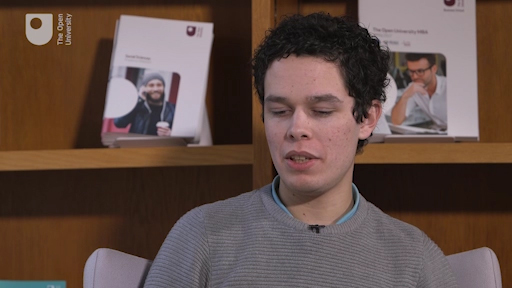
Finally, in this clip meet Alex, who will describe his experiences of autism at various points in the module.
Transcript
6 Brief history of autism: key players and milestones
We will end this introduction to autism with some historical background. Autism was first described in the early 1940s, and with developments in knowledge, the concept has been evolving ever since. To understand where we are now, it is important to know something about the key players and historical milestones of the last 8 decades.
Some of the language and concepts for describing and discussing autistic people throughout history may now seem odd or completely unacceptable. Remember, though, that ideas about autism arose within the context of psychiatric thinking and social attitudes of the time. Even if some of these ideas now seem misguided or wrong, their role in the history of autism must be understood and acknowledged.
6.1 1940s: the pioneers
Leo Kanner, an Austrian-born immigrant to the USA, pioneered the application of psychiatry (the branch of medicine that deals with the mind) to psychological problems in children. In 1943, he published one of the first known accounts of autism, based on his case studies of 11 children referred to his clinic (Kanner, 1943). He identified language problems; atypical use of non-verbal communication, such as eye gaze and gesture; narrowly restricted interests and a desire for sameness; and atypical reactions to sensory stimuli. The children’s apparent aloofness and isolation from the human world led him to coin the phrase ‘autistic aloneness’. ‘Autism’ comes from the Greek word ‘autos’ for self, and means being absorbed into oneself. To Kanner these shared features of behaviour suggested a

The second autism pioneer was Hans Asperger, a paediatrician working in Vienna during the same period as Kanner was active in the USA. In a paper published in German, Asperger described a behaviour pattern very similar to Kanner’s description, which he called ‘autistic psychopathy’ (Asperger, 1944). ‘Autistic’, as for Kanner, referred to the children’s aloneness and self-absorption, while by ‘psychopathy’ Asperger meant a psychiatric disorder affecting the personality. Asperger highlighted important features in common with Kanner’s case studies, yet the children he described seemed less disabled than Kanner’s group, generally having fluent speech and vocabulary, even if they used it oddly. They tended to talk at length about their favourite topic or interest. Rather than seeming unaware of the existence of others, their reactions to others appeared strange and antisocial. Asperger’s work was for many years not widely known outside Austria. It was only in the 1980s that psychiatrist Lorna Wing highlighted the remarkable similarity between Asperger’s and Kanner’s clinical observations and ‘Asperger syndrome’ was recognised as a diagnostic sub-type of autism. Wing also introduced the term ‘autism spectrum’ to reflect the variation on the core symptom profile.

6.2 Asperger revisited
Until very recently, many believed that Asperger shielded children in his clinic from Nazi programmes designed to ‘cleanse’ the Austrian and German population of individuals deemed to be weak, burdensome or ethnically non-Aryan (e.g. Jewish). However, very recently two researchers have shed new light on Asperger’s war-time activities (Czech 2018; Sheffer 2018). They provide convincing evidence that Asperger collaborated with the Nazi regime, despatching some children in his care to a ‘euthanasia clinic’ where they met their death. These revelations have caused widespread shock and revulsion, and at the time of launching this course, Asperger’s standing and contributions to the autism field are under searching review. There is no simple way forward. For instance, although Asperger syndrome is, for other reasons, ceasing to be a formal sub-diagnosis, for several decades, many people on the autism spectrum have accepted Asperger syndrome as their diagnosis, and embraced it as an identity. A range of views is beginning to emerge: some are arguing that Asperger syndrome should be renamed; others point out that history cannot be completely rewritten and terminology should be considered distinct from the individuals who may have originated it.
You can read more about the researchers’ findings and about different ideas for the way forward here:
https://www.spectrumnews.org/ news/ new-evidence-ties-hans-asperger-nazi-eugenics-program/
6.3 1960s: biological and socio-emotional theories of autism
Kanner initially favoured a
Many parents were extremely upset by the poor parenting theory. The psychologist Bernard Rimland noted that while his wife was an affectionate mother, their son screamed constantly and inconsolably from an early age. Rimland began to collect scientific and medical evidence to challenge Bettelheim’s approach, publishing his own biological theory of causation (Rimland, 1964). He devoted his life’s work to autism, acting as an advocate for children with autism and founding the Autism Society of America in 1965.
6.4 1960s: developments in the UK
In 1962, a group of pioneering UK parents founded the
6.5 1970s: early research milestones
Some of the first experimental studies of autism were conducted in the 1970s by the psychologists Beate Hermelin and Neil O’Connor, who developed a framework for studying many aspects of sensory, perceptual and memory processing (Hermelin and O’Connor, 1970).
Later in the 70s, Susan Folstein and Michael Rutter carried out their pioneering twin study (Folstein and Rutter, 1977). Folstein and Rutter found that when one member of an identical twin pair had autism, the second twin was more likely to have some form of autism than when the twins were non-identical. The researchers interpreted this as strong evidence that autism has a genetic basis.

6.6 1980s: an intervention to help children with autism
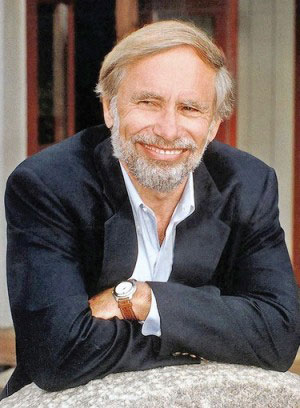
An influential early development in therapeutic
6.7 1980s–90s: a new theory of autism
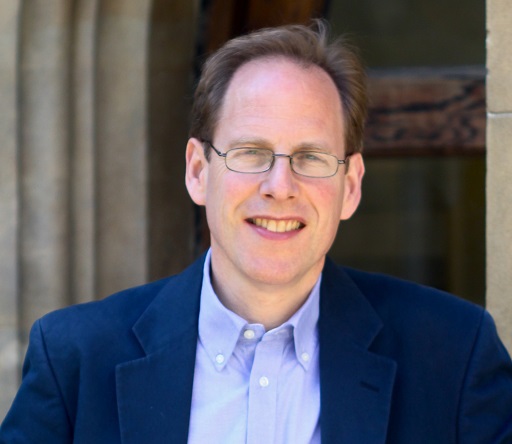
In 1985 three psychologists, Simon Baron-Cohen, Uta Frith and Alan Leslie, published an experimental study suggesting that children with autism have difficulty understanding what others are thinking and feeling – a ‘
6.8 1960s–2010s: prevalence of autism in the population
6.9 1986 onwards: autistic people speak for themselves
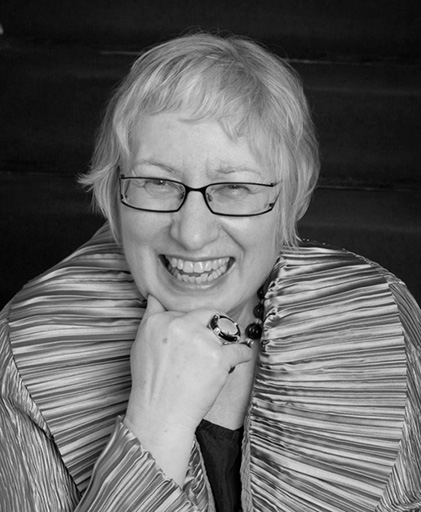
The dominant image of autism up to the 1980s was that of a person lacking the self-insight and communicative skills necessary to tell others what it is like to be autistic. This perception was challenged when an American professor called Temple Grandin published a book about her experience of autism (Grandin and Scariano, 1986). As a child in the 1950s, Temple’s delayed speech development and odd behaviour were attributed to brain damage. Her mother resisted attempts to have her institutionalised and hired a speech therapist. At school Temple benefitted from the encouragement of some wise mentors. When she was 18, her mother happened upon Bernard Rimland’s work and realised that her daughter was autistic. Temple nonetheless went from strength to strength, studying at university and becoming a professor and world expert on livestock handling, as well as a spokesperson on autism. Since Temple’s pioneering effort, many other personal accounts of autism have been published.
6.10 1990s onwards: the neurodiversity movement
Once people like Temple Grandin had found a voice and an audience, other challenges to the image of autism as a disabling medical condition started to occur.
6.11 The autism spectrum in the 21st century
The many developments in the autism field since the year 2000 make it hard to select the most important ‘players’ and milestones. You will learn more during the rest of this course. In research, advances in brain imaging and human genetics have shed new light on the brain systems and genetic mechanisms that may be involved. There is no ‘cure’ for autism, and some reject the very idea of a cure. But a range of helpful interventions is available, thought to be especially effective if started early. Revised diagnostic criteria for autism published by the American Psychiatric Association (American Psychiatric Association, 2013) addressed some of the inadequacies of earlier versions. Yet there is growing concern that autism in women may present in atypical ways and is going undiagnosed. Progress in autism rights includes, in the UK, the 2009 Autism Act, responding to an NAS campaign to protect the interests and address the needs of autistic adults. In 2014 the 67th World Health Assembly of the World Health Organisation passed a resolution supported by 60 member states to coordinate their efforts in addressing autism worldwide.
7 This week’s quiz
Check what you’ve learned this week by taking the end-of-week quiz.
Open the quiz in a new window or tab then return here once you’ve finished it.
8 Summary
This introductory week of the course has provided you with an overview of autism, highlighting key facts, and also just how much remains to be discovered. You have seen how the concept of autism has evolved since Kanner's and Asperger's early work, and in light of the variability which has emerged, how autism has come to be known as a spectrum. The importance of basing claims about autism on reliable sources of information has been demonstrated. Systematic methods such as experiments and surveys play a key role in furthering knowledge; insider accounts by people on the spectrum are also crucial in enhancing understanding. You will have noted that some ways of discussing, explaining and engaging with autism are highly contested, especially concerning whether it is a disorder, condition, or just a form of neurodiversity, and the related issue of whether autistic people need to be ‘cured’.
You should now be able to:
- evaluate and update your own knowledge of autism
- express a general overview of autism and why it is considered a spectrum
- understand different ways of gaining evidence and insights into autism
- appreciate some different experiences of autism
- understand key milestones in autism history.
Next week you will look at the different features of autism in more detail, giving particular attention to characteristic profiles of difficulties and strengths, to difficulties which may accompany autism, and to how things may change as children develop.
Now you can go to Week 2.
References
Acknowledgements
This course was written by Dr Ilona Roth and Dr Nancy Rowell.
Except for third party materials and otherwise stated (see terms and conditions), this content is made available under a Creative Commons Attribution-NonCommercial-ShareAlike 4.0 Licence.
The material acknowledged below and within the course is Proprietary and used under licence (not subject to Creative Commons Licence). Grateful acknowledgement is made to the following sources for permission to reproduce material in this course:
Images
Figure 1: Autism Spectrum
Figure 2: from: US National Library of Medicine https://collections.nlm.nih.gov/ catalog/ nlm:nlmuid-101420118-img
Figure 3: Courtesy of the Asperger Estate
Figure 4: Courtesy of Sir Michael Rutter
Figure 5 http://lovaas.com/
Figure 6: Simon Baron-Cohen; https://creativecommons.org/ licenses/ by-sa/ 3.0/ deed.en
Figure 7: © Robert Taylor
Audio/Video
Activity 6: Audio extract from interview with Dr Wenn Lawson by Dr Ilona Roth. © The Open University
Activity 6: Video: Alex talking to Dr Ilona Roth © The Open University
Every effort has been made to contact copyright owners. If any have been inadvertently overlooked, the publishers will be pleased to make the necessary arrangements at the first opportunity.
Don’t miss out
If reading this text has inspired you to learn more, you may be interested in joining the millions of people who discover our free learning resources and qualifications by visiting The Open University.