Use 'Print preview' to check the number of pages and printer settings.
Print functionality varies between browsers.
Printable page generated Monday, 5 October 2026, 10:26 AM
Introduction
Overview, aims and learning outcomes
The Healing Classrooms Continuing Professional Development (CPD) course is suitable for teachers and school staff currently supporting students from refugee backgrounds.
It covers key topics that equip staff to appropriately support students who have experienced trauma from forced displacement and conflict, such as toxic stress, trauma-informed teaching, identity informed approaches to healing, culturally responsive pedagogy and more, through the IRC’s 3-step Healing Classrooms programme. The final three units of this course will be dedicated each to a step of the Healing Classrooms programme.
This course is most relevant for UK-based educators working in mainstream education settings. If you are based outside of the UK, you are more than welcome to complete the course. You can also email IRC at healingclassrooms.uk@rescue.org to see if there is a bespoke Healing Classrooms offer in your country and language.
 Course learning outcomes
After studying this course, you should be able to:
Use a trauma-informed lens to support students from refugee backgrounds with potential trauma or toxic stress.
Help Prepare a Safe Place to Land for students by implementing key strategies that are discussed in the Healing Classrooms programme.
Help build a community for learning for students by growing cultural competence within your workplace and implementing key strategies.
Create an environment that fosters academic success for all students, utilising culturally responsive pedagogy.
Enrol on the course and a digital badge is awarded for completing each of the five units.
In addition, a course certificate is awarded if you complete all elements of the course content.
What is the International Rescue Committee?
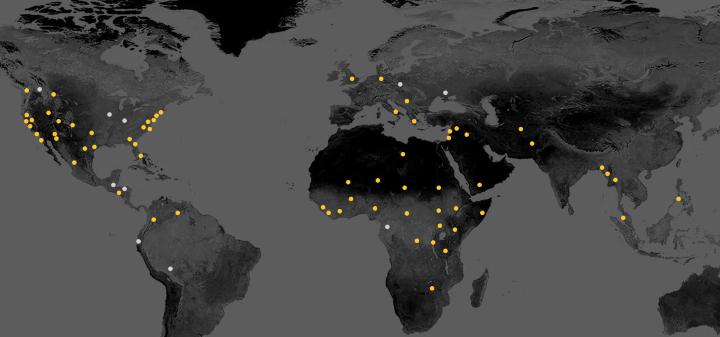
The International Rescue Committee (IRC) works in more than 40 countries and over 29 US cities to help people affected by humanitarian crises to survive, recover and rebuild their lives.
The IRC responds to the world's worst humanitarian crises, including the conflict in Ukraine and the crisis in Gaza. We help to restore health, safety, education, economic wellbeing and power to people devastated by conflict and disaster.
And we are proud to fight for a world where women and girls have an equal chance to succeed.
IRC's international commitment to education
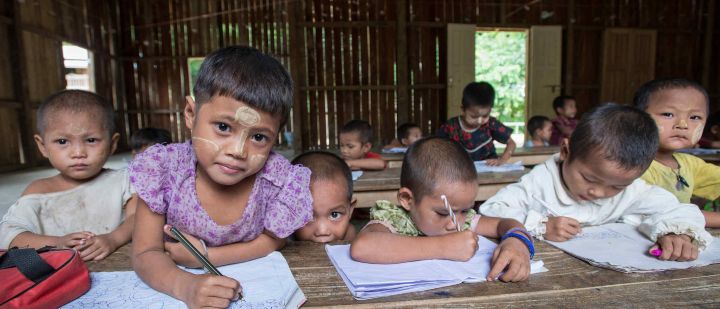
Education is the ultimate empowerment tool for children, their families and communities to survive and recover from conflict or crisis. It is what enables people to drive their own health, safety and prosperity.
Of the 62 million children out of school across the world, over half live in conflict-affected countries, yet resources for them remain low. Even for refugee families living in the United States or Germany, understanding how to access different forms of education can be challenging. Poor access to education can undermine people’s potential to improve their lives.
The International Rescue Committee provides children, youth and adults with educational opportunities that help keep them safe and learning the skills they need to survive and thrive.
What to expect from the course
This free course was designed by qualified teachers from the IRC’s UK Education Team in conjunction with IRC staff from around the globe. Built on decades of research and field-testing, the Healing Classrooms programme has been utilised in more than 20 countries both in conflict-affected zones and in resettlement countries to enable children and young people to heal from trauma and toxic stress.
The course begins with the key topics of trauma and toxic stress before moving on to the 3-step Healing Classrooms Approach, which you are encouraged to implement in your own classrooms by trialling your chosen techniques as you work through each unit of the course.
This is an interactive course with a range of activities for you to engage with, including reflections on your current practice as an educator, learning from others who have taken part in Healing Classrooms workshops led by IRC staff, and taking away key techniques to trial in your own classroom.
You are encouraged to fully engage with all activities, keep a learning journal throughout the course, and to use what you learn each week to adapt and improve your practice in your daily work in school.
Each unit will begin with a poem, written by a refugee or about refugees, which will highlight the key themes and concepts coming up. These poems, which have audio for listening, are a great resource to use in class.
You will read a series of case studies, based on real students and teachers, to gain a better understanding of the key issues students may be dealing with, the assets they may bring with them into the classroom and key theories which will enable you to better support them.
In Units 1 and 2, you will learn the basics of trauma, toxic stress, trauma-informed care and identity-informed care – theories which are each crucial to understanding the experiences of many refugees which will enable you to better support your students.
In Units 3, 4 and 5, you will learn about key concepts within the Healing Classrooms Approach – IRC’s global trauma-informed approach to educating refugee students. In the final three units, you will review case studies, recommended strategies, videos and create a bespoke, personalised action plan for you to utilise in your workplace.
In Unit 3, you will learn how to Prepare a Safe Place to Land, learning which strategies can help to build a sense of control for newcomer refugee students. In Unit 4, you will learn how to Build a Community for Learning, exploring concepts such as cultural competence and cultural humility and reviewing recommended strategies to utilise in your school.
Finally, in Unit 5, you will learn how to Foster Academic Success with your students, covering pedagogical theories such as Culturally Responsive Pedagogy and Translanguaging to help adapt your teaching and learning style to fit the needs of your students best.
Meet the team
Click on each tile below to learn more about the course authoring team.
Background – Healing Classrooms as a global strategy

The IRC’s Healing Classrooms Approach – built on 30 years of education in emergencies experience and a decade of research and field testing – offers children a safe, predicable place to learn and cope with the consequences of conflict and displacement.
Unlike many education programmes that focus solely on teaching academics, the Healing Classrooms Approach builds children’s social-emotional skills as well as their capacities to learn. This approach is based on research that shows social-emotional learning programmes improve students’ life skills, behavior and academic performance.
To help teachers, school personnel and communities create Healing Classrooms, the IRC:
Supports and trains teachers to establish safe, predictable and nurturing environments.
Creates and provides teaching and learning materials to build students’ academic and social-emotional skills.
Connects parents and caregivers with schools.
The Healing Classrooms Approach originated in 1997. It was the brainchild of IRC staff in the CRRD (Crisis Response, Recovery and Development) team who saw a need for robust teacher training for educators in refugee camps as a key method to help children to heal.
The Healing Classrooms Approach is based on the fact that children who do not feel safe cannot learn. Their brains are stuck in survival mode, and they are focusing on monitoring potential threats above all else. In order for children to make friends, to progress in their studies and to heal from any trauma they have experienced, they need to be in safe spaces where there are trusted adults they can seek out if they need support.
Here in the UK, Healing Classrooms training sessions have been running since 2022 and educators across all ages from early years foundation stage (EYFS) to university have taken part. IRC's team of former primary and secondary school teachers have adapted Healing Classrooms to ensure it fits our country context and the needs of educators here in the UK.
Healing Classrooms are spaces where children and youth can develop across these five areas – click on each number to learn more.
3-step Healing Classrooms programme
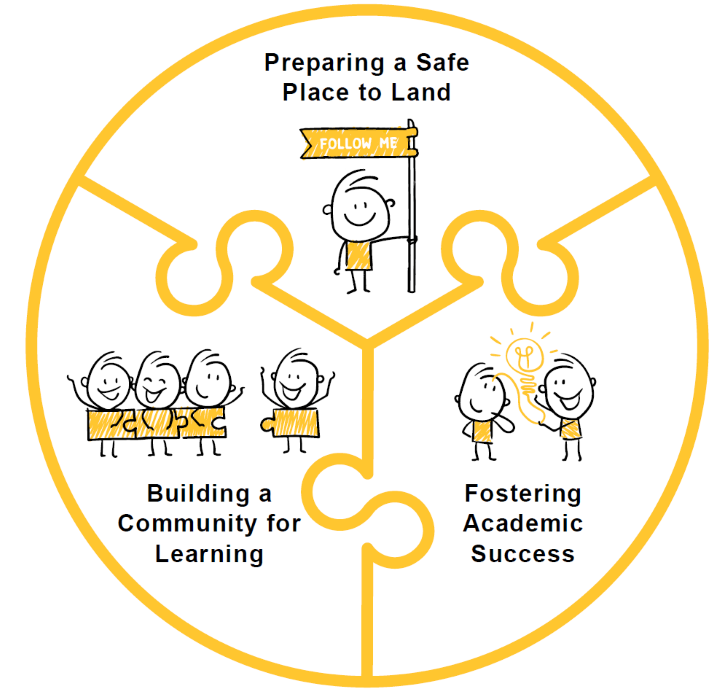
In the UK, Healing Classrooms is broken down into three steps:
Step 1: Preparing a Safe Place to Land
This step focuses on creating a sense of control and self-worth for students.
Step 2: Building a Community for Learning
This step focuses on creating a sense of belonging and meaningful relationships.
Step 3: Fostering Academic Success
This step focuses on creating intellectually stimulating environments for all students by using culturally responsive pedagogy (CRP).
Additional IRC resources and online training workshops
If you are interested in joining one of our free Education Officer-led sessions online, please visit our booking page. We offer free whole school training or open session where you can join groups of educators from across the UK to complete the course together. Email healingclassrooms.uk@rescue.org for more information or check out our website.