Use 'Print preview' to check the number of pages and printer settings.
Print functionality varies between browsers.
Printable page generated Monday, 5 October 2026, 10:26 AM
Unit 4 – Building a community for learning
Introduction

You will begin by reading a poem written by British poet, Brian Bilston (a pen name), which explores contrasting perspectives on asylum seekers in Britain.
In this unit, you will explore how to create a welcoming, inclusive community for all students, exploring recommended strategies, case studies, and tools and resources.
At the end of this unit, you will complete your action plan for Building a Community for Learning. In this plan, you will choose the strategies you wish to take away and try out in your classroom or wider school.
This action plan can help you to focus on your chosen strategies and reflect on how they have worked or ways in which you would like to adapt them, so they are most appropriate to your setting.
In Unit 5, you will be given your final action plan, so you have one per unit.
 Unit 4 Objectives
- Explain the importance of community building, relationship development and self-worth for refugee students.
- Explore tried and tested strategies to build a community for learning for newcomers and existing refugee students.
- Implement key strategies using case studies and considering how they could be successful in your own context.
Poem – Refugees by Brian Bilston
This poem reads as an anti-refugee rant from top to bottom.
However, when flipped and read bottom to top, it is a message of welcome and inclusion. It cleverly illustrates why inclusive, welcoming and respectful programming is required when working with people who are seeking asylum or are already refugees, especially against the backdrop of rising anti-immigrant hatred.
This poem highlights exactly why schools need to actively welcome newcomer students into their communities and to ensure racism and xenophobia have no place within the classroom or wider school.
You can listen to the poem if you prefer. Or why not read and listen at the same time?
Transcript
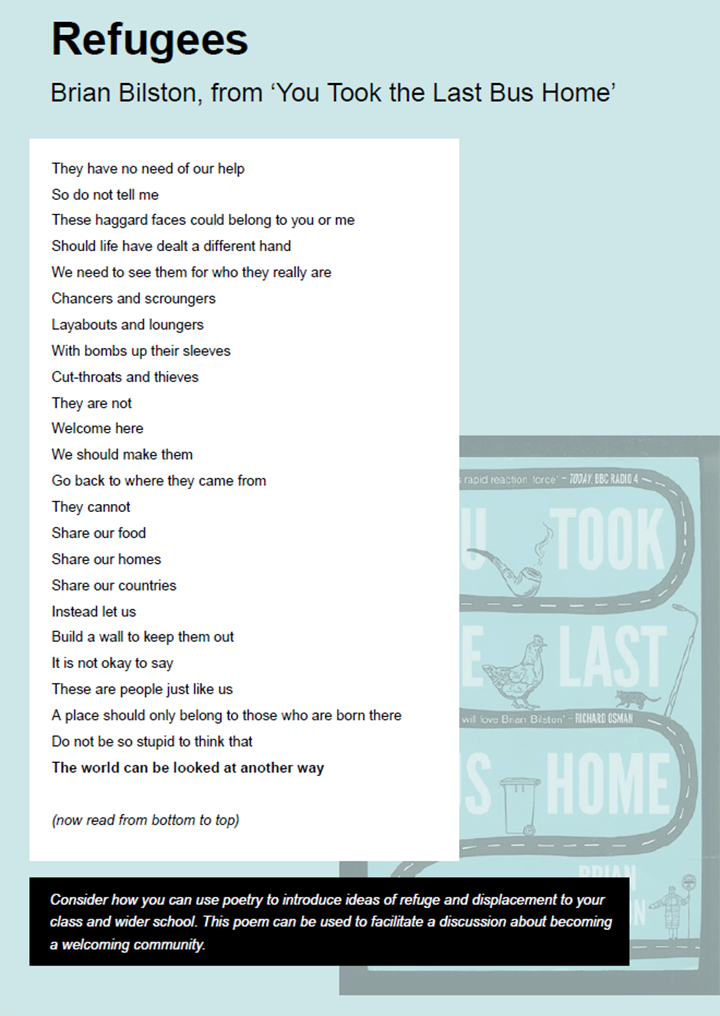
Now read the poem again from bottom to top.
These audio poems are a great resource to use in class.
As you work through this unit, keep in mind the contrasting themes in this poem and the importance of ensuring schools are welcoming, safe and inclusive against the background of anti-refugee hostility present in some parts of our society.
Building a community for learning
This step focuses on creating a sense of belonging and meaningful relationships.
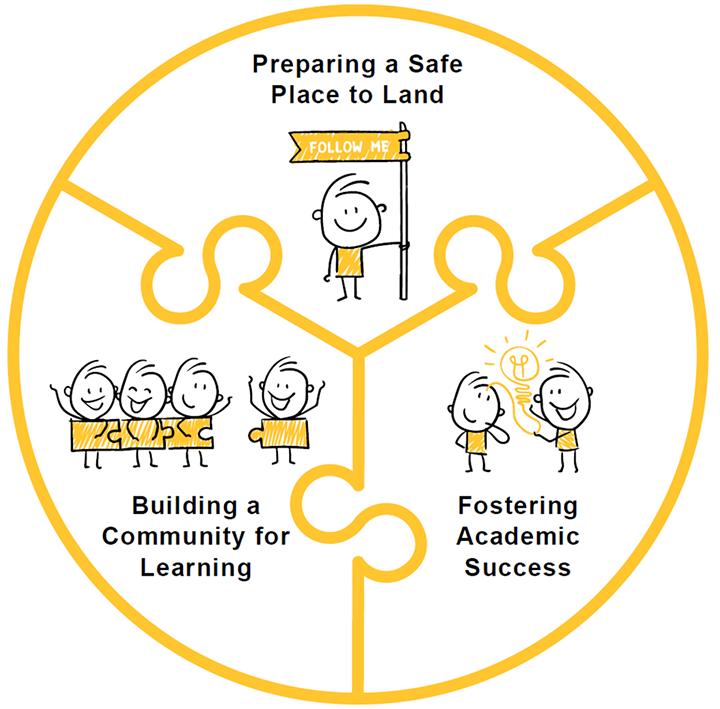
Why do students need a community for learning? Click on each number to learn more.
| Schools can provide a sense of belonging, a respectful and welcoming space which forms a new, welcoming community for refugee students. |
| Classmates and teachers can build strong, meaningful and supportive relationships to help rebuild trust for refugee students. |
| Schools can learn how to adapt to meet the specific needs of refugee students. |
 Task 13: Put yourself in their shoes
In the poem you read earlier in this unit, Brian Bilston helped you to understand one of the challenges newcomer refugees may face in feeling welcome in their new communities.
Now complete this activity where you consider what specific things schools can do to help build a welcoming community for new students and families.
Imagine you and your family have finally arrived in a safe country after being displaced for several years.
What could your child’s school do to help you feel a part of the new community?
List five things that the school, staff and pupils could do to build a community for learning for you and your family.
For example, having a buddy scheme so you have a friendly face to show you around the building and accompany you in lessons and a staff-student mentor scheme, so you have a trusted adult to discuss how your week has been.
Comment
Now you have taken the time to consider the challenges a refugee student may face in making new friends, finding trusted adults to share their thoughts with and other ways to feel a part of their new community, take a moment to reflect on the support your school already provides.
When people flee their homes to claim refuge elsewhere, they lose so much. Children lose their education, their friends, their family members and their homes. Meanwhile, parents lose their status in the community, their source of income and their support network.
When families arrive in the UK, it’s important that schools help to rebuild that sense of community by signposting families to external support (like community groups, English classes and religious centres) and building a welcoming community around their new students.
Seeing your culture reflected in your new school, having opportunities to build friendships and feeling like your teachers are invested in you as an individual are vital parts of becoming a part of a new community.
The Healing Classrooms Approach helps schools to adapt to become more inclusive places where refugee children can begin to resettle, rebuild their lives and work towards a better future.
Importance of a sense of belonging
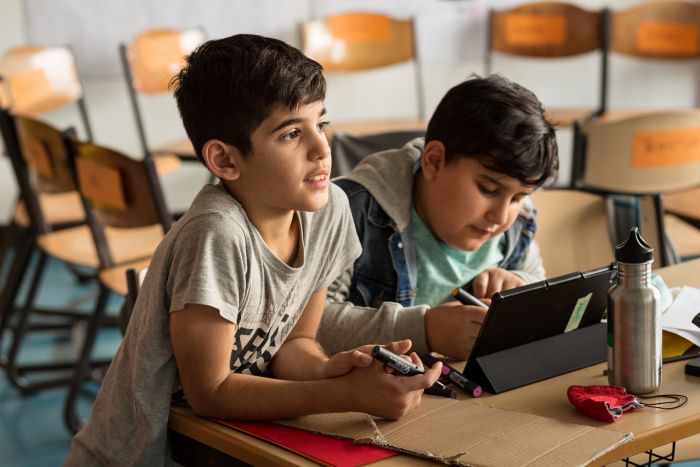
When students feel a sense of belonging at school, they feel included, accepted, and welcome.
They may feel like they are part of a group and are not alone. They respect their peers, teachers, and school community; show care and compassion for their peers; trust and feel attached to their teachers; and be more likely to attend school regularly.
Feeling a sense of belonging at school may be particularly important for children and youth affected by crises, as students can regain trust and the positive connections to their social groups and communities that may have been lost through experiences of displacement, disruption of social structures and violence.
Creating an environment in which children experience compassion, caring, and inclusion will serve to rebuild a sense of belonging. Going to school and feeling like a student also helps crisis-affected children and youth regain a sense of hope for the future.
Helping students to feel connected to their school and class helps them to feel that they have a support network. In many countries, research on events ranging from armed conflict to isolated armed attacks shows that having a strong support network is strongly correlated to emotional well-being and healing after trauma.
It is a protective mechanism for students to counter stress and trauma. People with no support network or with a negative support network (in which supporters undermine or belittle the person and/or the traumatic experience) are more likely to experience long-term distress (Hobfall, 2007).
Moreover, if a student feels connected to his or her school, he or she will generally internalise shared values of the school, thus demonstrating less misconduct, higher self-esteem, respect for teachers and peers, and higher educational achievements.
Furthermore, a strong sense of community in a classroom can diminish some of the negative psychological and behavioural reactions to adverse situations, such as poverty and conflict (Solomon, 1995).
There are various techniques which teachers can use to create a sense of belonging among their students and strengthen their student identity.
You will explore some of these techniques next.
Importance of self-worth
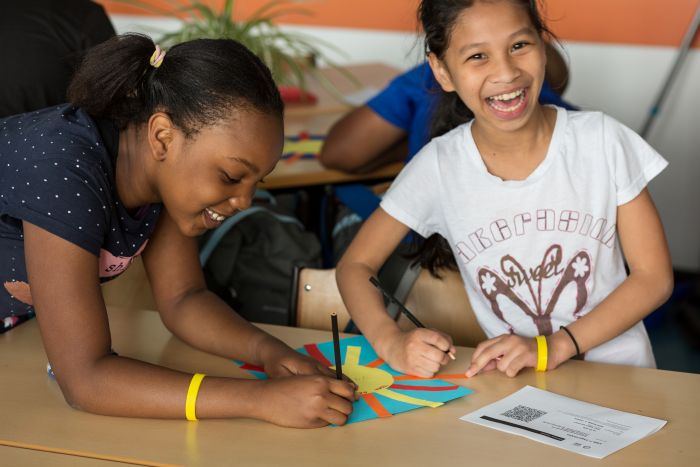
When students have feelings of self-worth at school, they feel capable and confident; proud of themselves and their abilities; and hopeful about having and being able to contribute to a positive future.
They like themselves and have good self-esteem. They feel a sense of self-efficacy, or able to achieve what they set out to do and to exert influence or have control over events that happen in their life (Bandura, 1994).
When children face disasters and traumatic events, they often lose their sense of self-efficacy, feeling that they do not have the ability to manage events that arise. This feeling can diminish one’s feelings of self-worth.
This negatively affects wellbeing, as students may lose confidence in themselves, feel hopeless about the future, and feel incapable of producing positive outcomes in their lives (Hobfall, 2007).
Schools can help elevate self-worth by encouraging students to realise they already have or can build the skills necessary to problem solving and deal with adversity. Having feelings of self-worth is also an important element of academic success. When students feel confident and hopeful, their academic performance will improve (Purkey, 1970).
Many teaching practices which promote feelings of self-worth, help students feel good about their abilities, and also target other elements of student wellbeing. Among these are treating all students equally, involving all students in class activities, displaying the names and the work of all students, and encouraging students to ask questions.
Next, you will review the practices of giving praise and encouraging goal setting, as well as reviewing recommended strategies for supporting and including every student and creating and assigning meaningful classroom tasks.
Recommended strategies for building a community for learning
Group work

Research conducted by Harvard University found that refugee students settled easier in schools where “group work was the norm”. This gave students space to work together, chat, support each other and build relationships which provided extra support for them in their new community (UNHCR, 2022). Teachers should choose groups carefully and select students who might get on well with the new student to help form friendships in the classroom.
Focus on inclusion

Harvard University researchers found that the decisions made by school staff regarding classroom culture, school ethos and curriculum adaptions often determined whether new refugee students were included or excluded (Lander, 2020). UNESCO found that when practical adaptions were not made, it impacted the quality of education for refugees and their feelings of belonging within the school (UNESCO, 2019).
Strong rapport with teachers and other staff

Getting to know your new students is vital to them settling into the school. Finding time to ask questions in class, speaking to support staff to find out about specific needs, and having conversations during breaks will help the student feel valued and important in your classroom. It may also help explain behaviour issues and challenges they face in class.
Encourage extra-curricular activities

Extra-curricular activities can help students to utilise an existing skill or hobby or develop new ones. They also give space to meet new people outside of the classroom, learn English in a non-formal environment, and to gain a sense of self-worth outside of academic classes.
Build cultural competence and humility among students and staff

To meaningfully resettle refugee children, staff and students must show “respect and appreciation of diversity and a willingness to examine one’s own cultural values and beliefs”. Most importantly, they must understand that “one culture is not superior to another” (Ballard-Kang, 2017).
Nurture respect throughout the school

Schools should embed an ethos of respect through assemblies, mottos, weekly aims for students and staff, celebrating key figures from other cultures, and awareness of religious and cultural holidays – also by actively teaching and learning about refugees. There are lots of ready-made resources online from UNHCR, Amnesty International, the Red Cross, Oxfam, UNICEF, Refugee Week, YouTube, and more.
School beautification projects

Staff and students can take on creative, hands-on projects to build a sense of belonging and community. Examples could include designing a school garden, making display boards, completing pieces of artwork like a school mural, or redesigning an area of the school like the library to make it a welcoming place for students to spend time.
Relationships with families/caregivers

Schools should seek to work with families to help them access services and support them where they can. Some schools have dedicated an hour a week to teaching English to parents and family members, others have welcomed families to the school for tours. Additional ideas could include afterschool meet and greets, fun days on the weekends, family bake-sales, and charity fundraisers.
You can download a PDF of the Unit 4 Strategies Sheet.
Watch this video to see how one school has implemented similar strategies and the impacts it is having on their students.
IRC UK has free Social Emotional Learning Games Banks and Lesson Plans available online.
In your own time, feel free to download them and select activities you would like to try in your school. See IRC’s Approach to Social and Emotional Learning for more information.
The next section demonstrates an example game from the Games Bank which is a great way to bring new students into the class.
Building a unified class
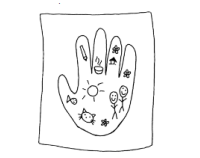
Step 1: In pairs, children draw around each other’s hand. Then, they decorate the hand with drawings and words to show who they are.
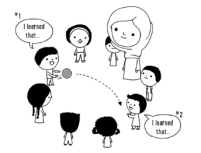
Step 2: Children can present their hands in pairs, thinking about what they share and what they have learnt from each other.
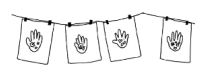
Step 3: Create a washing line display or wall display and use this as a conversation starter about differences, similarities and shared experiences in a circle.
An easy place to start is to ask – what is similar about all the hands? For example, they have fingers, they are similar shapes. Students may focus on how many students talk about foods people enjoy or the ways in which they have fun.
Then move on to differences: make a list on the board or a big piece of paper as you do this to help guide a final discussion.
| What do you notice about the hands? |
| What is most interesting to you? |
| Why do you think we drew hands instead of faces or eyes? |
| What can we achieve with our hands? For example, applauding, high fiving, building things, holding hands, dancing, helping someone. |
Use everything you have discussed and the hands themselves to make a beautiful display in your classroom and take a moment to reflect on the new things you have learnt about your students.
Task 14: Case study – Amara from Addis Ababa, Ethiopia

Now you have had time to familiarise yourself with the strategies, take a moment to read through the following case study and choose three strategies that you believe would be most appropriate to support this specific student.
Complete the table below justifying each strategy you chose and how it could help that specific individual.
Amara from Addis Ababa, Ethiopia
Age: _________________ (Choose an age group that you work with)
Amara arrived in your school recently after a harrowing journey from Ethiopia with her father.
Her family came on a boat from Libya to Italy to arrive in Europe and it took five tries before they safely got to Italy with four of the boats sinking. Her mother was kidnapped in Libya, and she hasn’t heard from her for two years.
Amara has just recently been accepted as a refugee in the UK and despite everything that the family is going through, she is determined to do well at school.
You notice however, that she is struggling to make friends and, in many ways, behaves like an adult rather than a child.
How can you help Amara to become a part of your school community?
| Chosen technique | How I would use it | How it could help |
Comment
Amara would benefit most from techniques that facilitate relationship building.
Her school should seek to better understand the family's situation and any roles she is taking on in the household in the absence of one of her parents.
Extra-curricular activities and group work could help immerse her in her new community and make her feel a part of the school while helping her to get to know her peers in the classroom and across different year groups.
The International Rescue Committee provides a wide range of assistance for refugees and vulnerable Ethiopian communities as the country faces escalating conflict, climate change and desert locusts. Various conflicts across the country are disrupting lives and preventing humanitarian organizations from delivering crucial aid. Ethiopia is heading toward its sixth consecutive failed rainy season, which would prolong a drought already affecting 24 million people. Find out more about IRC's work in Ethiopia.
As you explored in Unit 2, a person’s identity including their culture and religious beliefs influences how they move through the world, how they experience trauma and how they may find routes to heal.
Next, you will review two complementary theories – cultural competence and cultural humility.
Working towards cultural competency
Cultural competence is the ability to effectively and respectfully communicate, interact, and work with people from different cultural backgrounds by understanding, appreciating, and adapting to diverse beliefs, values, behaviours, and practices.
Review the table below to explore the different steps towards cultural competency.
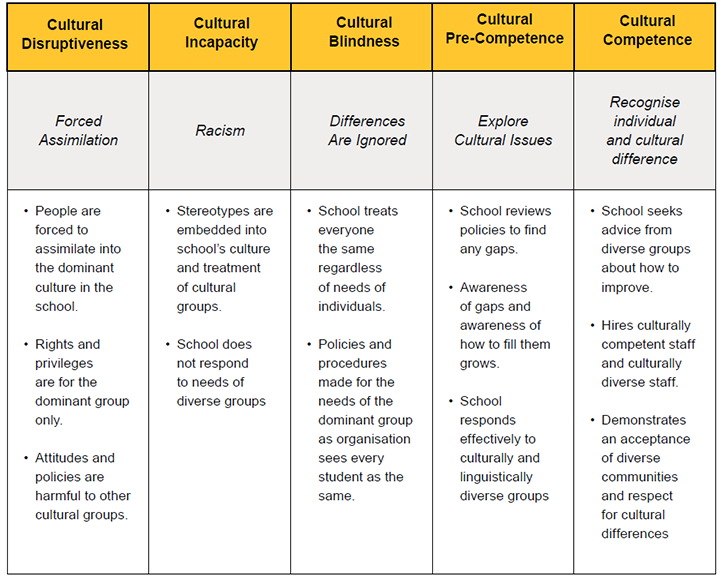
Take a moment to reflect where your school, the staff and the students may fit on this scale. Reflect on any areas for improvement you may notice and any areas where your school is doing well. It is important that schools seek to understand the basics of new students’ cultures and religions so their basic needs can be met.
Click on each number to reveal some examples.
The table above on the different steps towards cultural competency may make it appear as if cultural competency is an aim that can be completely fulfilled where a person can become a so-called expert in another’s culture.
Cultural humility is the overarching understanding that as we seek knowledge and understanding about each other’s cultures, to ensure we can work together in respectful ways, we will never truly be an expert in a culture other than our own.
Cultural humility helps us to move away from an expert-subject relationship which may include a certain power dynamic. It is a lifelong process of self-reflection and critique to understand different perspectives, a commitment to addressing power imbalances and promoting justice, and a willingness to develop partnerships with others based on mutual respect.
To understand the difference between the two:
| Cultural competency | I completed a workshop on Culture X. I am now an expert of Culture X. |
| Cultural humility | I understand that learning is a life-long process, and we must critically self-evaluate while listening to others advocate for themselves. |
Cultural humility can help you to avoid making assumptions based on your knowledge of a culture and see the individual in front of you and their specific needs whilst being respectful of their culture.
Watch the following video to learn more.
An excellent activity to get to better know your students, their cultures and them as individuals is by making Identity Mirrors.
These are display boards made by and for your students and can include a variety of things:
- I Am From poems
- Self-drawn portraits
- Handprint from building a unified class activity
- Cultural items (or photos of cultural items) important to student
- Student work that links to culture
- Letters written to past/future selves
- Languages they speak
- Photos or items from celebrations important to them
How else can you learn about and celebrate culture in school?
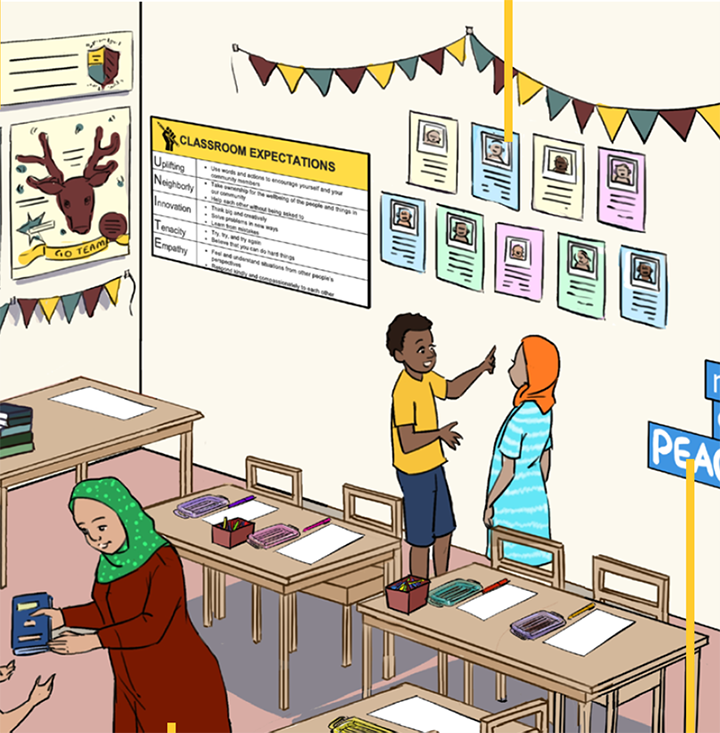
A past trainee on the Healing Classrooms programme said:
“In my school we have a sign on each door listing the languages spoken by students (and staff) in that class. Not only is it useful to know but it helps students feel a sense of pride seeing their language up there”.
Another past trainee said:
“We try to bring culture fully into the school. We assign a country to each form group, and they spend a week researching and making a poster about that place. We try to choose countries we have represented in our student body, and we include the UK as one of the countries. We then have assemblies where each form group presents their poster.
“Some of the groups performed dances or played music, especially ones which had a student from that country in their group. We followed that with International Evening where we invited parents into school. They brought food and people could go around the stalls, reading the posters and trying the foods”.
Another past participant said:
“We have a really high ceiling in our hall with big wooden beams going across and we use that to display our flags. We have one per country represented in school and we update it each time a student comes or leaves. It’s hard to upkeep but it’s worth it to see students feel respected and seen”.
Tools to help build a community for learning
You will now read through a selection of resources made by IRC to help you welcome new students into your community. You can click on each one to learn more.
As mentioned in the previous unit, IRC UK has a mini training programme for teachers to use with their students to prepare them to be effective buddies.
These tasks are available in a range of languages and subjects and can help parents with limited English be involved in their child’s schooling when they first arrive.
As a country with several annual events where fireworks are used, it is important that we acknowledge these loud banks and explosions could be triggering for some newcomer refugee students. Here is a fun activity to introduce them to these events to help prepare them and reduce the chance of retraumatising them.
This is a useful guide for students about hate crime and their personal safety.
Supporting Youth Affected by Hate Crime
This is a useful guide for school staff who may be supporting a student after experiencing a hate crime.
To better get to know the important events your new students celebrate. Send home this survey (or a translated version).
After reading through these tools and resources, take a look at the following case study. Using different strategies than you used in the first case study, choose three strategies which you believe would be support this specific family.
Task 15: Case Study – Viktoria from Bashtanka, Ukraine
Viktoria is the mother of a child in your class. She has called the school to complain as she isn’t getting regular updates about how they are getting on.
She explains that in Ukraine, children get homework from every class every day, so parents know exactly what they are working on and can check their work at home.
Her children are also asked to sit on the carpet which in Ukraine is quite a rude thing that children would get in trouble for.
Her older child is in Year 6, and she says she hasn’t received enough information about his upcoming SATs. She is very stressed.
How could you support this family to become a part of the community?
| Chosen technique | How I would use it | How it could help |
Comment
This case study highlights how education systems differ vastly across the world and aspects of schooling which may seem obvious in the UK may be new to many parents.
Likewise, things that they expect from school and teachers back home may not be possible or part of the education system here. It's vital that parents have channels to speak with schools to ask questions, voice concerns and keep up to date with what is going on.
Helpful expectation sheets can be made and translated and given to parents, induction meetings and drop ins can also be excellent opportunities for new parents and teachers to get on the same page when it comes to newcomer refugee student's education.
The war in Ukraine has drastically disrupted millions of lives, displacing people and creating unprecedented humanitarian needs. As of today, 12.7 million people are in urgent need of humanitarian assistance. Since February 2022, the International Rescue Committee (IRC) has been working in Ukraine alongside local partners to deliver life-saving support to people affected by the war, helping them survive, recover, and regain control of their future. If you'd like to find out more about IRC's work in Ukraine visit the website.
Action Plan – Unit 4
In this unit you have explored potential hostility newcomer refugees may face when they arrive in their new country alongside key themes in our introductory poem. You have also seen the importance of the ways we choose to welcome newcomer students and how this can impact their sense of belonging and sense of self-worth.
You have looked through the eyes of a child placed in an unfamiliar setting and tried to imagine the support you would need if you were in their shoes. You have read through recommended strategies for building a community for learning to support students as they try to resettle in the UK and you have tried out some of these strategies to help the students in the case studies.
Task 16: Action plan
Before finishing this unit, complete this action plan to decide which strategies you will take away from this session to try in your own classroom or wider school.
This is not to say you should limit yourself to just using three strategies forever, but it is a starting point to make meaningful and realistic adaptions to your daily work.
The Healing Classrooms Approach works best when all of the strategies, as outlined in previous sections, are eventually put into place.
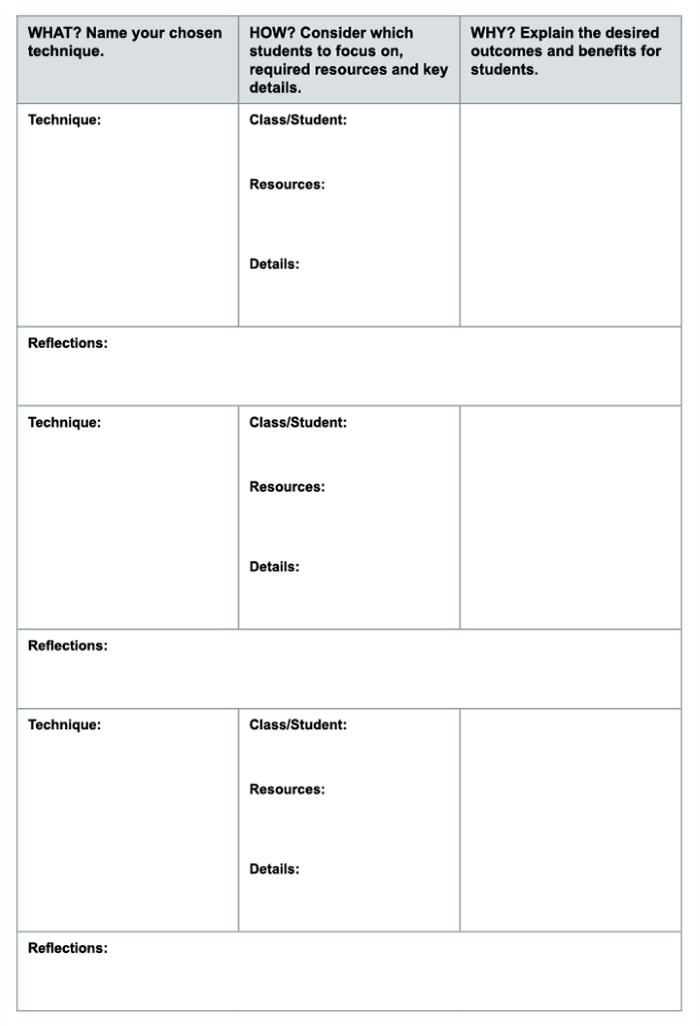
You can download a writable PDF of the Unit 4 Action plan.
Comment
Action plans can help you to solidify your knowledge after completing each unit and to take away key strategies to try in your own setting.
Print and share these action plans with your colleagues and suggest activities you can all try and then feedback after a few weeks to see the impact across classrooms.
Unit 4 Summary
In this unit, you explored how to create a welcoming, inclusive community for all students, exploring recommended strategies, case studies, and tools and resources to help you on your way.
You have completed your action plan for Building a Community for Learning, choosing the strategies you wish to take away and try out in your classroom or wider school.
This action plan can help you to focus on your chosen strategies and reflect on how they have worked or ways in which you would like to adapt them, so they are most appropriate to your setting.
You will now move to Unit 5, where you will explore the third step to the Healing Classrooms Approach: Fostering academic success.
But before you do this, please complete a short multiple-choice quiz to solidify your learning.
Moving on

References
Ballard-Kang, J. L. (2017) 'Using Culturally Appropriate, Trauma-Informed Support to Promote Bicultural Self-Efficacy Among Resettled Refugees: A Conceptual Model'. Journal of Ethnic & Cultural Diversity in Social Work 0(0), pp. 1–20
Bandura, A. (1994) 'Self-efficacy'. In V. S. Ramachaudran (Ed.), Encyclopedia of human behavior (Vol. 4, pp. 71–81).
Hobfall, S.E. et al. (2007) 'Five Essential Elements of Immediate and Mid-Term Mass Trauma Intervention: Empirical Evidence', Psychiatry 70(4), pp. 283–315.
Kim, D., Solomon, D., and Roberts, W. (1995) Classroom practices that enhance student’s sense of community. Paper presented at the annual meeting of the American Educational Research Association, San Francisco, CA.
Lander, J. (2020) 'Belonging', Harvard Graduate School of Education. Available at: https://www.gse.harvard. edu/news/ed/20/05/belonging (Accessed 26 June 2025).
Purkey, W.W. (1970) 'Self Concept and School Achievement'. Englewood-Cliffs, N.J.: Prentice-Hall, Inc.
UNESCO (2019) 'Inclusion of Refugees in National Education Systems'. Global Education Monitoring Report.
UNHCR (2022) Orientation Programs and Processes. Available at: https://www.unhcr.org/handbooks/ih/ placement-reception-orientation/orientation-programs-and-processes (Accessed 26 June 2025).
Acknowledgements
Thanks to the real children and families whose stories inspired these case studies and all of the past participants who have shared their examples of good practice which have all helped feed into this course.
Grateful acknowledgement is made to the following sources:
Every effort has been made to contact copyright holders. If any have been inadvertently overlooked the publishers will be pleased to make the necessary arrangements at the first opportunity.
Important: *** against any of the acknowledgements below means that the wording has been dictated by the rights holder/publisher, and cannot be changed.
573434: Brian Bilston
574099: Adapted from Samuel Rudi/Shutterstock
574100: Adapted from Freepik on Flaticon
574051: Dashqin Huseynaliyev/Alamy
574103: Adapted from Good Ware/Flaticon
574104: Adapted from Dashqin Huseynaliyev/Alamy
574105: Adapted from Trimaker/Shutterstock
572934: Adapted from image By Kateryna Fedorova Art/Shutterstock
572932: Wirestock Creators/Shutterstock