Use 'Print preview' to check the number of pages and printer settings.
Print functionality varies between browsers.
Printable page generated Monday, 7 September 2026, 9:37 AM
Unit 5 Could this meeting be an email?
Introduction

Building on what you explored in Units 3 and 4, this unit continues to examine how online work practices can reinforce or challenge gender inequalities. In this unit, we will explore how time management in organisations impacts gender differently, and how efficient meeting planning can contribute to greater equity in both the workplace and the home. Understanding how time and gender shape our experiences in online meetings is essential for promoting fairer and more inclusive digital interactions, which is the core objective of this course.
Time is a limited and valuable resource and its distribution is not neutral: women continue to carry a double shift between paid work and domestic responsibilities. Hochschild and Machung (2012) show that, even when both partners work full-time, women spend on average about 15 more hours per week on housework than men. Over a year, this adds up to nearly a whole extra month of work. This ‘second shift’ reduces women’s time for rest, personal interests and career opportunities. But the imbalance is not only about chores at home. Women are also more often expected to take care of the emotional side of family life – keeping relationships smooth, managing conflicts and remembering important details that keep the household running. The same pattern appears in the workplace: women are more likely to do tasks such as supporting colleagues, mentoring or organising office activities, which are valuable but often invisible and unrewarded. This shows that gender inequality in how time and effort are distributed goes beyond domestic work and continues in professional settings.
The lack of regulation of meeting times and their excessive duration can reinforce these inequalities, significantly affecting the work–life balance. Women are often more heavily impacted by long or irregular meetings because they already carry what Hochschild and Machung (2012) call the ‘second shift’: the combination of paid work and the greater share of household and caregiving responsibilities. This means that time lost in unnecessary or late meetings directly reduces the limited hours they have available for rest, family or professional development. In this way, unregulated meeting culture does not affect all employees equally. It reinforces existing gender inequalities by consuming women’s already limited time, while placing additional emotional demands on them in professional environments.
Additionally, you will analyse how meetings become a space where gender dynamics play a crucial role, whether through the unequal distribution of speaking time, the invisibility of women's voices or the impact they have on personal life. While optimising meetings for business outcomes is incredibly important, it is also essential to recognise that meetings provide social benefits, such as fostering a sense of belonging and building relationships within teams. The approach used should therefore balance efficiency with these relational aspects, ensuring that meetings are not only productive but also inclusive, respectful of everyone’s time and supportive of positive team dynamics. In this unit, through practical tools, you will learn how to structure and facilitate meetings that not only achieve business objectives but also promote gender equity, ensure all voices are heard and create an inclusive environment.
 Learning outcomes
By the end of this unit, you should be able to:
- Recognise how the distribution of time at work affects people depending on gender.
- Identify gender dynamics in meetings and their impact on productivity and equity.
- Reflect on how organisational time policies can contribute to gender equality and the wellbeing of workers.
- Apply equitable principles to the organisation of online meetings.
Welcome from the Unit 5 authors
Listen to the unit authors introducing themselves and sharing what they enjoyed most about the GEiO research project.
Note: In the audios below the authors speak in their first language. The transcript has been translated into English.
Transcript
Pía Podestá González
Adriana Gil Juarez
Pía Podestá González
Verónica Blázquez Pla
Next, go to 1 Time, gender and meetings.
1 Time, gender and meetings
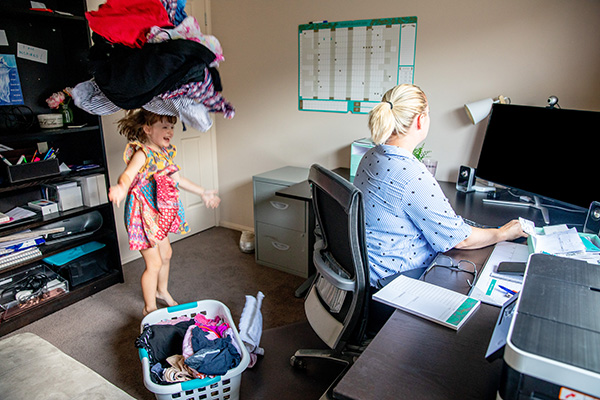
Time is a fundamental resource for organising daily life and ensuring people’s wellbeing, but research shows its distribution is not equal for everyone across society – women tend to take on the majority of unpaid work, such as domestic tasks and caregiving, which limits their availability and affects their participation in paid employment and other areas of life (Craig, 2007; Dugan and Barnes-Farrell, 2018). In addition, women also face a significant burden related to ‘emotional labour’, both at home and in the workplace. This adds an extra layer of pressure that is difficult to quantify, yet essential to the functioning of social and organisational life (Guy and Newman, 2004; Barigozzi et al., 2025).
These inequalities are not accidental; they are rooted in the way our society has historically divided roles between men and women, a pattern known as the ‘sexual division of labour’ (Federici, 2018; Lemus, 2023). Other social factors, such as age, social class or ethnic background also influence how time and labour are distributed across different groups (Atagua‑Díaz, 2024).
The COVID-19 pandemic exposed and deepened these inequalities, particularly with the rise of remote working and the overlap of professional and domestic responsibilities within the home. This so-called ‘double burden’ falls mainly on women, making it harder for them to manage their time and maintain their overall wellbeing (Reichelt, Makovi, and Sargsyan, 2021; Silva-Costa, et al., 2023).
This is why it is crucial to design ways of working and communicating that recognise these inequalities in order to promote fairer and more inclusive workplace environments. For example, deciding whether a meeting is truly necessary or if an email would suffice, while taking into account everyone’s availability and responsibilities, can help distribute time more fairly and reduce overload, especially for those with greater caregiving duties.
This approach is not only about improving organisational efficiency, it also acknowledges and addresses the diverse realities and needs within work teams, and ultimately supports a more equitable balance between work life and personal life.
Now watch Video 1, which summarises time management and gender inequality.
Transcript: Video 1 Time management and inequality
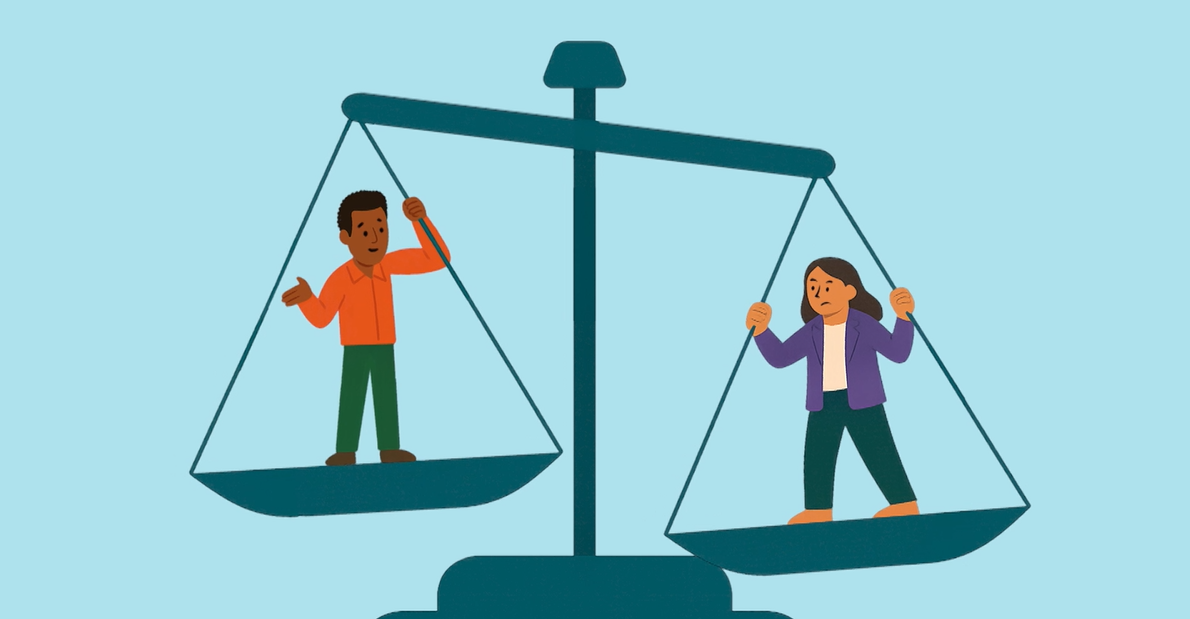
Time is a resource that doesn’t affect everyone equally. Women, in many cases, have to face a double shift: work and domestic responsibilities. This means that every minute lost in unnecessary or poorly managed meetings has a greater impact on them. While some may afford to spend more time in endless meetings, others have to rush to pick up the kids, do the shopping or prepare dinner. Therefore, managing time well is not only a matter of efficiency but also of equality.
Meetings are not gender-neutral. Studies show that women are interrupted more frequently, have less speaking time and are often listened to less. This not only limits their contribution but also makes the time they spend in meetings less efficient. If we want more productive and fair meetings, we must ensure that all voices are heard and that time is distributed equitably. Unnecessary or poorly planned meetings not only steal work time, but also widen gender inequalities. Moreover, the pandemic intensified the workload at home, especially for women, who had to juggle remote work with childcare and domestic tasks. For many women, every extra minute at work means less time for domestic chores or family care. This does not happen in the same way for men, who, in many cases, have more flexibility to dedicate extra time to work. Reducing the amount of time in meetings not only improves efficiency but also contributes to a fairer distribution of time between men and women.
Although progress has been made in gender equality, many domestic tasks still fall on women. Cleaning, caregiving for dependents, laundry and cooking are tasks that are often assumed to be the responsibility of women. Reducing the load of unnecessary meetings can contribute to a better distribution of time for everyone, but especially for women. Balancing the workload at home and at work is a shared responsibility. By optimising work time and reducing unnecessary meetings, we create more space to share responsibilities and enjoy a more balanced life. An effective meeting has a clear goal, engaged participants and well-managed time. We must ensure that every minute of the meeting counts and that everyone feels heard and valued. Meetings should serve to improve our work, not waste time that could be dedicated to other things. Furthermore, good planning and a well-defined agenda can make meetings more useful, efficient, and productive, freeing up time for more important tasks and for ourselves.
Let’s manage our time better: at work, at home and in meetings. Well-utilised time will allow us to be more productive, more present and improve our quality of life. Time is a limited and valuable resource that, when managed efficiently, can significantly improve quality of life, especially for women, who often face the double burden of professional work and domestic responsibilities. Reducing unnecessary meetings, optimising their duration, and ensuring they are productive not only increases work efficiency but also frees up time for family and personal life. Moreover, it’s essential to recognise that the equitable redistribution of domestic tasks is a shared responsibility that benefits everyone. More conscious time management and more equitable participation in meetings and at home are key steps toward achieving a more balanced and fair life.
Ultimately, managing time well is not just about productivity, but also about equality and shared wellbeing.
1.1 Meeting or email?
Now have a go at Activity 1 which helps you consider different situations and whether they are better suited to a meeting or communication via email?
 Activity 1 Decision tree: meeting or email?
Work through the factors in the decision tree to help you decide whether you should communicate by email or call a meeting.
Feedback
Key questions from an inclusive perspective
Before calling a meeting, ask yourself:
- How will this meeting affect those with caregiving duties or other additional responsibilities?
- Am I ensuring that all voices, especially those that are under-recognised or excluded such as a women, LGBTQI+ individuals, neurodivergent people, racialised groups are meaningfully heard?
- Can I adjust the time or duration of the meeting to respect everyone’s time?
Benefits of applying this decision tree
- For people with additional responsibilities – reduction of work burden and more time for personal life.
- For the company – more efficient, inclusive, and productive meetings.
- For everyone – better work climate and greater wellbeing, and a more equitable setting that acknowledges the diversity of differing realities and needs.
2 Reflecting on gender and time

The previous section introduced you to research on how gender affects the time and effort individuals are expected to dedicate to different activities in our society. This builds on ideas explored in earlier units, where we examined how unequal distributions of domestic and emotional labour affect people’s experiences of online work. You then looked at ways you could help address these disparities by thinking in more detail about whether calling a meeting is necessary or not.
Activity 2 provides further opportunity to reflect on the relationship between gender and time and how these inequalities relate to your own work context.
Activity 2 Reflecting on gender and time
a.
They have multiple work and personal responsibilities that compete for their time.
b.
They prefer to avoid meetings to focus on other activities.
c.
They are not interested in the topics being discussed.
d.
They sometimes schedule overlapping commitments.
The correct answer is a.
Feedback
Multiple work and personal responsibilities can limit a person’s availability for long meetings. This highlights the importance of being mindful of everyone’s time and considering alternative ways to share information or make decisions when possible.
a.
To make meetings more inclusive and equitable.
b.
To reduce unnecessary costs for the company.
c.
So that people can leave work earlier.
d.
To avoid overburdening participants with heavier workloads.
The correct answer is a.
Feedback
Managing time well during meetings helps make them more inclusive and equitable, ensuring that all participants can contribute fully without feeling rushed or overlooked.
a.
Establish norms to ensure all participants can contribute without interruptions.
b.
Schedule meetings outside of standard working hours.
c.
Avoid rotating leadership roles in meetings.
d.
Prolong meetings so that everyone participates.
The correct answer is a.
Feedback
Establishing norms that ensure all participants can contribute without interruptions helps make meetings more equitable, giving everyone a fair chance to share their ideas.
a.
They have more time for participants’ personal activities.
b.
They can increase participants' workload and make balancing tasks more difficult.
c.
They can express themselves more freely in the workplace.
d.
There is no impact on participants' day-to-day life.
The correct answer is b.
Feedback
Poorly managed meetings can increase participants’ workloads and make it harder for them to balance tasks, impacting both productivity and work-life balance. While some options may seem plausible, the main consequence of poorly managed meetings is that they add stress and reduce efficiency, making it more difficult for participants to manage their responsibilities effectively.
a.
Allow only the most experienced participants to speak.
b.
Prolong the duration of meetings to ensure everyone participates.
c.
Ensure that all voices are heard and respected without interruptions.
d.
Make meetings longer but less frequent.
The correct answer is c.
Feedback
Ensuring that all voices are heard and respected without interruptions helps make meetings more equitable, fostering inclusive discussions where everyone can contribute. Equitable meetings require active facilitation and respect for all participants’ contributions.
Having explored important factors that affect co-workers’ availability and inclusion in meetings, you can now apply these insights in the next activity.
2.1 ‘Meeting or email’ scenarios
Activity 3 invites you to explore some ‘meeting or email’ scenarios – use the decision tree from Activity 1 to guide your thinking.
Activity 3 Meeting or email scenarios
Based on the decision tree from Activity 1, select the best option for each situation.
a.
Schedule a brief meeting with a clear goal and a time limit, using a time slot that suits most of the team.
b.
Send a detailed email and wait for individual responses before the deadline.
The correct answer is a.
Feedback
In urgent situations that require consensus, a brief meeting with clear moderation and respect for everyone’s time is more efficient. Using synchronous channels allows for real-time clarification and collective decision-making. Make sure to offer alternatives if someone cannot attend, such as recording the meeting or by sharing a summary.
a.
Organise a meeting to explain the information.
b.
Send a document or presentation with a summary and visuals by email, leaving room for follow-up questions.
The correct answer is b.
Feedback
When there is no need for discussion or decision making, asynchronous communication (email, presentation, video) allows each person to manage their time flexibly. This respects different working styles, personal responsibilities and time zones.
a.
Have an in-person meeting with the entire team.
b.
Use an instant messaging tool or form where everyone can share their input at different times to gather feedback.
The correct answer is b.
Feedback
Using asynchronous channels promotes inclusion, especially for people with flexible schedules, different time zones or caregiving responsibilities. It also supports those who prefer to reflect before sharing their thoughts, encouraging a greater diversity of ideas.
a.
Organise a video call with the client.
b.
Send a detailed explanation by email.
The correct answer is a.
Feedback
Sensitive or complex issues are better addressed in real time to build understanding and avoid miscommunication. A video call allows for clarification, interpretation of nuances and building trust.
a.
Schedule an interactive meeting with a moderator.
b.
Ask each member to send their ideas by email before a final discussion.
The correct answer is a.
Feedback
Brainstorming thrives in interactive spaces that foster creativity. To ensure inclusivity, the unit should have careful moderation, ensure speaking turns and use visual tools that facilitate participation from everyone, including those joining remotely.
a.
Send a quick message to coordinate actions.
b.
Call a meeting with representatives from each area to coordinate actions immediately.
The correct answer is b.
Feedback
When alignment between multiple departments is required, a well-led meeting allows for quick coordination of actions and clarification of doubts. Make sure to invite only key people, maintain a clear focus, and document decisions for those who cannot attend.
a.
Organise a meeting to review the points and clarify roles and responsibilities.
b.
Send an email explaining each team’s responsibilities and asking for confirmation of receipt.
The correct answer is a.
Feedback
When there is conflict or tension, real-time, face-to-face communication is especially valuable. Direct contact allows for the perception of body language, tone of voice and other non-verbal cues that help prevent misunderstandings and build stronger agreements. Additionally, it helps people feel heard and understood, which contributes to reducing tension. It is essential that the meeting fosters a respectful and inclusive environment where all perspectives are valued.
a.
Hold a brief meeting to assign tasks, clarify doubts and answer questions on the spot.
b.
Send an email with individual assignments, deadlines and responsibilities.
The correct answer is a.
Feedback
Assigning tasks in a meeting ensures mutual understanding and helps identify potential conflicts or dependencies. It also creates a sense of shared commitment. You can complement this with a summary email to reinforce what was discussed.
a.
Hold a meeting to review the report together and discuss changes in real time.
b.
Create a shared document with clear instructions and send the link by email so each person can review and comment according to their availability.
The correct answer is b.
Feedback
Facilitating asynchronous collaboration allows each person to provide feedback at a time that best suits them, respecting different schedules and responsibilities. Additionally, centralising comments in a shared document makes it easier to consolidate observations. On the other hand, a meeting can be useful for quick clarifications but may limit participation from those with tight schedules or working across different time zones.
Feedback
Applying the decision tree not only optimises communication and organisational efficiency, but also promotes inclusion and equity, particularly for those with greater caregiving and social responsibilities, including many women.
Explicitly choosing between a meeting or an email can make a significant difference in wellbeing, productivity and fairness in the workplace.
3 The right to time and gender equality

Time is considered a fundamental right that influences the wellbeing of individuals and communities. Various organisations, both public and private, have regulated time to improve quality of life. Although the right to time has gained visibility, its distribution remains unequal, especially for women, who bear a disproportionate burden of unpaid work (ILO, 2018). The United Nations Economic Commission for Europe (UNECE) highlights this ‘time poverty’, in which women perform 76.2% of the unpaid work globally (ILO, 2018). These differences are not inherent but reflect social expectations, structural inequalities and the unequal organisation of care within households and workplaces. The lack of childcare services and the traditional division of domestic responsibilities continue to deepen this inequality (UN, 2020).
The COVID-19 pandemic exacerbated these inequalities, increasing the domestic burden, particularly for women, who must balance paid work and household tasks. The shift to videoconferencing has led to an increase in domestic responsibilities at home, resulting in stress and anxiety, especially for those whose ambition is to produce flawless work (Shen and Zamani, 2024; Agba, et al., 2022). Although some studies show that men have increased their participation in domestic work (Shafer, Scheibling and Milkie, 2020), caregiving tasks continue to be dominated by women (Yavorsky, Qian and Sargent, 2021).
In Activity 4 below, you will apply the ideas explored in this unit so far to your own context using the Social Identity Wheel to help you to reflect on how different aspects of your identity may shape your experience of time.
Activity 4 Social identities – time and gender inequalities
It is useful to apply frameworks like the Social Identity Wheel which you’ve come across throughout this course to reflect on how inequalities might affect individuals differently. This tool helps us explore how overlapping identities – such as gender, processes of racialisation, socioeconomic class, age and accessibility – can interact to shape each person’s experience of time use, caregiving responsibilities and access to opportunities. Recognising this complexity is essential to creating truly inclusive approaches to the work–life balance.
Using the Social Identity Wheel, jot down some thoughts about how your own social identities might impact the time you have available to complete your tasks.
Time policies can be a key tool in redistributing work and caregiving responsibilities, contributing to gender equality, social wellbeing and productivity. These policies must be based on scientific evidence to ensure a fairer distribution of time and promote a proper balance between work and personal life. Research on the use of time is essential to support policies that respond to societal needs (Duarte and Quirós, 2024).
Although videoconferencing has increased flexibility, research indicates that it has also amplified domestic and caregiving burdens for women (Pacheco Salazar, Rivas Esparza and Martínez Labrín, 2022), highlighting the need to review and adapt videoconferencing policies to ensure that work and domestic responsibilities are distributed equitably. Without proper regulation, online meetings can reinforce pre-existing inequalities (Craig and Churchill, 2020). The pandemic revealed how traditional gender norms continue to influence the distribution of domestic work, but it also showed how, with a gender perspective, it is possible to change these dynamics (Carlson, Petts and Pepin, 2020).
In conclusion, the pandemic deepened gender inequalities in the distribution of domestic and paid work. Public and labour policies need to be developed as a matter of urgency that promote a more equitable distribution of work and domestic responsibilities, supporting gender equality and the wellbeing of all workers (Rodríguez, Pardo and Castañeda, 2022). Videoconferencing policies must be adapted to support a fair balance between professional and personal life, ensuring that domestic tasks do not disproportionately fall on women (Moreno Colom et al., 2021).
4 Time rights activity

In the activity below you will be part of an interactive story where you can make decisions that will influence the narrative’s development. Through your choices, you will explore how time, equality policies and working flexibility affect work dynamics and relationships in the professional context.
The purpose of this activity is to reflect on how time and its distribution (a fundamental right) affect individual wellbeing, especially in work contexts where domestic responsibilities still disproportionately fall on women. Additionally, you will question how flexibility and organisation at work can contribute to gender equality and better time distribution. This interactive format allows you to see how different decisions influence time distribution and workplace equity in real-life situations.
Activity 5 How would you act? Your narrative
Follow the story
As you progress through the narrative, you will encounter points where you must make a decision about what to do next in relation to a work meeting. Each decision will impact the direction of the story.
Choose your path
At each decision point in the story, you will be presented with some options (A, B and C). You can choose which option to take and that choice will decide the events that follow.
Reflect on your decisions
For each choice, it is important to briefly reflect on how that decision relates to time management, equity in responsibilities and work dynamics. These responses will help your understanding of how certain choices affect not only the person who makes them, but also the people around them.
Conclusion
At the end of the story, there will be a general reflection on the effects of your decisions, drawing out the links between these and the theoretical context of the right to time, gender equality policies and work dynamics. You will also consider the implications of your choices and how they can influence the working environment in practice.
Unit 5 conclusion
The way time is organised and used has a direct impact on equality of opportunity and the work–life balance. By adopting strategies for more efficient and equitable meetings, you can foster a fairer and more productive organisational culture. Moreover, recognising the right to time for all employees is essential to ensure a respectful and balanced work environment. This unit is a first step towards the necessary transformation to optimise resources and ensure time management. This will promote gender equality, the wellbeing of employees, and the creation of more inclusive and efficient workspaces.
Incorporating tools like the Social Identity Wheel also helps us better understand how individual identities – such as gender, processes of racialisation, socioeconomic class, age, or functional diversities – intersect and influence people’s experiences at work. By acknowledging these diverse identities, we can design time management and workplace practices that are not only more inclusive but also actively responsive to the different needs of all team members.
Now test your learning in the Unit 5 practice quiz.
Unit 5 practice quiz
Now have a go at the Unit 5 practice quiz – you can attempt the quiz as many times as you like.
After you have completed the Unit 5 quiz move onto Unit 6 What you’ve learned and farewell.
References
Agba, M. S. et al. (2022) ‘Telecommuting and remote work revolution: Are workers more effective and productive working from home? (A multi-perspective analysis)’, Logos Universality Mentality Education Novelty: Social Sciences, 11(2), pp. 82–94. Available at: https://doi.org/10.18662/lumenss/11.2/73 (Accessed: 17 July 2025).
Atagua‑Díaz, Z. (2024) ‘Cómo crear una verdadera equidad de género para distinguirla de una falsa equidad de género’, Mujer Andina, 3(1), pp. 75–86. Available at: https://doi.org/10.36881/ma.v3i1.950 (Accessed: 17 July 2025).
Barigozzi, F. et al. (2025) Beyond Time: Unveiling the Invisible Burden of Mental Load. Advance online preprint (arXiv preprint). Avaliable at: https://doi.org/10.48550/arXiv.2505.11426 (Accessed: 17 July 2025).
Carlson, D., Petts, R. and Pepin, J. (2020) ‘Men and women agree: During the COVID-19 pandemic men are doing more at home’, Paid and Unpaid Care Work, 7. Available at: https://digitalcommons.wcl.american.edu/wlpcarework/7(Accessed: 17 July 2025).
Craig, L. (2007) ‘Is there Really a Second Shift, and if so, who does it? A Time-Diary Investigation’, Feminist Review, 86(1), 149–170. Available at: https://doi.org/10.1057/palgrave.fr.9400339 (Accessed: 17 July 2025).
Craig, L. and Churchill, B. (2020) ‘Dual-earner parent couples' work and care during COVID-19’, Gender, Work and Organization, 28(Suppl 1), pp. 66–79. Available at: https://doi.org/10.1111/gwao.12497 (Accessed: 17 July 2025).
Duarte, G. and Quirós, C. (2024) ‘Determinantes del teletrabajo y brecha de género’, Revista de Economía Mundial, (68), pp. 1–15. Available at: https://doi.org/10.33776/rem.vi68.8314 (Accessed: 17 July 2025).
Dugan, A. G. and Barnes-Farrell, J. L. (2018) ‘Working mothers’ second shift, personal resources, and self-care. Community’, Work & Family, 23(1), pp. 62–79. Avaliable at: https://doi.org/10.1080/13668803.2018.1449732 (Accessed: 17 July 2025).
Federici, S. (2018) ‘El capital y el género’, in Catalán, M.A., Fernández Guervós, C. and Ponz, M. (trans.) El patriarcado del salario: Críticas feministas al marxismo, Madrid: Traficantes de Sueños, pp. 47–67.
Guy, M. E. and Newman, M. A. (2004) ‘Women’s jobs, men’s jobs: Sex segregation and emotional labor’, Public Administration Review, 64(3), pp. 289–298. Available at: https://doi.org/10.1111/j.1540-6210.2004.00373.x (Accessed: 17 July 2025).
Hochschild, A. and Machung, A. (2012) The Second Shift: Working Families and the Revolution at Home. London: Penguin.
International Labour Organization (ILO) (2018) El trabajo de cuidados y los trabajadores del cuidado para un futuro con trabajo decente (Informe N.º 106). Available at: https://www.ilo.org/es/publications/major-publications/el-trabajo-de-cuidados-y-los-trabajadores-del-cuidado-para-un-futuro-con (Accessed: 17 July 2025).
Lemus, L. (2023) ‘El género hace al trabajo: Aportes de la economía feminista a la sociología de las relaciones laborales’, Ciencia Política, 18(35), pp. 147–164. Avaliable at: https://doi.org/10.15446/cp.v18n35.105136 (Accessed: 17 July 2025).
Moreno Colom, S. et al. (2021) ‘El impacto de género del teletrabajo confinado en los usos del tiempo’, Revista de Estudios Sociales, 45, pp. 53–66. Available at: https://doi.org/10.7203/acs.45.28997 (Accessed: 17 July 2025).
Pacheco Salazar, M. T., Rivas Esparza, Y. L. and Martínez Labrín, S. (2022) ‘Conciliación trabajo-familia en mujeres en situación de teletrabajo, a partir de la contingencia sanitaria por COVID-19’, GénEroos. Revista de investigación y divulgación sobre los estudios de género, 29(31), pp. 121–148. Available at: https://revistasacademicas.ucol.mx/index.php/generos/article/view/456 (Accessed: 17 July 2025).
Reichelt, M., Makovi, K. and Sargsyan, A. (2021) ‘The impact of COVID-19 on gender inequality in the labor market and gender-role attitudes’, European Societies, 23(suppl 1), S228–S245. Available at: https://doi.org/10.1080/14616696.2020.1823010 (Accessed: 17 July 2025).
Rodríguez, Y., Pardo, A. and Castañeda, I. (2022) ‘La conciliación vida laboral-vida familiar y la salud de las mujeres en tiempos de COVID-19’, Revista Cubana de Salud Pública, 48, pp. 1–15. Available at: https://revsaludpublica.sld.cu/index.php/spu/article/view/2911/1796 (Accessed: 17 July 2025).
Shafer, K., Scheibling, C. and Milkie, M. A. (2020) ‘The division of domestic labor before and during the COVID-19 pandemic in Canada: Stagnation versus shifts in fathers’ contributions’, Canadian Review of Sociology/Revue canadienne de sociologie, 57(4), pp. 523–549. Available at: https://doi.org/10.1111/cars.12315 (Accessed: 17 July 2025).
Shen, M., and Zamani, E. D. (2024) ‘Gender differences in remote work: A study on the boundary management tactics of women and men’, Information Technology & People, 38(4), pp. 1925–1947. Available at: https://doi.org/10.1108/ITP-06-2023-0547 (Accessed: 17 July 2025).
Silva-Costa, A. et al. (2023) Gênero e trabalho remoto: associações entre a saúde mental e as horas de trabalho remoto e doméstico. Cadernos de Saúde Pública, 39(1), e0004823. Avaliable at: https://doi.org/10.1590/1413-81232025301.04892023 (Accessed: 17 July 2025).
United Nations (UN) (2020) El avance de las mujeres hacia la igualdad de género se estanca. Departamento de Asuntos Económicos y Sociales de las Naciones Unidas. Available at: https://www.un.org/es/desa/women-report-2020 (Accessed: 17 July 2025).
Yavorsky, J. E., Qian, Y. and Sargent, A. C. (2021) ‘The gendered pandemic: The implications of COVID‑19 for work and family’, Sociology Compass, 15(6), e12881. Available at: https://doi.org/10.1111/soc4.1288 (Accessed: 17 July 2025).