Use 'Print preview' to check the number of pages and printer settings.
Print functionality varies between browsers.
Printable page generated Tuesday, 1 September 2026, 8:12 AM
Session 1: Defining myself and how I feel about my present situation
What is reflection?

Reflection is a process that involves thinking and understanding – an honest exploration and examination of our previous experiences. It is thinking about things you have done and experienced in your life, and working out what you have learned from them so that you can better understand the person you are now, your qualities, what you are capable of and what you want to do. This kind of thinking can be helpful for anyone, at any time of life, whoever you are and whatever situation you are in.
The scope of your reflection can vary. For example, you might want to reflect on what you’ve learned from a recent work placement, caring responsibilities or study experience, or you might want to just take an overview of your life as a whole.
Reflection can be uncomfortable, depending on previous experiences, but it can also be liberating as we develop a better understanding of ourselves and our situation, and can then move forward.
If at any point you feel the course has brought difficult emotions then you can visit Carers.org to find out where your nearest local support service is or to talk to someone online. There are also useful contacts in the Find out more section of this course.
Case studies
Listen to the following people talking about their experiences of caring, their roles and responsibilities and how they feel about their current situation.
If you want to read a speaker’s words as you listen, click on the ‘Transcript’ link beneath the player.
Alana
Transcript
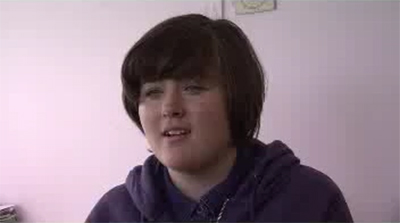
Alana is 17 years old and cares for her mum and sister. She helps with practical tasks and supports her mum and sister in understanding situations. Alana started caring when her dad left, helping her mum cope and taking care of her sister including attempting to resolve issues on behalf of her sister in school.
Alana goes out once a month with a young adult carer group and receives one-on-one support. She is studying Hairdressing in college, has just passed her Level 1 and will be progressing onto Level 2.
She does find it difficult studying while caring, she mentions her A2A card and EMA as things that help (see box below for more information).
A2A stands for Access to Action Card. Some Local Authorities in Wales issue these to young carers. It helps young people to tell teachers/tutors that they are carers.
EMA stands for Education Maintenance Allowance. It is a weekly payment for young people from low household incomes, to help cover the costs of them staying in education.
James
Transcript
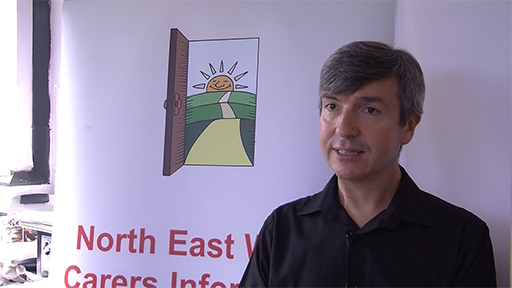
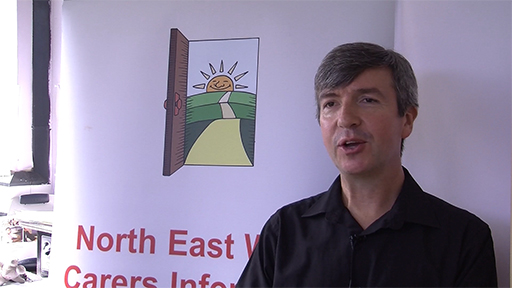
James is 45 years old and cares for his mum who has Alzheimer’s disease. James’ mum has recently gone into residential care as the disease had reached a point where she needed to be in a safer environment.
Caring changed James’ life significantly. He had a busy, successful career but as his mum’s illness progressed, she moved closer to him and he found he needed more and more time to provide care for her. To be able to do this, James took voluntary redundancy and found part-time employment with a local carers’ service.
Having left full-time employment, he was able to begin an MSc in Psychology one day a week. James finds -studying calming and comforting, and an important distraction.
Suzanne
Transcript
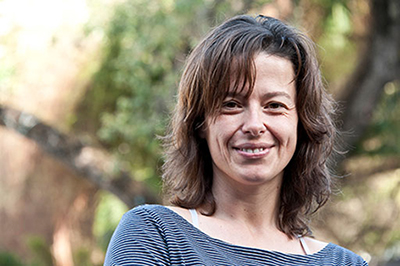
Suzanne helps care for her brother who has schizophrenia. Suzanne feels her caring role isn’t just about caring for her brother but also about supporting other members of her family including her dad.
When she first started caring for her brother, Suzanne found it difficult and felt quite alone coming to terms with changes to her brother’s personality.
Suzanne feels that as a carer she has developed a greater awareness of her own instincts and feelings, as well as developing independent research skills. She also feels that caring helped her to question and challenge people in positions of expertise or authority. Five years on from her brother’s diagnosis, Suzanne has found that in many ways it has had a positive impact and that her family has been brought closer together.
The support from the local carers’ service was important to Suzanne, including the provision of counselling and training.
Suzanne is a writer and a community worker who sees herself in the future spending more time writing and having more work published.
Christine
Transcript
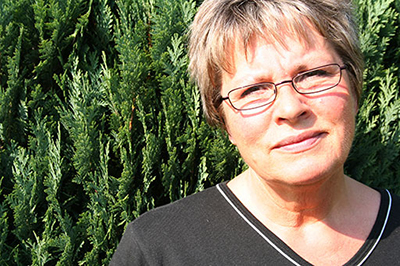
Christine cares for her son who is 19 and has multiple and complex disabilities.
Christine considers herself a naturally caring person; she’s a qualified nursery nurse, and enjoys looking after children. She finds it hard to call herself her son’s carer because she is his mum.
The lowest point of caring for Christine is the loneliness and isolation, not just for herself but also for her son. Christine is frustrated with the lack of provision for her son locally.
Christine feels she has learned a great deal from caring for her son; about herself and everyone else in the world. The skills Christine identifies include empathy, determination, selflessness and the ability to be assertive particularly in support of her son.
Christine and her son are going through a period of transition as her son will be going to residential college soon. Christine knows this period is going to be difficult but remains positive and hopeful she can work through it with the support of her husband.
Claire
Transcript
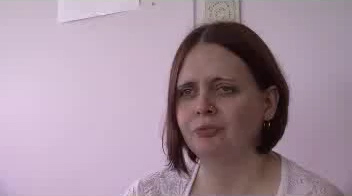
Claire is 32 years old and cares for her partner who has Becker Muscular Dystrophy. She was also long-term carer for her mother who died in 2012. Her mother wasn’t diagnosed but held many Asperger’s/Autistic traits.
Claire feels being a carer has made her more understanding and improved her problem-solving skills and adaptability. Caring for her mother was an emotionally draining experience whereas caring for her partner is more physical.
School was not a good experience for Claire because of bullying and her home environment. After leaving school, she completed childcare courses but then struggled with her own mental health problems.
Claire has been learning sign language. She found it difficult to get to the point where she felt confident enough to go into a learning environment, but is now studying Institute of British Sign Language Level 1 and hopes to go onto Level 2.
Claire intends to do some voluntary work with deaf people so she can practise sign language and learn more. She feels she has learned most from the people she meets who have had struggles.
These examples show many of the challenges that carers experience but also the opportunities that carers have to develop their skills and pursue opportunities that matter to them – such as James’ MSc in Psychology and Alana’s hairdressing training course. Perhaps some aspects of the above stories reflect your own experiences?
Reflection isn’t always easy – and thinking about your experiences of caring can be painful and difficult to think through, for any number of reasons. At the same time, it’s not always easy to understand what you have learned from past experiences or decisions taken.
It’s therefore sometimes quite helpful if you can work through these reflections with additional support if this is available to you –a friend or mentor or a support worker from a local carers’ service, for instance. If at any point you feel the course has brought difficult emotions, then you can visit Carers.org to find out where your nearest local support service is or to talk to someone online. There are also useful contacts in the Find out more section of this course.
Your reflection
Activity 1.1 Thinking about myself
To get you started, think about the following four questions:
- How do I see myself now?
- What am I most proud of?
- What makes me happy?
- How would I like to see myself in the future?
Before trying to answer these questions have a look at the following examples, which show how Alana and James answered them.
Example 1: Alana
We know that Alana has completed a Level 1 in Hairdressing and is progressing onto Level 2. Have a look at Alana’s table to see what Alana hopes for the future and how she sees herself now.
| How do I see myself now? | What makes me happy? |
|
|
| What am I most proud of? | How would I like to see myself in the future? |
|
|
Think about the following questions:
- Do you identify with anything Alana is saying?
- Do you have anything in common?
- What is different about your situation and how you feel?
Example 2: James
Now look at James’ table and listen to him describing his experiences.
Table 1.2 James’ table
| How do I see myself now? | What makes me happy? |
|
|
| What am I most proud of? | How would I like to see myself in the future? |
| Remaining cheerful in the face of adversity |
|
Transcript
Your table
Now fill in the boxes for yourself on Activity sheet 1.1 that we have provided for you. We will return to this activity in Session 5 so you may want to keep a copy of your table.
OR
Open your Reflection Log and go to Activity 1.1. Once you have completed the activity, make sure you save the document again.
If you are working in a group and would like to share your answers, do so now.
Activity 1.2 Defining myself
This activity asks you to think of the various roles you have in your life and what these involve.
In the previous section, we heard about Christine’s experiences of caring for her son, what it has taught her and how she feels about it. Have a look at Christine’s list of the roles that she now has in life, and then listen to her talking about these in the audio clip.
| My main roles in life | What I do |
|
|
Transcript
The example above shows how we have different roles in life. We all have many roles in which we use a variety of skills and abilities.
Think about the following questions:
- Do you have anything in common with Christine?
- Have you had to deal with some of the same difficulties?
- Do you have goals you want to achieve?
In the previous section we also read about Claire and her role caring for her mother and her partner. Have a look at Claire’s table where she describes her many roles and what she does.
| My main roles in life | What I do |
|
|
Now define yourself at the present time, and the roles you fulfil, in Activity sheet 1.2.
OR
Open your Reflection Log and go to Activity 1.2. (If you forgot to save your Reflection Log, you can open a new document.) Once you have completed the activity, make sure you save the document again.
If you are working in a group, you might want to share your answers and discuss your roles with each other. Similarly, if you are working one-to-one with a mentor, use this time to tease out some of the ideas above.
Summary
Session 1 aimed to get you started on thinking about yourself and was designed to help you get an idea of how you feel about your present situation.
You probably discovered that you do a lot of things using a variety of skills and abilities – some may be ones you discovered through caring, others may be brought with you to caring. Maybe you didn’t recognise how skilled you actually are, or what qualities you have? One of the aims of reflection is to help you recognise your own skills and talents.
You have now completed Session 1. In Session 2 you’ll look at how these skills, abilities and qualities are developed over time.
Session 2: Learning by looking at my life over time
Acknowledgements
What about me? was developed by Carers Trust Wales and OU in Wales. It is based on and adapted from content developed by Lindsay Hewitt and Christine McConnell of The Open University in Scotland in collaboration with Bridges Programmes.
We are hugely grateful to the carers and staff from North East Wales Carers Information Service (NEWCIS) for sharing their stories and testing out the course activities. We hope you find something in their experiences that speaks to you as well.
Except for third party materials and otherwise stated (see terms and conditions), this content is made available under a Creative Commons Attribution-NonCommercial-ShareAlike 4.0 Licence.
The material acknowledged below is Proprietary and used under licence (not subject to Creative Commons Licence). Grateful acknowledgement is made to the following sources for permission to reproduce material in this course:
Images
Figure 1.1: © nico-blue/iStockphoto.com
Figure 1.2: © Juanmonino/iStockphoto.com (model photo used for illustrative purposes only)
Figures 1.3 and 1.4: © frikadella/iStockphoto.com (model photo used for illustrative purposes only)
Video/audio: © The Open University
Every effort has been made to contact copyright owners. If any have been inadvertently overlooked, the publishers will be pleased to make the necessary arrangements at the first opportunity.
Click the link above for further information on:
– further study in Welsh related to this subject
– related study content from The Open University
– this topic and free course materials on OpenLearn
– studying from outside the UK? We have students in over a hundred countries studying online qualifications.