Use 'Print preview' to check the number of pages and printer settings.
Print functionality varies between browsers.
Printable page generated Wednesday, 30 September 2026, 7:34 AM
5 Empowering research as a way of knowing and being
Introduction
In this section we move on to consider the relationship between method and
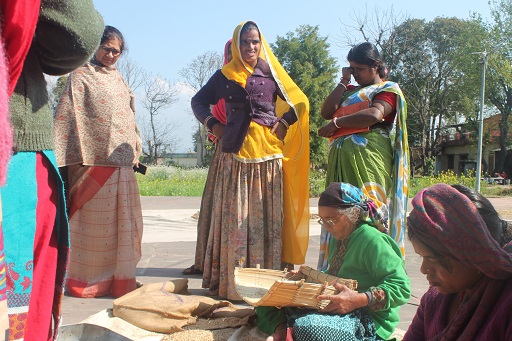
‘Methodology’ refers to the overall approach implied by a researchers’ choice of particular methods, in combination with their theoretical orientation and the research questions that they ask. In Film Focus 2 (Section 2) Emma made the case for research to be considered as a
In a related vein, Vannini and Vannini (2019: 1) argue that ‘an artisanal ethnography is resolutely itinerant in regard to all its work processes, deeply sensitive to its materials, and profoundly aware of the affordances of its tools’. This relies on ‘unscripted and nondetermined processes through which skilled practice unfolds’ (Vannini and Vannini, 2019: 2). ‘Artfulness in the sense it is being used here also involves being wily or bringing a bit of craftiness into the craft’ (Back, 2012: 34, emphasis in original). Craft thereby acts as a resource that organisational researchers can use to engage with and resist the political pressures that they face (see Section 2) in order to facilitate greater research empowerment.
As discussed in Section 1, the
Related to this is the idea of research as a practice whereby ‘researchers make knowledge’ (Morgan, 1983: 7, emphasis in original). Hendry et al. (2018: 1) suggest that ‘to trouble method is to acknowledge not only that it is the consequence of a particular time and place, but that it is not inevitable, natural, or universal’. They suggest that conventional, modernist, scientific approaches to method have resulted in a situation where we are ‘severely limited [in] our capacity to “be” in the world, [and] to recognize that we are part of a complex, indeterminate, and always in process system of relationships’ (p.9). Crucially, they pose the question of how research can be ‘reconceived not as a product, but as a process of being in relationship to others’ (p.13). The implications of this are far-reaching and imply a shift towards a relational ethics of producing knowledge where what is known is unstable, situated and shifting. An
Ethnography, self and intersubjectivity
Here, Tim discusses ethnography as a way of understanding how research participants make sense of their everyday lives. As a longitudinal methodology, ethnography places particular demands on all participants as researchers become woven into the social fabric of the research context. It is therefore fundamentally important that ethnographers consider their ontological and epistemological dispositions in order to appreciate and ‘truthfully’ account for the intersubjectivities of the research process: researchers are participants too, and should not write themselves out of the research. Tim will therefore illustrate how researchers can think through these ethical considerations before, during and after research fieldwork encounters.
Activity: Film Focus 9, ‘Ethnography, self and intersubjectivity’ – Tim Butcher
Watch the film and make your own notes in response to the following questions:
- Define ethnography in your own words.
- What does an ethnographer do in a research field?
- Why is it important to reflect and keep record of your thoughts and feelings about the role and activities you perform during an ethnography?
- Have you ever kept a research diary before? How helpful did you find this? What would you change if you did this again?
Transcript
I’m Tim Butcher. I work for The Open University in the UK. And in this session, we’ll be talking about ethnography, self and intersubjectivities. So the first thing we should really try to understand is the everyday. What is the everyday? What are our lived realities?
As ethnographers, it’s really important to understand what’s going on in the field every day. Important questions might include, why do we live the ways we do? Who determines how we live? How do we navigate our way through our lives? And how do we make sense of it all? These are really key questions for ethnographers.
And so as ethnographers, why are we interested in these concepts of the everyday? Well, it’s because we take the perspective that our everyday realities are constructed. It’s the social constructivist view that we take as ethnographers.
Now particularly in the field of management research, I’m an organisational ethnographer. So as an organisational ethnographer, what I’m very interested in is how we organise our everyday lives, from making our breakfast in the morning right through to how we might plan a schedule of activities in the coming months, but also how our lives are organised for us, who organises aspects of our lives, why it’s been organised like that. And so trying to understand our relationship with the wider world as well.
So you’re probably asking yourself, what is ethnography? And more specifically, what is organisational ethnography? For me, organisational ethnography is about understanding how people, how participants in the research, make sense of the organisation of their lives. For me, organisational ethnography is more than just a methodology. It involves a longitudinal study, maybe several months, several years.
My current research with the people of Papunya is now eight years long and will continue on in various ways. It’s a very embedded study. I myself, in that particular project, I come and go from the research context, from the field. The last trip I took was a month long.
Some ethnographers spend their whole time in the field with communities. And so ethnography can take many different forms. And it may also involve many different methods within the overall methodology, and hence, why I think of it more as being more than a methodology.
Now ethnography comes from both trying to understand the social and the cultural, and so has its origins in anthropology and also sociology. Its origins in anthropology can be seen as very problematic. In the late 19th century and into the early 20th century, a lot of ethnographers were very involved in researching social groups, cultural groups, cultural practices, which actually advanced colonial projects.
So ethnography has origins in anthropology. And in the nineteenth and early twentieth century, anthropology took a key role in the colonising project. The methods and techniques that were used were to understand, to gain a better knowledge of cultural practices that Westerners, Europeans, didn’t necessarily previously understand. And by extracting that knowledge, by taking that knowledge out of those communities, it was then used against those communities.
Now that’s really problematic. And to this day, it means that many communities are very, very sceptical of researchers coming into their communities, sharing their knowledge with them. And it’s very, very important to understand why they are very wary of researchers.
And so there’s been a lot of work done, very much from a post-modern perspective, in ethnography, both in anthropology, sociology and within organisations studies and management to identify and develop methods of ethnography which take account of the intersubjectivities of the research, which will go on to talk about further now.
So as an ethnographer being embedded for a very long time in a community, you become very much part of the social fabric. It’s very important that you situate yourself, this idea of you and yourself, your own being, in the field, in the community with other participants. You weave yourself into the social fabric. Other participants will weave you in. The whole situation is socially constructed.
So as an ethnographer, what you’re doing is you’re going in and observing social and cultural practices. You need to understand the social poetics. What’s going on? Why is this happening? How is this happening? And asking questions, listening to answers and really trying to observe and understand just what’s going on.
And so conventionally, we always think of ethnographers as what we call participant observers, so observers of participants. But perhaps we need to think about that more carefully. And this is the work that’s gone on in post-modern ethnographic thinking, is to re-conceive the ethnographer as perhaps an observer participant.
So I, as an organisational ethnographer, I’m a participant in organisational life. And so I’m observing the practices of many participants, but also my own practices and how those intersect, and whilst doing that, also being mindful very much of the power dynamics between myself as a researcher and other participants.
So it’s important to be interwoven into the social fabric. But you’re probably asking yourself, well, if I’m woven into that fabric, what do I do as a researcher? How do I capture what’s going on? So my own methods are quite varied. I always carry a notebook with me. It’s always there with me. And I take field notes diligently.
Everything that’s said to me, everything that I see, things that I experience, things that I feel, things that catch me by surprise, things that intrigue me, I make notes. I ask questions in those notes, things that I might come back to later. It’s almost like a diary. So I’ll take notes whilst things are occurring so that I don’t lose them. But also, at the end of every day, I’ll go back through those notes, and I’ll write new notes.
So as an organisational ethnographer in the field, I’ll take notes. I always carry a notebook with me and a pen. And as things happen in the moment, I’ll make notes. At the end of every day, I’ll go through those notes. I’ll make fresh notes.
What else do I do? I take photographs. Photographic practice is part of my ethnography. It may not be what every ethnographer does. But visual methods can be really helpful to ethnographers, because it’s a way of seeing. There are other things that we can do as observer participants, participant observers, that are able to understand what’s going on – so not just sitting on the sideline and watching, but actually taking part.
So when I’m taking notes, when I’m taking photographs, I’m at sporting events in my current project. So I’m in amongst the crowd. I’m walking around the boundary line. I’m seeing things happening from different angles. I’m listening to what’s going on. And I’m really feeling that atmosphere.
I said before that the way I see ethnography, it’s more than just a methodology. You know, my own ontology, my own lived reality as an organisational ethnographer is one that I see more than just a job, more than just a profession, more than just a way of doing research. But it’s a vocation to me.
For me, I feel I have a responsibility to other research participants, to people who read the research, to who I engage with in connection to the research. And so what I’ve said before in a previous film about staying true to participant stories, this for me is very much a way of understanding the lived reality of being an organisational ethnographer.
And so that then leads me to ask questions about both before, during and after the research, about just how embedded am I in the field? How embedded am I in people’s lives? How interwoven am I? How engaged in the social scene am I?
Certain scenes I might get more involved in. I’ve just talked about being at sporting events and being part of the crowd and feeling the excitement, whereas there are other situations in the research when I might take more of a backseat. And different scenes, different settings, will mean that I respond in different ways. I behave in different ways.
Some other questions I have to ask myself is, will I get involved in certain cultural practices? Will I be invited into those? And if I’m invited, should I choose to, or should I not? These are the questions that we have to ask ourselves.
I always remember having a conversation at a conference with an early career academic who was considering doing an ethnography in a tattoo parlour. And she didn’t have tattoos, but she was considering getting a tattoo to be able to get access to do that research. And she brought that idea to the conference and shared it with us as an audience. And that was a really interesting dilemma for her. I actually don’t know the outcome. But it’s an interesting dilemma.
So it leads to these questions of, as a researcher, as an ethnographer, are you an insider, or are you an outsider? How much of an insider will you become? How much of an insider do you want to become? How much of an insider can you become? Or will you always be an outsider? And these are perennial questions that all ethnographers ask themselves, and every ethnographic experience is different. And there are so many reasons why because of the way the social is constructed.
So you’re a participant in the research process, too. All of these things that I’ve talked about so far, it sounds like a lot of fun. Some of it might sound quite confronting, quite challenging. But really, you’ve got to start to think quite critically about your own disposition in the field, both before, during and after. And so it’s important for you to attune yourself to the field.
Now I’ve talked about my own ontology, the way I see how I am as an ethnographer. And a lot of that’s come through experience, a lot of experience through several studies. And so you as an ethnographer entering the field really need to think of your own way of entering the field, your own way of being in the field. What are you comfortable with? What are you not comfortable with? And how do you feel about things? Feeling part of something, but part of what? And how much do you want to feel part of that?
The way you identify yourself to and with other participants, the way that you co-create shared narratives and collective stories these are important ways to bond with other people in the field, to become a participant yourself. But how much do you want to share?
And so as I say, it’s very important to think very critically about what we call intersubjectivities, these relationships that you build, how you build them, how much you want to build them, and the sort of ethical dialogue you have with other participants, but also, most fundamentally, the ethical dialogue you have with yourself.
And so that internal ethical dialogue is very much understanding your own reflexivities and how you are in the field and really critically examining what’s going on inside you so that you know just how embedded you want to become, how long you feel able to study for, the sorts of things that might change over time, how the research might even change you.
So these are things that you can really take away from the research. And that’s the importance of the note-taking, for example at the end of the day, going through your diary notes, at the end of an extended period of research, going through those notes again, and really seeing, where were you, and where have you come to? Because without doubt, ethnography is really going to transform you as a researcher. And it needs to be something that you’re comfortable with.
We recommend that you keep notes of your answers to these questions so you can return to them during the course.
Empowering research practices
Activity: Film Focus 10, ‘Empowering research practices’ – Nirmal Puwar, Goldsmiths, University of London, UK
Watch the film and make your own notes in response to the following questions:
- Explain the idea of ‘curating as research process’ in your own words.
- What ‘meeting places’ for ‘stories, archives and materials’ can you think of in your own research?
Transcript
So that takes us to a project that I think Tim heard me present on on cinema space. Foucault talks about cinema space being a heterotopia in terms of space, but also in terms of time. So there are multiple temporalities in cinema.
And on the screen, there are so many spaces being pulled in. But also, the site of a cinema can be a place of heterotopia. It can be a alternative way of being in the city, for instance. And Roland Barthes has these really nice snippets of observations you can call them ethnographic observations of watching people in the cinema, observing their postures, their bodies, their coats. What happens when you sink in to the seat?
And there’s a lot of work in film theory on the films themselves, but not so much work on there’s a lot of audience studies, which is different. But there’s not so much work on the cinemas themselves what happens in cinema going. And Annette Kuhn has published a book called An Everyday Magic, where she did lots of interviews with people all across the UK on cinema-going habits that they had from the 1930s onwards.
Now, the cinema is also a cite using Alan Blum’s work. I argue it’s a social scene. It can be a social scene where people go. They establish intimacy in the city, establish a sense of belonging in the city. Now, you may know the film East is East. I don’t know if anyone’s seen it. Yeah, well, you’ll recognise a film scene from there where they go to Bradford. It’s a mixed heritage family. They go to Bradford to watch the film, and there’s a lot of commotion in the cinema. And people are singing, eating. So this is a post-war period. This would be the 1960s and ’70s in the UK.
And Bradford is north of England. So I became interested in these scenes, basically, in that period of post-war history. And because they allowed us to see I think may offer us a very, very rich viewfinder on city life how cities were made if you look at these scenes cinema scenes.
And they were, in many ways, meeting places where people gathered when it wasn’t so you know, we take it for granted when it wasn’t so easy to hear songs from other cultures. It wasn’t so easy to wear clothes from elsewhere. There was quite a lot of racism in the 1950s. So they were meeting places for people.
But also, they were a meeting place for me methodologically. I was meeting stories, archives, and materials. And so, often you have a material meeting encounter, as well, in research. And I worked with a gallery to create a film called Khabi Ritz Khabi Palladium. You can watch some of it online, actually, if you type it in.
And we created an exhibition. So we sort of found some old cinema seats and created a cinema space, collected audio archive. Now, that was a brilliant project. But we were still struggling with the institutional demands of a museum. You know, they have their props – for instance, glass cabinets. They’re obsessed with glass cabinets.
And lots of description so we had lots of tension over that. And it became a public site, where we had an opening, and people arguing what’s in the film. And this was quite disturbing for the museum because they wanted it to be a happy multicultural affair. But I said it’s part of it, you know?
The process of representation is contested. This so-called community is not homogeneous. People have, you know, have different political leanings. They’ve had longstanding friendship battles with each other. But it was interesting to do it in the gallery, as well, to change the gallery space and to bring people into the gallery.
So I ended up creating a second film from the archive that was left called Coventry Ritz. And this one, you can actually watch the whole film online. And then a third film called Cinema III which actually works with a sound artist and a paper artist. So there’s many ways, many ways you can use the same material.
And it probably still feels like an unfinished business to me. Right, because in this project, what was really central was to actually disturb the public sight of the museum because there are longstanding tropes in which ethnic or multicultural communities are exhibited, you know?
They have a fascination with soirees, weddings, colourful things, cooking. This is standard inventory in which multiculturalism is done in a gallery not in a gallery, in a museum. So the first thing I wanted to do is not fall into or not – I had to disturb those expectations, which inevitably involves tension.
And so many times I wanted to give them Stuart Hall’s essay on representation. But you know, they’re just saying, who do you think we are? Why shouldn’t we reach to your core? So there are different knowledge bases that we’re building on and different aesthetics and expertise because they think, well, we have the profession of exhibiting.
And we will say, well, we’ve been dissecting exhibiting, and it’s been really limiting the frames you’ve been putting us in. We need to open that up. So that is kind of central to curation. If you choose to curate your research in a public side, then unless you’re just going to repeat their methods of representation, you have to try and get into this conversation in the most diplomatic way possible.
Otherwise, they will keep you out, as well. One thing about this project we’re so interested even though we had interviewed so many people in the city, up to this day, people will come up to me and say, you haven’t interviewed so-and-so. You know, I’ll be walking around somewhere – I’ve got a story, or in that photo that you exhibited, my uncle’s there. He’s gone now.
So what it did, it actually was a big attractor for bringing in stories and opening up stories. And my main reason for doing it was because migration is told in very predictable ways. You know, it usually has a linear pattern where they came from, why they left, what the journey was like, how difficult it was but here, how they became activists.
Now, all of that happens. All of it happens. But what usually happens in the telling of the story, the dynamic quality in the inventive way, the way in which people have their nightmares and dreams together and making their lives, they’re usually erased. So the dynamic quality of making life – it gets lost in that very predictable linear management of stories.
And my point was to disturb that. Cinema-going helped us disturb that because people – this particular cinema I worked with it was actually bought by people from an Indian workers’ collective. They bought it. And they used it as a cinema space, but they also had political meetings there.
They invited actors over. You know, they made it into a wrestling pit sometimes so that people could watch a wrestling match. They had musical performances in there. And many of these people actually were working really hard in foundries, factories, you know, sewing machine outlets.
And they came together in these places. It was the highlight of their week, basically, to go there. And most people would try to dress up like the actors before go into the cinema because usually the albums the music was released before the films. So they would look at the album some of them worked double covers and have a relationship with them.
So this allowed us to tell a very different story of migration, to not follow the normal pattern, and to think about how people made space in the city. They exerted imagination, used networks, and to not of course they suffered racism, which is one of the reasons these places were so valuable but to not just make them into victims but to also think of them, really, as actors of making lives, too.
Yes, and the other thing that brought me to this project was that my father actually when he retired, he worked in this particular gallery as an attendant. And across the country, you’ll find lots of attendants who are from the colonies- ex-colonies in their suits. My dad didn’t see it as a job. He just saw, wow, it’s a beautiful building. I wear this suit. I walk around it, and I watch. The galleries are fine.
But I suppose it was a way of, you could say, dematerialising the space itself, reoccupying it differently to change the public space in itself. And so if academics are now working with their creative methods and taking them to public zones, we need to be aware of what we’re positioned as and what we’re expected to do, what we might want to do, what we don’t want to do, and what out techniques of resistance are.
I must say, it’s extremely exhausting doing any of this exchange. And I came back running to my office, you know, when these creative projects finished. I actually love sitting in the library just, like, it’s me, my books. I’m writing. Obviously, all of this feeds into you, and it affects you. But there’s is a different kind of intellectual and emotional labour involved when you’re negotiating. And that’s a part of the process.
Comment
The video with Nirmal Puwar and the questions in the activity draw attention to the role of creative public engagement using the research process of exhibiting. In her work, Nirmal refers to this as ‘curating sociology’ (Puwar and Sharma, 2012). She argues that researchers can ‘engage with the academy and beyond, by turning to and deploying cross-disciplinary collaborations that engage in creative knowledge practices – as drama, event, exhibitions, installations, film production and music performance, for example’ (p. 40). Key to this is the idea of curating as a research process that ‘embraces creativity and experimentation in the production of public knowledge’ (p.43).
Stories from the field
Guangpuanang Kahmei: feeling empowered by the Naga people of the Langthabal region
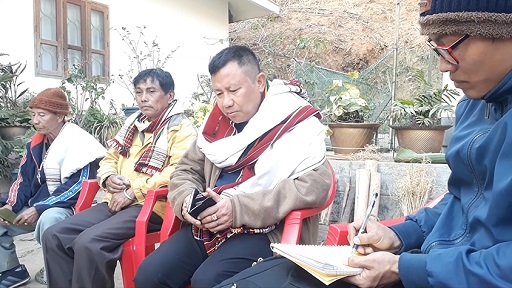
As introduced in the previous story from the field, Guangpuanang Kahmei, a researcher on the project team, studied with the Naga people in Rongmei village. In this except from Guangpuanang’s research diary, he discusses his feelings about gaining access and building trust in communities in the region and culture where he grew up, but has not lived in for several years, since moving interstate for his education:
The people I encounter in the Langthabal Chingkha are simply amazing. The way they give respect to us is one I can never forget which I do not deserve at all. I feel like I’m already apart of their community during my short stay with them.
Originally, I was planned to have a small interview with some elders there and my intention is not to have a group discussion but to observe their cultural activities. But when I reached the field, I change my mind. With the good cooperation of the elders, we successfully conducted the storytelling session.
The way they treated us and the way they talked with us, how they used the words is simply amazing. Even the elders treated us as par, they never hesitate to share their Morung and their cup (food and wine). When we pass through the village, whoever we meet in the way irrespective of young and old talk to us with politeness, this practice is not just to the known person in the village but to any person within the village gate. Because of this reason, everyone knows everybody (where they live and what they do including their relatives) in the neighbourhood not just in their village but also in the neighbouring village (that’s why it is very easy to find the person if we know the person name). They have no reservation telling what they knew even to the stranger like us. What I saw in that village is an overwhelming experience altogether. When we are to go back some elders drop us to the village gate. After saying goodbye to each other when we walked down the road one of my friends say to me, ‘My Christian village will not know how to treat others like that, if they come to our village, we will not be able to welcome them as they do.’ Their humility, their politeness in their talk, in their conduct, if at all is respected and known by all one will not hesitate to say that they are the most civilized people in the world.
Activity
Guangpuanang’s diary
Based on your reading of Guangpuanang’s diary entry and having watched the film below, make your own notes in response to the following questions:
- How important is it to understand a community’s (religious) beliefs to know their people?
- What difference does it make for the researcher’s understanding and immersion to join community events instead of scheduling formal interviews with participants?
- What do you think are the moral dilemmas that an empowering researcher faces when participating in community routines and rituals? To help you answer this, you could refer to your answers in the previous story from the field about what you would and would not participate in.
We recommend that you keep notes of your answers to these questions so you can return to them during the course.
Recommended reading
Bell, E. and Willmott, H. (2019) ‘Ethics, politics and embodied imagination in crafting scientific knowledge’, Human Relations (in press). Available at: http://oro.open.ac.uk/ 62673/ (accessed 1 October 2019).
Cunliffe, A.L. (2011) ‘Crafting qualitative research: Morgan and Smircich 30 years on’, Organizational Research Methods, 14(4): 647–73. Available at: https://pmt-eu.hosted.exlibrisgroup.com/ permalink/ f/ gvehrt/ TN_sage_s10_1177_1094428110373658 (accessed 1 October 2019).
Hendry, P.M., Mitchell, R.W. and Eaton, P.W. (2018) Troubling Method: Narrative Research as Being, New York, NY: Peter Lang.