Use 'Print preview' to check the number of pages and printer settings.
Print functionality varies between browsers.
Printable page generated Monday, 21 September 2026, 12:43 AM
2 Examining our biases and assumptions
2 Examining our biases and assumptions

Best-practice models for developing cultural competence in therapeutic work with marginalised people involve reflecting on your existing beliefs. This section looks at societal beliefs and ideas about trans people, and about sex and gender more broadly, that may influence the way practitioners interact with trans people, address them, think about them, and therefore respond to their experiences, whether they are themselves cis or trans. As you go through this section, remember to stop and think about your own beliefs and ideas on these topics. Consider how unconscious beliefs might prevent you from fully meeting a trans client and entering their frame of reference.

2.1 Unpicking sex and gender
 Activity 2.1: Explaining sex and gender
Part 1
What happens when a baby is born? Complete the following table by dragging the statements into the boxes. Alternatively, you can download the accessible PDF version below.
Discussion
Having done this exercise, do you consider a UK birth certificate recording ‘M’ or ‘F’ to be a biological process or a socially constructed one? In Germany, there is a third category for intersex children who don’t fit this M/F classification (Schotel and Mügge, 2021) – what does this imply about the system we have, and what are the implications for trans and intersex people?
2.2 Meeting Patrick
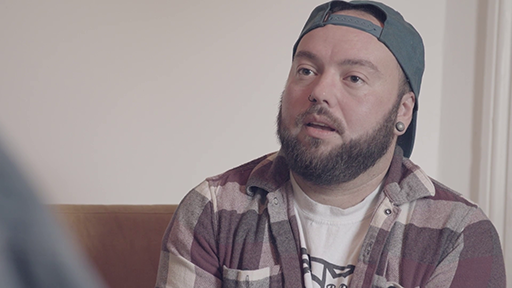
The next activity explores how sex and gender concepts apply in counselling through a video of an early session with a trans client, Patrick. Patrick, played by a trans actor, is in therapy with Jake, an experienced psychotherapist and trans man.
For this and other training videos, Patrick received a client case history, and both he and Jake were given key themes to guide their interaction. Patrick was asked to improvise in response to these cues and Jake was asked to respond as he would to a real client (with one exception). Most of the videos are intended to be extracts from the very first counselling session. The videos in Activities 3.4, 4.3 and 5.3 depict parts of the 12th session after the therapeutic relationship has been established.
Activity 2.2: Patrick meets Jake – session one
As you watch the video, focus on trying to get a sense of what is going on for Patrick; also notice what Jake is doing to be supportive of Patrick. Then, answer the questions that follow.
Transcript
2.3 Building empathy
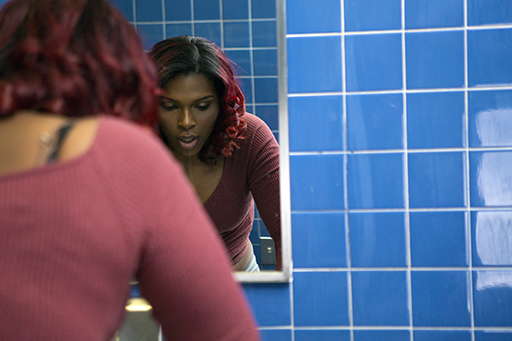
If you know little about the trans experience, empathy for trans clients may be harder. This is important because therapist empathy is regarded as a core predictor of the effectiveness of therapy across all therapy types (Watson, 2016). Cis practitioners may find the following visualisation exercise helpful for developing empathy.
Activity 2.3: Visualisation
It is a good idea to find somewhere quiet where you feel comfortable, closing your eyes as you listen to this.
Transcript
What was the experience of doing this visualisation like for you? Did it feel helpful?
Discussion
Existing ideas about a client can disrupt empathy and prevent fully meeting them. We may need to spend time tuning into trans narratives to clear away some of our existing thoughts.
2.4 Thinking about transphobia
In 2019, the World Health Organization (WHO) declared definitively that being trans is not a mental illness, echoing the declassification of homosexuality back in 1990 (World Health Organization, 2021).
The minority stress model: Historically, it was assumed that being trans meant being mentally ill; the same thing was assumed about being gay. However, research has shown that it is not being trans that is associated with having mental health problems but rather how trans people are treated. In short, greater social stigma correlates with poorer mental health among trans people. A landmark study published in the prestigious medical journal The Lancet corroborated this understanding, prompting the WHO decision (Robles et al., 2016; see also Price et al., 2024; Drabish and Theeke, 2022).
This understanding of the mental health of trans people aligns with the ‘minority stress model’ initially developed by Meyer (2003), which understands mental health disparities for marginalised groups as being explained by the stressors caused by living in a hostile social context: experiencing bias, microaggressions, harassment, discrimination and targeted violence.
Targeted violence: Some ICTA participants reported experiencing physical threats and expressed fear about high levels of violence against trans people. Hate crimes against trans people have tripled in the past decade. (Home Office, 2024).
Stonewall reports that young trans people are particularly at risk of hate crime, with 53% having experienced hate crime in a one-year period (Stonewall, 2018), while Galop reports a significantly higher number of transfemmes (a term used to refer to trans women and feminine-presenting AMAB non-binary people) are affected by hate crime (Bradley, 2020).
Internationally, statistics for violence against trans women who also experience racism are particularly high (Human Rights Campaign Foundation, 2019).
Microaggressions: Microaggressions are everyday behaviours or terms that, intentionally or not, convey hostile or prejudicial messages based on group identity. (Sue et al., 2007). Microaggressions often reflect prevailing societal understandings of particular groups or identities; in the UK increased prejudice towards trans people is indicated by an 18% drop since 2019 (to 64%) in the number of people who describe themselves as ‘not at all prejudiced’ against people who are transgender (National Centre for Social Research, 2023).
The extensive research on microaggressions evidences their clear negative impact on the mental health of marginalised people, including trans people (e.g. Kimber et al., 2024). It is important to understand the significant impact of microaggressions as they can be:
- Insidious – often unnoticed or minimised by those unaffected.
- Systemic – rooted in broader societal bias.
- Cumulative – daily exposure makes them especially harmful to mental health.
Activity 2.4: Identifying trans microaggressions
There are different kinds of microaggressions that trans people can experience (Nadal, Skolnik and Wong, 2012). Pair the types of microaggressions with the quotes from participants in the ICTA research project and quotes from Patrick, taken from the video you watched earlier. Alternatively, you can download the accessible PDF version below.
Discussion
The last quotation was from Patrick when he was talking to Jake in the video you saw earlier. Did you notice this reported microaggression in the video?
2.5 Denial of trans authenticity
So far, we have talked about targeted violence and microaggressions. Both are examples of the discrimination/transphobia experienced by trans people. Philosopher Talia Bettcher (2009, pp. 98–99), argues that transphobia stems from a ‘basic denial of authenticity’. She believes that this denial underpins the majority of anti-trans bias. In a world where trans people are sufficiently commonplace and well researched to be understood to be having a genuine experience, rather than being an unexplained anomaly. This bias undermines what Bettcher calls ‘first-person authority’ − the right of every trans person to define their own experience.
Activity 2.5: Who gets to decide who I am?
a.
True
b.
False
The correct answer is a.
a.
Transition improves mental health (Cornell University, 2017; this is also a finding of the ICTA project). However, trans people still carry the burden of minority stress, which impacts their wellbeing.
a.
True
b.
False
The correct answer is b.
b.
Only about 0.5% of trans people regret transitioning or return to their assigned gender (Wiepjes et al., 2018). A large U.S. study found most de-transitions were due to external pressures—family, partners, employers, discrimination, and job difficulties (Turban et al., 2021).
a.
True
b.
False
The correct answer is b.
b.
We explore this more later. There is a lack of evidence for this myth, but we saw in the ICTA research co-occurring issues used to undermine trans identity.
a.
True
b.
False
The correct answer is a.
a.
The WHO no longer use the term gender dysphoria, deeming it pathologising, but clinical levels of distress are not consistently seen in all trans people (Davy and Toze, 2018) – so not having ‘dysphoria’ is not evidence someone is not trans.
a.
True
b.
False
The correct answer is b.
b.
This idea been debunked (Serano, 2010) but it has led to some harmful misconceptions.
Discussion
Bettcher is suggesting that transphobia results when we forget that the person who understands their identity and needs best is the person themself. As therapists, it is useful to note the myths and stereotypes that might undermine our ability to accept a trans person’s first-person authority.
2.6 Living with transphobia

You have been learning about the discrimination that is experienced by trans people. Negative societal views can lead trans people to internalise these beliefs.
Internalised transphobia refers to a trans person wholly or partly believing negative stereotypes about trans people or applying them subconsciously to themself. Internalised oppression is likely to increase the risk of mental health difficulties and lower self-esteem (Ventriglio et al., 2021; Iantaffi and Bockting 2011). It is a part of the concept of minority stress as conceptualised by Meyer (2003).
ICTA participants talked about the impact of internalised transphobia on them:
- ‘I think a huge part of being trans is trying not to be trans. I kind of felt what was the worst possible thing that I could be… when I grew up all trans people were weirdos. So, I didn’t want to be trans.’
- ‘I would cross-dress as a teenager, in my 20s and 30s, but secretly. And I always had, it gave me a great feeling at the time but then was followed by remorse, guilt, shame and all those negative feelings.’
- ‘I wasted years of my life… I was still internalising a huge amount of transphobia and shame and guilt… [my faith saw it as] sinful and wrong and harmful.’
Internalised transphobia can be powerful, often causing shame and other harmful emotions. Therapists must avoid reinforcing transphobia − whether through microaggressions, stereotypes, denial of authenticity, or accepting internalised beliefs as truth.
In the next activity, you will learn more about what ICTA participants said about their experience of navigating transphobia.
Activity 2.6: Experiences of navigating transphobia
Listen to the following sound clip of quotes from the research about experiences of microaggressions, prejudice, discrimination and violence, voiced by actors.
Please be aware the contents may be distressing.
Transcript
What did you find yourself feeling or thinking when you were listing to this? Would you feel confident in responding to a client who voiced something like this?
Discussion
Our research participants have hopefully brought alive the pervasiveness and the severity of the impact of navigating a transphobic world. One way we as therapists might fail our clients is by struggling to stay with and empathise with these stories – instead we create mental defences that can deny, minimise or blame the client’s experience (Hope, 2019). It is helpful to notice we are doing this and think about what was hard to ‘stay with’ in the client’s story.
Summary
This section examined societal assumptions about trans people and contrasted them with evidence and lived experience. It also explored discrimination against trans people and its impact on mental health.
 Pause for reflection
Write down three key things you have learned (or unlearned) from this section.
Now, continue to 3 Supporting clients through transitioning.