Use 'Print preview' to check the number of pages and printer settings.
Print functionality varies between browsers.
Printable page generated Monday, 14 September 2026, 1:39 AM
Unit 1: Change
1.1 Welcome
Transcript
Welcome to this course! By joining us on this journey we know that you are someone who is interested in making change happen.
As we begin, the world is in a period of intense turmoil. Conflict in parts of the world, the spike in food and fuel prices, the climate crisis, the politically motivated persecution of migrants and other groups, and crackdowns on activism and human rights are affecting most countries directly or indirectly. How we respond to these pressures will be critically important for changemakers seeking to help make positive change happen for people and the planet.
You may be new to this area, or you may already be active as a changemaker in your community. You want to deepen your understanding of how change happens, to sharpen your skills in creating change that really sticks, and to share your experience and learn from others who are working on different change actions around the world.
Whatever your concern or interest is in wanting to see change happen, we hope you will benefit and find motivation from your engagement in this course, at a time when we are facing a range of social and climate change-related emergencies.
In this video we hear about what to expect from the course and how to get the most out of it.
1.2 The course ahead
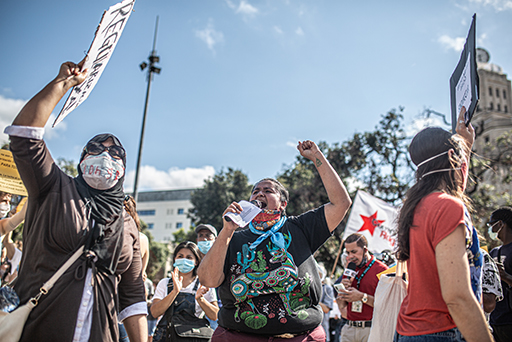
The aim of this course is to build on what you may already know, introduce you to some new perspectives and approaches, and provide opportunities to build knowledge and experience around how to make change happen.
Whether you are an experienced changemaker or a newcomer, we welcome you.
Getting the most from the course
Throughout the course, we will discuss concepts, tools and strategies often used by changemakers and activist organisations. We will also hear from several inspiring activists from a range of countries and contexts about their first-hand experiences of making change happen. You will have the opportunity to apply what you learn to a real-world problem affecting you, your community, or your country and which may be part of a global movement or more local in nature.
In each unit there will be steps where we ask you to note your reflections, learning or plans. There are various options for recording these. You can either use the free text boxes provided, and then save or print these out at the end of the course, or you can open and type into or print out the ‘Make Change Happen Plan’ which is in the PDF downloads at the end of this step. Alternatively, you can keep a notebook by your side and note your thoughts there.
The reflection icon below will remind you when there are steps for self-reflection or journaling throughout the course.

We encourage you to take part in all you can but feel free to skip forward if there are activities that do not suit you. You can also return to steps if you think of ideas later. Content in the course is provided on a CC-BY-NC-SA licence which means that you are free to share it and adapt it.
You will gain a certificate and badge on completion of the course.
About the course team
The course was developed by staff from across Oxfam and draws on many sources and knowledge shared by other organisations, activists and thinkers. The course was developed in partnership with The Open University, which provided support with the learning design and delivery.
Oxfam believes in the power of people. Millions are already mobilising. Even where people live in crisis or poverty, they have the courage to hold those in power to account for their actions. These are the changemakers who will win the fight against inequality, who will beat poverty and injustice. We offer our support to help relieve suffering, and act together to transform lives and create change that lasts. This course is part of that effort, designed to share what we, our partners and other activist organisations have learned about how change happens, and to create space for you to develop your own thinking and practice.
The course includes stories of political, social, economic, and environmental change drawn from a range of organisations, movements, community groups and activists around the world. The stories are used to illustrate learning points but are by no means exhaustive and you will know of many more examples from your own countries and areas of interest.
Course outline
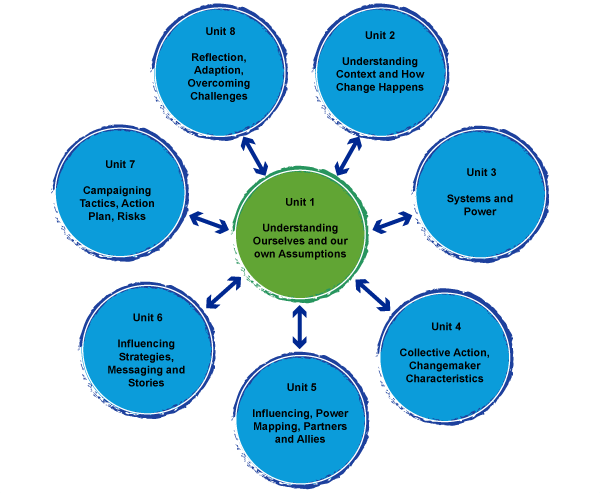
In brief, the course will take you on a learning journey which follows this route over the eight units. However, change is not a linear process. The order of course elements over the eight units could be debated but we have strived to make a learning journey which is engaging, valuable, and inspiring.
We hope you enjoy it!
Your Make Change Happen Plan
The activities in this course will prompt you to make notes. For your convenience, and to keep all your thoughts in the same place, we have created a downloadable Make Change Happen Plan, to help you study.
You should download this plan and save it somewhere you can easily access, if you wish to use it.
 Activity 1.1: What is your experience of making change happen?
As you begin this course it is worth reflecting on what you already have experience of and can bring to the learning journey.
How have you been involved in social, environmental or political change processes in your life or in your work? Have you taken part in marches, campaigns, community actions, or movements for change, or simply talked to friends, family and neighbours about the issues that you are passionate about?
It is also worth reflecting on where the gaps in your knowledge and experience are and what you hope to get from the course. What are you hoping to learn?
Add your thoughts to the free text box, in the Make Change Happen Plan or in your own notebook.
1.3 Introduction to Unit 1: What kind of change are we talking about?
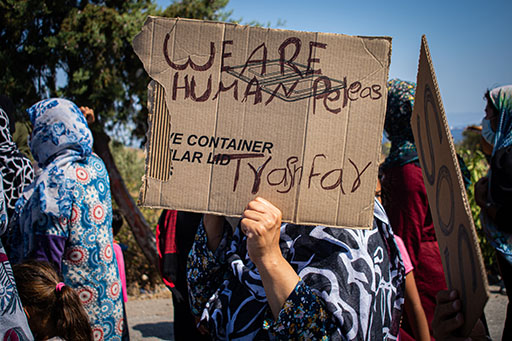
In this first unit of the course, we will look at different ideas of what change is and what it means for people and communities. We will explore the role of changemakers in making change happen and will hear from a range of individuals who are active in resisting attacks on their rights, or the rights of others, and bringing about change in different ways and in different contexts.
It will be important to think about how the perspectives presented are similar or different to your own experience and understanding of change. We hope that you can bring together your current understanding with some new perspectives as you think about change goals you have for yourself and for your own community.
 Learning outcomes
By the end of this unit you will:
- identify the underlying assumptions about ourselves, about others, and about what change is and how change happens
- understand the different forms and drivers of change
- recognise the planned and unintended consequences of change.
1.4 Understanding ourselves
Transcript
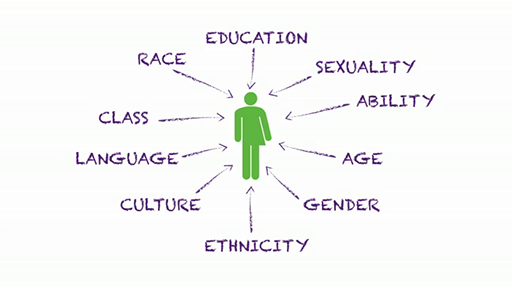
Watch this video which explains that, without always being aware of it, we see the world through our personal experience, identities and beliefs and we make assumptions all the time based on those beliefs. If we are to engage in effective change processes, we need to be aware and willing to interrogate our own assumptions and beliefs. Failure to do so will likely make us judgemental and could bring us into conflict with others.
Downloads
Activity 1.2: Thinking about you
Take some time to think about who you are and what your various identities and sources of power and privilege are, or your experiences of marginalisation or oppression. How might these inform the way you think about and engage with different issues in the world?
Here are some useful questions to help you reflect on this:
- What are one or more ways in which you have had unearned advantage in your life due to factors outside your control, or where there are barriers that other people experience that you do not (also known as privilege)?
- What are one or more ways in which you have had disadvantage in your life due to factors outside your control (also known as areas of oppression)?
Think about these questions in relation to your own:
- Gender and gender identity
- Race
- Class
- Religion
- Employment
- Economic status
- Nation of origin
- Sexual orientation
- Ethnicity
- Age
- Physical ability
- Education
- Language
- Migration status
Try to remember the first time that you became aware of the differences in power between people and how their identities may advantage or disadvantage them. What was the incident or experience that led you to this awareness?
Now, try to remember the first time you became aware of your own power, or felt a sense of powerlessness? If you have felt less power at times, what are your strategies to build your own power?
When you reflect on yourself – your multiple, intersecting identities, your background and life experiences, your own power – what does this lead you to consider in terms of your role as a changemaker?
Add your thoughts to the free text box, in the Make Change Happen Plan or in your own notebook.
1.5 So what is change?
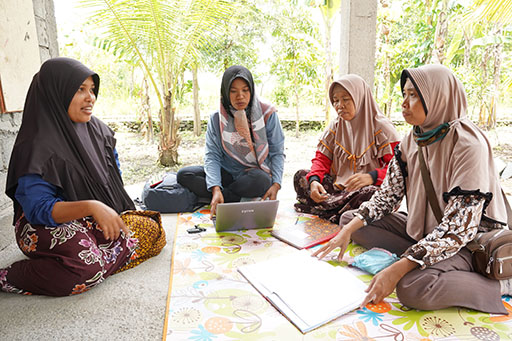
Here are some thoughts on what change is:
- Change comes in many guises and happens in many ways.
- Change is nearly always contested. Some people or institutions will support it, others will oppose.
- Change can be transformative when it challenges existing ways of doing things, or it can be incremental and piecemeal.
- Change can happen through strong and decisive leadership, or it can happen through shared interests and collective action.
- Change can appear to happen through luck, or a happy, or unhappy, accident.
- Change may be one small piece of a bigger picture where the long-term outcome may be unknown, and it may also involve one step forward and two steps back.
- Change can be scary. It is unpredictable and makes people feel insecure, even if those people stand to benefit from the change.
- Change does not affect all groups in the same way, and can be good for some while being less good (or bad) for others.
- Change can be highly beneficial, and it can be dangerous, putting certain groups at risk.
- Change can lead to a backlash, where individuals or institutions work to undermine a change achieved and try to restore the previous order of things.
- Change can be led from outside the community, often imposed from government or private companies, or it can come from within the community, from active people at the grassroots level.
- Change can be supported or opposed by governments or businesses, for good or for bad.
- Change can happen at different levels; at a personal level within ourselves, at a household level, community level, national level and global level.
- Change at a personal level can evoke strong feelings: fear, loss, anger, self-doubt, hope, joy, acceptance, solidarity.
- Change can be resisted by vested interests, which benefit from the status quo, but where outside interventions can loosen and overcome such resistance.
- Change can also be resisted by communities and disenfranchised groups, who consider it more of a threat than an opportunity.
- Change in some form is continuous and inevitable – even things that people consider to be immovable and fixed are always changing – culture, norms, beliefs and practices.
- Change can happen as the result of intentional action, and it can emerge in unplanned and unpredictable ways, with unintended consequences.
- Change often looks clear only in retrospect. While they’re happening, events are often confusing and contradictory.
- Change processes are seldom smooth – they often consist of long spells of stasis, punctuated by sudden spikes of good/bad change (‘windows of opportunity or threat’).
Activity 1.3: What do you think change is?
What have we missed here? What else are important characteristics of social and political change? Which of these thoughts on what change is do you think are the most relevant to making change happen in your location?
Add your thoughts to the free text box, in the Make Change Happen Plan or in your own notebook about what you think is important to understand about change.
1.6 People as activists: making change happen
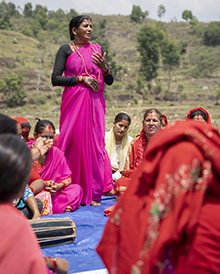
When we talk about change in this course, we are talking about people acting to make a positive difference in their communities, their organisations or in wider society.
Such activism is any action with social consequences. You may well have already taken part in actions like these in your community. It often involves coming together with others who have similar values and ideas in social movements, faith groups, women’s groups, youth groups, queer groups, neighbourhood associations, trade unions, or village savings and loan groups. We call this collective action.
Acting collectively
Activists come together to resist repression and attacks on human rights. They can provide vital feedback to state decision-makers in shaping legislation and exerting pressure for reform of existing laws to meet people’s needs, even where restrictions to the activities of civil society organisations and individuals undermine the ability for people to speak out. By coming together individuals can add to and make louder the voice they have through traditional political channels such as democratic elections, where they exist.
Activists can also challenge regimes as in the popular uprisings and demonstrations seen in many countries in recent years. Such momentous protests often lead to a backlash or crisis or a period of uncertainty. They do not always achieve the change they aim for right away, but they are an important signal that change is necessary.
But whilst most of the day-to-day efforts of activist groups are less dramatic than the overthrow of governments, they do play an important role in the change trajectory of most societies.
Movements have coalesced in different parts of the world against racist policies, police brutality, and the legacy of colonialism, and for reparations, civil rights and racial justice. They have strived for women’s rights and the rights of gender and sexual minorities, for reproductive rights, rights to land and inheritance, protection from sexual harassment and gender-based violence, and the rights to freedom of expression and self-determination.
Movements have formed in protest over environmental destruction, from the climate crisis to big infrastructure projects that threaten to displace people from their homes. Many of these have been led by Indigenous communities and by young people, coming together to exert their collective power.
Factory workers, state employees, university students and small-scale farmers have long realised that organising collectively will give them the bargaining power they need to get better conditions for themselves and others.
Groups like trade unions, producer associations, cooperatives and small business associations can win fairer wages, prices or working conditions for their members. People also have some power as consumers of products and services and can effect change through their decisions on what to buy.
Alliances and coalitions of groups can influence international policies such as banning landmines, gaining access to medications and vaccines, and making trade fairer. Many lobby government for greater state regulation or other measures to limit the excessive and often hidden power of business interests.
Acting locally
Activists also work locally, pushing authorities to install street lighting, bike lanes or clean water, pave the roads or invest in schools and clinics. Community groups often run services themselves such as public education programmes on everything from hand washing to labour rights.
In conflict-affected eastern Democratic Republic of Congo, Community Protection Committees made up of six women and six men elected by their villages identify the main threats to villagers and implement actions to mitigate them. When people are forced to flee renewed fighting, they help people get organised in new refugee camps.
Responding to opportunities and trends
The factors that cause people to step forward to campaign for change can be many and varied.
Some of these factors are political, economic, social, technological and environmental longer-term trends. For example: migration, urbanisation, climate impacts, demographic changes between younger and more ageing populations, awareness of issues through social and traditional media. They also include more sudden shifts that may occur within countries or globally, what we call critical junctures, for instance spiralling consumer prices, extreme floods, wars, and the sudden fall of governments or regimes. These critical junctures can provide windows of opportunity for people to take action and push for a change. They may also constitute threats that call for resistance.
1.7 What drives a changemaker?

Transcript
As part of the development of this course, we spoke to people around the world who are passionate about making change happen. We wanted to understand what drives them, how they think about change, and what lessons they could share.
We have included some of the interviews here. The changemakers featured are working on a wide range of different issues, in different contexts, as individuals, in organisations, and as part of networks and movements. Please note that the views expressed are their own.
In this first video we meet Art, Elena, Kelly, Oudai, Neha, Eric and Sabah who share their perspectives on what drives them to take action for change.
Changemaker Profiles:
Chioma Agwuegbo is Executive Director at TechHerNG and is convener of the #StateofEmergencyGBV Movement, a coalition of organisations igniting citizens to advocate for an urgent, comprehensive, and sustainable response to sexual and gender-based violence in Nigeria.
Sabah Khan is co-founder of Parcham, an organisation in India dedicated to breaking stereotypes based on religion, class, caste, gender and other markers of difference to create a society respectful of diversity.
Elena Mejia is a feminist rapper, organiser and facilitator working in Lima, Peru to address issues of gender justice, economic justice and narrative work for social movements in the Actua.pe labs.
Kelly Mundy is a Senior Campaign Manager for Oxfam Great Britain campaigning to tackle inequalities such as economic and gender, which undermine the fight against poverty.
Eric Njuguna is an organiser with Fridays for Future MAPA (Most Affected People and Areas) in Kenya, supporting protests aimed at putting pressure on world leaders to take action to advance climate justice and to amplify the voices of those most impacted by the climate crisis.
Hadeel Qazzaz is a Regional Gender Justice Coordinator for Oxfam International based in Ramallah, West Bank, and advocates for women's rights throughout the Middle East and North Africa region.
Art Reyes III leads an organisation called We The People: Michigan, that works to build multi-racial working class organising capacity in the state of Michigan, USA, fighting for a better state and community that all people deserve.
Neha Singh is an organiser who started a women's rights campaign called ‘Why Loiter?’ in Mumbai, India, that aims at reclaiming public spaces for women by loitering.
Oudai Tozan is a researcher and founding member of the Syrian academics and researchers network in the UK, working with the Syrian diaspora and those who experienced forced migration to mobilise, connect and support each other, but also to support Syria when the situation allows.
1.8 Three views on change
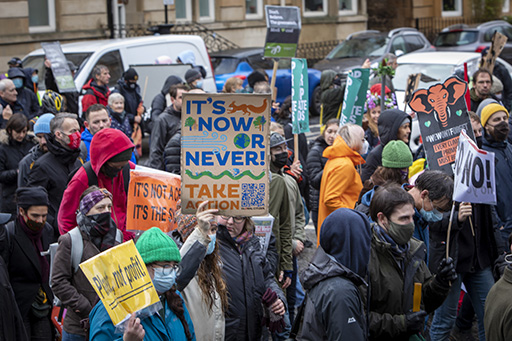
To provide some illustration of different kinds of change read these three brief case studies.
They each vary by level of change – personal, local and global; by who are the drivers of the change – individuals, communities and movements; by what type of change they are addressing – attitudes, policies, behaviours; and by how they are making change happen – through the use of digital technology, through protest, and through quiet activism.
Each of these examples is making an important contribution to making change happen on climate change and environmental degradation.
By looking at the three we can sharpen our awareness of the different ways in which change can and does happen.
Case study 1: Protecting the forest from loggers
Born in rural Odisha, India, Jamuna Tudu grew up in a family which planted tree saplings on their land as there was no existing forest there. She married in 1998 and moved to another village 100km away where there was a lush forest she could see from her new house. However, when shown the area she was shocked to see how ravaged the forest was. It was being stripped of trees by illegal logging by the local mafia. She couldn’t stand seeing the trees cut down and resolved to do something about it.
Jamuna tried to gather the women of the village to protect the forests but many were fearful of the mafia, and her family were resistant too. She managed to persuade five women who shared her passion for forest conservation to join her. Together they formed the Van Suraksha Samiti. They set up patrols of the forest area and tried to scare away the loggers. They would confiscate saws and hide them in the village which led to attacks. It became clear there was cooperation between the police and the mafia. Despite the dangers, more women found the courage to come forward and joined Jamuna and the others in defending the forest. They established new traditions such as planting saplings on the birth of a baby or on marriage.
Jamuna realised the need to go beyond her village and help save the forests of nearby villages. She convinced them to take action against the illegal loggers too. Today, 10,000 women across 300 villages work together to stop the cutting down of the forests. She says, ‘As long as we live, we dedicate ourselves to protecting forests and planting new saplings.’ Jamuna’s determination and courage has been recognised through several prestigious awards.
Case study 2: School Strikes for climate
Frustrated by the unwillingness of people to acknowledge and take action on the climate crisis and the lack of leadership and change from policy makers, the then 15 year old Greta Thunberg began to sit with a placard outside the Swedish parliament every Friday in August 2018. Then, in the three weeks leading up to the Swedish election, she sat there every school day, demanding urgent action. The media picked up on this and as news spread, more young people in her town joined her in the school strikes, and others organised actions outside local parliaments and town halls around the world.
Vanessa Nakate was 22 at that time and worried about the impacts of the climate crisis on agriculture and livelihoods in Uganda where she lived. Concerned about the lack of public awareness of the causes and impacts of the crisis, and by its absence from the school curriculum, she organised Uganda’s first youth strike in January 2019, initially joined only by her siblings as many of her fellow students were too nervous to join, afraid that they might face arrest. She continued her protest each week, often alone, standing outside the Ugandan parliament.
Initially ignored or dismissed by many, her message grew on social media as she shared images of her strikes on Twitter. In late 2019 she was invited to join other youth activists at COP25 in Madrid and used her attendance to highlight the lack of African voices and experiences in international coverage of the climate crisis. Vanessa is now an important voice in the youth strike movement and has founded the Rise Up Movement to amplify African perspectives on climate change. Increasingly, the term MAPA (Most Affected People and Areas) is being used to help focus climate activism on the needs of communities that contributed the least and which suffer the most from climate crisis.
#FridaysforFuture is part of that hopeful global movement that has forged a consensus for climate action amongst many young people. In November 2019, 4 million people took part in school strikes across the world.
Case study 3: Historic legal victory for climate justice in France
The French government, among others, has been very vocal about the climate crisis on the international stage over the past few years, making commitments at summits including the Paris agreement on reducing carbon emissions in 2015. Like most governments of wealthy and industrialised countries who pollute the most, the French government has failed to take these commitments seriously.
In December 2018, four French NGOs; Notre Affaire à Tous, The Nicolas Hulot Foundation, Greenpeace France and Oxfam France launched legal action against the French State for non-compliance with its climate obligations, its lack of climate ambition, and endangering the fundamental rights of French citizens. In just a few weeks, more than 2.3 million people signed the petition supporting the action – the largest in French history on any issue. Social media influencers were key and a video clip accompanying the launch had 14 million views on Facebook, and 1 million on YouTube.
On February 3rd, 2021, a French court ruled that the State’s inaction on climate change is illegal and that it is at fault for failing to take sufficient measures in line with its legal commitments. It also recognised the harm done to the environment because of France’s climate inaction. This sets an important legal precedent. It leaves the government open to compensation claims from French citizens who have suffered climate-related damage, such as flood victims or farmers and winemakers. On December 31, 2022, the deadline given by the court for the French State to act to limit its greenhouse gas emissions expired. The plaintiffs in the case are pushing for a financial penalty beginning in 2023 to force the State to act.
The case is part of a growing global movement to take legal action to force governments, and others, to act on climate change. The French case was inspired by a similar case in the Netherlands which ordered the government to ramp up its emissions reduction target. In Colombia, 25 young people got Supreme Court recognition of the need to act against deforestation, and in favour of climate protection. In Pakistan, a farmer’s son obtained recognition of the right to life and of access to food in the face of climate change.
Activity 1.4: Looking at change through different lenses

After reading the three case studies, think about the following questions.
- What different factors brought about the changes in the three case studies?
- Who were the changemakers and what role did they have?
- At what levels did change take place (personal/household/community/national/global)?
- Was the change sparked by a sudden event and/or is it part of a wider shift or trend?
- Which aspects were planned, deliberate change and which were more spontaneous, unpredictable or even unintended?
- Were there any groups negatively impacted, and any who may have resisted the change?
- What long-term or more widespread changes do these case studies suggest might occur as a result?
Add your thoughts to the free text box, in the Make Change Happen Plan or in your own notebook about how change happens based on this exercise.
1.9 What will your change be?
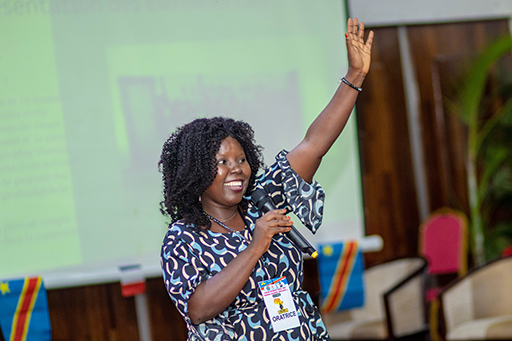
Now it is over to you to think about the change that you would most like to make a contribution to. There is so much that needs to change, and also so many ways to get involved. What key challenges that you see around you are you passionate about changing? Why do you care about this issue?
To help you think about your change goal – i.e., what you want to happen – and to define it more clearly, we will undertake a ‘visioning’ exercise.
Unit 2 will then help you to focus in on what role you can play to make this change happen.
Activity 1.5: Visioning your change
Take a moment to imagine that you woke up one morning and what you wanted to see changed had happened. You had helped solve the problem you wanted to address.
You can think as far as you need to into the future (because, as we know, real change takes time):
- What would the changed state be like?
- What tangible changes will you see?
- What will the people who have benefitted from the change be doing, be feeling, be saying?
- What unintended consequences might there be?
- Who might be negatively affected by this change, and so potentially still resist it?
In no more than 50 words, write your change goal in the free text box, in the Make Change Happen Plan or in your own notebook.
1.10 Summary of Unit 1
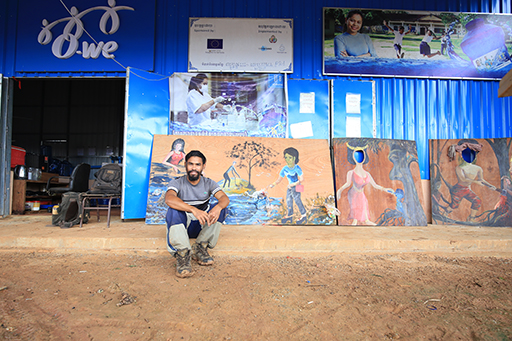
In this first unit you have taken some time to orient yourself to the course and to reflect on your own identity and assumptions and their role in how you can effectively make change happen. You have considered what social change is and different drivers and types of change.
You have listened to the testimony of changemakers from around the world and looked at three different stories of change tackling the same issue in different ways. We hope that this has given you a good grounding on the diversity of approaches to change.
For social change to happen, specific and concrete actions need to take place. It is not just about creating awareness and interest in an issue, for example, although that is important. Something actually needs to shift for change to take place; something that makes a real difference that we can see or experience.
You have undertaken an exercise to help you visualise a change you would like to see and imagine what the future state might be. As a changemaker, having a clearly visible goal, explaining why achieving that goal can make a real difference, and mobilising or persuading people to action are critical elements in your ability to achieve the change. In the next unit we will look more at the broad context for the change that you envision, we will analyse what specific areas of change are needed, and you will have the chance to identify objectives to achieve your change goal.
Further reading
Here are some links to sites where you can find out more about making change happen as well as more about the campaigns and change processes featured here.
- Oxfam Influencing for Impact Guide
- Oxfam Policy & Practice tools for influencing
- Views & Voices Influencing blog series
- From Poverty to Power
- How Change Happens
- Activists Handbook
- Mob Lab
- Beautiful Rising
- AWID Rights at Risk Resource Library
- JASS Just Power
For more information about staying safe online visit:
- Security in-a-Box (from Tactical Technology Collective and Front Line Defenders)
- Surveillance Self-Defense (from the Electronic Frontier Foundation)
- Take Back the Tech provides specific advice for women’s rights activists working online
1.11 End-of-unit quiz
In Unit 1 of this course, the topics have been – what kind of change are we talking about, understanding change, changemakers and their stories, and different forms and drivers of change.
Now test your knowledge on what you have learned with this short quiz.
References
Source for case studies:
Fridays for Future (n.d.) What is MAPA and Why Should We Pay Attention to It?, [Online]. Available at: https://fridaysforfuture.org/ newsletter/ edition-no-1-what-is-mapa-and-why-should-we-pay-attention-to-it/ (Accessed 15 August 2023).
Grano de Sal (2018) Cómo ocurren los cambios, [Online]. Available at: http://granodesal.com/9786079805906-2 (Accessed 15 August 2023).
Green, D. (2024) How Change Happens 2nd Edition, Duncan Green, Oxford, UK: Oxford University Press: https://fdslive.oup.com/ www.oup.com/ academic/ pdf/ openaccess/ 9780198899952.pdf
JharkhandStateNews (2020) Jamuna Tudu uses mobile phones to protect forest in Jharkhand, 6 July, [Online]. Available at: https://jharkhandstatenews.com/ article/ top-stories/ 3603/ jamuna-tudu-uses-mobile-phones-to-protect-forest-in-jharkhand (Accessed 16 October 2023).
L’Affaire Du Siècle (n.d.) L’Affaire Du Siècle, c’est un movement citoyen inédit!, [Online]. Available at: https://laffairedusiecle.net/ (Accessed 16 October 2023).
Le Comte, A. (2021) A Historic Legal Victory for Climate Justice in France, Oxfam, 10 March, [Online]. Available at: https://views-voices.oxfam.org.uk/ 2021/ 03/ a-historic-legal-victory-for-climate-justice-in-france/ (Accessed 15 August 2023).
McIntosh, P. (1989) ‘White Privilege: Unpacking the Invisible Knapsack’, Seeking Educational Equality and Diversity, Wellesley Centers for Women, [Online]. Available at: (1989), Some Notes for Facilitators (2010), Peggy McIntosh https://nationalseedproject.org/ key-seed-texts/ white-privilege-unpacking-the-invisible-knapsack (Accessed 16 October 2023).
Advance HE (n.d.) Unconscious bias, Impact of unconscious bias, [Online]. Available at: https://www.ecu.ac.uk/ guidance-resources/ employment-and-careers/ staff-recruitment/ unconscious-bias/ (Accessed 15 August 2023).