Use 'Print preview' to check the number of pages and printer settings.
Print functionality varies between browsers.
Printable page generated Monday, 14 September 2026, 1:39 AM
Unit 4: Partners
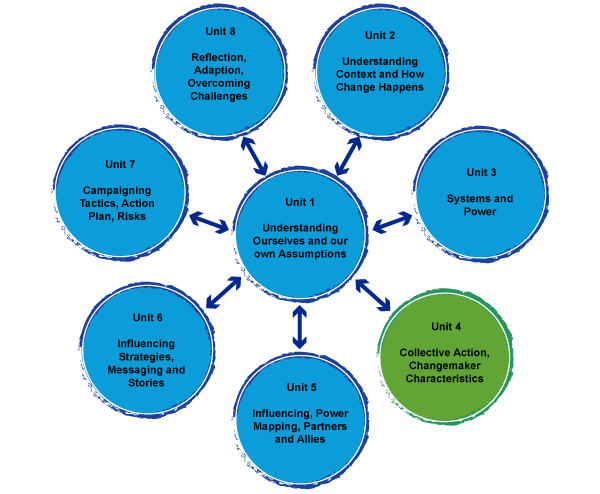
4.1 Introduction to Unit 4: The power of collective action

There is power in people. As we learned in the previous unit, ‘power with’ and ‘power within’ are two expressions of power that can be harnessed to great effect to make change happen. In this unit we will explore in more depth how working with others is a fundamental approach to achieving change.
We have already identified some characteristics of effective changemakers, such as having a good awareness of one’s own identity and potential biases, and being willing to adapt and change according to the power dynamics and shifts in the economic, political, and social system. Effective changemakers need to sharpen their ability to ‘dance with the system’, adjusting to the changing landscape of possibilities and threats, endlessly curious about their environment, understanding how others are engaging and reacting to the context, rather than becoming too fixated on their own plans.
In this unit we will delve a little deeper into the qualities you might already have, or wish to cultivate, as you lead change and join others in making change happen.
 Learning outcomes
By the end of this unit you will:
- understand the benefits of working with others
- recognise the characteristics of effective changemakers
- understand good feminist leadership for change.
4.2 What is the power of collective action?
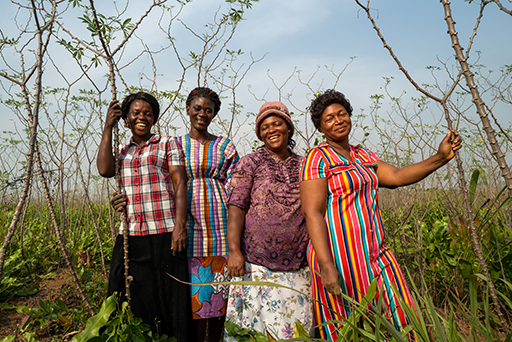
Working with others through partnerships, as part of coalitions and alliances, and in support of broader movements is vital in building collective power. Here are some of the benefits:
- Allows you to identify new ideas and approaches, valuing diversity in perspectives.
- You can reach and mobilise more people.
- You can build common agendas, enabling better coordination.
- Creates a louder and more credible voice.
- Strength in unity can reduce some risks.
- Share skills, acknowledging that different stakeholders have different strengths.
- Reduces competition for resources and helps avoid working in parallel or at counter purposes.
But there are many other reasons too.
 Activity 4.1: The power of collective action
Why do you think working with others to achieve change is so important? Can you think of examples where collective action has been particularly powerful?
Add your reflections to the free text box, in the Make Change Happen Plan or in your own notebook.
4.3 What do we mean by collective action?
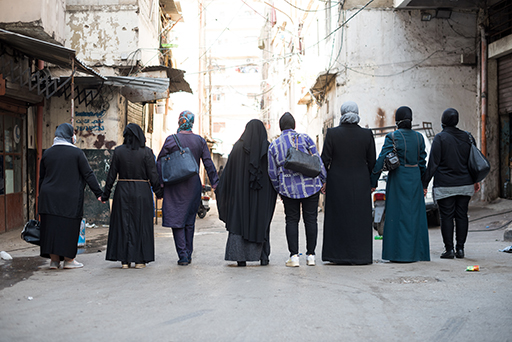
Collective action – working with others – is a critical element of achieving change. It is a form of ‘power with’ and is more effective than each interested individual working alone.
Collective action can operate at a local community level. Or it can address systemic social and political issues on a grander scale, where social movements can play a significant role nationally or across borders.
Social movements are important actors for change around the world. You may already have been part of one or more movements as someone with a passion for making change happen.
Whether it's a struggle against violence and impunity, for a more democratic regime, or more specific demands such as land reform, the right to marriage, policies to combat climate change, or the passing of gun control laws, it is often the power of people organising, marching in the streets, and connecting via social media that proves a crucial factor in creating pressure for change.
Even when unsuccessful in achieving their overall objectives, there is great power in organising in this horizontal way, and building solidarity around common identities and grievances.
Movements of disability activists, Black, Indigenous and People of Colour, women, transgender people, students, or garment workers uphold the principle of ‘nothing about us, without us’. Participation in such movements gives us hope that we are directly involved in the process of building a better world. For activists who are not at the grassroots, there is an increasing emphasis on supporting such movements, and being careful to avoid ‘getting in the way’ of local leadership and action. Depending on the issue, your natural allies are most likely to be other local people and civil society groups, those who are directly affected by a particular issue, and whose cause you can also get behind in a sensitive and truly supportive manner.
Your plan to make change happen might also need to include working with people who are undecided or who are not fully aware or understand the importance of the issue. And it will likely also include those who are blocking your change, either directly or indirectly. It should also challenge you to think carefully about your role, your own power, how you or your organisation is truly perceived, and what this means for how you work with others.
Collective action can mean working with people or groups who have a different point of view, different life experiences or different ideas about how change happens and what the priorities should be. So, as well as building relationships with like-minded individuals and organisations who champion your cause you may also need to reach out to others who you would not normally align with but who could bring benefits to your cause. These are people or organisations who may be respected and listened to by those who have decision-making power, such as business leaders, academics or local chambers of commerce.
4.4 How working with others achieves change
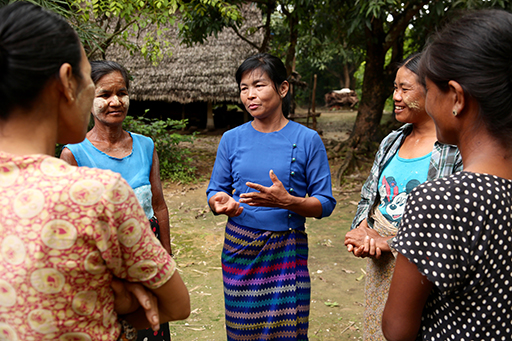
We all know of inspiring examples of national or global movements for change. Here are two case studies that illustrate the power of collective action in communities where, despite difficult local contexts, citizen activism has successfully achieved local changes in policy and practice, attitudes and behaviours.
One group increased their negotiating power by working together, the other increased their power of persuasion by campaigning together.
Anti-domestic violence little vaccine
From January 2020, many Chinese cities including Wuhan were locked down due to the Covid outbreak.
At the beginning of the lockdown, Guo Jing felt vulnerable and helpless as the infection rate rose dramatically. She began communicating regularly with her friends online, setting up a feminist activist WeChat support group after a few days. The group examined the lockdown from a feminist perspective discussing ways of engaging with the social impacts and exploring strategies to help individuals overcome a sense of vulnerability, especially for young women like themselves.
In their discussions, they realised that the epidemic was exacerbating sexual discrimination and domestic violence against women. Trapped in a confined physical space for a long period of time, many men were venting their pent-up frustrations on their family members.
Guo and her friends decided to launch an ‘Anti-Domestic Violence Little Vaccine’ campaign. The group published an open letter online, calling for an end to domestic violence and encouraged people to copy or print out the letter and post it in public spaces. The response was overwhelming: ‘In just a few hours, several thousand people volunteered to become 'little vaccines’ volunteers.’ Many people dialled the telephone number of the Women’s Rights Hotline run by the All-China Women’s Federation to make sure that the hotline was in operation. Others shared their own experience of falling victim to domestic violence. The campaign’s Weibo social media account attracted over 8 million views with many comments supporting the campaign. One participant wrote: ‘We should all become active spectators and refuse to remain silent when seeing domestic violence around us!'
Feminist activism is a politically sensitive issue in China but it is possible to tackle domestic violence with the right approach. The campaign attracted some male participants and support from parents. The ‘Anti-Domestic Violence Little Vaccine’ campaign offers a good example of activism in a time of crisis and a ‘state of emergency’. The collective spirit and emotional intensity generated can be mobilised for activist purposes, and the impacts can be greater than in more ordinary times.
Women peacebuilders in Yemen advocate for the re-opening of Al-Riyyan airport
The conflict in Yemen labelled the country as one of the worst humanitarian crises in the world. According to the UN, more than 21 million people in Yemen are in immediate need of humanitarian assistance. Yemeni citizens lack access to medical supplies and foodstuffs and lack freedom of movement throughout the country or internationally with more movement restrictions imposed on women and girls. Despite the difficulties and limited participation of women in the political arena, women peacebuilders in Yemen are working tirelessly to alleviate the suffering of their communities.
The Al-Riyyan International Airport in the coastal city of Mukalla, the capital of the Hadhramaut governorate, was closed in April 2015 after Al Qaeda in the Arabian Peninsula (AQAP) took over the city. Despite the city’s liberation from AQAP the following year, the airport remained closed. Without access to the airport, citizens in Mukalla had to travel over 200 miles on hazardous roads to the airport in Sayoun. For patients with severe medical conditions, this journey was dangerous or impossible.
A women’s group in Hadhramaut began advocating for the re-opening of the Al-Riyyan airport. Their campaign had a two-pronged approach: holding meetings with key stakeholders and decision-makers to apply pressure to re-open the airport and using creative means to raise community awareness and generate public support for the campaign’s initiative.
The women’s group used art and community gatherings for their awareness-raising and advocacy. They produced a short stop motion animation film titled ‘The Longest Way to Our Dreams’, which portrays a young girl who suffers a life-altering car crash and is unable to seek medical attention due to the airport’s closure. They held community gatherings where people affected by the closures could share their stories. The women’s group compiled ten of these personal accounts into a booklet called ‘Unforgettable’, a booklet full of stories, children’s drawings and poems depicting the suffering caused by the conflict in Yemen.
In January 2019, the governor of Hadhramaut accompanied the women’s peacebuilding team on a visit to the Al-Riyyan airport. This visit was covered by local media and television stations and broadcast widely on social media. ‘Through networking and advocacy, the women’s group was able to convey their demands to local government representatives and decision-makers in a peaceful manner... these women deserve to occupy senior leadership positions,’ said the deputy governor for youth affairs in Hadhramaut. The governor of Hadhramaut directed all airport staff and personnel to resume their positions starting in April 2021.
During the closing ceremony of the advocacy campaign a member of the Hadhramaut women’s group proclaimed, ‘We were able to prove that women can make a difference. We have successfully achieved the goals we had when we started the project and will continue to address various community priority issues.’
4.5 ‘Nothing about us, without us’
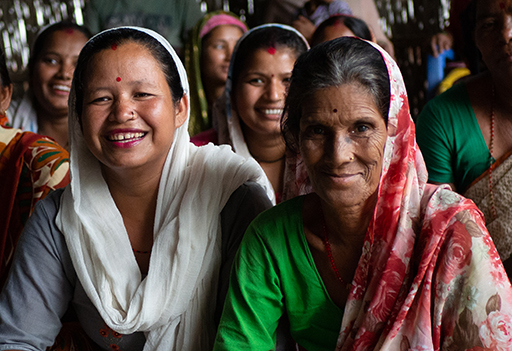
As we have seen in these two case studies, one of the great advantages of working collectively with others is that you are more likely to make a change that is the right change for more people.
Take your lead from those for whom you want to bring about change. You should never simply assume that the change you are seeking matches the aspirations and needs of the community. By listening to and looking at the change issue together you are more likely to create solutions and a change that sticks. Act in solidarity with people rather than on their behalf.
As a changemaker you may be part of, or working directly with people or groups who are marginalised or excluded in society. If so, follow the rule: ‘nothing about us, without us’, i.e. propose or decide nothing without their active leadership in the decision-making process.
Bringing in diverse voices and perspectives provides a depth and breadth of experience on your change issue. It can also help to offset the unconscious biases and assumptions that we all naturally have and that we explored in Unit 1. Actively including those with different gender and sexual identities, racial or ethnic identities, religions, classes, migration statuses, ages, and with diverse physical and mental capabilities is important, remembering that within each of these groups there are people whose experiences intersect with those of other groups, so they may experience inequality in multiple ways.
If you are not directly affected by the change issue, you need to be clear about your role, and how you will work with and support people who are. This means helping to make space for the voices of others, and being very careful not to crowd them out.
Community organising
Community organising and activism enables a group of people to turn its resources into the power to make change happen. The first question a community organiser might ask is not ‘what is my issue’ but ‘who are my people’ – who is my constituency. It is about the people with a particular problem mobilising their own resources to solve it.
However, communities, of whatever form, will have their own power dynamics and inequalities. Many of the forms and expressions of power we reviewed in the last unit may exist within them. It is important as changemakers to recognise that no one person can claim to ‘represent’ all people within a community. Working with the community to address power differences and inequalities will need a careful approach.
The principles that many community organisers hold close to their hearts are:
- that power is shared
- that community effort is based on equal partnership and open dialogue – active listening and reflection are key
- that change is also based on individual and community transformation – ‘power within’ and ‘power with’ leading to ‘power to’.
As always when working with people, cooperative and collaborative behaviours and modes of working are the most effective approaches. Bringing people together around an issue takes time and decision-making is often complex and can be slow. Being able to work with others is dependent on your ability to build and maintain trust. It is the essential glue which will help you identify and fully realise the strengths of each person in your group or each party in an alliance and to reach agreement on the strategies and tactics to use. Consensus has to be constructed with care and different interests within the group need to be dealt with in an open and transparent way. Establishing clear roles, plans and ways of working together will help avoid confusion and hopefully engage and keep people motivated.
Basing the collaboration on a shared vision and commitment to deliver good change can go a long way. You may need to make compromises to your vision of change to accommodate others’ views but it will also mean that you will have a greater chance of moving forward.
4.6 How do you harness the power of collective action?
Transcript
In this video we hear from Neha, Elena, Hadeel, Oudai, Sabah, Kelly, Art, and Eric about what they see as the benefits of working in partnership with others for change, harnessing the power of collective action.
Chioma and Oudai also share some thoughts about navigating the challenges that may come from working with others.
Eric, Kelly and Sabah then talk about some of the qualities of a strong changemaker.
Changemaker Profiles:
Chioma Agwuegbo is Executive Director at TechHerNG and is convener of the #StateofEmergencyGBV Movement, a coalition of organisations igniting citizens to advocate for an urgent, comprehensive, and sustainable response to sexual and gender-based violence in Nigeria.
Sabah Khan is co-founder of Parcham, an organisation in India dedicated to breaking stereotypes based on religion, class, caste, gender and other markers of difference to create a society respectful of diversity.
Elena Mejia is a feminist rapper, organiser and facilitator working in Lima, Peru to address issues of gender justice, economic justice and narrative work for social movements in the Actua.pe labs.
Kelly Mundy is a Senior Campaign Manager for Oxfam Great Britain campaigning to tackle inequalities such as economic and gender, which undermine the fight against poverty.
Eric Njuguna is an organiser with Fridays for Future MAPA (Most Affected People and Areas) in Kenya, supporting protests aimed at putting pressure on world leaders to take action to advance climate justice and to amplify the voices of those most impacted by the climate crisis.
Hadeel Qazzaz is a Regional Gender Justice Coordinator for Oxfam International based in Ramallah, West Bank, and advocates for women's rights throughout the Middle East and North Africa region.
Art Reyes III leads an organisation called We The People: Michigan, that works to build multi-racial working class organising capacity in the state of Michigan, USA, fighting for a better state and community that all people deserve.
Neha Singh is an organiser who started a women's rights campaign called ‘Why Loiter?’ in Mumbai, India, that aims at reclaiming public spaces for women by loitering.
Oudai Tozan is a researcher and founding member of the Syrian academics and researchers network in the UK, working with the Syrian diaspora and those who experienced forced migration to mobilise, connect and support each other, but also to support Syria when the situation allows.
4.7 Characteristics of effective changemakers
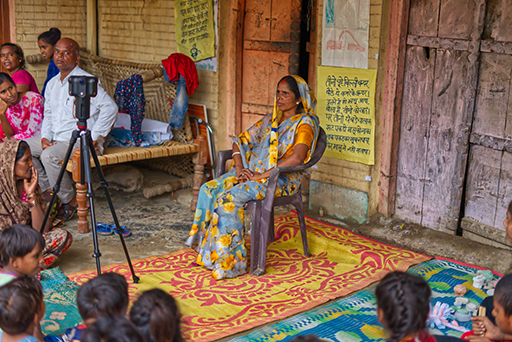
What drives a changemaker? What drives you?
Some changemakers are driven by their struggle for survival and the defence of their own rights; others by their values, personal experience, a sense of social or political justice or a personal moral compass that distinguishes what they believe is right and wrong and inspires a belief in the changes they want to see. Some are inspired by their religious faith, by social movements or organisations they are part of, and/or perhaps by people they have met in their lives.
The importance of self-care and collective-care
Having the resilience to deal with setbacks or even attacks, experiencing and learning from failure, and managing the anxiety of uncertainty are valuable skills for an effective changemaker. It’s about taking calculated risks, perhaps acting outside your comfort zone and having the persistence and courage to challenge the status quo. How we each handle the frustration, stress, and anger that often comes with wanting change to happen, while keeping our thinking clear and our actions appropriate to the task in hand, is very important.
The kinds of risks faced by activists vary hugely of course. People willing to speak out in insecure or autocratic countries may face intimidation, threats or worse. Some need to flee the country. Even in countries and contexts which appear secure, change is disruptive and responses will vary.
Whatever their situation, changemakers need to stay safe, maintain energy, and vision and prevent burnout and disillusion. Taking good care of ourselves and each other is a vital part of activism. As the Black feminist writer Audre Lorde said, ‘caring for myself is not self-indulgence, it is self-preservation, and that is an act of political warfare’.
Remember, you’re in this together with others. A benefit of working collaboratively is the opportunity to share the burden and to check up on each other regularly. After all, there is great comfort in solidarity. It’s important that as a group of changemakers you build collective-care strategies into your activism – how are you going to support each other, especially when times are tough? Maintaining morale in the face of adversity and over a long time period can be a challenge, so celebrating small wins together is an important tool in keeping hope alive.
Cultivating curiosity
Curiosity, humility, self-awareness and openness to a diversity of viewpoints are important characteristics active campaigners for change need. Curiosity about the world needs to be laced with humility and self-knowledge. We don’t – can’t – have all the answers; we can’t predict events; what works in one place won’t work in another.
As we know from the unit about ‘dancing’ with systems, we need to become comfortable with messiness and uncertainty. We need to include a diverse range of people and viewpoints in any discussion and, however busy we are, take regular time-outs to observe, reflect and assess what is or isn’t working and change direction accordingly.
Looking hard, listening, asking questions, and thinking critically about the answers you are given are invaluable skills. It means having the ability to ‘accept the unexpected’ and listening to feedback so that you can adjust your strategies and tactics based on what you have learned and to also take advantage of opportunities that arise.
Understanding our human rights
Last but not least, changemakers need to be aware and informed of their rights and the rights of people they are working with. Speaking out, participating in campaigning activities and actively working for these rights, especially when they are under threat, is part of being an active changemaker. Everyone is entitled to these rights, without discrimination.
4.8 Leading from where you are
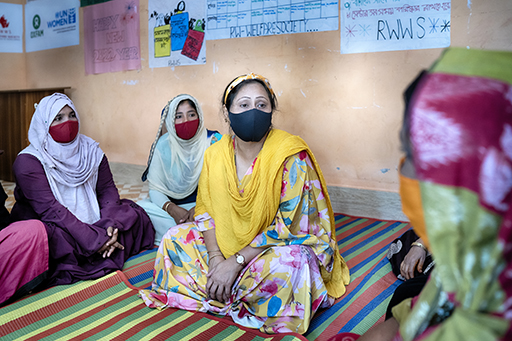
First and foremost, leading change is about having the commitment to make change happen. It’s the first resource, the first ‘spark’, which makes change possible. Demonstrating that commitment and inspiring others to do the same will be critical to success.
This ‘Dancing guy’ video takes an unusual approach to showing the role of the leader, as well as that of the first followers, in building a movement of people.
If you have a passion and interest in making change happen, the chances are that you are a leader, even if you don’t see yourself as one.
There are many definitions and theories of leadership and many different approaches and styles – from the autocratic to the democratic, from the transactional to the transformational. Different organisations, businesses, institutions, cultures and countries have developed or adopted their own particular leadership approaches over time.
For many social justice activists, organisations and local community groups working collaboratively and ensuring everyone’s voice is present and heard are key principles by which they share leadership.
Over the last several decades feminist activists and women’s movements, particularly in the majority world, have taken the lead in redefining leadership through a commitment to create alternatives to traditional hierarchical leadership cultures. These alternatives cover many aspects from critical self-reflection to new collective decision-making structures. An increasing number of social justice organisations and activist group across the globe are adopting feminist leadership principles and approaches into their practice.
Feminist leadership calls on people to individually and collectively transform themselves and to:
- use their power, resources and skills in non-violent, inclusive ways
- mobilise around a shared agenda for equality and the realisation of human rights for all
- emphasise consensus and cooperation over competition
- share power and decision-making
- champion diversity and ensure all people are valued in a supportive environment
- aim to overthrow patriarchal power structures, and advocate for social, economic and political equality for women
- focus on values such as authenticity, honesty and empowerment
- recognise that feminist activists and their organisations are leading struggles for social justice around the world, and must continue to be at the forefront.
Fundamentally, feminist leadership recognises that change in the world starts with ourselves. In order to contribute to broader transformation, we must be prepared to self-reflect and challenge ourselves.
Activity 4.2: Reflecting on your characteristics
Thinking about the characteristics for leading change that we’ve identified in this unit, it’s useful to reflect further on our own role as changemakers. Here are some guiding questions:
- What do you think are the most important characteristics for an effective changemaker and why?
- What characteristics do you feel you are strong in?
- What characteristics do you find challenging and why?
Add your reflections to the free text box, in the Make Change Happen Plan or in your own notebook.
4.9 Summary of Unit 4
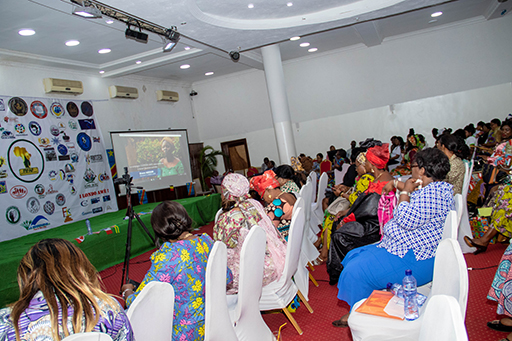
In this unit you have explored in more depth two concepts that we began in the last unit: ‘power with’, i.e. the power derived from working with others, or collective action; and ‘power within’, i.e. how strengthening our inner resources of curiosity, courage and feminist leadership makes us more effective changemakers.
We have learned more about community organising, the value of contributing to social movements, and what effective leadership for change looks like.
As a changemaker you will have more impact if you are prepared to listen, be genuinely curious, try new approaches, take calculated risks, learn from failures, question your own power and privilege and shift power towards individuals and communities at the sharp edge of change. Perhaps most crucially, you will need to work with others committed to your common cause. For positive and sustained social change, ‘how’ it is achieved is as important as ‘what’ is achieved.
In the next unit we will look in more detail at your spheres of influence and how to identify allies and partners who can help extend your influence. We will also build on the power analysis from the last unit to build our change strategies.
4.10 End-of-unit quiz
In Unit 4 of this course, the topics have been – the power of collective action, working in partnership with others, and the characteristics of effective changemakers.
Now test your knowledge on what you have learned with this short quiz.
References
Batliwala, S. (2011) Feminist Leadership for Social Transformation: Clearing the Conceptual Cloud, CREA, [Online]. Available at: https://www.uc.edu/ content/ dam/ uc/ ucwc/ docs/ CREA.pdf (Accessed 16 October 2023).
Lorde, A. (2017) A Burst of Light: and Other Essays, USA: Dover Publications.
Sources for case studies:
Bao, H. (2020) ‘Anti-domestic violence little vaccine’: A Wuhan-based feminist activitist campaign during COVID-19’, Interface: a journal for and about social movements, 12(1), pp. 53–63, [Online]. Available at: https://www.interfacejournal.net/ wp-content/ uploads/ 2020/ 07/ Interface-12-1-Bao.pdf (Accessed 16 October 2023).
Green, D. (2020) ‘Anti-domestic violence little vaccine’: A Wuhan-based feminist activitist campaign during COVID-19’, From Poverty to Power, 23 September, [Online]. Available at: https://frompoverty.oxfam.org.uk/ anti-domestic-violence-little-vaccine-a-wuhan-based-feminist-activist-campaign-during-covid-19/ (Accessed 16 October 2023).
NDI (2019) Women Peacebuilders in Yemen Advocate for the Re-Opening of Al-Riyyan Airport, 12 June, [Online]. Available at: https://www.ndi.org/ our-stories/ women-peacebuilders-yemen-advocate-re-opening-al-riyyan-airport (Accessed 16 October 2023).
Further reading
Drew Dudley – Everyday leadership https://www.ted.com/ talks/ drew_dudley_everyday_leadership
How Change Happens (OUP 2016)
Resources for personal and organisational resilience, MindfulNext
Self care and community care tools, The Andre Lorde Project
Stories of people changing the world, MobLab
The Center for Servant Leadership
The Universal Declaration of Human Rights
Why care is a political act, Oxfam Views & Voices blog
Why self-care and collective wellbeing are critical to winning change, MobLab
What’s the role of Oxfam in supporting social movements for change?, Oxfam Views & Voices blog