Use 'Print preview' to check the number of pages and printer settings.
Print functionality varies between browsers.
Printable page generated Monday, 14 September 2026, 1:39 AM
Unit 5: Influencing
5.1 Introduction to Unit 5: Spheres of influence
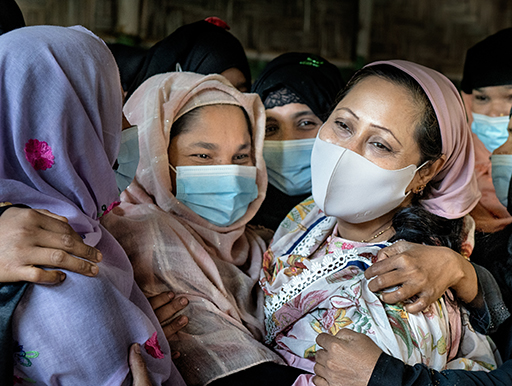
This unit explores the relationship between the changemaker and the space available to influence for change. It looks at what influencing is and different approaches you can use to influence others. You will draw on your own experience of being influenced and influencing others to ground your understanding.
You will have an opportunity to apply this thinking, and previous learning about power, systems, and working with others, to identify where you can make tangible differences in influencing for change. The context analysis tool helped you identify your change goal and objectives and in this unit, the power mapping tool will help you to identify the key stakeholders, potential partners and target audiences for the change you wish to see.

 Learning outcomes
By the end of this unit you will:
- explore the space in which changemakers operate
- understand the spheres of influence open to you, and also their limitations
- apply the power mapping tool to your change issue in order to identify key stakeholders and audiences.
5.2 Being influenced... and influential
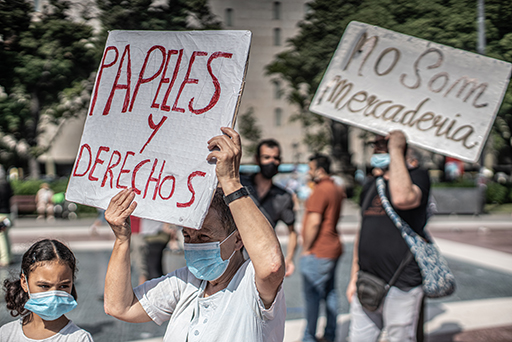
A useful way to understand influence is to think about it in relation to you.
Think of a time when someone influenced you successfully to do something that you hadn’t wanted to do or that you hadn’t thought of doing. What did they want you to do? What was it about the way they influenced you that worked?
Perhaps think about some of the characteristics or attributes that this course has outlined so far.
 Activity 5.1: Influencing others
Now think about an example of how you influenced someone to do something.
- What did you want them to do?
- What worked? What didn’t work?
- What was the influencing approach you used? Was it the same or different to the influencing approach that successfully influenced you?
Add your reflections to the free text box, in the Make Change Happen Plan or in your own notebook.
We hope that this gets you thinking about your personal influencing approach and the attributes you have for influencing others. It may also help you to continue to identify the characteristics that you want to strengthen in yourself in order to build your skills and abilities to influence others to make change happen.
5.3 What is influencing?
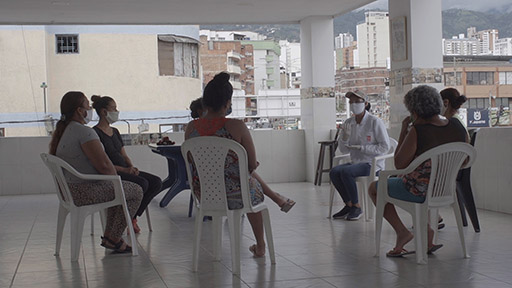
Influencing is the ability to get others – whether individuals, groups, organisations, or governments – to do something they wouldn’t otherwise have done. It can also be the ability to get others not to do something they would have done. Influencing means having an impact on people’s hearts and minds, but importantly also their actions. As well as influencing wider attitudes, social norms and behaviours on an issue. it can also be collective and systematic efforts to change power relationships, the terms of public debate, or the policies and practices of institutions.
As you’ll know from campaigns you’ve been involved in or seen already, changemakers need to communicate a vision of change and encourage and inspire others to align their actions with that vision. This will often mean identifying and appealing to shared values and communicating well through strong narratives around the common challenges faced, along with positive and inspiring stories of how these challenges can be overcome. We will look at storytelling and developing narratives in the next unit.
In this unit, we focus on influencing through engagement and persuasion.
To achieve change you may need to accompany persuasion with pressure, particularly with powerful decision-makers who may not be your natural allies. All depending on power analysis. Examples include the use of digital tools and social media that demonstrate the level of public concern or organising a demonstration or sit-in to highlight your issue in the media.
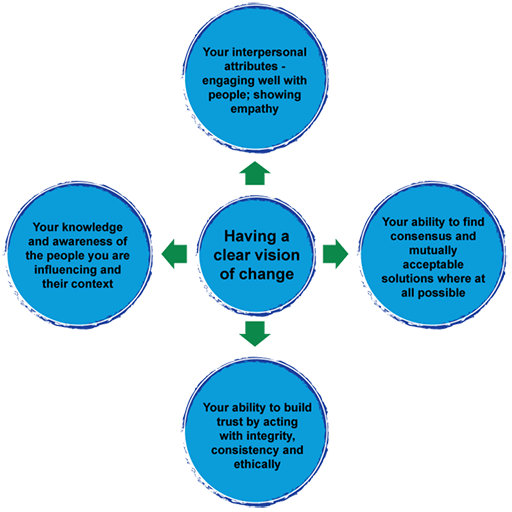
To be effective in your influencing, you should also think about how to build a constituency of allies and supporters. The building of support is likely to rely heavily on who you are as an individual and your own personal networks and influencing skills. This can also be described as interpersonal power, of which there are two types: personal power and positional power.
Personal power is the power you have because of your characteristics as an individual. We’ve already talked a lot about the desirable characteristics of changemakers in terms of your own curiosity and courage. Your ability to work well with people, to listen and garner trust and respect from others, as well as your credibility and ability to empathise with others, will all drive your personal power. Thinking about how you can apply some of the feminist leadership principles we outlined in Unit 4 will be important too. Developing these personal attributes are essential for building your constituency and enhancing your influence.
Positional power derives from the role you occupy or the responsibilities you have, whether from a formal or informal role. The knowledge, expertise or information you have, or can access, are also important sources of power which you can use to good effect as a changemaker. Wherever your power is derived from, it’s how you use it and for what purpose that is important, as well as how you work with others.
As changemakers, you will need the support and actions of others but you are unlikely to have direct control over them, nor is this necessarily desirable. As you saw in the last unit, your ability to build consensus is important. You may have some positional power, but you will most likely rely on personal power; the power that resides in personal relationships.
You also need to think about the influence your group or constituency has and how you engage with this collective power (power with). The bigger your constituency of supporters the more influence – or group power – it will have. But the group’s influence will also depend on other sources of power – such as your perceived authority, reputation, knowledge, credibility, legitimacy and the trust people have in the group.
5.4 Understanding your sphere of influence

As a changemaker you set out to influence the world around you. You may be trying to change the policies and practices of a government or business; strengthen the voice of your community; change hearts, minds and actions of policy makers; or pioneer or promote new solutions. You will perhaps be doing so with other people and allies as collective action is more influential than individual action.
In most cases, whether a restricted context or not, you will only ever have partial influence of what you are trying to achieve. The sphere of influence framework is a useful tool to help you determine what is and what is not within your power to influence.
You can consider activities and processes that are within the sphere of control to be areas which you, or your group/organisation, have complete control over and where the outcomes and changes observed will be largely down to your own actions.
The sphere of influence is the area where things are not completely in your – or your group/organisation’s – control but you do have some power or influence to help bring about a change. It can be quite large in some contexts and on some issues, and it can be very small in others where people’s voices and actions are tightly constrained.
The sphere of concern or interest, on the other hand, focuses on areas of change that you – or your group/organisation – have no control over, but do have a deep concern with or interest in. This sphere often covers actions taken by others or the results of wider trends and events in the world.
This tool can help you focus your activities on where you can make a tangible difference making it more likely that the change you deliver will have some effect on both your sphere of influence and your sphere of concern, however small. It can also help ensure you understand the context for being a changemaker where you are. Where you are, what issue you are working on and your realistic sphere of influence may affect your ability to associate, organise and act, whether formally or informally, individually or collectively.
Remember that change is often incremental. Although your overall goal may involve a widescale transformation, using the sphere of influence framework should help you map out more of a step-by-step approach and identify what is more directly in your control and influence.
5.5 Illustration of spheres of influence
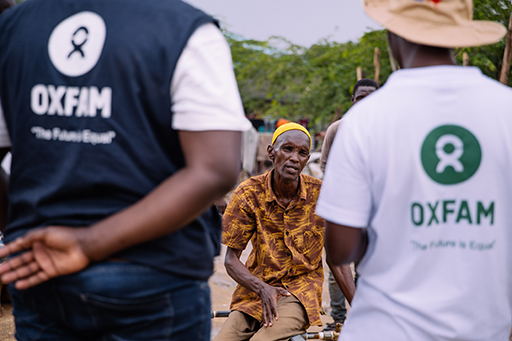
As an example of how these spheres of control, influence and concern work in practice, please read this short case study from Brazil.
Brazil
Brazil is one of the largest economies in the world and also one of the most unequal. Black women disproportionally experience economic and political marginalisation, precarious working conditions, and sexual violence. Without confronting the structural racism and sexism in Brazilian society, the country will not achieve a more equal, democratic and sustainable pattern of development.
In this context, five friends from a feminist collective wrote an article in 2012 in Brazil’s national newspaper about the invisibility and unattended rights of women who lived at the periphery of large cities, and at the margins of society. It was shared widely on social networks and lots of letters were sent it. It appeared there were many others who felt the same way.
They went on to establish a news website called ‘We, women from the periphery’ (‘Nós, Mulheres da Periferia’) led by Black and peripheral women to provide a space for journalism that they couldn't find anywhere else. The site includes stories and opinion from Black transgender and cisgender youth and women and aims to democratise public debate. It offers a different way of seeing events in Brazil and in the world and contribute to the construction of a plural, anti-racist and non-patriarchal society.
In 2021, Nós Mulheres da Periferia, in partnership with Oxfam Brasil, carried out the initiative ‘Recados sobre Nós’. This action involved sending letters to Black women leaders across Brazil to strengthen their experience of self-care and encourage the expansion of political participation of Black women in decision-making spaces.
Now let’s understand the different spheres in relation to We, women from the periphery.
Sphere of control: The resources of the group: the digital platform, how they spend their time and funds; their journalistic skills; the commitments they make; the plan and activities they will deliver; their social networks and social media accounts, and the support of the community around them.
Sphere of influence: The people who can be persuaded to write and read the news articles and letters; local media who may be interested in covering the issues more; the decisions or position of the local authority and the local politicians to do something on the issues; other local groups in the area who may also be concerned about what happens on the issues; the attitudes of people in authority locally; the attitudes of the community from one of acceptance of the present state to one of wanting to make change happen.
Sphere of concern: The decisions and position of the national government; the budget and authority they give to the local authority; the wider social norms in society that might help perpetuate what is considered acceptable in local politics and which overlook the voices of young people in decision making; the wider economic and social state of the country that inhibits local authorities’ and local groups’ ability to act.
Activity 5.2: What can you influence?
Now it’s time to apply this framework to the change that you, your group or organisation are working on.
- What is in your sphere of control?
- What is in your sphere of influence?
- What is in your sphere of interest or concern?
Add your thoughts to the free text box, in the Make Change Happen Plan or in your own notebook.
5.6 Mapping who has power and influence
Transcript
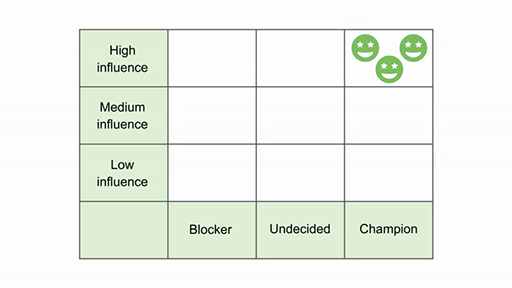
Now that we’ve thought more about what influencing is, let’s look at who are the key stakeholders and audiences we want to influence.
Power mapping is a tool which can help to identify who to influence, who you could reach out to for support, and who you could work with and alongside. These will be individuals or organisations who have an interest or concern about the problem or issue you are campaigning on. They may have decision-making power on the issue or be influential people, organisations or groups. You should also include the people who will ultimately benefit from the change you want to achieve.
Watch the video above to see how a simple power map matrix can help you analyse all the relevant stakeholders in relation to your change goal and objectives.
Activity 5.3: Power mapping
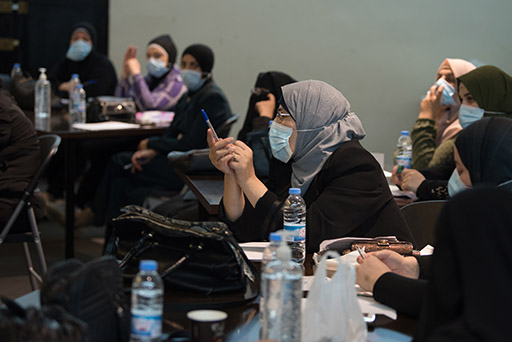
Use the power mapping tool below to help you think more critically about, and prioritise, who you need to engage to achieve your change objectives. It will help you identify who are your supporters, or champions, who are the blockers and who is still undecided on your issue, and how influential they are.
Remember to consider those people or stakeholders who may potentially be negatively affected by the change as well as people who may be in overlooked or marginalised groups in society, in this particular context, or on this issue. This is a time to ensure that you have considered everyone. And it is also a chance to consider the ‘unusual suspects’, i.e. those people or groups who might not naturally be on your radar but who would have an interest in the change issue.
The more specific you can be the better. So, for example, don’t just include ‘media’ but specify whether you are referring to the press, TV, radio or other media, perhaps even specific media outlets, newspapers, even named journalists if certain individuals are particularly relevant to the issue you are working on.

| Blocker | Undecided | Champion | |
|---|---|---|---|
| High influence | |||
| Medium influence | |||
| Low influence |
5.7 Influencing where space is restricted
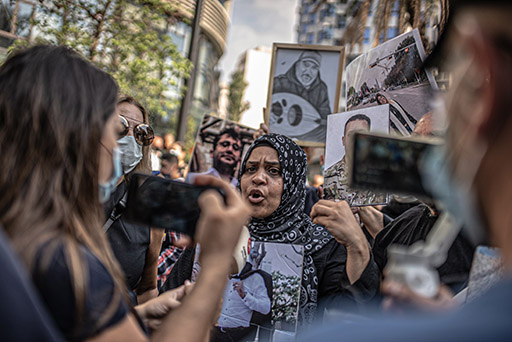
Many social justice and rights-based organisations and activists are influencing in conflict areas and where there is a closing of space for civil society to operate. There is a growing global trend to restrict the rights to freedom of association, assembly and expression. Groups which hold power may feel threatened by any attempt at change and be fearful of losing their power or patronage. In such contexts, activists may be intimidated, threatened, imprisoned or attacked simply for defending their rights or the rights of others, of environmental and social justice. They may experience political and public backlash and online harassment from individuals or groups.
In these contexts, the possibility to effect change through direct influencing is likely to be limited. International activism in solidarity with local and national human rights defenders is a critical route to supporting change in situations like this but also carries risks.
Those groups in power always rely on others to maintain their position. They might have a popular support base, support from wealthy business elites or the military or media, and they might have support from outside the country.
Influencing in such contexts requires as much knowledge as you can realistically gather about the interests and incentives as well as the concerns and fears of the power holders and their supporters. It requires changemakers to develop an acute sense of risk and a willingness to take the appropriate level of risks. Speaking out explicitly about repression and rights violations is clearly not always possible, and in some cases may do more harm than good. In such cases, bearing witness and recording what is occurring is also a vital action.
As a changemaker it is important to be aware of the space that you have to act and that you can understand and mitigate the risk to you and to others as you make choices about different types of action. We will deal with mitigating risks in more detail in Unit 7.
5.8 Identifying who you will work with and how
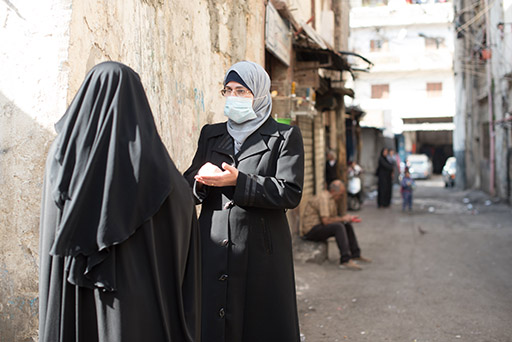
Now that you have thought about where your real spheres of control and influence are, and you have identified the key people or groups with an interest in the change you wish to see – both for and against – it’s time to focus on finding those that you could effectively work with to achieve your change. These certainly include potential partners and allies, but also those stakeholders you wish to target to achieve change – these could be decision-makers, role models or key influencers, and might also be ‘messengers’, people with access to decision-makers and influencers, when you don’t have direct access or a great deal of influence yourself.
A partner would be an individual or organisation that you decide to work together with on an on-going basis on the change issue. An ally would be a person or group who is supporting and potentially contributing to the change activity in some way.
It is useful at this stage to refer back once more to the discussion on self-awareness and unconscious biases in Unit 1. In thinking about who is best to work with, take time to ensure that your judgement is not obscured by pre-existing assumptions.
Activity 5.4: Identifying who you will work with
5.9 Summary of Unit 5
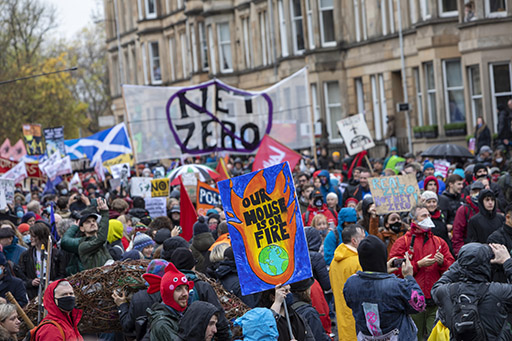
In this unit you have looked in depth at spheres of influence and how to identify what is in your sphere of control, influence, and concern.
Ideally, we will always be extending outwards our influence. However, this may be constrained in different countries and contexts and on different issues. It’s critical that we’re aware of the space that we have to operate in and that we keep ourselves, and those we’re working with and for, safe, as we work to make change happen.
You also mapped the people and groups to influence about your change issue including who amongst them could be potential blockers, undecided (or indifferent) but could be persuaded, and those who are champions. In the next unit we will look at the narratives, messages, and stories that you can tell to inspire others to take action.
5.10 End-of-unit quiz
In Unit 5 of this course, the topics have been – spheres of influence, understanding influence, and where the power lies.
Now test your knowledge on what you have learned with this short quiz.
References
BeautifulRising (n.d.) Jalur alternatif melakukan pendaftaran akun bermain slot gacor [Online]. Available at: https://beautifulrising.org/ tool/ power-mapping (Accessed 15 August 2023).
Nós, Mulheres da Periferia [Online]. Available at: https://nosmulheresdaperiferia.com.br/ (Accessed 15 August 2023).
Oxfam (2019) Oxfam’s Guide to Feminist Influencing [Online]. Available at: https://policy-practice.oxfam.org/ resources/ oxfams-guide-to-feminist-influencing-620723/ (Accessed 15 August 2023).
Oxfam (2020) Influencing for Impact Guide: How to deliver Effective Influencing Strategies [Online]. Available at: https://policy-practice.oxfam.org/ resources/ influencing-for-impact-guide-how-to-deliver-effective-influencing-strategies-621048/ (Accessed 15 August 2023).
Oxfam (n.d.) Oxfam Brasil [Online]. Available at: https://www.oxfam.org.br/ (Accessed 15 August 2023).
Tsui, J., Hearn, S. and Young, J. (2014) ‘Monitoring and evaluation of policy influence and advocacy’, ODI, [Online]. Available at: https://odi.org/ en/ publications/ monitoring-and-evaluation-of-policy-influence-and-advocacy/ (Accessed 15 February 2024).