Use 'Print preview' to check the number of pages and printer settings.
Print functionality varies between browsers.
Printable page generated Monday, 14 September 2026, 1:44 AM
Unit 6: Messaging
6.1 Introduction to Unit 6: Developing strong messages for change
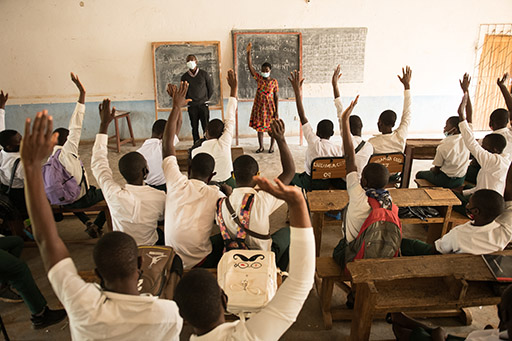
Now that you have identified the space you have to influence and the people, groups or institutions to target and work with in your influencing, it’s valuable to reflect on the types of messages which will prompt others to join you and to take action for change.
Developing strong narratives that inspire others to do what they might otherwise not do is a great skill to nurture.
In this unit we look at a current campaign to see the approaches used for shifting narratives. We will discuss the merits of appealing to both emotion and to reason in your influencing. You will have the opportunity to apply this learning by developing messaging to engage your audiences in your change action.

 Learning outcomes
By the end of this unit you will:
- understand some key principles of messaging
- reflect on the merits of appealing to head, hand and heart
- understand the power that dominant narratives have and how to create alternative narratives to achieve change
- apply this learning by developing messages for your change action.
6.2 Influencing head, heart and hands

Transcript
A simple way to think about influence is through a campaigning approach and thinking about how to appeal to head, heart and hands. Watch the video for a short overview.
When you appeal to a person’s head you engage their intellect – what they think.
When you appeal to a person’s heart you engage their emotions and their values – what they feel.
If you focus first and foremost on appealing to people’s values and feelings and then back this up with relevant facts and rational arguments, you are more likely to lead them to purposeful action, as reasoning is often influenced by values and emotions.
When you appeal to a person’s hands you appeal to their need or wish to take action and work with others – what they will do. Offering concrete things that they can do will also motivate them into action.
Head
Here you use communication based on logic and reason that makes sense to the person you are trying to influence. It means having facts, figures and examples based on evidence available to back up your case. You should be able to confidently present the argument and answer any questions in a way that is credible to the person you are trying to influence.
Remember though, you should be realistic and manage expectations, not over promising on the benefits in order to make your case credible. You should also listen carefully to objections as they may bring to the surface problems you had not thought of.
Some of the latest thinking and research in cognitive science and psychology argues that people have biases in their decision-making and that we are rarely persuaded by facts alone. The Princeton University psychologist, Daniel Kahneman, said: ‘No one ever made a decision because of a number. They needed a story.’
So, do not rely on fact and evidence alone. Do what you can to understand what motivates people and the values that will be driving their decision-making processes. This is part of appealing to the heart, outlined below.
Heart
Here you communicate in a way that appeals to people’s values, emotions and sensibilities, their feelings about themselves, their lives and their empathy for others. Values such as fairness, responsibility, care, loyalty, justice may be important – or their emotions such as love, fear, anger, excitement and hope. If the proposed change action and the way you communicate it matches their values and what they see as important then they will be much more likely to take action themselves or support what you are trying to achieve.
Telling stories about why you are campaigning for a change, the vision that motivates you, and what the benefits will be is an effective and compelling way to connect with people’s values and their emotions.
There will also be shared values across groups in any society. If you are reaching out to new audiences who are not your natural allies it can be helpful to consider what those shared values might be. As always, listening carefully before jumping to conclusions about what values are important to different people is key.
Songs, music and powerful images can also make that connection and contribute to a sense of group solidarity. The gospel songs of the US civil rights movement are an example of this. Communicating a sense of hope through highlighting the positive things your change action can achieve is also critical for presenting a compelling vision of the future and resonating with the other person’s values.
Hands
Here you communicate in a way that offers the person you want to influence the opportunity to take action on something they care about in a collaborative way with yourself and others and to see the difference that they can make. Working with others is a powerful way to win commitment to a change action.
As a changemaker you will want to consider how to include elements of all three approaches into your communication and messaging to move people to action. Where you put the emphasis will vary depending on your specific influencing strategies and targets.
There are some great examples of public speeches where individuals have been able to tell a story of change which connects head, heart and hands, and which shows purpose, motivation, and what can be done about it. Here are just two examples of storytelling in action. As you listen, think about the technique used to inform, motivate and inspire others.
Watch James Croft's public narrative at Harvard.
Watch Koreti Mavaega Tiumalu speaking at Power Shift 2013.
There is no doubt that storytelling is a powerful skill to develop as a changemaker. However, there are also countless examples, past and present, of influential and powerful people and groups in society appealing to people’s emotions in a negative way. For instance, using messages that target people’s anxiety or fear of change or losing out to other more marginalised groups in society.
As a changemaker, acting with integrity and from positions that value diversity and the rights of all people needs to be at the core of your communication and engagement with others. As we have seen, it’s as much about how we achieve change, as what we achieve.
 Activity 6.1: What kind of messages motivate you?
Think about the kinds of messages, narratives or stories that frame your thinking about key issues. What motivates you to change your ideas or behaviour around those issues?
What might motivate people with different experiences or values to you?
Add your reflections on the kinds of stories that work to make change happen to the free text box, in the Make Change Happen Plan or in your own notebook.
Downloads
6.3 Narratives as a form of power

There are two aspects of narrative that are important for changemakers in their influencing.
The first is how changemakers can use story-telling techniques in their messaging to motivate people to action, as we have seen in the previous examples.
The second relates to the way different groups across cultures and nations interpret events or reality and shape them into truths, beliefs, ideologies and perceptions of what is right or wrong. These have a direct impact on people’s actions, behaviour and the establishment of social norms. These narratives are a form of invisible power, which we discussed in Unit 3.
Narratives are made up of many stories, representations of knowledge, tweets, visuals, videos, memes, online content, offline conversations, interviews and speeches that help keep deeply held ideas about society and people in place. Dominant narratives help to legitimise existing power relationships and make them seem normal, natural or correct. They can support us to feel connected, or like an outsider. They can keep things staying the same, and they can also drive change.
Social justice and women’s rights activists and organisations are increasingly focused on creating alternative narratives to challenge those that impede change both at the policy level and in people’s attitudes and behaviours. For example, a dominant narrative of women’s informal and unpaid care work as not having economic value can be challenged with an alternative that shows it as work that makes a vast contribution to national economic prosperity and societal wellbeing, and is the responsibility of all to invest in.
As changemakers, we can reinforce or challenge narratives, and we can contribute to and even create new narratives that align with the change we wish to see. Connecting with people who are different to us and engaging with diverse perspectives can help create those new narratives. As always, the power we derive from collective action, working with others, can provide strength and legitimacy to our call to change.
6.4 Shifting the narrative around inequality
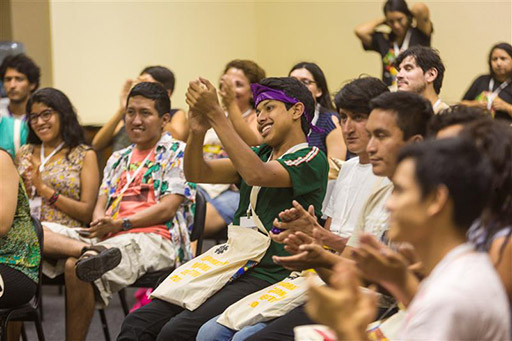
To understand how using different messaging, adjusting the stories you tell, and who tells them, can shift narratives which leads to fundamental change we will look here at the case study of Actúa.pe.
Actúa.pe
In Peru, 40% of the population is vulnerable, and 12 million people are at risk of falling back into poverty. According to data from the National Institute of Statistics and Information, ‘one and a half million young people (34%) who work do not earn enough to access proper nutrition’. Among young people, women are the most affected, as they are often paid less than men, and people with LGBTQIA+ identities are affected by marginalisation.
Two youth-led organisations, Left Youth Forum (FJI) and Interquorum Network (Red IQ), have worked along with Oxfam in Peru through the Youth Activism Laboratories with the aim of addressing the issues of decent work for young people. Actúa.pe proposed to strengthen capacities of young activists so that they could develop their own proposals to influence decision makers. During the 2016 presidential election campaign and the 2018 regional campaign, young people met with candidates from across Peru. They presented data on education and employment and asked for commitments to make youth employment policies a priority in their mandates.
Actúa.pe became an online and offline activism platform that works with youth activists from all over the country. One of the first actions Actúa.pe took was to publicly monitor the presidential candidates’ commitments to address inequality through tax justice, decent work, gender justice, environmental governance, and access to natural resources. It provided interactive tools for voters to see how each candidate was addressing these issues and a social media strategy to connect the public with decision makers, journalists, and digital influencers.
The National Youth Activism Laboratories organised public debates as well as street art, theatre and music to raise awareness of economic justice, gender justice and environmental and climate justice. Through this work, Actúa.pe achieved a place in the national public discussion, contributing to position the problem of inequalities on the agenda of civil society for the defence of rights, and contributing to transformative narratives.
Since then, Actúa.pe has enabled a diverse range of youth activisms, individuals and social organisations to monitor, connect and amplify citizen action against inequalities with a focus on the use of stories, images and memes to communicate data in a way that connects with common sense and people's perceptions.
‘Actúa has become a personality, a constant opinion-maker, informed, critical, smart, funny and playful, but rigorous. It has become part of a current that feeds other currents that are increasingly questioning dominant narratives,’ says Alejandra Alayza from Oxfam in Peru. She cites a meme which was circulated to support a union of women street cleaners who started an anti-corruption campaign. They went out 'to sweep clean' the Palace of Justice. The union of women saw the meme and it became their symbol at marches. ‘The meme was a way of honouring them, to help them shine with pride, dignity and hope. We did not realise it could also be a tool of self-identification as a movement.’
Activity 6.2: What stories are told about inequality?
The case study of Actúa.pe is both a good example of the use of messaging which appeals to head, heart and hands, and the creativity that people and organisations working together can use to shift narratives – the stories we tell ourselves – around inequalities.
Take a moment to think about the messaging that is used and the stories that are told about inequality where you are. What work is being undertaken to shift the dominant narratives and create alternatives? What are the messages and stories that are told, and who is telling them?
You may wish to focus on a specific area of inequality, such as economic, racial, gender, environmental, or the way in which they relate to each other and cross-over.
Do you think appealing to emotions and rational argument are equal in this case, or would one be more powerful than the other?
Add your thoughts to the free text box, in the Make Change Happen Plan or in your own notebook.
6.5 Developing your story of change

Clear communication is key to effective influencing and campaigning. And storytelling and strong narratives are key to clear communication. We all understand and respond to stories.
It can help to think about the change you want to see as a story.
Personal stories are powerful because they are easy to engage with, because people connect and relate to the experiences and emotions of other people, and because they trigger emotions that people will be moved by, to act. Personal stories that illustrate the problem and the solution you want your audience to imagine, and support can be powerful means to communicate those stories and inspire hope.
Providing spaces for people directly affected by the issue to speak in their own voices and to share their experiences and perspectives in their own way is vital. It enhances their own power and influence to affect change, and is a more honest and accurate reflection of the situation.
Other people with an interest in the change, including those who hold the power to make the change, can also be a good source for storytelling. As a changemaker, speaking about what motivates you and your vision for change can also inspire others to act.
The following structure can help you build up your story of change:
- PURPOSE: WHAT is the problem you are addressing and what needs to change?
- ‘The problem we want to change is…’
- MOTIVATIONS: WHY does the issue matter to you and why should it matter to others?
- ‘It matters that we fix it because…’
- VISION: WHAT would a successful outcome look like? What is the benefit you want to help bring to people, and the impact you want to have?
- ‘If we can achieve… the difference it will make to people’s lives is…’
- POWER AND ACTION:
WHO has the power to make the change? Is there a reason why they haven’t already? Who do you need to influence to bring about the change? What are their values, motivations, needs?
HOW, specifically, can you target audiences that can help make the change happen? What is your best initial guess at the mix, timing and sequencing of activities – or change tactics – that is most likely to help achieve your aim and objectives? (The action, could be individual but primarily by joining with others.)
- ‘You have the power to make or influence this change, by doing ….’
Activity 6.3: Developing your story of change
Now it’s your turn. Develop a story about the change you want to see using the structure above. Try to keep your story to within 150 words. Write it in the free text box, in the Make Change Happen Plan or in your own notebook.
6.6 Clearly identifying your messages
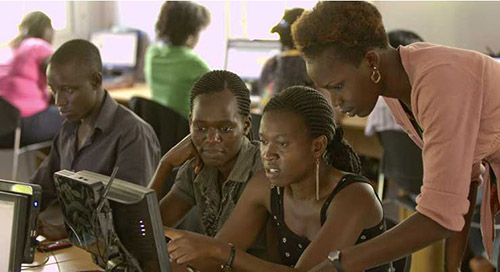
You can refine your story of change further by tailoring it for the target audiences you identified in your power mapping in Unit 5.
Think about the kinds of messages that will likely work for your different audiences and where it is most appropriate to put the emphasis on head, heart, and hands. The change objectives that you identified earlier in the course and the influencing strategy that you choose to use will affect the messages you employ.
For example, if you are engaging in dialogue with decision-makers and power-holders you may be looking for areas of agreement and consensus on points of mutual interest. They may be interested to see data and evidence, but also understand how your vision of change aligns with their own interests. On the other hand, if you wish to rally your natural supporters, a good story, clear values and strong call for action may well work. However, such messages are unlikely to influence the undecided or those who have a lot of power to block change.
As we have already discussed, you won’t know if the messages you choose will work until you test them and ‘learn by doing’. You’ll need to assess what is or is not working and adapt accordingly.
To build effective messages, you need to tap into your audience’s priorities, values and concerns. It might be helpful to consider the following questions:
- How do you connect to their values?
- What do they want or need to know?
- What kind of information attracts them?
- What do you want them to do? What ‘call to action’ could you use?
- How can you motivate people to believe that they can indeed make a difference?
- How might the same story or message be interpreted differently by different groups?
- What would you say to convince them of the need for change, so they listen and engage?
- How might adding personal stories of struggle and hope influence them?
Activity 6.4: Clearly identifying your messages
The messaging tool below can help you to plan your messaging for the stakeholders identified in your power mapping. Choose to focus on no more than three of them and decide what is most likely to appeal to their head, heart, hands. Write an appropriate message based on your change goal and story of change.
| Message | Message | Message | |
|---|---|---|---|
| Audience | Head – evidence and rational arguments – what do you want them to know? | Heart – values and emotions – what do you want them to feel? | Hand – what action can they take – what do you want them to do? |
| E.g. Potential supporters who can join the campaign… | |||
You will find a copy of this table in the Make Change Happen Plan for you to complete for your change issue, or add your thoughts to the free text box or your own notebook.
6.7 Summary of Unit 6
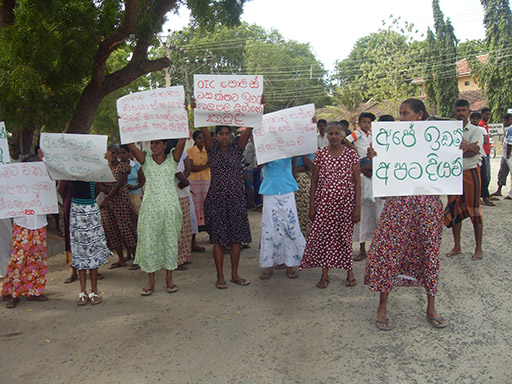
In this unit you have explored developing effective stories and messages for influencing and campaigning.
You have looked in depth at the kinds of messages and stories that can influence others to support the change that you are seeking. Appealing to people’s logic and reason, to their emotion and feelings, and to their desire and ability to take action all have a place.
You have also explored how to challenge narratives or develop alternative narratives and use these to progress change through collective action.
You have now covered some of the core components of developing a change strategy by learning how to engage and communicate effectively with your main audiences.
In the next unit you will have the opportunity to identify your tactics and finalise your plan for change.
6.8 End-of-unit quiz
In Unit 6 of this course, the topics have been – developing strong stories for change, influencing strategies, and developing messages.
Now test your knowledge on what you have learned with this short quiz.
References
Actua.pe (n.d) Actua.pe. Available at:: https://actua.pe/ (Accessed 18 October 2023).
Crabtree-Condor, I. (2020a) Narrative Powers and Collective Power Action: Conversations with people working to change narratives for social good – Part 1, Oxfam, [Online]. Available at:: https://policy-practice.oxfam.org/ resources/ narrative-power-and-collective-action-conversations-with-people-working-to-chan-621020/ (Accessed 18 October 2023).
Crabtree-Condor, I. (2020b) Narratives Power and Collective Action: Conversations with people working to change narratives for social goodPower – Part 2, Oxfam, [Online]. Available at:: https://policy-practice.oxfam.org/ resources/ narrative-power-and-collective-action-conversations-with-people-working-to-chan-621085/ (Accessed 18 October 2023).
Oxfam (2020) Youth Activism aAgainst Inequalities, [Online]. Available at:: https://oxfamilibrary.openrepository.com/ bitstream/ handle/ 10546/ 621070/ cs-activismo-juvenil-desigualdades-peru-010520-en.pdf?sequence=2 (Accessed 18 October 2023).
Further reading
Good movements follow great stories, Narrative Arts
Guide to Public Narrative, Leading Change Network Resource Center
How Change Happens, Oxfam
Influencing Behaviours and Practices to Tackle Poverty and Injustice, Oxfam
Influencing for Social Justice: Nudge, Shove, Show or Shout?, Oxfam
Messaging This Moment: A Handbook for Progressive Communicators, Center for Community Change
Public Narrative, Collective Action, and Power, DASH Harvard
Storytelling with a purpose, IBT
Thinking, Fast and Slow, Daniel Kahneman, published by Farrar, Straus and Giroux