Use 'Print preview' to check the number of pages and printer settings.
Print functionality varies between browsers.
Printable page generated Monday, 14 September 2026, 1:39 AM
Unit 7: Tactics
7.1 Introduction to Unit 7: Taking action to make change happen

This unit is your chance to select the tactics you are going to use and to make your final preparatory steps to take action.
Over the last few units you have worked on some of the key elements of laying the foundations for an effective campaign and influencing strategy to make change happen.
Your strategy must now include a clear plan of actions, or tactics, designed to achieve change informed by your understanding about the context, power, target audiences, appropriate narratives and messaging, and the space available for different kinds of influencing.
Learning from what you might have tried in the past, from what others have done, drawing on the knowledge of allies, using your imagination and trying different things, will all be key.
Small steps can lead to a bigger change so don’t worry about starting gradually, as long as you know where you are heading. Sometimes you might find that your action takes two steps forward and one step back. Do not be disheartened by this. Reflect on what happened, learn from it, and do things differently next time. Use your best judgement, which will steadily improve the more things you try, and talk to others. Rest assured you will never have all the answers; nor will anyone else.
Making change happen is very much a journey into the unknown, in which you feel your way. Being alert and responsive to shifts in the landscape and adapting accordingly is what makes an effective changemaker. You will also need to be clear on the risks you or others you are working with will be taking and think about how you will manage these risks.

 Learning outcomes
By the end of this unit you will:
- identify your key tactics/activities
- create an action plan for implementing your change
- identify the risks you will need to take and how to deal with them
- identify how you can track progress as you take action
- engage in a change action.
7.2 A Analysing Campaign Strategy and Tactics

First, in order to understand how a campaign can use a range of different tactics to achieve its aims it is useful to look in detail at an example. In the next activity, you will do just that.
 Activity 7.1: Analysing campaign strategy and tactics
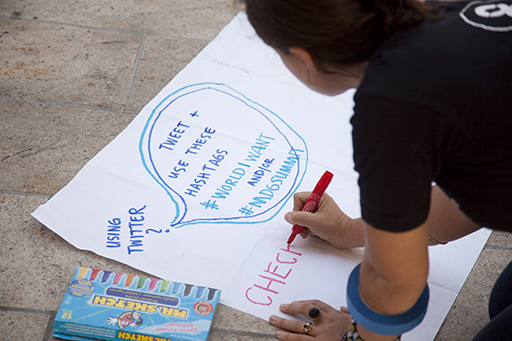
Read this overview of ‘I care about her’, a campaign working with men and boys to end violence against women and girls, run through a partnership of several organisations including Oxfam in Zambia:
As you read the case study, please reflect on these questions:
- What were the objectives of the campaign?
- What different dimensions of power do you see in this case study?
- Who did the campaign work with and why?
- Who was the campaign trying to influence?
- What tactics did the campaign employ? Which were successful and which were not?
Add your views on what you think the campaign should do next to the free text box, in the Make Change Happen Plan or in your own notebook.
7.3 A huge range of possible influencing tactics
Tactics are the specific actions you intend to pursue to help you achieve your objectives. There are a huge range of possible tactics to use to make change happen. The possibilities are as broad as your imagination. Your context and power analysis will help guide you, but central will be your power mapping and the decisions you have made as to who your key targets are and what specifically you need to influence them to do. You will need to choose an appropriate mix and sequencing of your tactics and activities keeping these targets in mind. The more specific and targeted the aims of your chosen tactics are, the easier it will be monitor progress, to make adjustments and ultimately the more effective you will be in moving towards your change goal.
We have seen just a few possible tactics through the case studies and discussions in this course so far, such as the media adverts, billboards, radio broadcasts, marches, trainings, education cards, discussion groups, police and school engagement used by the ‘I care about her’ campaign in Zambia.
A key question to ask yourself when choosing tactics is what will help make real change happen among the specific people and institutions you are influencing?
Think about whether you want to encourage or persuade by engaging directly with decision-makers and influencers in their spaces through what we call insider tactics, and which are generally less confrontational. Or do you need to put pressure on them through public mobilisation and what we call outsider tactics, which are generally seen as more confrontational? Often a mix of these two approaches works best but tensions might also arise as a result of using both, something you will need to manage.
For instance, if you are aiming to change the policies and practices of governments or other institutions or businesses you could consider the following.
Insider (persuasion) tactics:
- Research and evidence to highlight what needs to change and why.
- Focus on engaging directly with policy and decision-makers by developing relationships, convening meetings, establishing dialogue, letter writing and lobbying, also known as advocacy.
- Package up your ideas and solutions and be ready to present them when there are windows of opportunity, for example, a new sympathetic government or a swing in public mood in favour of your issue.
- Recruit influential and credible voices who can access and influence decision-makers directly.
- Create your own spaces and platforms for change and invite relevant people in to help influence the agenda.
Outsider (pressure) tactics:
- Build alliances and coalitions for change to engage and put pressure on decision-makers – for example with celebrities, community and religious leaders, or other people seen to be credible spokespeople on the issue.
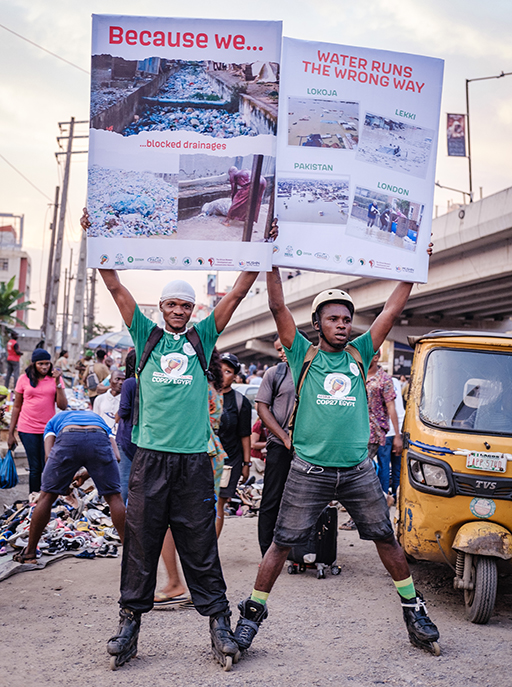
- Mobilise your community and the public to demonstrate concern on the issue and support for the change – through demonstrations, protest and media stunts, online petitions and digital and social media activities.
- High profile media to hold targets to account and even to expose bad practices.
- Raise awareness via social media, engaging influencers who have large followings and are prepared to take up the issue.
If you have an objective to strengthen the voice or power of people who are affected by or concerned about the issue, you could consider using the following tactics:
- Awareness raising activities within your community.
- Bring people together to act and learn and be involved in securing the change.
- Build a wider movement for change through events, meetings and social media activities.
- Build leadership and campaigning skills within your group.
- Fundraising and technical advice
If you have an objective to change social norms and behaviours that are helping to perpetuate an injustice you could consider the following:
- Develop communication messages, ideally delivered through popular messengers, influencers and role-models, that emphasise positive norms and behaviours that also challenge the ‘bad’ social norms or behaviours.
- Awareness raising activities within communities affected.
- Empowerment and social-learning activities with those people negatively affected.
- Activities that influence or put pressure on government, public services, the media, businesses, or the justice system to change policies and practices that shape norms and behaviours or contribute to maintaining negative social norms.
If you have an objective to pioneer or promote new solutions to tackle a particular injustice, and to help spread the change through influencing and campaigning, you could consider using a mix of the following:
- Pioneer the initiative locally, test it and then, if successful, scale it up.
- Create networks and communities of practice to share learning on and promote new approaches to solving the problem you want to address.
- Influence other groups, institutions, service providers or government departments to adopt and promote the new practices or behaviours.
- Create spaces for open discussions and brainstorming of ideas around solutions.
Many other tactics can be employed too, dependent on the context, the audience, the message, and what you’re trying to achieve and with what resources. A list first published in 1973 by the American political scientist Gene Sharp, shows 198 methods of ‘nonviolent action’, and it was compiled even before the dawn of digital and social media. A PDF version of this list is available in the downloads area below.
Although focused on methods of nonviolent action, this publication also highlights a range of confrontational tactics that can be used to achieve change. This also begs the question whether violent action can ever be justified when seeking to achieve positive change on social and environmental justice issues, recognising that there is a distinction between violence against people and causing damage to property or disruption to events or livelihoods.
Whichever tactics you think could be effective in achieving your objectives, careful consideration of how to manage risks is important, and something we’ll come back to later in this unit. If you need to, how easy will it be to switch tactics when something is not working, when tensions become unmanageable or when a new opportunity appears? Finally, do you have access to the resources and time needed for the kind of tactics you think could work?
There are many resources available on the internet which provide guidance and inspiration on possible influencing tactics and we link to some of them in the further reading sections of this course.
Downloads
7.4 How do you decide on the strategies and tactics you use to make change happen?
In this video Hadeel, Eric, Elena, Art, and Kelly share their experience in selecting the strategies and tactics they use.
Neha also shares her thoughts on risk in changemaking.
Transcript
Changemaker Profiles:
Chioma Agwuegbo is Executive Director at TechHerNG and is convener of the #StateofEmergencyGBV Movement, a coalition of organisations igniting citizens to advocate for an urgent, comprehensive, and sustainable response to sexual and gender-based violence in Nigeria.
Sabah Khan is co-founder of Parcham, an organisation in India dedicated to breaking stereotypes based on religion, class, caste, gender and other markers of difference to create a society respectful of diversity.
Elena Mejia is a feminist rapper, organiser and facilitator working in Lima, Peru to address issues of gender justice, economic justice and narrative work for social movements in the Actua.pe labs.
Kelly Mundy is a Senior Campaign Manager for Oxfam Great Britain campaigning to tackle inequalities such as economic and gender, which undermine the fight against poverty.
Eric Njuguna is an organiser with Fridays for Future MAPA (Most Affected People and Areas) in Kenya, supporting protests aimed at putting pressure on world leaders to take action to advance climate justice and to amplify the voices of those most impacted by the climate crisis.
Hadeel Qazzaz is a Regional Gender Justice Coordinator for Oxfam International based in Ramallah, West Bank, and advocates for women's rights throughout the Middle East and North Africa region.
Art Reyes III leads an organisation called We The People: Michigan, that works to build multi-racial working class organising capacity in the state of Michigan, USA, fighting for a better state and community that all people deserve.
Neha Singh is an organiser who started a women's rights campaign called ‘Why Loiter?’ in Mumbai, India, that aims at reclaiming public spaces for women by loitering.
Oudai Tozan is a researcher and founding member of the Syrian academics and researchers network in the UK, working with the Syrian diaspora and those who experienced forced migration to mobilise, connect and support each other, but also to support Syria when the situation allows.
7.5 Checking your assumptions
It is important to identify what assumptions you are making about how to achieve change and why you think the tactic or activity you are choosing will work.
An assumption is something that you believe to be true without evidence or proof. As a changemaker you will decide what the best tactics that will likely lead to a change are. However, your assumptions will be heavily influenced by your own beliefs, attitudes, life experiences, sense of agency, power, privilege and your prejudices about how you think change could happen. It is helpful to identify clearly what assumptions you have about a change process and test them out as you go.
For instance, an assumption that providing good evidence and research to back up your arguments for change will persuade a particular audience to take action might not necessarily be true. Why might this be the case? It might be that their values or ideological positioning is at odds with the change you are proposing so no amount of evidence will persuade them otherwise. Or that there are powerful vested interests lobbying the decision maker to block the change.
You might believe that raising the public’s awareness of an issue will lead to the public putting more pressure on politicians and policy-makers to act. This might or might not be true in any particular context.
Or you might think that providing people with information about the harms caused by certain behaviours will stop them doing them. But the behaviours may be influenced by a range of other factors other than awareness or information. For example, people won’t necessarily stop smoking just because they know of the severe risks.
So, when you are deciding on which tactics and activities you will use it is good practice to identify your assumptions and test them as you undertake your change activities so you can check if they are working. If not, you’ll need to review and consider alternative approaches.
It’s all about being reflective, responsive and agile, i.e., ‘dancing with the system’.
7.6 Developing your action plan
Now it’s time to decide the tactics you will use to influence your target audiences.
To help get your thinking, we have taken two of the objectives from the Zambia ‘I care about her’ example we shared earlier and have identified the tactics chosen and the assumptions made.
You can use the tool by downloading the Word version below the image.

Activity 7.2: Developing your action plan
Consider your own change goal, the objectives you set out, and the targets you identified in previous units of the course.
With these in mind specify:
- at least three tactics that you will try
- the assumptions you are making
- a deadline for each objective.
Use the template below, which is also in your Make Change Happen Plan, to write your action plan, or use the free text box or your own notebook.
| Objective | Tactic, key targets and activity (What will you do?) | Assumption | By when? |
|---|---|---|---|
| 1 | |||
| 2 | |||
| 3 |
7.7 Understanding risks
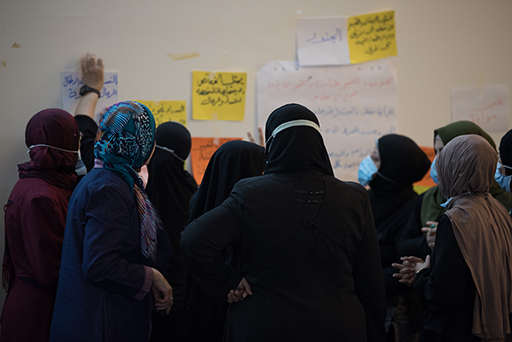
Being a changemaker and advocating for social, policy or practice change is inherently risky. If you are not prepared to take calculated risks, in certain situations, you are less likely to achieve your change. You may need to challenge the status quo or people and institutions who have power and influence. You may be exposing previously hidden conflicts or neglected issues or groups. There could be unintended consequences or even danger for yourself or others. If your group or community is marginalised or vulnerable to people, institutions or authorities who exercise power in a negative and harmful way, then you must take great care to consider and then mitigate any potential harm that might arise as the result of your actions.
Examples of risks you might face as a changemaker are as follows:
- Risks to your own security or to the safety of your supporters or community from speaking out, such as being arrested or faced with violence, including risks from authorities and risks within the household (such as gender-based violence).
- Hostile reactions from the community or from a particular section of society. For instance, when you are challenging social norms.
- Hostile reactions from the media.
- Damage to assets and property.
- Unprotected personal data for you and your allies saved on your phone or computer is accessed by hackers.
- Upsetting officials and politicians who might not want to engage with you.
- Legal action from someone you might have defamed.
- Damage to your reputation and the relationship you have with your supporters and allies.
- Increased scrutiny of your organisation’s finances.
- Online harassment through social media.
- Active oppression by agents of states, companies or institutions whose positions you are aiming to change.
It’s important to recognise that there is both a negative and a positive side to taking risks. Change inevitably holds risk and some well managed risk can lead to reward. Taking risks is about the courage to choose a course of action that could succeed or fail. It’s also about understanding the risks clearly, and being able to identify ways to minimise them while being able to maintain your goals for change. It’s about dealing with uncertainty about the results of a particular action or tactic you might use to make a change and taking appropriate mitigating action.
Activity 7.3: Preparing to mitigate risks
You will find a table in the downloads below where you can identify the risks you might face for your three change objectives and the tactics you are considering as part of your action plan.
It will help you make a judgement about what risks are realistic, what risks you are prepared to take to achieve each of your objectives and how you can minimise any adverse impacts. Risk mitigation is about identifying the risks that are most likely and potentially of highest impact and focusing on those.
It may be that some risks are smaller than others and relatively easy to mitigate. For example, they may mean small adjustments to your current ways of working, like using an online password generator, installing a paper shredder next to your recycling bin, changing your route or regular meeting place. Others may take more planning and consideration. The goal is to create sufficient safety or protection to continue to do the things you want to do – rather than change your approach altogether.
To help get you thinking we have taken one of the objectives from the Zambia example we shared and identified potential risks.
You will find a copy of this table in the Make Change Happen Plan and in the downloads area below. Alternatively, you can use the free text box or your own notebook to note down the risks.
7.8 Preparing for action
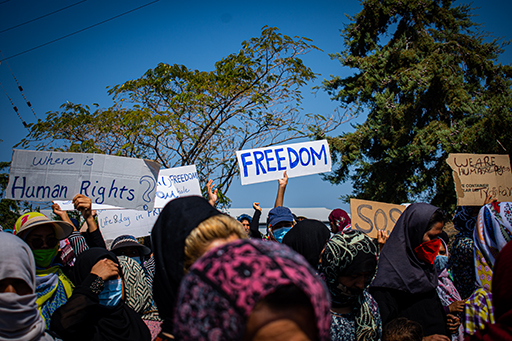
No matter how much you prepare yourself and think through all possible risks and consequences of your actions, it's likely that things will unfold quite differently in reality. In order to be ready for this, it's important to consider how you will go about monitoring your actions. This means thinking about what signs will tell you that plans might need to be changed. Beyond your own observations and reflections, a good way to be adaptive in this way is to seek feedback from others who are involved in some way with your change action, directly or indirectly.
Activity 7.4: Preparing for action
As a final check before you undertake your activity, answer the following questions to ensure you are fully prepared.
- How will you get quick feedback and from whom?
- What will you do if your assumptions are wrong?
- How will you know if your plan is working? If it is not, how will reach a decision on how and when to adapt your plan?
It will be important to note down what responses you are getting as you implement your actions: the reactions of the people you are engaging with; what they do as a result; and anything unexpected that happens. Having a daily journal to record these things is one way to capture your thoughts, ideas and reflections as you carry out your change action.
Add your reflections to the free text box, in the Make Change Happen Plan or in your own notebook.
7.9 Taking action
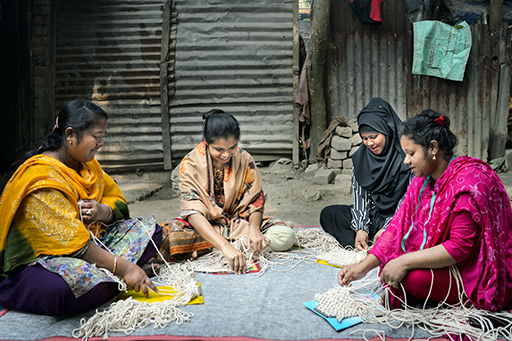
Now is the time to take your next steps in the change journey and implement one or more of those activities.
Choose something that you can do over the next week. For example, you could do one of the following:
- Have a conversation with somebody about your plan or the next steps you are considering.
- Look online for suitable local groups or national organisations that are campaigning or active on the issues you would like to make change happen on and join their campaign.
- Contact people who could be or are already involved in the change activity and set up a meeting to start planning a series of activities to take your plan forward.
- Advertise to see whether others might be interested in setting up a local activist group on your issue – in your local community, community of interest or identity; in your college, school or workplace, etc.
- If you are already active on an issue with other changemakers, organise a meeting to share your learning and develop new ideas to take your campaign forward.
Activity 7.5: Taking action
What do you intend to do first? Note your commitment in the free text box, in the Make Change Happen Plan or in your own notebook.
7.10 Summary of Unit 7
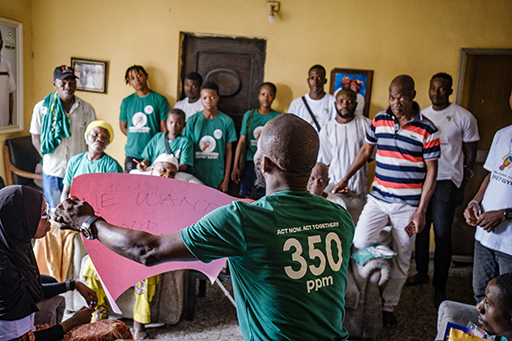
In this unit we have looked at the tactics you can use to help achieve the change you want to see and the personal steps you can take to prepare yourself for action. We hope you have been inspired by the stories of others and the steps they are taking.
You have thought about the assumptions you are making about the activities and tactics you will use and how to identify and deal with potential risks. Also, you began to put a plan to achieve change in place. It is an important first step.
So, as you move forward you may need some words of encouragement from the great Nelson Mandela:
‘It always seems impossible until it’s done’
and
‘Action without vision is only passing time, vision without action is merely day dreaming, but vision with action can change the world’.
Further reading
7.11 End-of-unit quiz
In Unit 7 of this course, the topics have been – taking action to make change happen, strategy and tactics, developing your action plan, understanding and mitigating risk, and the steps to implement your plan.
Now test your knowledge on what you have learned with this short quiz.
References
Albert Einstein Institution (n.d.)198 Methods of Nonviolent Action, [Online]. Available at: https://www.aeinstein.org/ 198-methods-of-nonviolent-action (Accessed 18 October 2023).
Mayne, R. (2019) ‘Influencing Behaviours and Practices to Tackle Poverty and Injustice’, Views & Voices, 17 January [Online]. Available at: https://views-voices.oxfam.org.uk/ general/ influencing/ 2018/ 01/ influencing-behaviours-practices-tackle-poverty-injustice (Accessed 15 August 2023).
Oxfam Policy & Practice (2015) I Care about Her: building a movement of champions in Zambia to end violence [Online]. Available at: https://policy-practice.oxfam.org/ resources/ i-care-about-her-building-a-movement-of-champions-in-zambia-to-end-violence-aga-345992/ (Accessed 15 August 2023).
Sharp, G. (1973) The Politics of Nonviolent Action, Boston: Porter Sargent Publishers.
Tsui, J., Hearn, S. and Young, J. (2014) Monitoring and evaluation of policy influence and advocacy, ODI Working Paper 395, Overseas Development Institute. Available online: https://odi.org/ en/ publications/ monitoring-and-evaluation-of-policy-influence-and-advocacy/ (Accessed 16 February 2024).