Use 'Print preview' to check the number of pages and printer settings.
Print functionality varies between browsers.
Printable page generated Sunday, 25 October 2026, 4:49 PM
Session 6: Understanding the stock market
Learning outcomes

 Session learning outcomes
By completing this session, you will be able to describe:
What a stock market does.
Risk associated with investment in a stock market.
 Glossary
6.1 Why do I need to know what a stock market is?
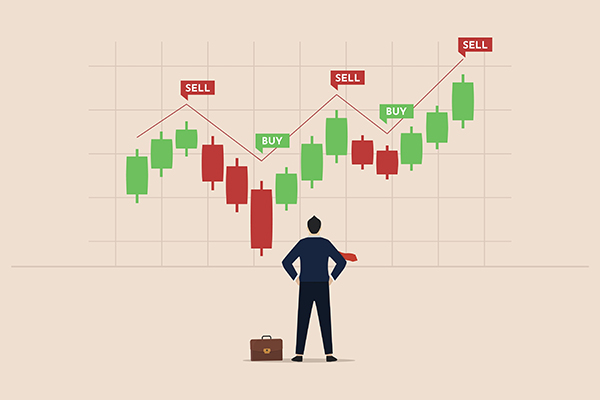
Earlier in this course, you learned that as a young adult, your parent or guardian can open a Junior Cash ISA or a Junior Stocks and Shares ISA. A key benefit of ISAs is that you do not pay tax on interest that you receive on your savings in these accounts.
Also, before you are 16, your parent or guardian controls your ISA. However, when you are 16 years old, you can control your ISAs.
Managing a Junior Cash ISA is easier than managing a Stocks and Shares ISA. For savings in a Junior Cash ISA, you will need to compare interest rates offered by different banks or building societies. This requires some work, but comparing interest rates is not too difficult.
Managing a Junior Stocks and Shares ISA is more difficult than managing a Junior Cash ISA. The main reason is that you have many more options to invest the money saved in your Junior Stocks and Shares ISA.
For example, Stocks and Shares ISAs can include shares of companies traded on a stock exchange (such as the London Stock Exchange). Therefore, it is important to know a little bit about how the stock market works.
6.2 How does a stock market work?
Unlike money deposited in a savings account, investment in shares issued by companies listed on a stock exchange is very risky.
The risk is that the value of your investment may decrease if the value of the companies you invest in goes down.
For example, suppose you buy 10 shares of a company when the stock price is £10 per share. This means that at the time when you buy the shares, the value of your investment in the company is £100.
After you have bought the shares, the price of the company’s shares may go up or go down. If the price goes down, then the value of your investment will go down as well. The risk is that you may end up with less money than you started with.
Watch this video below which helps to explain how the stock market works.
6.3 Diversification – don’t put all your eggs in one basket
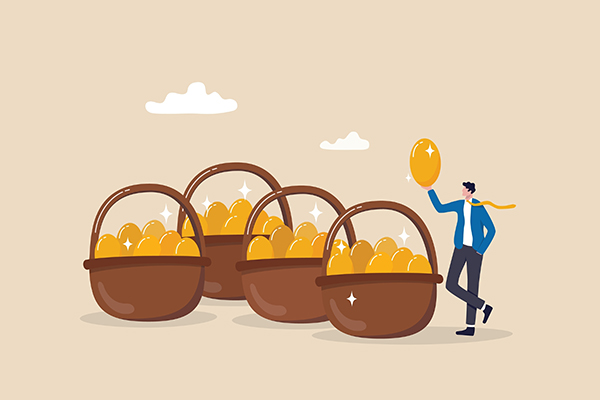
Many investors try to reduce their risk by investing in a large number of companies or other assets. We say that such investors hold a diversified portfolio of assets.
The benefit of investing in a diversified portfolio of assets is that the price of some assets may go down, while the price of others may increase. So, overall, a loss on some assets can be cancelled out by a gain on others.
There are various financial products that allow investors to hold diversified portfolios at a low cost.
 Risk and returns
You can skip this activity if you are short on time. However, if you are thinking about making investments, then you should consider completing this activity.
Spend 30 minutes on the following brief article by the Financial Conduct Authority (FCA).
This article provides more information about risks associated with investments such as shares issued by companies.
After reading the article, use the text box below to describe the relationship between risk and return (or write it down in your notepad).
Moving on

References
Financial Conduct Authority (FCA) (2023) Risk and returns. Available at https://www.fca.org.uk/investsmart/risk-returns (Accessed 16 July 2025).
Acknowledgements
Grateful acknowledgement is made to the following sources:
Every effort has been made to contact copyright holders. If any have been inadvertently overlooked the publishers will be pleased to make the necessary arrangements at the first opportunity.
Important: *** against any of the acknowledgements below means that the wording has been dictated by the rights holder/publisher, and cannot be changed.
Images:
565765 : Image: Trader sitting on globe : eamesBot / Shutterstock
565766 : Image: Man observing stock market : Yunus Praditya / Shutterstock
565769: Image: Golden eggs in baskets: eamesBot / Shutterstock
565896: Image: Paper plane: Wirestock Creators / Shutterstock
Weblink:
Risk and returns | FCA