Use 'Print preview' to check the number of pages and printer settings.
Print functionality varies between browsers.
Printable page generated Thursday, 22 October 2026, 5:23 AM
Unit 6 What you’ve learned and farewell
Introduction
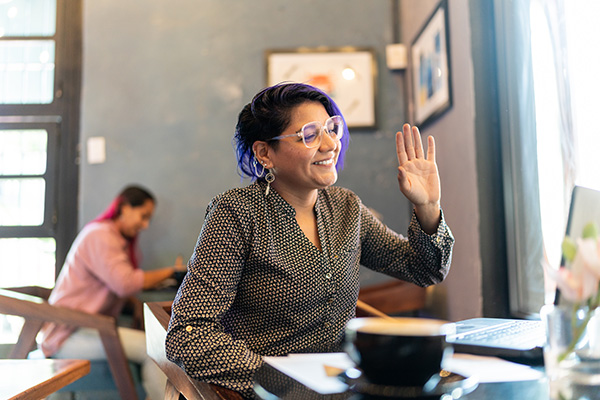
Congratulations, you’ve reached the final unit in this course. We hope you’ve enjoyed it and learned more about how to facilitate or participate in more equitable meetings.
Throughout the course you’ve looked at how your participation can make others feel more included and how this impacts the quality of the meeting. You also examined best practice for online meetings, looked at different ways of chairing and considered how humour can be used both positively and negatively. Finally, you covered the impact of time management in meetings and how this relates to social identities, particularly gendered ones.
 Learning outcomes
Now you have completed the course, you should:
- Have built your understanding of effective and ineffective meeting practices.
- Understand how aspects of meetings affect men and women differently.
- Have considered how humour can be used to support communication.
- Understand the role of identity in online meetings.
- Know how to promote inclusivity within online meetings to improve productivity.
Farewell from the course authors
Listen to the course authors sharing what they found most interesting about the GEiO research project and saying farewell.
Note: In the audios below the authors speak in their first language. The transcript has been translated into English.
Transcript
Antonia Heil
Annadís Gréta Rúdólfsdóttir
Verónica Blázquez Pla
Lisa Lazard
Nikolina Janjic
Next, go to 1 Time, gender and meetings.
1 Summary of each unit
Unit 1 Welcome to the course and what you need to know
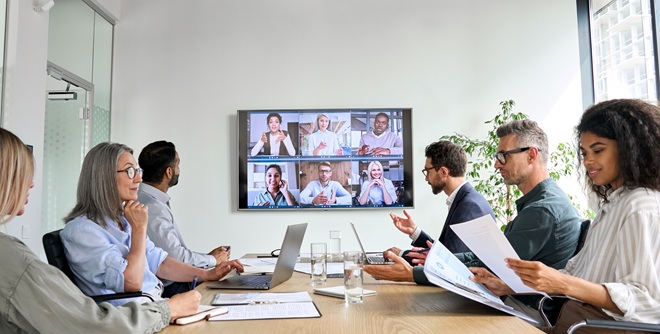
In this unit you considered how videoconferencing can be used to support or resist gender inequity at work. As rapid technological developments have increased, remote and flexible working patterns and online meetings have become routine features of our day-to-day working lives and they have changed how participation is organised.
The Social Identity Wheel was introduced to help you think about who you are and how it impacts how you work, and to notice how privilege can normalise some identities over others.
Drawing on findings from a multinational research project in Germany, Iceland, Spain and the UK, the course’s overall aims are to make your work meetings more pleasant and more productive by making sure everyone is getting their say.
Unit 2 Being a participant – how to play nicely!
This unit discussed how participation in online meetings is shaped by gender and power, influencing who takes the floor, who is interrupted and whose contributions are heard. The course presents four communication styles: submissive, confrontational, assertive and cooperative, to consider how they impact equity in meetings.
Confrontational behaviour, including repeated interruptions and inappropriate remarks, can hinder group interaction and sideline others, whereas assertive and cooperative approaches value colleagues’ input, set limits respectfully and involve all participants.
Microaggressions – unintentional behaviours or comments that exclude or demean colleagues – are more common than often thought in videoconferencing. Common examples include unnecessary or patronising explanations, subtle snubs and abrupt interruptions while someone is speaking. Microaggressions are often shaped by existing inequalities in people’s social positions, within both organisational culture and society more generally. Women and other minoritised groups are more likely to experience microaggressions at work. Recognising these dynamics and choosing responses that welcome participation helps build equitable online working relationships where everyone feels comfortable to contribute.
Unit 3 Leading the way – effective chairing
This unit differentiated between effective and ineffective chairing practices and explained the differences between participatory and directive leadership styles. Although each has benefits and drawbacks, depending on the context and function of the meeting, a participatory style of leadership contributes to a more inclusive experience for everyone at the meeting.
Unit 3 presented research showing that participation in meetings is impacted by social identities, with some groups less likely to participate than others. Social identities also shape responses to the chair, with previous research showing that female chairs are judged more harshly than male chairs.
The concept of intersectionality was introduced to consider how multiple social identities interact to produce unique experiences of discrimination. Inclusive chairing involves awareness of the range of social identities within meetings and ensures that the views and contributions of all are invited and valued – the unit outlined practices, such as inclusive language use, that promote participation, as well as those that discourage it.
Unit 4 50 shades of humour
Humour in the workplace serves various functions, including fostering community and relieving stress, but it can also reinforce hierarchies and contribute to bullying. The unit considered how the perception of humour can vary depending on context and identities, such as gender, race and class.
Often, men dominate joke-making during online meetings, while women are expected to laugh along, reflecting societal expectations. Humour can create a positive atmosphere or relieve awkwardness in uncomfortable situations. However, it can also be misappropriated to mock or belittle others, resulting in a toxic work environment. Reactions to humour can vary, influenced by one’s position and identity, highlighting the importance of attending to the dynamics of humour to mitigate workplace hierarchies.
Unit 5 Could this meeting be an email?
This unit explored how time management in the workplace affects men and women differently, especially due to the ‘second shift’ many women face with both paid work and domestic responsibilities. It analysed how the lack of regulation and poor planning of meetings can worsen these inequalities, negatively impacting the work–life balance.
It also examined gender dynamics in meetings, such as the unequal distribution of speaking time and the invisibility of women’s voices. By using practical tools, the unit suggested how to optimise meetings to make them efficient, inclusive and respectful of everyone’s time, to help contribute to a fairer and more productive organisational culture.
2 The Social Identity Wheel
In Unit 1 you were introduced to the Social Identity Wheel and have returned to it in each of the units in relation to each of the topics covered in the course. As mentioned in Unit 1, the aim is to provide an opportunity to consider how identities can impact online meetings and specifically, how they can make meetings easier or more challenging for different people.
In summary, more productive and pleasant meetings are also those that are equitable – this message should help you in future meetings, as well as in your everyday life. The next activity returns to the questions you were asked in Unit 1 so you can consider if your answers have changed at all.
 Activity 1 Who are you now?
As promised, here is your opportunity to revisit your answers from Unit 1. But first, try answering the questions again, keeping in mind what you’ve learned across the course.
3 Looking back, going forward
In Unit 1, you explored some of the topics introduced in the course. To refresh your memory these topics are included here again with a summary of the key points you have learned about each topic.
Communication styles
Gender can impact how we communicate at work. What we say and do, as well as what we expect from others can be influenced by gender stereotypes, non-verbal cues and power relationships.
Unit 2 – key points
Unit 2 explored four communication styles:
Submissive = avoids conflict – apologetic, hesitant, defers to others.
Confrontational = direct and often aggressive, blunt, combative, dominating tone, focus on winning or asserting control.
Assertive = respectful and confident – self-assured, open to dialogue, honest.
Cooperative = prioritises working together – seeks consensus and values group harmony, flexible, focused on shared goals.
Assertive and cooperative styles are most closely linked to creating equity in meetings, as they support inclusive dialogue and shared decision making. You also looked at how microaggressions, which are subtle, often unintentional behaviours or comments, can undermine equity by making people feel excluded, disrespected or less valued in group interactions.
The four most common communication styles that include both spoken and body language were detailed in an interactive graphic.
Leadership
Chairing a meeting is a form of leadership. Different forms of leadership can promote or reduce equal and fair participation from meeting attendees.
Unit 3 – key points
Unit 3 looked at two leadership styles – participatory/facilitative and direct/authoritative and their impact on equity in meetings. While participatory leadership encourages inclusion and shared decision making, it can lead to longer, less focused meetings. Direct leadership offers clarity and quick decisions, but it may limit discussion. Used thoughtfully, both styles can support equity and productivity. Effective leaders often blend both styles, depending on the context and what the goals of the meeting are.
We also explored how good chairing means being aware of how social identities like gender, race or disability can shape people’s experiences in meetings. Inclusive chairing actively invites and values all contributions. We outlined practical ‘dos’ and ‘don’ts’ for running more equitable, respectful and effective meetings.
Some of the key aspects of chairing an inclusive online meeting were summarised in a series of flip cards.
Ensuring inclusive online meetings
Humour
Workplace humour can serve many different purposes. It can be a great tool for building relationships among colleagues and teams, but it can also be used to undermine a person or even become a means of bullying.
Unit 4 – key points
Unit 4 explored how humour shapes power dynamics in online meetings. It can be a powerful tool to either reduce or reinforce workplace hierarchies.
Used positively, humour can lighten the mood, make people feel more comfortable sharing mistakes and defuse tension. Chairs can use humour to set a welcoming tone and encourage openness. However, humour can also be used to belittle others, conceal aggression or maintain control while appearing friendly. It can reinforce hierarchies, especially when used by those in senior roles, and may perpetuate stereotypes or even prejudice.
You looked at how humour is gendered – men are expected to make more jokes, often in a direct or challenging style, while women are expected to laugh along or use humour to build connections. These patterns reflect and reinforce broader stereotypes about gender roles and authority in the workplace. Reflecting on one’s own and others’ use of humour is an important step in challenging these dynamics and fostering equity in meetings. To end this unit, we looked at practical skills to change meeting cultures in the workplace.
Unit 4 Activity 2 feedback
To view the videos again, return to Unit 4 Videos 1–3.
Time
Time is precious and most people feel they do not have enough of it at work. Distribution of time at work affects men and women differently, particularly for those who have competing work–life commitments.
Unit 5 – key points
Unit 5 focused on the importance of managing time in online meetings and recognising that time is a valuable resource for everyone. Before scheduling a meeting, it’s important to consider who it impacts and whether it’s truly necessary. You were introduced to a decision-making tool to guide this process, prompting key questions such as:
How might this meeting affect those with caregiving responsibilities?
Are all voices – especially women’s and minoritised groups – being heard?
Can the timing or duration be adjusted to respect everyone’s time?
Using this approach benefits everyone. For women, it can help reduce work overload and protect time for personal responsibilities. For organisations, it leads to more efficient, inclusive and productive meetings. For teams, it fosters a supportive work culture and improved wellbeing. Being mindful of how time is used in meetings is a practical way to support equity and build more respectful and effective workplaces that everyone can enjoy.
The decision tree in Activity 1 helped you decide whether you should communicate by email or call a meeting.
Unit 5 Activity 1 Decision tree: meeting or email?
4 Bringing it all together
Now that you have almost completed the course and reviewed each of the units, this activity will allow you to put that new learning into practice. In the following activity you will rewatch one of the videos of an online meeting to identify good and bad practice.
Activity 2 How was it for you?
In Unit 2, you watched a short video of a budget meeting. You may remember that in this meeting, six employees were discussing their department’s financial planning for the coming year. When you first watched this video, you were asked to identify different communication styles and considered how they impacted interactions in the meeting.
Now we would like you to watch the film again, but this time we would like you to consider how equitable, inclusive and productive this meeting was for everyone who took part.
We’d like you to use your knowledge on how to effectively chair and participate in meetings (Unit 3), workplace humour (Unit 4) and managing time (Unit 5). To do this, we’ve included a few questions to help you reflect on the meeting interaction.
Now watch the video again and note down your thoughts in the boxes below.
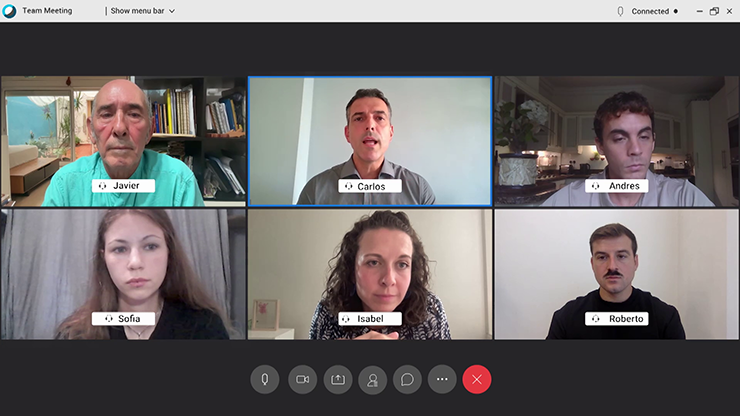
Transcript: Unit 2 Video 1 (repeated) Carlos' communication style
Now that you have almost completed the course and had a chance to try out your skills, we hope you’ll be confident in identifying good and bad practice in online meetings, as well as supporting or challenging it as appropriate.
Unit 6 conclusion
Congratulations! You have finished the final session. Across the course you have:
- Built your understanding of effective meeting practices.
- Explored how participation in online meetings is shaped by gender and power.
- Recognised four communication styles and microaggressions.
- Examined chairing as leadership and inclusive practices.
- Reflected on how humour shapes workplace hierarchies in videoconferencing.
- Looked at time management and its impact on equity and productivity.
This learning will support you in promoting inclusivity in online meetings and improving meeting productivity.
Next, complete the end-of-course quiz to test your learning from across the course and achieve the course badge.
End-of-course quiz
Now have a go at the end-of-course quiz.
If you don't pass with 80% or higher you'll be able to attempt the quiz again.
After you have successfully completed the end-of-course quiz and viewed all the course learning material you'll be awarded the ‘Best practice in online meetings’ digital badge and statement of participation.
Thanks from the team
Transcript
Thank you for participating in this course – we hope you found it useful.
Visit the Gender Equitable Interactions Online webpages at The Open University.
Course questionnaire
We would appreciate it if you would share your experience with us – please take five minutes to share any comments and feedback you have in the course questionnaire; both positive feedback and constructive criticism are welcome.
Contributors
United Kingdom
Lisa Lazard
Rose Capdevila
Alison Davies
Germany
Irmgard Tischner
Antonia Heil
Iceland
Annadís Rúdólfsdóttir
Flora Tietgen
Gyða Pétursdóttir
Katrín Ólafsdóttir
Spain
Adriana Gil-Juárez
Barbara Biglia
Alejandra Araiza Díaz
Jordi Bonet Martí
Marta Castillo González
Nikolina Janjic
Pía Podestá González
Verónica Blázquez Pla
Partners and funders
Where to go for help
United Kingdom
ACAS (Advisory, Conciliation and Arbitration Service)
Free and confidential employment-law and workplace advice for employees and employers.
Helpline: 0300 123 1100 (Mon–Fri, 8 a.m. to 6 p.m.)
Protect (formerly Public Concern at Work)
Whistleblowing charity offering free legal advice for raising concerns at work.
Line: 020 3117 2520
Wider support networks (especially relevant to workplace stress or discrimination):
Mind – mental-health advice and peer support; Able Futures helpline (0800 321 3137).
Equality Advisory and Support Service (EASS) – discrimination and human-rights advice: 0808 800 0082.
TUC and UNISON – trade union resources, legal representation and support.
Education Support – 24/7 helpline for education professionals.
Mental-wellbeing crisis helplines (useful for workplace-related distress):
SANEline: 0300 304 7000 (daily, 4:30 p.m. to 10:30 p.m.).
CALM: 0800 58 58 58 (daily, 5 p.m. to midnight).
Shout: Text ‘SHOUT’ to 85258 (24/7).
Papyrus HOPELINEUK: For under-35s: 0800 068 4141 (days/hours vary).
Germany
BAMF/‘Working and Living in Germany’
Hotline/advice on job search, recognition of foreign credentials, residence, and language.
Phone: +49 30 1815-1111 (Mon–Fri, hours vary by topic).
Federal Ministry of Labour and Social Affairs hotline (Arbeitsrecht advice).
-
Legal advice on employment law (Arbeitsrecht): +49 30 2219 11004 (Mon–Thu 8 a.m. to 8 p.m.).
-
Mental-health/emotional support helplines:
TelefonSeelsorge (24/7): 0800 111 0 111, 0800 111 0 222, or 116 123.
International Helpline Berlin (English): 030 4401 0607.
Krisenchat (text/WhatsApp, youth focus): +49 157 3599 8143.
Nummer gegen Kummer (youth and adult support): Adults – 0800 111 0 550; Youth – 116 111.
Iceland
Directorate of Labour (Vinnumálastofnun)
Central employment-support service across Iceland, including workplace-related queries.
Phone: 515 4800; also offers online chat and email.
‘Employment with support’ service
Personalised job-seeking and workplace integration support for those with reduced work capacity.
Contact via same phone number: 515 4800.
Spain
Inspección de Trabajo y Seguridad Social
Government’s Labour Inspectorate – handle complaints about unfair dismissal, unpaid wages, health and safety, and workplace discrimination.
Complaints (‘denuncia’) can be submitted online or at local provincial offices; process is free and can be anonymous.
Citizens Advice Bureau Spain (CAB Spain)
Offers guidance, especially beneficial for expatriates navigating Spain’s labour system.
Acknowledgements
Grateful acknowledgement is made to the following sources:
Every effort has been made to contact copyright holders. If any have been inadvertently overlooked the publishers will be pleased to make the necessary arrangements at the first opportunity.
Important: *** against any of the acknowledgements below means that the wording has been dictated by the rights holder/publisher, and cannot be changed.
Unit 1
575477: Lisa Lazard: Provided by Lisa Lazard
575483: Rose Capdevila: Provided by Rose Capdevila
575474: Irmgard Tischner: Provided by Irmgard Tischner
575468: Annadís Greta Rúdólfsdóttir: Provided by Annadís Greta Rúdólfsdóttir
575472: Gyða Margrét Pétursdóttir: Provided by Gyða Margrét Pétursdóttir
575476: Katrin Olafsdottir: Provided by Katrin Olafsdottir
575465: Adriana Gil-Juárez: Provided by Adriana Gil-Juárez
575470: Barbara Biglia: Provided by Barbara Biglia
575475: Jordi Bonet: Provided by Jordi Bonet
582289: 1 The growing importance of online meetings: Dimitri Otis/Getty Premium
573710: Introduction: alotofpeople/123rf
569552: Introduction: Luis Alvarez/Getty Premium
577971: 1 Humour at work: 10'000 Hours/Getty Premium
575763: Introduction: andreswd/Getty Premium
579298: Introduction: FG Trade Latin/Getty Premium
575738: Social Identity Wheel: GEiO
Unit 2
573710: Introduction: alotofpeople/123rf
575470: Barbara Biglia: Provided by Barbara Biglia
575466: Alejandra Araiza Díaz: Provided by Alejandra Araiza
575478: Marta Castillo González: Provided by Marta Castillo Gonzalez
575479: Nikolina Janjic: Provided by Nikolina Janjic
575586: 1 Gender and power relationships in online meetings: stellalevi/Getty Premium
578304: 2 Communication styles: DC Studio/Freepik
575593: 3 Microaggressions (graph 1 redrawn): Redrawn by the Open University from Graph 'Employed people reporting discrimination at work by main reason, sex and country of birth, EU, 2021' ec.europa.eu/eurostat. Available here: https://ec.europa.eu/eurostat/statistics-explained/index.php?title=Self-perceived_discrimination_at_work_-_statistics (Accessed: 02 Dec 2025) Available under a https://creativecommons.org/licenses/by/4.0/
575605: 3 Microaggressions (graph 2 redrawn): Redrawn by the Open University from Statistics Canada (2020), Sexual misconduct and Gender based Discrimination at work, 2020, (2020). Reproduced and distributed on an "as is" basis with the permission of Statistics Canada under a Statistics Canada Open Licence. Available here:https://www150.statcan.gc.ca/n1/pub/11-627-m/11-627-m2021061-eng.htm
575611: 3.1 Microaggression in videoconferencing - chart (redrawn): Adapted from Women tech network available here: https://www.womentech.net/en-gb/women-in-tech-stats
575619: 3.1 Microaggression in videoconferencing - data (redrawn): Redrawn by the OU from Discrimination in the EU. European commission. Available here: file:///C:/Users/dc4388/Work%20Folders/Downloads/Discrimination_in_the_EU_sp535_Infographics%20(3).pdf (Accessed: 03 Dec 2025) Available under a https://creativecommons.org/licenses/by/4.0/
578327: 4 Preparing to make a difference: DC Studio/Freepik
578296: TEXT: Sexual harassment at work.....: Directive (EU) 2024/1385 of the European Parliament and of the Council of 14 May 2024 on combating violence against women and domestic violence. (Text) [ 14 May 2024) Available here: https://eur-lex.europa.eu/legal-content/EN/TXT/PDF/?uri=OJ:L_202401385 (Accessed 27 May 2025) Available under a : https://creativecommons.org/licenses/by/4.0/
Unit 3
569552: Introduction: Luis Alvarez/Getty Premium
575469: Antonia Heil: Provided by Antonia heil
575467: Alison Davies - Provided by Alison Davies
569553: 1.2 Chairing as leadership: Morsa Images/Getty Premium
569602: Participative chairing: Plan Shoot / Imazins/ Getty Premium
569560: Directive chairing: skynesher/Getty Premium
569562: 2. Online meetings and social identities (intro): adamkaz/Getty Premium
575738: 2.1 Analysing your online meeting experiences
577926: Kimberlé Crenshaw (new): Monica Schipper / Stringer/Getty Images Entertainment
569565: 2.2 When the chair is a woman: © Golubovy | Dreamstime.com
569570: 4. Inclusive practice: chairing skills for online meetings (image 1) fizkes/ 123rf
569574: 4. Inclusive practice: chairing skills for online meetings (image 2): fizkes/123rf
569576: 4. Inclusive practice: chairing skills for online meetings (image 3): andreypopov/123rf
Unit 4
577971: 1 Humour at work: 10'000 Hours/Getty Premium
575471: Flora Tietgen: Provided by Flora Tietgen
575476: Katrin Olafsdottir: Provided by Katrin Olafsdottir
577860: 2.1 Gender and humour (image 1): Tempura/Getty Premium
577861: 2.1 Gender and humour (image 2): miniseries/Getty premium
577868: 2.2 Responding to humour (image 1): Comstock Images/Getty premium
577876: 2.2 Responding to humour (image 2): Alistair Berg/Getty Premium
577868: 2.2 Responding to humour (image 1): Comstock Images/Getty premium
577876: 2.2 Responding to humour (image 2): Alistair Berg/Getty Premium
575738: Social Identity Wheel: GEiO
Unit 5
575763: Introduction: andreswd/Getty Premium
575465: Adriana Gil Juarez: Provided by Adriana Gil-Juárez
575481: Pía Podestá González: Provided by Pia Podesta Gonzalez
575485: Verónica Blázquez: Provided by Verónica Blázquez
575762: 1 Time, gender and meetings: Belinda Howell/Getty Premium
575766: 2 Reflecting on gender and time: mapodile/Getty Premium
575767: 3 The right to time and gender equality: MilosStankovic/Getty Premium
575738: Social Identity Wheel: GEiO
575769: 4 Time rights activity: Hiraman/Getty Premium
Unit 6
579298: Introduction: FG Trade Latin/Getty Premium
575468: Annadís Greta Rúdólfsdóttir: Provided by Annadís Greta Rúdólfsdóttir
575469: Antonia heil: Provided by Antonia heil
575477: Lisa Lazard: Provided by Lisa Lazard
575479: Nikolina Janjic: Provided by Nikolina Janjic
575485: Verónica Blázquez: Provided by Verónica Blázquez
575738: Social Identity Wheel: GEiO
575483: Rose Capdevila: Provided by Rose Capdevila
582421: Four logos provided in one pdf: © Ministerio de Ciencia e Innovacion, © Financiado por la Union Europea, © Plan de Recuperacion, Tranformacion y Resiliencia, © Agencia Estatal de Investigacion
582420: Rannis (logo): Rannis
582426: UAB (logo): UAB Barcelona
582423: UKRI (logo): UKRI
582425: Universitat Rovira i Virgili (logo): Universitat Rovira i Virgili
582428: University of Iceland (logo): University of Iceland
582424: Deggendorf Institute of Technology (logo): Deggendorf Institute of Technology
582406: Federal Ministry of Education and Research (logo): Federal Ministry of Education and Research
582417: Chanse (logo): Chanse