Use 'Print preview' to check the number of pages and printer settings.
Print functionality varies between browsers.
Printable page generated Tuesday, 1 September 2026, 8:50 AM
Session 4: Clarifying my goals and planning for the future
Introduction

In Sessions 1–3 you’ve looked at where you are now and how you got there. In this session you’ll think about where you want to be in the future.
You may currently be in work or studying. If not, it may be the time is right for you to consider returning to work or resuming studies that have been put on hold, or even to change direction completely. This could involve building on the knowledge and skills you’ve gained from caring and thinking about studies that lead to care-related employment. Or you might want to start something completely new.
Your own starting point for study will depend on many things: your personal circumstances, previous educational qualifications, the length of time away from formal education or training, and opportunities for getting on to the courses that interest you.
Researching the study, role or career areas that you are interested in will help you with your plans, ensuring that you make an informed decision, and don’t end up on what you feel is the wrong path. It may be that you’re not in a position to act on your future goals yet, but thinking about it may be a useful process.
Choosing a job profile

Many of the skills and abilities that you looked at in Session 3 are transferable – skills you have developed in one area of your life that can be carried over into another area. In this session you are asked to think about the future – for example, which career or subject area you may be interested in – and then explore what the possibilities and options are for you.
A list of the main career areas is given in Activity 4.1. You can see that this list is very long – so how do you choose?
Activity 4.1 Using the computer to explore ideas

If your main aim of completing What about me? is to help you decide on a future career or a career change, you may want to spend more time on this activity to fully explore your ideas. This will help ensure that you make a realistic, well-informed decision for yourself.
IT skills can help you research or explore your ideas. Click on at least one of the careers or subject areas listed in Table 4.1 that you are interested in, or perhaps are unfamiliar with. The career areas given here are links that will take you to job profile information in these areas. (Press the ‘Ctrl’ key on your keyboard and left-click with the mouse.)
Explore the information given for two job profiles, so that you are able to respond to the following points:
- What are the entry requirements for your chosen job profiles?
- Name two skills that are required for each of your chosen job profiles.
- Make a note of any point that particularly interests or surprises you.
You can complete this activity on your own or in pairs if you are in a group. Remember to save your answers because you will return to these in future activities.
Use either the Activity sheet 4.1 or your notebook to record your answers.
OR
Go to Activity 4.1 of your Reflection Log. Once you have completed the activity, make sure you save the document again.
If you want to look at careers information through the medium of Welsh or explore opportunities specific to Wales, you may want to go to the Careers Wales website.
How did you get on? Were you able to answer the questions? Did any of the information surprise you?
The information that you have just researched will help you with the next activity in this session.
You may want to return to Activity 4.1 later to fully explore your ideas further, especially if your main aim is deciding on a future career or a career change.
Clarifying your goals
Planning a career takes time! If you are thinking of a new career, or perhaps wondering where further study and qualifications might lead you, you may want to research other resources before identifying possible goals for the future. Further information and advice is available from Careers Wales or The Open University’s Careers Advisory Service.
There is also a Find out more section at the end of the course, with information links and contact details for further resources and support.
Your goal may be a new career, a course of study, learning a new skill or improving your situation – whatever feels right for you at this stage of your life. Make a note of any points that you feel you need more information on, such as study skills, funding and fees or course choice, for example – the links given above will help you. Keep your notes safe because these will help you with your plans and in completing this course.
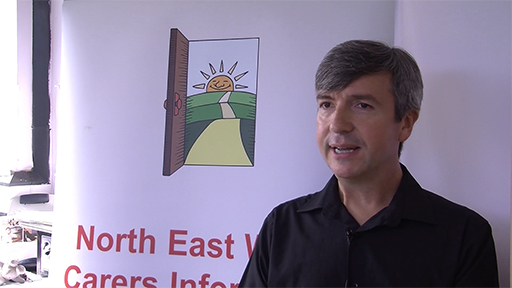
You’ve heard from James throughout the course. Now listen to James talk about his experience of studying part-time while caring.
James: life, work and study
Transcript
Claire: life, work and study
Transcript
As you listened to James and Claire, did you notice if they were always sure about what they wanted to do? Although James had wanted to do a masters degree, he had not originally planned to pursue post-graduate study. Claire had tried different education routes before she discovered her enjoyment and enthusiasm for sign language, in which she is now working towards a qualification.
Sometimes a change of direction or goal is forced upon us. We heard earlier about how James had to leave full-time employment after having to take up his role as a carer. Other changes or choices are made voluntarily, for example if we find that we enjoy a particular subject or have skills in another field.
Reflection
Do you already know what you want to do? Have you thought about different possibilities?
Activity 4.2 Clarifying my goals through visualisation
You may have some idea of what direction you would like to go in now or you may still be thinking about it. When we have had difficult or disappointing experiences in our lives, these can affect our confidence and how we feel about the future.
You have explored your skills, qualities and abilities and have some idea of what you have to offer. Now ask yourself:
- Where am I now?
- What am I doing?
Take some time to imagine yourself in the future. Allow yourself to consider that there are possibilities for you.
Write a sentence saying what your hopes are for your future. You might find it useful to look back at the notes you made for Activity 4.1.
You can use Activity sheet 4.2 or save this in your notebook.
OR
Go to Activity 4.2 of your Reflection Log.
You can share this or keep it to yourself. Once you have completed the activity, make sure you save the document again.
Factors that can help or hinder you
Through their video and audio clips and their worksheets you’ve heard Claire, Christine, Suzanne, James and Alana talk about how they found it hard to do what they wanted because of some difficulties they had. They also talked about the help and support they had received; for example, in finding a job, being able to complete a qualification or going on work experience.
Reflection and discussion
- Can you remember anything in particular that helped these individuals to achieve their goals?
- Can you think of any difficulties they had to overcome?
Discuss this in your group or make a few notes if you are working alone.
Thinking about your life now, what do you feel can help you to achieve your goals? What things might make it difficult?
It can also be helpful to look at how you have made decisions and choices in the past, or how you have coped in difficult situations. This is especially important if you have made a few ‘false starts’ or things have not gone as well for you as you had hoped.
How do you make decisions and choices? For example, do you research the internet, speak to an adviser, friend or colleague, or contact local colleges or training organisations? Or do you decide quickly after hearing or seeing something? Your timeline may have helped you to see some points where, on reflection, you may have chosen differently if you had been better informed.
Have a look at what Alana has identified as factors that can help her achieve her goal and possible difficulties.
| My goals | Factors that will help me to achieve them | Factors that might give me difficulties |
| Becoming a hairdresser |
|
|
And now have a look at what Christine has identified as positive factors and possible difficulties.
| My goals | Factors that will help me to achieve them | Factors that might give me difficulties |
|
|
|
Activity 4.3 Thinking about my goals: factors that can help or hinder me
Use Activity sheet 4.3, listing your goals and the factors that may help or hinder you in achieving them.
OR
Go to Activity 4.3 of your Reflection Log. Once you have completed the activity, make sure you save the document again.
You will need the notes you made for Activity 4.2 about your goals. Write these in the first box; then list the factors that will help you and those that might make it difficult for you to achieve your goals. Your goal may be a new career, a course of study, learning a new skill or improving your situation – whatever feels right for you at this stage of your life.
Some of the factors that could help you achieve your goal, or the ones that may give difficulties, might be similar to those described by Christine and Alana in their tables. For example, both Christine and Alana identify finances as a difficulty and determination as a positive factor.
Overcoming difficulties
There are many ways to get help to overcome difficulties and to find the best way to achieve what you want. You can go to websites and search for the help you need online, or you can get advice face to face from some of the organisations listed in the Find out more section at the end of the course.
Have a look at the help Christine has to overcome difficulties.
Christine’s sources of help
- NEWCIS (local carers’ centre)
- Parents – finances
- Husband – understanding and support
- Business course – if I do set up a craft stall/shop
- Craft event’s organiser
- FLVC – (local voluntary council)
- Fitfish – (retreat)
Christine identifies her local carers’ service and family members as important sources of support, as well as other opportunities that would help, including pursuing studies and volunteering.
Activity 4.4 Help to overcome difficulties
You have seen the sources of help that Christine identified. Now think about your own circumstances. If you think you will need help:
- Find out who can help you.
- Talk about and discuss your ideas and plans with the important people in your life.
- Check the list of organisations given in the Find out more section at the end of the course.
- Write down the details of any organisation you are thinking of asking for help.
Use Activity sheet 4.4 to reflect on and list who you can ask or where you can go for help.
OR
Go to Activity 4.4 of your Reflection Log. Once you have completed the activity, make sure you save the document again.
If you are working in a group context, you can discuss this with your group tutor and with others in your group.
Summary
You have now completed Session 4. This session focused on how to start working towards your goals, how to research and plan, how you can help yourself, and how to recognise that sometimes we need the help of others and to know where to find that help.
In the final session of What about me? you will look more closely at the support networks in your own life that can help you as you work towards your goals. You will also identify other sources of information, advice and guidance that are available to you as you plan your next steps.
Session 5: Identifying my next steps and where I can find information and support
Acknowledgements
What about me? was developed by Carers Trust Wales and OU in Wales. It is based on and adapted from content developed by Lindsay Hewitt and Christine McConnell of The Open University in Scotland in collaboration with Bridges Programmes.
We are hugely grateful to the carers and staff from North East Wales Carers Information Service (NEWCIS) for sharing their stories and testing out the course activities. We hope you find something in their experiences that speaks to you as well.
Except for third party materials and otherwise stated (see terms and conditions), this content is made available under a Creative Commons Attribution-NonCommercial-ShareAlike 4.0 Licence.
The material acknowledged below is Proprietary and used under licence (not subject to Creative Commons Licence). Grateful acknowledgement is made to the following sources for permission to reproduce material in this course:
Images
Figure 4.1: © pablographix/iStockphoto.com
Figure 4.2: © RyanKing999/iStockphoto.com
Figure 4.3: © Logorilla/iStockphoto.com
Table
Table 4.1 adapted from: https://nationalcareersservice.direct.gov.uk/ advice/ planning/ jobfamily/ Pages/ default.aspx
Video/audio: © The Open University
Every effort has been made to contact copyright owners. If any have been inadvertently overlooked, the publishers will be pleased to make the necessary arrangements at the first opportunity.
Click the link above for further information on:
– further study in Welsh related to this subject
– related study content from The Open University
– this topic and free course materials on OpenLearn
– studying from outside the UK? We have students in over a hundred countries studying online qualifications.
Next: Session 5: Identifying my next steps and where I can find information and support