climate change

Courses tagged with "climate change"

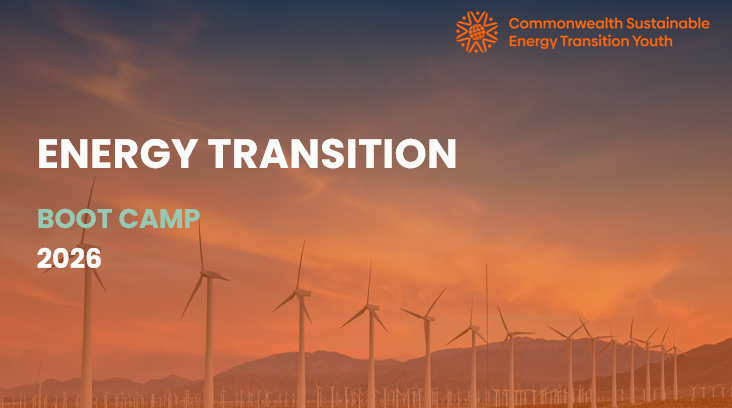
Energy powers everything: hospitals, schools, businesses, homes, and economies. Yet millions of Nigerians go without reliable, affordable electricity every day. The Energy Transition Bootcamp is an 8-week programme that takes you deep into the world of energy how it works, who has access to it, why so many don't, and what clean energy solutions can do to close that gap. You do not need to be an engineer or an expert. You just need to care about energy and what it means for people's lives. Anchored in SDG 7,, the global goal for affordable and clean energy, this programme connects the big picture of the global energy transition to the everyday reality of energy access in Nigeria. By the end, you will have the knowledge to understand energy at any scale, and the skills to design and pitch a real clean energy solution for your community. Delivered by CSET Youth Nigeria, National chapter of the Commonwealth Sustainable Energy Transition Youth Action Group.
Category: OER

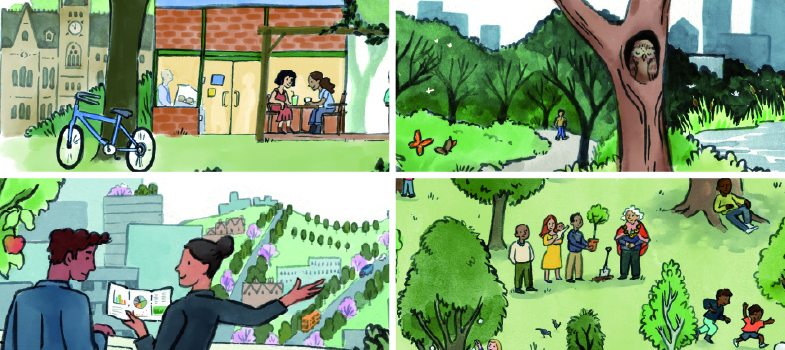
Learn how to use a participatory visioning tool that integrates social values in planning, management and decision-making around urban treescapes.

Category: OER
This free course focuses on the central role education can and should play in a world that needs to live more sustainably.
Category: OER
This short introduction discusses how elevated CO₂ together with increases in drought and high temperature may impact upon the growth and development of plants, particularly with reference to some agricultural systems.
This unit seeks to identify a workplace’s impact on global climate change through its emissions of greenhouse gases (GHGs), notably carbon dioxide (CO₂), the most common such gas. It will then provide some guidance on how best to reduce that footprint, looking in turn at behavioural and management issues, relatively straightforward physical measures and transport.
This unit looks at how what we eat has a direct effect on climate change. It also considers the importance of how our food reaches our plates, who controls that process and why this makes a difference to climate change. The unit also explores the positive action that individuals and communities can take to act for change.
This unit explores the effects of anthropogenic climate change on non human species. It explores examples of the way that different non human species adapt to climate change. It uses basic ideas in ecology to examine how species will, and, already are, adapting to changing climates. Finally, it looks at how these adaptations will affect biodiversity within the UK.
This unit considers the ways in which climate change affects us as individuals and where we live. It also considers what can be done to reduce or stabilise climate change. These key questions are explored - How does climate change affect me and where I live? What kind of changes might I be able to observe where I live? What kinds of change will be experienced in other parts of the world? What can be done to stabilise climate change? What can be done to reduce/stabilise climate change? What is the best way to reduce the risk of climate change?
This short unit explains how decisions are taken about allocating scarce resources in a market economy, and why such decisions may have potentially disastrous effects on the environment including the climate.
There is now a strong global scientific consensus that climate change is real and due to CO₂ emissions from human use of fossil fuels. When considering action to reduce emissions, and prevent the worst impacts of climate change, large changes require government intervention and changes in corporate behaviour. However, there are many important actions that can be taken in parallel by individuals in order to move towards a lower-carbon lifestyle.
This unit will explore how both renewable and non-renewable energy sources may contribute to our energy future within a context of a need to meet carbon reduction targets. It will review current energy sources and technologies and their limitations and then explore future possibilities, a hydrogen economy, the use of nuclear energy and carbon capture.
This introduction to ecopsychology explores how climate change affects how we feel about our world and our future. We will explore how strong feelings triggered by this crisis can send us into denial and despair, hindering our ability to act meaningfully. We will also come to understand more about our emotional responses and how they can empower us to learn to live with climate change.
Businesses can be affected both directly from climate change and indirectly through government policies. Risks can occur from the impacts of predicted climate change effects such as increased temperature, extreme weather events, disrupted ecosystems and flooding of land. This unit is wrried for small and medium enterprises and people interested in how businesses can respond to climate change. It introduces key concepts such as risk, corporate social responsibility and engaging employees and enables businesses to quickly grasp the issues and opportunities for managing risks. Unit authored by Dr. Barbara L Jones
This unit looks at how industrial agriculture is one of the anthropogenic causes of climate change. It goes on to consider what adaptations must be adopted in order to mitigate its impact on climate change. The concept of food security is introduced and its link to climate change explored. Finally, the notion of adapting agriculture through the way we design and live in cities is presented.

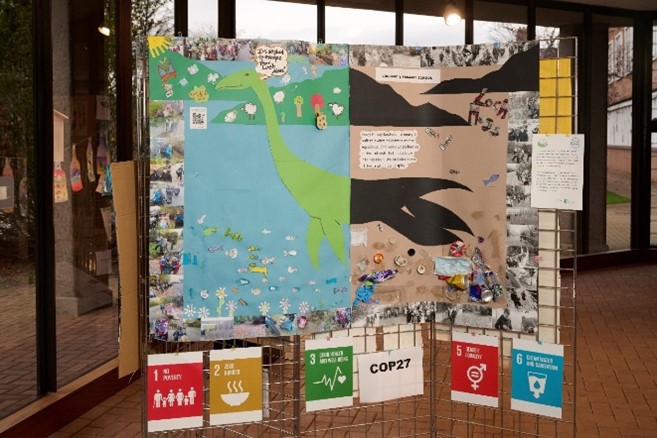
This article covers the origins of the Connecting Communities and Heritages against Climate Crisis (CCHCC) programme - Art in Action - which started with initiatives in Scotland connecting school communities with local government, and is now, in 2024, spreading to Wales and sub-Saharan Africa. The programme is currently a collaboration between the Open University and Highland OneWorld and is actively seeking additional partners.