Different types of business
Use 'Print preview' to check the number of pages and printer settings.
Print functionality varies between browsers.
Printable page generated Sunday, 17 May 2026, 1:33 PM
Different types of business
Introduction
Businesses come in all shapes and sizes. This free course, Different types of business, looks at some of the different types of business on the basis of size, industry sectors, and ownership structures and legal forms. It is helpful to think about a number of different types of business because they have different characteristics and behave differently.
This OpenLearn course is an adapted extract from the Open University course B100 An introduction to business and management.
Learning outcomes
After studying this course, you should be able to:
describe different types businesses
explain different ways of classifying businesses: by size, industry sector and ownership type
apply these ideas to a real business through a video case study.
1 Categorising a business
Let’s start with an activity to get you thinking about these different types of business.
Activity 1 Your experience of different businesses
This activity will help you start thinking about different types of business and what characterises them. Next time you are walking through your nearest town or city, make a note of the various businesses you come across and some of their most obvious characteristics. You can do this from memory if you prefer. Think about the criteria by which you might categorise these businesses. Make a note of these criteria and any examples you have thought of.
Discussion
You may have thought about a number of different criteria, such as size, the type of business they do, where they are located, who owns them, etc. Here are some commonly used criteria for categorising businesses:
- Size – this is a fairly obvious but important category. A local greengrocer’s store, run by the owner and employing perhaps two further people, would be an example of a so-called micro-business. A large supermarket chain with stores in multiple locations in several countries and employing dozens of people in each store, as well as many more in its headquarters, warehouses and transportation fleet, would be an example of a large multinational business. And then there are many medium-sized enterprises in between.
- Industry sector – a fashion retailer, a hairdresser, someone running a market stall, a farm, a machine tool manufacturer and a commercial cleaning business are all very different businesses, and what they do to a large extent influences how they operate.
- Ownership – this is not always obvious from the outside but different businesses often have very different ownership structures. Some are owned by private individuals, others by groups of shareholders, others are owned by the state, and some have yet different types of owners, such as their own employees or customers, or charitable foundations.
There are other ways of classifying businesses but size, industry sector and ownership structure are some of the more obvious categories to start with.
2 Classifying businesses by size
One of the most obvious ways in which businesses differ is their size. Most of us know some businesses that are very small – one-person businesses or micro-businesses of fewer than five people. Examples may include a single person running, for example, a web design company, a hairdresser’s or a small catering business, or a small retailer, such as a craft shop or a florist, employing just one or two other people. Small and medium-sized enterprises actually make up over 90% of the number of businesses in most countries (although they do not employ over 90% of all employees or make over 90% of all business deals). At the other end of the scale are businesses that are very large – multinational corporations employing thousands of people and operating in many different countries. We are familiar with at least the names of some, such as Microsoft, Samsung, Siemens, Renault, and many more both well-known and less well-known large corporations. And then there are many businesses of all sorts of sizes in between.

It is less obvious how we should measure the size of a business. There are several different measurements available, not all of which are suitable for measuring the size of all types of business. For example, measuring a business’s size on the basis of how much profit it makes assumes that it is a for-profit enterprise. Measuring the stock market value of a business assumes that its shares are traded on the stock market, which is by no means true for all businesses.
Two measures that are applicable to nearly all businesses are number of employees and annual turnover, i.e. the total value of sales made over the period of a year. These two measurements are not always in accord with each other: there are some businesses with very few employees that nonetheless produce quite a large annual turnover. For example, a single person trading shares on the stock market could make a very large turnover in a year if they were very successful. The European Commission uses a combination of number of employees and turnover to define the size of a business (EC, n.d.):
- Large enterprises employ 250 people or more and have an annual turnover of more than €50 million.
- Medium-sized enterprises employ fewer than 250 people and have an annual turnover of no more than €50 million.
- Small enterprises employ fewer than 50 people and have an annual turnover of no more than €10 million.
- Microenterprises employ fewer than 10 people and have an annual turnover of no more than €2 million.
Businesses with fewer than 250 employees are often collectively classified as small and medium-sized enterprises (SMEs).
In some ways the challenges for small and for large businesses are not so different. All businesses need to make sure they offer goods or services that people want to buy, that they have enough income to cover their costs and something left over, and that people working for them are motivated, well qualified and work well together. In other ways, however, small businesses operate very differently from large businesses.
- Small businesses are often owned and managed by the same person. This ‘owner-manager’ may be the founder of the business, or sometimes a relative, perhaps a son or daughter of the founder. Owner-managers are often more emotionally involved in their business than the managers of large enterprises owned by anonymous shareholders.
- Because of the small size, managers are often very closely involved in the day-to-day running of the business. They also tend to know many – often all – employees personally. This is different in a large business, where top managers cannot possibly know all their employees personally. It also often makes for a different, more personal management style.
- Small businesses have flatter hierarchies. In a small organisation there is no need for many layers of management. In a very small business, it may be just the ‘boss’ and a number of employees. Again, this tends to make for more informal management styles. It can also be useful in terms of innovation, as people across the business can find it easier to work with each other and new ideas can be developed and implemented more quickly than in larger organisations, which are often more bureaucratic. This is one reason why many innovations come out of small businesses (often new ones) rather than larger ones, although this is of course not always so.
- Smaller businesses often have more limited financial resources. They need to be very careful how they spend their money and that they have enough money coming in each month to pay staff and all their bills. This also means that they sometimes do not have the money to make further investments, even if these investments would repay themselves in a relatively short period of time by saving costs (e.g. investment in new, energy-efficient machinery) or bringing in more money (e.g. investment in product development to attract more customers).
- Smaller businesses also usually have limited management resources. A single manager, or a very small management team, only has so much time to attend to all the business and the same will be true of a small number of employees. This can be a problem as it can limit a business’s ability to seek out new opportunities – for example developing new product ideas – or address new challenges – for example dealing with new competition or new business legislation – simply because nobody has time to do so.
There is much more that could be said about the differences between large and small businesses and also about the differences between businesses of a similar size. For the moment, it is enough to be aware that size does matter in business and management, not because bigger or smaller is better but because they pose different challenges and different opportunities.
3 Classifying businesses by industry sector
Businesses also obviously differ by what they do. It is very common to distinguish businesses by industry or sector. An industry is a group of businesses that are related in terms of their main activity, for example manufacturing cars or selling groceries. Smaller industries (for example, the car manufacturing industry) can be grouped into larger industry sectors (for example, the manufacturing sector in general). An individual business is classified as belonging to a certain industry on the basis of its main activity. So, for example, a car manufacturing business may also have a small financial services arm (to provide finance to customers to help them buy a new car) but that financial services arm would probably only be about 10% of the business’s overall activity, whereas car manufacturing might be 80%. Therefore, this business would be classified as belonging to the car manufacturing industry, and not financial services.
Economists often distinguish three broad sectors of the economy:
- The primary sector involves extracting and harvesting natural products from the earth (for example, agriculture, fishing and mining).
- The secondary sector consists of processing (for example, the processing of food stuffs produced by agriculture), manufacturing and construction. That is to say, the secondary sector takes the products from the primary sector and does something more with them.
- The tertiary sector provides services, such as retail services, entertainment or financial services.
Some people also distinguish a fourth sector, which is made up of intellectual activities, such as education.
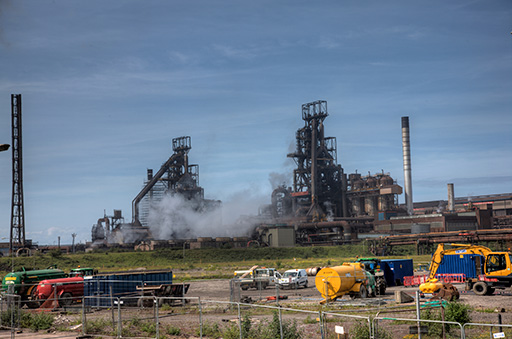
It is useful to distinguish these broad economic sectors as we can see that there will be important differences between a business operating in the primary sector and one that provides a service. Nonetheless, it would also seem obvious that there may be big differences between businesses within the same broad economic sector. A farm and a coal mine will be very different although they are both in the primary sector; and a business that makes, say, potato chips and one that builds railway tunnels will also differ along many lines. There are quite a number of different classifications of industries and some of them go into very fine detail. Some of these coding systems have been developed to help government agencies to classify industry groups; others have been developed by financial ratings agencies to help financial investment companies make investment decisions. There is no need to go into detail on any of these classification systems here. What is important, however, is to be aware that the industry a business is in will have an important influence on how that business operates. For example, the operations of a fisheries business, a manufacturing plant or a service provider such as a telesales company, will be very different in terms of complexity, the kind of technology used and the level of investment required to set it up. There are also big differences in marketing a primary agricultural product to food manufacturers and marketing a service such as, say, carpet cleaning to consumers. While a variety of businesses in different industries face similar issues in some respects, many of the particular opportunities and challenges are strongly shaped by their industry context.
4 Ownership structures and legal forms
Businesses not only vary in size and industry but also in their ownership. Some are owned by just one person or a small group of people, some are owned by large numbers of shareholders, some are owned by charitable foundations or trusts, and some are even owned by the state. Different ownership structures overlap with different legal forms that a business can take. A business’s legal and ownership structure determines many of its legal responsibilities, including the paperwork that the owners need to complete in order to set up the business, the taxes the business has to pay, how profits from the business are distributed, and the owners’ personal responsibilities if the business makes a loss or goes bankrupt.
It is not necessary to go into great detail on legal forms and ownership structures here but a short overview will help you to appreciate the diversity of businesses. At the broadest level it is possible to distinguish between organisations that are owned and run by private owners, those that are owned and run by the state and those that are run by voluntary organisations. Here we will first look at different types of privately owned businesses.
Legal forms and ownership structures of businesses are different from country to country. In the United Kingdom the majority of businesses (but not all) are sole traders, limited companies or business partnerships (UK Government, n.d.).
- Sole trader – a person who is running a business as an individual. Sole traders can keep all the business’s profits after paying tax on them but they are personally responsible for any losses the business makes (i.e. they would have to cover them out of their private money if necessary), paying the bills incurred by the business (e.g. stock or equipment), and keeping a record of all sales and expenditures. Sole traders can take on employees – the term implies that they own the business on their own, not that they must work there alone.
- Limited company – an organisation set up by its owners to run their business. A limited company is a legal person. Of course, a company is not a person in the sense we commonly understand it. What the term means is that the law regards a limited company as having the same legal standing as a person, i.e. it has legal rights and obligations in itself, which are independent from the rights and obligations of its owners as individuals. For example, a limited company can own property. A limited company’s finances are separate from the finances of its owners. Any profit made after taxes belongs to the company. The company can then share its profits, most commonly among all the owners. Limited companies have ‘members’, i.e. the people who own the shares. A limited company also has ‘directors’. Directors may be share owners but they don’t have to be. Shareholders’ and directors’ responsibilities for the company’s financial liabilities (such as losses or debts) are limited to the value of their shareholdings. This means that they do not have to pay out of their personal income or assets if the company runs into financial difficulties. There are two main types of limited company: private limited companies and public limited companies. The shares of public limited companies (PLCs) are traded in the stock market, where anybody can buy shares in the company if they wish to do so. Private limited companies are not traded in the stock market and other people can only buy shares in them with the approval of the current owners (for example, if they are invited to invest in the company by the current owners).
- Business partnerships – an arrangement where two or more individuals share the ownership of a business. There are two main types of partnership: general partnerships and limited partnerships. In a general partnership all partners are personally responsible for the business, meaning they are liable for any losses or debts with their personal income or wealth if necessary. In a limited partnership partners are not personally liable if the business incurs any losses or debts. Profits from a partnership are shared between the partners and each partner then pays taxes on their share. There are a lot of fine details and several possible permutations in the structure of business partnerships, which are important when setting one up but need not concern us any further here.
There are some other legal ownership structures for businesses in the UK (including some different laws relating to partnerships in Scotland) but the three introduced above are the most common. Similar business ownership structures exist in many other countries although the precise legal implications can differ in important ways.
Legal and ownership structures, business size and industry sector are not entirely independent of each other. For example, most sole traders tend to be small businesses, not least because a single individual rarely has the financial capacity to finance a very large business, nor the desire to be personally liable with all that they own if a large business were to run into financial troubles. Certain industry sectors require large businesses. For example, it is not viable to run a small steel works because the physical and financial investment required are so large. In other cases, industry sector and legal form are closely related. For example, law firms and some other professional service firms with more than one professional working in them in the United Kingdom are legally required to be set up as partnerships and no other ownership or legal structure is permitted.
5 Examples of different businesses
In this section you will look at some examples of businesses and consider how the different categories of business introduced earlier apply to them.
Example of a small, family-owned, private limited company: Merrythought Teddybears
Merrythought is a business that makes teddy bears, located in Ironbridge, Shropshire, in the United Kingdom. The business was founded in 1930 by Gordon Holmes. It is a private limited company, still owned by the Holmes family and is currently run by Gordon Holmes’s great-granddaughters, Sarah and Hannah Holmes.
The business has approximately 25 employees and does all its manufacturing in England. It makes a large number of different styles of teddy bears, ranging from ‘traditional’ British bears, to special occasion bears (for example Merrythought provided the official commemorative bears for the 2012 London Olympics) and various ‘novelty’ bears. Merrythought bears are sold all over the world and there is a particularly thriving export market in Japan, where they have a ‘cult’ following. Antique bears and limited edition bears are collectors’ items and there are even Merrythought collector clubs and events.
Example of a large, shareholder-owned, public limited company: Reliance Industries Ltd
Reliance Industries Limited (RIL) is a conglomerate holding company with headquarters in Mumbai, India. It is the largest private sector business in India and operates in five major industry sectors: exploration and production, refining and marketing, petrochemicals, retail and telecommunications.
The business was founded in 1960 by Dhirubhai Ambani together with his cousin Champaklal Damani. In 1966 it was transformed into a public limited company. The business started out as a manufacturer of man-made fibres and textiles and later moved into telecommunications, and subsequently natural gas and mineral oil exploitation, and retail, as well as petrochemicals. There is a very large group of shareholders but over 40% of the shares remain in the hands of the founding family. The business has over 20,000 employees worldwide and an annual turnover of over 28 billion US dollars.
Example of a large, family-owned, private limited company: Mercadona supermarkets
Mercadona is a Spanish supermarket chain, which employs over 74,000 people in total. In 2014 it had 1499 supermarkets all over Spain. It was founded in 1977 by married couple Francisco Roig Ballester and Trinidad Alfonso Mocholi as a small butcher’s shop and is still owned by the family.
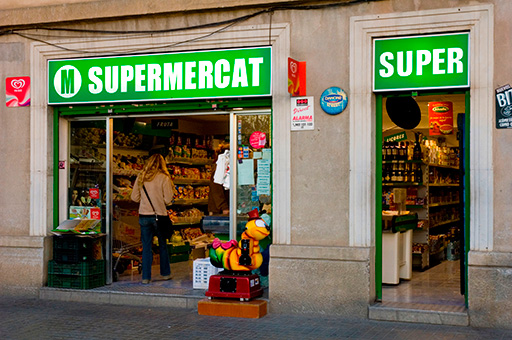
Mercadona competes successfully against international supermarket chains operating in Spain by keeping its prices low through long-term contracts with suppliers, little paid advertising and reduced packaging, and by increasing productivity through extensive employee training. It is now the largest Spanish food retailer by sales.
Activity 2 Classifying the example businesses
After having read through the three examples of businesses above, think about each one’s size, industry and ownership structure. For each example, answer the following questions:
- Is this a large, medium-sized, small or microbusiness?
- What would you say is the industry to which the business belongs?
- What does the example tell you about the ownership structure of the business?
Discussion
The three examples above are very different businesses, situated in different countries, in very different industries, of different sizes and ownership. They include two large enterprises and one small firm. Of the two large enterprises, one is a public limited company, traded on the stock market, and the other is family owned. The small firm is also family owned. Two of the businesses are manufacturing companies (although Reliance is also a significant service provider to other organisations) and one is a retail services business. You may also have noticed that two of the businesses (Merrythought and Mercadona) sell directly to consumers, whereas Reliance sells to other businesses and other large organisations.
You should now have a basic idea of the diversity of businesses and some of the key differences between businesses in terms of size, industry and ownership. In the next section, you will look at another example, a short case study of a German company called Schaefer Kalk.
6 Case study: Schaefer Kalk
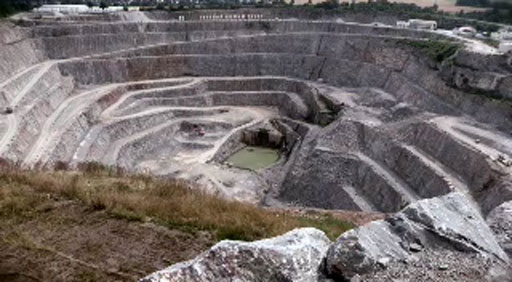
Schaefer Kalk is a German-based company that quarries limestone and processes it into a variety of products that are sold to industrial and construction industry customers across the world.
Watch the following video, which introduces the company and is approximately four minutes long.
Transcript: Introduction to Schaefer Kalk
A brief introduction to Schaefer Kalk
(Adapted from Schaefer Kalk, 2010 and pers. comm. current and previous directors of the company)
The second half of the nineteenth century was an important time in the history of German business. The period is called ‘Gründerjahre’ (‘foundation years’), because it was a time when numerous well-known German businesses were founded. Many of these, such as Bosch, Siemens, BASF, Henkel, and many more, still exist and thrive today. The foundation of businesses was fostered by the establishment of the railways and developments in steam technology, among other things. During that period, in 1860, Johann Schaefer, a lawyer from the small town of Diez (located along the river Lahn, a tributary of the Rhine, in the modern German federal state of Rhineland-Palatinate) was on a look-out for new business opportunities. One of the several projects he started, and eventually the most successful one, was the development of a lime works, taking advantage of the excellent limestone stocks that are found in the vicinity. The works at Hahnstätten which he founded are still the productive heart of the company Schaefer Kalk today.
More than 150 years later Schaefer Kalk is still owned and run by the descendants of Johann Schaefer, now in the fifth generation. Schaefer Kalk belongs to what is called the German ‘Mittelstand’, which means a medium-sized, privately – usually family – owned business. Mittelstand describes less a precise company size (it includes businesses larger than those classified as medium-sized by the European Union) and more the general nature of the business. Most Mittelstand companies are orientated towards long-term business and asset building and less towards short-term profit and share price maximisation. They are not usually traded on the stock exchange.
From the modest beginnings in 1860 a much larger, international company has developed. The exceptionally chemically pure limestone stock in Hahnstätten has been the basis for a range of very high-quality limestone products, which are used in a wide variety of production processes and products, including steel production, construction, chemicals, pharmaceuticals, paper manufacturing and plastic production. Hahnstätten is still at the heart of the company’s production but there are now two main production sites in Germany, one in Malaysia and a smaller one in China. There are also several smaller plants for a product called precipitated calcium carbonate (PCC), situated directly on the production sites of major paper manufacturers (therefore called on-site plants) in Finland, Austria, France and the Czech Republic. Today the company employs over 680 people worldwide.
Schaefer Kalk’s most basic production processes include the extraction of the natural resource, limestone, from quarries and the processing (burning) of the stone in kilns. The resulting calcium oxide (quicklime) is sold directly to some customers (for example cement manufacturers and some environmental applications) but for many other applications it is processed further by Schaefer Kalk itself. One of the most important products for the company is precipitated calcium carbonate (PCC), from a process whereby the carbon dioxide (CO2) that is removed from the natural calcium carbonate in the kilns is added again. This results in the product (calcium carbonate) which is chemically exactly like the natural stone but which can be given different physical properties, such as different crystal lengths and structures. It also turns a naturally grey stone into a white product. PCC is used, among others, in paper manufacturing and the production of plastics and pharmaceuticals. Also important is a range of high-quality mortar and plaster products for the construction trade.
Schaefer Kalk today has three managing directors, two of whom – Heike Horn (finance and human resources management (HRM)) and Kai Schaefer (technical) – are the great-great-grandchildren of Johann Schaefer. The third director – Andreas Kinnen (sales and marketing) – has no family connection with the business. Although there is a great preference for having family members as directors, potential directors have to prove themselves through relevant education and previous work experience in order to be appointed. These three directors are supported by a number of middle managers, who include HRM and finance managers, the plant managers and the leader of the laboratory, among others. In 1983 the company appointed an external advisory board, which meets four times a year with the company directors and is consulted on all important business decisions, such as the appointment of directors or major investment decisions. The company is financed through the equity held by the members of the extended family, retained profits and bank loans. There are no outside share or equity holders.
The company prides itself on the high quality of its products and a constant striving for technical improvement and new product development in order to meet the high demands of its customers, particularly in the chemical, pharmaceutical and paper manufacturing sectors. Lime production is a very long-term business: quarries are developed to last for decades and other plant, such as kilns, is expected to continue operating for not much less time. Investment costs are high and need to be recovered over a period of several years. Schaefer Kalk (like many businesses that sell to other businesses rather than to consumers) has a relatively small number of customers who tend to buy large quantities of the products they need on a regular basis. Long-term customer relationships are therefore highly important and Schaefer Kalk prides itself on the fact that many customers have been with it for decades, in some cases since the early years of the company in the 1860s. Schaefer Kalk also prides itself on the care it takes in recruiting, training and developing employees. It has an extensive training programme for apprentices. Many employees stay with the company for decades and some have parents and grandparents who also worked at Schaefer Kalk.
6.1 Case study activity
The following activity will help you review what you have learnt about the Schaefer Kalk company.
Activity 3 Understanding the case study
Answer the following questions.
What does this company do?
Discussion
Schaefer Kalk is a limestone extracting and processing company. This means it straddles the primary (resource extraction) and secondary (manufacturing) sectors.
Who are Schaefer Kalk’s main customers?
Discussion
Schaefer Kalk sells a variety of products derived from limestone to customers in the construction, steel, chemicals, pharmaceuticals, paper and plastic industries.
How is the company managed?
Discussion
Three company directors supported by a number of middle managers and advised by an external advisory board.
List some further key features of this company that you think are worth bearing in mind?
Discussion
Long history – founded in 1860, owned and managed by the fifth generation of descendants of the founder, slightly larger than medium sized but with international reach.
Conclusion
In this short course you have learnt about different types of business by size, industry sector and ownership structure. You have studied and completed an activity involving several short examples of different businesses. You have also studied a slightly longer case study of a German business and have discussed its nature in another activity. In doing so you have started to develop some study skills, such as reading a text and case study information closely, and applying some concepts (in this case the different classifications of businesses) to that case study information.
References
Acknowledgements
This course was written by Anja Schaefer.
Except for third party materials and otherwise stated (see terms and conditions), this content is made available under a Creative Commons Attribution-NonCommercial-ShareAlike 4.0 Licence.
The material acknowledged below is Proprietary and used under licence (not subject to Creative Commons Licence). Grateful acknowledgement is made to the following sources for permission to reproduce material in this free course:
Course image: © Ant Clausen/Shutterstock.com
Text
Section 6: ‘A brief introduction to Schaefer Kalk’: Adapted from Schaefer Kalk (2010) A brief Introduction to Schaefer Kalk. © 2010 Schaefer Kalk GmbH & Co. KG
Figures
Figure 1: Hairdresser © Johann Helgason/Shutterstock.com
Figure 1: Florist © Candybox Images/Dreamstime.com
Figure 1: Business meeting © Photodisc Getty
Figure 1: Cleaner © Dmitry Kalinovsky/Shutterstock.com
Figure 2: © iStockphoto.com/tirc83
Figure 3: © Peter Forsberg/Shopping/Alamy
Video
Section 6, Schaefer Kalk case study: © The Open University
Every effort has been made to contact copyright owners. If any have been inadvertently overlooked, the publishers will be pleased to make the necessary arrangements at the first opportunity.
Don't miss out
If reading this text has inspired you to learn more, you may be interested in joining the millions of people who discover our free learning resources and qualifications by visiting The Open University – www.open.edu/ openlearn/ free-courses.