First steps in innovation and entrepreneurship
Use 'Print preview' to check the number of pages and printer settings.
Print functionality varies between browsers.
Printable page generated Saturday, 4 April 2026, 9:08 PM
First steps in innovation and entrepreneurship
Introduction
This free course, First steps in innovation and entrepreneurship, provides you with a short introduction to innovation and entrepreneurship, clarifying some key themes and terminology and helping you to examine your own views about these important subjects. There are four sections:
- Initial impressions and experiences
- Innovation and why it matters
- Varieties of entrepreneurship
- Connecting innovation and entrepreneurship
This OpenLearn course is an adapted extract from the Open University course B205 Exploring innovation and entrepreneurship.
The full course examines different forms of innovative and entrepreneurial practice around the world and at different scales, including: technological and social innovation; commercial and social enterprise; independent and corporate entrepreneurship. It also helps learners to develop subject-related skills, knowledge and understanding as they participate in activities including preparing a ‘visual essay’, taking part in online negotiations and developing their own proposals for an innovative entrepreneurial venture.
Learning outcomes
After studying this course, you should be able to:
examine personal pre-existing ideas and assumptions about innovation and entrepreneurship, and see how they compare to those of other people
identify core innovation and entrepreneurship terms and categories, apply these categorisations to practical examples and recognise where boundaries between these categories are blurred
recognise the main connections between innovation and entrepreneurship and start to isolate a distinctively ‘entrepreneurial’ role in the innovation process.
1 Initial impressions and experiences
In this section, you will look at some of your pre-existing ideas about innovation and entrepreneurship, and see how they compare with those of other people.

1.1 My impressions of innovation and entrepreneurship
In the following activity, you will consider your existing ideas about innovation and entrepreneurship.
Activity 1
- What words or images come to mind when you hear the words innovation or entrepreneurship? Write down these first thoughts before continuing with the task. In the case of an image, try to give a short description.
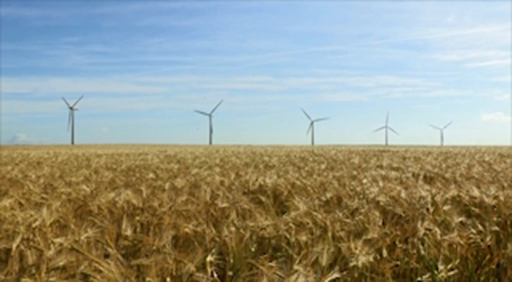
- Now watch this six-minute video, which profiles Westmill Wind Farm, a community-owned wind farm that began operations in the south of England in 2008.
Transcript
Record your responses to the following questions:
- a.What (if anything) about Westmill Wind Farm would you describe as ‘innovative’?
- b.Who (if any), of the people featured in the video, would you categorise as ‘entrepreneurial’?
- c.What types of challenge has Westmill Wind Farm experienced over the years?
- d.How would you determine whether Westmill Wind Farm had achieved its aims?
- Watch the video a second time. Revisit your answers, modifying them if necessary.
- Look back at the ideas about innovation and entrepreneurship that you recorded in question 1. Would you change them after watching this video?
Discussion
We selected a slightly unusual example of innovation to encourage you to review your existing ideas and assumptions about innovation and entrepreneurship. Consider, for example, why you thought a particular feature of Westmill Wind Farm was innovative – did your list include the wind turbines (i.e. the technology) or did you see it as too well-established to fit that description? Did you identify other features, such as the financing and ownership model (i.e. a community-based online share issue), or did that fall outside your image of innovation? Turning to the search for entrepreneurs, did you see the founders of Westmill Wind Farm as fitting that category? If so, what was it that made them fit your definition? If not, why did they not meet your criteria for being an entrepreneur? Would you categorise any of the other people featured (e.g. the local investors or the volunteers at the open day) as entrepreneurial?
As an optional follow-on activity, you might find it interesting to compare Westmill Wind Farm to its sister organisation Westmill Solar, the UK’s first co-operative, community-run solar farm.
1.2 Name three innovations and entrepreneurs
In the following activity, you will continue to examine your existing ideas about innovation and entrepreneurship.
Activity 2
- Think of the first three innovations and the first three entrepreneurs that come into your mind and note them in the boxes below. These can be recent or historical examples. When you’ve noted your examples, click the Save button under each box.
- Now review your list. How many of the innovations that you have selected would you regard as a ‘success’? Likewise, how many of the entrepreneurs have had a ‘successful’ career? Note your reactions in the box below.
Discussion
It would not be surprising to find that there are very few cases of failure on these lists. People tend to be attracted to success stories and they are a common feature of most popular media coverage, especially in the case of ‘celebrity entrepreneurs’, although there are some notable exceptions. For example, journalists and politicians sometimes highlight a failed innovation, particularly if it has proved costly to large numbers of consumers or taxpayers (e.g. a new product that has to be withdrawn from the market because it is dangerous, or a new government computer system that is cancelled because it does not work properly). There are many reasons why individuals and organisations are tempted to concentrate on enterprises and innovations that have succeeded rather than those that have failed. For example, it is generally much easier to gather evidence about an organisation or venture that is still operating.
2 Innovation and why it matters
In this section, you will look at the concept of innovation and how it relates to discovery, invention and design, using a series of case studies.

2.1 Distinguishing terms: discovery
The word ‘innovation’ usually implies novelty and its practical use. But how can we be more specific? We first need to distinguish the term from three closely-related concepts: discovery, invention and design. These words are often used interchangeably, so it is important to be clear about the differences in meaning and how each relates to ‘innovation’. We have selected illustrations of each term. By reading them in turn and finding your own examples, you will develop a clearer idea of each, and how they relate to innovation. First we look at discovery.
Case study: Discovery
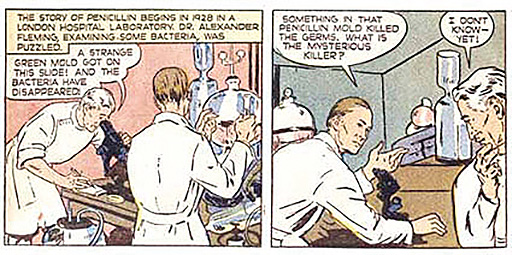
Alexander Fleming discovers penicillin
Alexander Fleming was born in Scotland in 1881 and later trained as a doctor in London. He became a research scientist at St Mary’s Hospital Medical School, working on vaccines. During the First World War, he served in the British Army’s Medical Corps where he witnessed the prolonged impact of battlefield infections. After the war, Fleming returned to his research career at St Mary’s. He began to study influenza (flu), a disease that was a particular priority following the pandemic of 1918–19, which is estimated to have killed more than 20 million people. The research team had been using a set of Petri dishes to grow the bacterium staphylococci. One day in September 1928, Fleming was sorting through some used dishes and noticed a bacteria-free circle on a dish that had been accidentally contaminated with mould from a neighbouring laboratory. Following consultations with colleagues, the mould was identified as penicillium notatum and Fleming decided to name the active substance, ‘penicillin’. By the end of the century, this pioneering antibiotic was being described as the world’s most effective life-saving drug.
Activity 3
- Can you think of another example of discovery? You could select one from the world of scientific research, or another area of human activity, such as the visual arts. Describe the discovery you chose in the box below.
Discussion
Scientific discoveries are often the result of long periods of systematic research. However, Alexander Fleming’s experience shows that discovery can happen from chance or serendipity. In his case, the accidental contamination of a research study generated an unexpected outcome. We tend to associate discovery with the natural sciences, but it does occur in other fields. For example, in earlier generations, explorers could discover new parts of the world, and historians continue to discover new information about the past. In addition, creative artists often describe their work as the outcome of a process of discovery – often self-discovery.
2.2 Distinguishing terms: invention
In the following activity, you will look at a case study relating to invention.
Case study: Invention
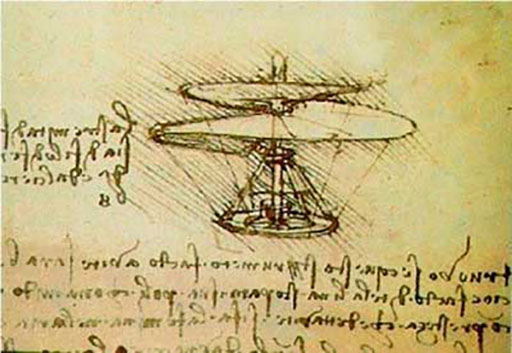
Leonardo da Vinci invents the aerial screw
The aerial screw is one of Leonardo da Vinci’s most famous and surprising inventions, regardless of the fact that it could never work in practice. The illustration (pictured) is from his own sketchbook and was drawn more than 500 years ago. Da Vinci was investigating a variety of theoretical problems, such as the dynamic and physical characteristics of air, and it seems that his intention was to demonstrate that air could be compressed and therefore gain material density. Da Vinci’s aerial screw anticipated some aspects of the modern helicopter, but there was no possibility of building a functioning prototype with the materials available in his time. He also sketched several other ideas for a flying machine. These included a glider with intricately-drawn wings that were derived from a detailed study of birds.
Activity 4
- Can you think of another example of invention? For instance, you could select a new technology, a product, or a less tangible invention such as a process or service. Describe your invention in the box below.
Discussion
Just as in the case of some discoveries, it may not have been possible to convert Leonardo da Vinci’s flying machine invention into a working technology at the time, however, even ‘failed’ or ‘stalled’ inventions can still contribute to the innovation process by passing on ideas that may only be fully realised in the future. For the innovation scholars Freeman and Soete (1997, p. 6, cited in Conway and Steward, 2009, p. 9), an invention is, ‘an idea, a sketch or model for a new or improved device, product, process, or system.’ They also note that, although an invention may sometimes be patented, it may not necessarily lead to a technical innovation.
2.3 Distinguishing terms: design
In the following activity, you will look at a case study relating to design.
Case study: Design
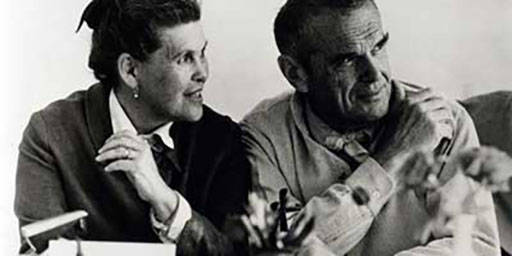
Charles and Ray Eames design original furniture
Charles and Ray Eames are among the most influential designers of the twentieth century. Charles had a background in architecture and Ray was an artist, who had studied with the German abstract expressionist painter Hans Hofmann. They met at the Cranbrook Academy of Art in Michigan and began to collaborate on a variety of projects, including architecture, furniture design, industrial design and photography. Following their marriage in 1941, they relocated to California and began to produce a series of original furniture designs that exploited compression-moulded plywood and other new materials. Following the Second World War, the couple licensed a US company to manufacture their new furniture designs. The Eames’ ‘LCW’ (Lounge Chair Wood) made from moulded plywood, was described by one leading critic as, ‘the chair of the century.’ This was followed in 1956 by the ‘670/671’ Eames Lounge Armchair and Ottoman (pictured) and many other products. The family home that they designed in 1949 also become an icon of ‘mid-century’ design. Many of the Eames’ furniture designs remain in production today. These designs are also widely imitated, a perhaps unwelcome, yet significant, indication of their enduring quality and popularity.

Activity 5
- Can you think of another example of good (or bad) design? As with invention, you could select a product design or something less tangible like the design for a process or service. Enter your own example in the box below.
Discussion
Designers respond to users’ needs and market requirements by providing physical shape, form or order to products, services and other artefacts (e.g. processes and organisational structures). The design process typically involves a series of stages, as the designers (often working in conjunction with technicians, marketers and other specialists) create and refine a concept. In the case of product designers such as Ray and Charles Eames, this might involve a progression from initial sketches though to detailed drawings and technical specifications. Designs are sometimes unique and un-repeatable. However, products destined to be produced in large numbers, such as Eames chairs, need to be designed in order to facilitate volume manufacturing. (You can find out more about the Eames design partnership at their official site). We now turn to the concept of innovation to distinguish it from discovery, invention and design. To do so, we reconsider the three immediately previous examples because each of them can be viewed as a step on a much longer path.
2.4 Distinguishing terms: innovation
Finally, in the following activity, you will review the previous case studies focusing on innovation.
Case study: Innovation
Drugs, helicopters and armchairs …
Penicillin
An important aspect of this story is that Alexander Fleming was not responsible for the subsequent development of penicillin. He was not a chemist, and would not have been able to produce penicillin in a sufficiently stable form with the technologies available at the time. In 1929, Fleming published a scientific paper describing his findings, but this was largely ignored. In fact it was more than ten years later in the early years of the Second World War that a research team at Oxford University, led by Howard Florey and Ernst Chain, created the first functioning version of the antibiotic that could be produced in volume. Florey and Chain travelled to the United States, where much of the subsequent development took place. This involved many new actors, including commercial drugs companies such as Merck and Pfizer, a US Government Agency (The War Production Board) and an entirely new production process, the design of which was overseen by the chemical engineer, Margaret Hutchinson Rousseau. These intensive efforts resulted in a massive increase in production volumes, so that, by 1945, many billions of units were being produced.
The helicopter
Leonardo da Vinci’s invention is often described as a source of inspiration for the helicopter, but it would be five centuries before the concept was fully realised. The term ‘helicopter’ (meaning ‘spiral wing’) was first used by a French writer in the mid-nineteenth century. By the first decade of the twentieth century, several inventors were experimenting with helicopters, among them a Russian aeronautical engineer, Igor Sikorsky, who described his first attempts at building this kind of aircraft:
‘My first two machines were built between 1909 and 1910 and were helicopters. The first of these ships refused to leave the ground while the second could lift itself, but refused to lift me.’ (Sikorsky Archives, n.d.)
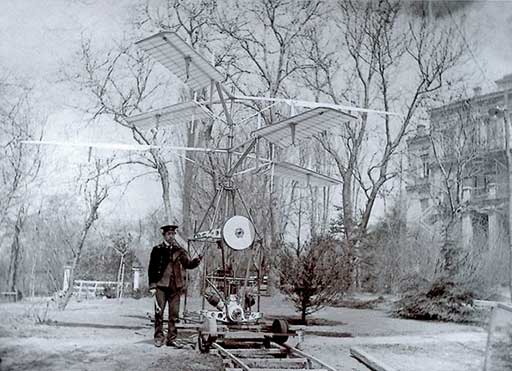
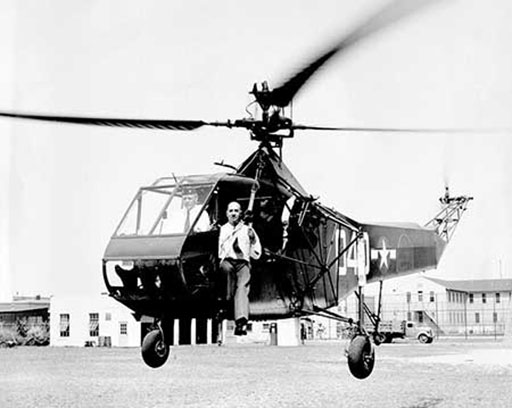
Despite these early setbacks, Sikorsky went on to produce the first successful single main rotor helicopter. Having moved to the USA in the early 1920s, he created a company, Sikorsky Aero Engineering Corporation, which specialised in the design and manufacture of new types of aircraft such as flying boats. In 1939, the company introduced the Vought-Sikorsky VS-300 and, just four years later, it announced a modified version that was to become the world’s first mass produced helicopter, the Sikorsky R-4(pictured).
Armchairs
Behind the groundbreaking furniture designs of Charles and Ray Eames and especially the LCW chair, was a highly innovative approach to construction and using newly available technologies for materials: the moulded plywood. The design’s success could be attributed to the fact that the chair was – surprisingly perhaps for wood – comfortable, lightweight and practical. By bringing together influences from their respective backgrounds: architecture (Charles) and art (Ray), the outcome was a highly functional, yet aesthetically pleasing item. This chair has become an enduring design icon, along with a number of Eames designs.
Activity 6
- Can you think of another example of innovation? Enter your own example in the interactive box below.
Discussion
We have avoided defining the terms that have been discussed in this section. This is because the distinctions between discovery, invention, design and innovation are quite subtle and open to interpretation. It is therefore worth exploring these concepts for yourself, rather than jumping immediately to simple definitions.
3 Varieties of entrepreneurship
In this section, we examine different types of entrepreneur and entrepreneurial activity, and start to think about their economic, social and environmental impact.
3.1 Different types of entrepreneurship
In the following activity, you will listen to some real-life entrepreneurs and consider the types of entrepreneurship they represent.
Activity 7
- To begin this activity, try to list as many different types of entrepreneur as you can. We are looking for modifications which usually involve inserting another word in front of the original word. For example, a ‘social entrepreneur’. Don’t attempt any internet searches. Simply record the terms below so that you can refer back to them later:
Listen to this audio, which features four entrepreneurs talking about their contrasting ventures. It lasts about six minutes
Transcript
- Now study the following definitions and try to match the entrepreneurs (and types of entrepreneurial activity) that you heard about in the audio to one or more of the highlighted terms. You can also insert your own terms by copying them from the list you produced in part 1. Record your comments in the box below, then refer to the discussion.
Corporate entrepreneur / intrapreneur
These terms are both used to describe someone who acts entrepreneurially inside an existing organisation, which may range from a medium-sized firm to a large corporation, government agency or charity. The constraint of operating from within an organisational hierarchy, rather than being free to act independently, is the key feature that distinguishes corporate entrepreneurs / intrapreneurs from other entrepreneurs. Some organisations actively encourage corporate entrepreneurship / intrapreneurship as a way of promoting innovation and adaptability. There are strong parallels between this role and that of ‘product champion’ which is a term sometimes used by innovation researchers.
E-preneur
This term has been derived from the wider use of the letter ‘e’ to refer to ‘electronic’ (as in ‘email’ and ‘e-commerce.’). It is used to refer to the growing number of people who run businesses that depend entirely on the internet. With the proliferation of internet-based businesses, it now represents a very broad category, and could include anyone from the owner of a large online retailing empire to a self-employed person using an online shopping platform (such as eBay.com or Etsy.com) to sell specialist products from home.
Ecopreneur
This term has become popular as a way of describing entrepreneurs who establish ventures, or introduce new initiatives with the aim of tackling specific environmental problems. In practice, this can mean a wide variety of activities, ranging from a small, community-based enterprise selling organic fresh produce to a large commercial business operating in a low-carbon industry sector, such as the manufacture or installation of solar photovoltaic (PV) panels.
Lifestyle entrepreneur
This term is normally used to describe a person who has set up a small business in order to pursue a personal interest such as a craft (e.g. a pottery studio) or a sporting activity (e.g. horse-riding holidays). It is sometimes seen as a negative term, with the same kind of implied criticism as for ‘hobby’ farmers. The term refers to the idea that this type of entrepreneur prioritises quality of life over other common motivations for running a business. They might want to achieve a reasonable level of income from the venture, but are not actively pursuing purely commercial goals such as growing it into a much larger business, or securing large (or short-term) financial returns.
Portfolio entrepreneur
This term refers to someone who operates several different ventures at the same time. There are different types of portfolio entrepreneur. They can range from extremely wealthy owners of multiple businesses to much less prosperous people, often based in remote rural areas, who engage in several different small enterprises in order to reduce risks and to maintain an income when local markets, or economic conditions more generally, are depressed or uncertain (note the distinction between this term and the ‘serial entrepreneur’).
Rural entrepreneur
This term refers to people who create or operate businesses in the countryside. It is sometimes used in a more restricted way to focus on the traditional rural industries, such as agriculture, forestry, food manufacturing and rural crafts. However, the term is also used to refer to those running a variety of businesses that happen to be located in a rural area. It can also be difficult to define the geographic boundaries of rural businesses (e.g. does it include an entrepreneur whose business is located in a village that is on the fringes of a large city, or someone based in a remote rural location who spends much of their time doing business internationally).
Serial entrepreneur
This term refers to someone who sets up several different ventures over a period of time, often reinvesting profits from the sale of an existing business in order to finance a new one, sometimes in an entirely different field of activity. This pattern may reflect the entrepreneur’s preference for creating new ventures rather than managing larger established businesses (note the distinction between this term and the ‘portfolio entrepreneur’).
Social entrepreneur
This term is normally used to identify the founder(s) of a social venture, or someone who initiates a larger programme of social change. The distinctive feature of this type of entrepreneurship is that the primary purpose is to address social or environmental problems rather than simply to achieve commercial goals. This suggests a number of differences, including the values involved, how people understand concepts such as entrepreneurial ‘opportunity’, and the way that organisations are run. There has been a lot of interest in social entrepreneurship in recent years and this has generated many competing definitions.
Technology entrepreneur
This term typically describes a person who has founded a new venture in order to develop some form of advanced technology, most commonly in industry sectors such as information and communications technology (ICT), biotechnology, nanotechnology and other applied sciences. One of the distinctive features of this kind of entrepreneurial activity is that it is often very fast-moving, as a result of new scientific discoveries and often intensive international competition – there are also particularly strong links to innovation. Governments around the world see this kind of entrepreneurial activity as a particularly important source of economic growth as well as offering possible solutions to major societal challenges such as poverty and climate change.
| Interviewee | Type of entrepreneur / entrepreneurial venture |
Danny Quinn |
|
Julia Charles |
|
Dan Wright |
|
Catherine Bottrill |
Discussion
We suggest that our interviewees fall into the following categories:
Danny Quinn – social entrepreneur. He describes his business, Black Sheep, as a social enterprise working in arts and culture undertaking performance-based work and participatory community arts projects. They train new and emerging artists and provide opportunities for real experience in the creative industries working alongside professionals.
Julia Charles – lifestyle entrepreneur. Julia is following her passion for staging entertainment events. Whilst the term lifestyle entrepreneurs is sometimes used for individuals who have limited growth aspirations for their ventures, Julia has no such limited aspirations.
Dan Wright – ecopreneur and technology entrepreneur. Heliex Power helps industrial companies recover wasted energy with an inventive engineering product that is protected by patents. If you listen carefully Dan also mentions that he has started and sold companies in the past – also making him a serial entrepreneur.
Catherine Bottrill – ecopreneur, e-preneur and portfolio entrepreneur. Her company, Pilio, helps organisations reduce their use of energy. Their product is software, accessed online in a ‘software as a service’ model. Catherine also mentions that she is involved with another organisation, Julie’s Bicycle, indicating she is a portfolio entrepreneur.
This shows that the entrepreneur types often overlap, rather like different types of innovation. The exercise also highlights how difficult it can be to produce a single definition for these varied types of activity. It is important to bear these points in mind as you start to use this terminology, and to avoid jumping to conclusions when you see a reference to a particular ‘type’ of entrepreneur or entrepreneurial activity.
Entrepreneurship has generated more than its fair share of new terms (or ‘neologisms’). We have concentrated on those that are most commonly used, and that are (in most cases) reasonably well-defined. However, there are many other terms, most of which are simply passing fads and fashions. We have also tried to avoid a few terms that are either inappropriate or slightly offensive. Examples of these more dubious terms include ‘Alterpreneur’ (referring to an older person, possibly beyond the normal retirement age, who establishes a new business venture), ‘Kidpreneur’ (an ugly term, typically used to describe a young person who has become wealthy by creating a commercially-successful app or computer game), and ‘Mompreneur’ (a particularly dubious term, occasionally used to refer to a woman who sets up a business while, or possibly after, having a family).
While the interviewees are different types of entrepreneur, they also demonstrate common themes. For example, both Danny and Catherine talk about identifying a gap in the market that provided an opportunity for their business.
3.2 The impacts of entrepreneurial activity
Entrepreneurial activity can have decisive effects on us as individuals. It can also make a real difference to the communities we live in, to the performance of national and regional economies, and the state of the natural environment. In this task we examine these impacts of entrepreneurship, which can be both positive and negative.
Is entrepreneurship always ‘a good thing’? Research suggests that increased levels of entrepreneurial activity can help to generate positive economic outcomes, including more employment opportunities, less unemployment, lower prices, more rapid technological innovation, and increased rates of economic growth. However, entrepreneurial activity can also act in dysfunctional ways that inflict serious economic damage. The global financial crisis of 2007–10 was a particularly dramatic example, with devastating effects on individuals, businesses, and communities around the world. In a widely cited article, the US economist and entrepreneurship researcher, William Baumol distinguished between economically ‘productive’, ‘unproductive’, and ‘destructive’ forms of entrepreneurship (Baumol, 1990). He sees productive entrepreneurship as having a beneficial impact (e.g. increasing incomes and employment and meeting people’s needs). By contrast, unproductive entrepreneurship (e.g. ‘rent-seeking’ activities, such as tax avoidance) has negative effects, while destructive entrepreneurship (e.g. organised crime) can undermine an entire economy. Baumol’s historical study explores how entrepreneurial resources have been reallocated between these three roles over the centuries.
Activity 8
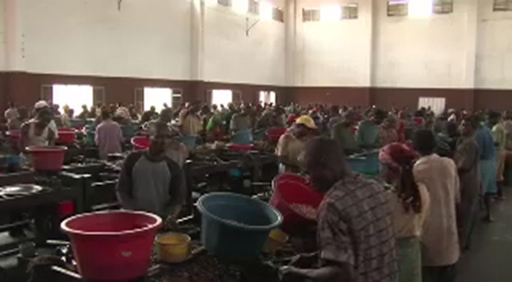
Watch these two videos, which examine contrasting impacts of different kinds of entrepreneurial activity in Mexico and Peru. Each video lasts about seven minutes.

Transcript
Transcript
- Having watched the videos, categorise the examples featured using Baumol’s (1990) categories of economically ‘productive’, ‘unproductive’ or ‘destructive’ entrepreneurship, then add one or two additional examples from your own experience. Include a brief explanation as to why you have placed each example in the chosen category.
| Type of entrepreneurship | Practical example | Brief explanation |
| Productive | ||
| Unproductive | ||
| Destructive |
Discussion
This task referred to the work of a US economist and entrepreneurship researcher, William Baumol, who distinguished between economically ‘productive’, ‘unproductive’, and ‘destructive’ forms of entrepreneurship (Baumol, 1990). He suggested that productive entrepreneurship has beneficial impacts. By contrast, unproductive entrepreneurship has negative effects, while destructive entrepreneurship can undermine an entire economy.
The fish farming venture illustrates how entrepreneurial activity can be economically productive, generating higher incomes and providing new employment opportunities for women in this remote Peruvian community. The venture was initially supported by micro-finance provided by a regional women’s development organisation, Pro Mujer. The work of this organisation could also be described as productive (social) entrepreneurship. The video shows how it has successfully adopted an innovative approach to financing very small enterprises pioneered in Bangladesh by Muhammad Yunus and the Grameen Bank. By contrast, the Mexican example illustrates how opportunity-seeking entrepreneurial activity can be economically unproductive, or even destructive. In this case, unregulated commodities market speculation has inflated the price of the corn used to make tortillas, which are a key part of the national diet. While speculation is nothing new, technological and financial market innovations have enabled it to exert much more powerful effects on world markets. By creating high and unstable prices, this kind of speculation can undermine the confidence of investors and damage the economic livelihoods of individuals, families and small businesses.
During this task, you may have identified examples that could be placed in more than one of the boxes. For example, entrepreneurial activity that has increased mobility (e.g. low-cost airlines flying to islands in the Indian Ocean), could be seen as economically productive in the short term, helping to promote tourism and other forms of economic development. However, this kind of activity may prove to be economically destructive over the longer term due to its environmental impacts (i.e. increasing carbon emissions, contributing to global warming and rising sea levels).
This task has raised several important issues around the impact of entrepreneurial activity, and of particular kinds of innovation.
4 Connecting innovation and entrepreneurship
In this concluding section, we look at the connections between innovation and entrepreneurship.

4.1 Invention, design, innovation and (social) entrepreneurship
In the following activity, you will watch a video about a social enterprise and use this to review some of the themes you have studied in this course.
Activity 9
- Watch this video about a solar light promoted by the social venture ‘Liter of Light’ (n.b. The word ‘Liter’ in this organisation’s title is the US spelling of ‘litre’). The video lasts about four minutes.

Transcript
- Consider how the video illustrates some of the themes discussed in this course, and in particular:
- a.the differences between the terms: discovery, invention, design and innovation - and how they are related to one another in practice
- b.the different types of entrepreneur, including any distinctive features of social entrepreneurs
- c.the connections between entrepreneurial activity and innovation.
Make your own notes below, responding to these questions and adding any other reflections on what you have discovered during the course.
Discussion
The Liter of Light case illustrates many of the themes we have been discussing this short course on innovation and entrepreneruship. You can find out more about the invention of the solar light online by visiting the organisation’s website or by conducting your own web search. There are also some interesting videos online, showing how to assemble a solar light, which highlight various design issues (e.g. how to make the roof watertight and how to provide light at night by extending the basic ‘bottle’ design).
The rapid spread of this invention to other countries, and enrolling local people to produce and distribute the lights, can be seen as representing types of technological innovation and social innovation. There is also evidence that the activity of social entrepreneurs such as the Liter of Light founder, Illac Diaz, has helped to drive these innovations into new areas.
Lastly, did you see any evidence of discovery in this story? It appears that in 2002 a Brazilian engineer named Alfred Moser came up with the idea of using a plastic bottle filled with water to refract sunlight and provide alternative lighting during the country’s frequent power failures. A few years later, Illac Diaz founded ‘MyShelter Foundation’ to provide affordable housing in the Philippines using recycled materials. The people at MyShelter Foundation were filling plastic water bottles with mud (to make walls) and with water (to make windows). Someone alerted Diaz to Moser’s closely-related idea. He saw the opportunity it presented and, in 2011, founded the social venture ‘Liter of Light’ to put it into practice.
We can also explore the links between different types of innovation and entrepreneurship through the different ways in which they create value. For example, an e-preneur might make a great deal of money by launching a new app – this would be an example of creating economic value. However, if this innovative service was designed to address a social issue (e.g. to raise awareness of a health issue such as diabetes, or to reduce bullying in schools), it could also create social value.
Conclusion
We hope you have enjoyed this short OpenLearn course, First steps in innovation and entrepreneurship. You should now have a clearer view of your pre-existing ideas and assumptions about innovation and entrepreneurship, and be able to see how they compare to those of other people. You should also be able to identify some of the core terms and categories used in innovation and be able to apply them to practical examples. Lastly, you should have started to recognise how the topics of innovation and entrepreneurship are connected and feel more confident about taking your studies to the next stage.
If you are interested in innovation and entrepreneurship, take a look at our undergraduate specialism in this area, BA (Honours) Business Management (Innovation and Enterprise). You can also view the following introduction to B205 Exploring innovation and entrepreneurship.
Transcript
References
Acknowledgements
This free course was written by the B205 Exploring innovation and entrepreneurship course team.
Except for third party materials and otherwise stated (see terms and conditions), this content is made available under a Creative Commons Attribution-NonCommercial-ShareAlike 4.0 Licence.
The material acknowledged below is Proprietary and used under licence (not subject to Creative Commons Licence). Grateful acknowledgement is made to the following sources for permission to reproduce material in this free course:
Images
Course image: old wheel © iStockphoto/malerapaso; typical railway station clock © iStockphoto/assalve; black locomotive © iStockphoto/omersukrugoksu; vintage phone dial © iStockphoto/MyImages_Micha; bicycle post © iStockphoto/didemgecegezer; military radar screen © iStockphoto/petersimoncik. Full acknowledgements for course image used elsewhere.
Figure 1: from www.the-scientist.com/
Figure 2: Eric VANDEVILLE / Getty Images
Figure 3: © Eames Office LLC (eamesoffice.com)
Figure 4: © Vitra International AG
Figure 5: Igor I. Sikorsky Historical Archives, Inc © 2015
Figure 6: Igor I. Sikorsky Historical Archives, Inc © 2015
Video
Activity 1: Video: Westhill Wind Farm courtesy of http://energyshare.com/
Activity 8: Video: Mexico courtesy of www.cultureunplugged.com
Activity 8: Video: Peru courtesy of www.cultureunplugged.com
Activity 9: Video: courtesy of Jason Magbanua www.youtube.com/ watch?v=cQCHvO2H0_0
Every effort has been made to contact copyright owners. If any have been inadvertently overlooked, the publishers will be pleased to make the necessary arrangements at the first opportunity.
Don't miss out
If reading this text has inspired you to learn more, you may be interested in joining the millions of people who discover our free learning resources and qualifications by visiting The Open University – www.open.edu/ openlearn/ free-courses.