Social science and participation
Use 'Print preview' to check the number of pages and printer settings.
Print functionality varies between browsers.
Printable page generated Saturday, 4 April 2026, 2:38 AM
Social science and participation
Introduction
This course explores how social science helps to inform and shape public debates and policy-making processes. It introduces the idea that the descriptions (measurements, dates and representations) and understandings (concepts, explanations, theories and interpretations) developed by social scientists contribute to actually making the social worlds we live in. In other words, social science helps to make visible (or describe) social phenomena, and make sense of (or understand) social processes. In doing so, it makes a difference to the social worlds it investigates (it helps to enact them).
This OpenLearn course provides a sample of Level 2 study in Social sciences
Learning outcomes
After studying this course, you should be able to:
identify the ways in which social scientific descriptions and understandings are related to the enactment of social worlds
understand the enactment of social science in terms of informing public debates and shaping the social worlds it investigates
identify the ways in which social science investigates participation as a topic and the uses to which social science research on participation is put
understand how social scientific ideas about participation in social worlds have impacted on public debates and policies about poverty
provide examples of how ordinary people are themselves involved in participating in social science.
What is participation?
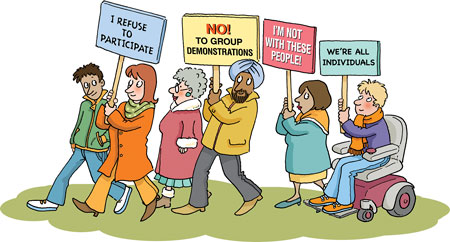
To explore how social science helps to make a difference to social life – how it helps to enact social worlds – this course focuses on participation. Participation refers to all the ways that people engage in social worlds with others including taking part in social life, sharing in a common culture and being involved in civic activities. Social scientific investigations of all sorts of topics – such as poverty, social exclusion, political representation and everyday life – often revolve around the value ascribed to participation by experts and ordinary people alike.
Participation as a topic attracts a great deal of attention from social scientists. The political scientist Patrick Chabal (2009) uses the word ‘partaking’ to capture the dual sense in which participation is important in social science:
- the idea of taking part in activities with others
- the idea of making use of shared resources.
You will see that both of these dimensions of participation are important in social scientific accounts of participation.
Some participation involves deliberate decisions to act together with others, such as when people march in a demonstration, vote in an election or join a group formed to pursue a shared purpose, such as protecting the environment.
Other activities, such as using public transport or visiting a museum, might at first seem less obviously social but they are still forms of participation. Many people engage in them together, but even when these activities are done individually we all share in their overall costs and benefits, for example by making contributions to keep museums open or paying taxes to subsidise public transport systems.
Differences in participation
Social scientific research on participation is often concerned with differential patterns of participation – with describing who does and who doesn’t participate, and why, and suggesting appropriate measures to enhance participation in general, or among particular groups.
These differential patterns of participation can be divided into two broad areas:
- differences in the levels and types of participation undertaken by people who are from different backgrounds, who live in different areas or who have different levels of income
- changing patterns of involvement of people in different sorts of participation over time.
In this course you will learn how social scientists seek to describe and understand these related areas of participation. The focus will be on introducing the idea that social scientific investigation helps to enact social worlds. You will see that investigations of participation are always concerned with informing debates about the future of participation and shaping opportunities and initiatives to transform who participates and how.
Poverty and participation
The following film, ‘Social science, poverty and participation’ looks in some detail at the history of social scientific definitions of poverty. It addresses how social scientific ideas about participation in social worlds have impacted on public debates and policies about poverty, inequality and social exclusion.
You should now watch the film. You will need to spend some time engaging with its themes and issues, and we recommend that you watch it at least twice.
As you watch, consider the questions below:
- How have definitions of poverty, and of how to measure poverty, changed over time?
- According to the film, what have been the key contributions of social scientists to the redefinition of poverty?
- Has social science made any difference to how poverty is understood?
Transcript: Social science, poverty and participation
As you continue through this course, you should keep in mind the issues addressed in this film, and in particular the questions it raises about what shapes different people’s participation in social activities.
Who participates?
In the film ‘Social science, poverty and participation’, you saw that not everyone in society is able to participate equally in all social activities. This is the key insight of social scientists who have worked on defining and measuring poverty. You also saw that social scientists contribute to the process of defining which activities people should be participating in, in order to play a full part in wider social worlds. This is a simple way in which social science enacts participation.
In the following short film, ‘What counts as participation?’, the sociologist Ruth Levitas indicates the role of social scientists in defining what counts as participation. As you watch, listen out for the way she describes political participation.
Transcript: What counts as participation?
Levitas defines participation quite broadly. It includes economic, cultural and social activities, as well as political ones. She also defines political participation broadly, not confining it to voting, but suggesting it should be understood as ‘being able to influence the circumstances of one’s own life’.
Measuring participation
In 2008, a team of social scientists began a five-year research programme called ‘Understanding Society’. This was financed by the main funder of social science in the UK, the Economic and Social Research Council (ESRC). The programme of research involves over 100,000 participants from 40,000 households from across the UK. The researchers are collecting information on many aspects of social life through a longitudinal social survey. This involves repeated collections of data from the same people over a long period of time about their preferences, attitudes and values, and about the wider environments of both individuals and the households in which they live.
The goals of the research include:
- measuring and explaining stability and change in people’s living conditions, health and well-being
- understanding changes in individual outcomes and behaviour.
(Understanding Society, 2008)

An important dimension of the Understanding Society project is the description of levels of participation in the UK. The project defines participation as a basic feature of social worlds:
Society is bound together through the participation of its members, who in turn, share the benefits that flow from participation: social, material and political resources; a sense of identity and belonging; and the reciprocity that makes for citizenship.
In this definition, participation is central to making social worlds what they are. You might notice an interesting double sense: on the one hand, taking part is what binds social worlds together; on the other hand, participation is also about sharing benefits, about making use of the resources, identities, and reciprocities that flow from participation.
The Understanding Society project is therefore an example of social science that takes participation as an object of investigation. It is also an example of a social science method that depends on the participation of ordinary people.
Understanding participation
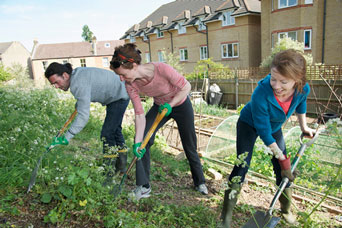
The Understanding Society project illustrates how social science description, in this case measuring participation, depends on social science understanding – on how participation is defined. The project identifies two broad dimensions:
- activities primarily defined as forms of taking part in, or what the project calls ‘social participation’, including involvement or interest in politics, involvement in local civic activities or volunteering
- activities related to making use of, based on consumption including material consumption and consumption of social and environmental resources.
These different dimensions of participation relate to the ability of people to participate in social worlds, but in different ways. Recalling Levitas’s comments about participation, you might notice that these two dimensions also involve people making a difference to social worlds by joining in shared social activities; these are ways in which people enact their social worlds in new ways.
People can engage in varied forms of informal civic activity and associational life (the project calls this 'neighbouring'), and in formal political processes such as voting or membership of a political party. A person’s material consumption will depend on them having the economic resources to pay for goods and services that are necessary in everyday life, whereas social consumption also depends on the different resources through which people sustain ordinary relationships.
The idea of defining and measuring participation as a ‘multidimensional concept’, combining both social participation and consumption, follows the work of Peter Townsend (1979) and other social scientists whom you saw in the film, ‘Social science, poverty and participation’. They argued that being able to afford a certain level of consumption is a basic condition of being able to participate fully as a member of society.
Watch the following film clip, ‘Poverty and social exclusion’, in which social scientist David Gordon, an expert in poverty research, discusses the concept of social exclusion. Try to focus on how much emphasis he places on consumption-based criteria in describing and evaluating the quality of people’s participation.
Transcript: Poverty and social exclusion
Gordon defines participation even more broadly than Levitas. Social exclusion is an important issue for him because it prevents people ‘doing the things they want to do’.
In his definition of social exclusion, Gordon is getting at the idea that what’s at stake in defining poverty is not only that some people have fewer material resources than others, but also that this affects their ability to take part in activities in which they should be able to participate.
Evaluating participation
Defining participation as including consumption activities, ‘neighbouring’ and measures of more formal participation means that the Understanding Society research is able to capture relationships between participation (in the broad sense used by Levitas) and levels of material deprivation and poverty (of the sort that Gordon touches on). Since both material and social consumption require financial resources, there is likely to be a difference in the levels of overall participation depending on how much income people have available. However, ‘neighbouring’ does not necessarily vary quite so predictably according to measures of socio-economic advantage.
Activity 1 Evaluating types of participation
Take a look at the examples of participation listed below. Think about which of these six examples are most important in shaping the overall level or quality of someone’s participation in society. Use the text box to rank each of the examples from 1 to 6, with '1' being the most important in shaping the overall level or quality of someone’s participation in society.
- a.Having access to material resources to buy goods and services
- b.Being able to afford occasional treats for yourself and your family and friends
- c.Living in a clean and healthy environment
- d.Being involved in local community groups
- e.Trusting government organisations
- f.Taking part in politics, e.g. voting in elections
Discussion
There is no correct answer to this question.
Nevertheless, you might want to think about why you have ranked some activities as more important than others. Is it because you are more involved in some of these activities than others, or you would like to be?
Asking people what they think is important in defining participation in society has been a key aspect of social science research. So your opinion on these matters is exactly the sort of thing that social scientists are interested in finding out about. In fact, social scientists often expect people to have strongly held opinions on all sorts of matters. The fact that your opinion might differ from someone else’s reminds us that the issues social scientists expect us to have opinions on are inherently contested.
Social science might be seen as helping to enact social worlds by giving people the opportunity to express their opinions. More broadly, it makes differences of opinion on contested issues visible by encouraging the widespread expectation among people that they should have opinions on all sorts of matters and should have the opportunity to express them.
Participation in the UK
The Understanding Society project seeks to generate large-scale, representative descriptions of how the different activities that people engage in relate to their well-being, status and position. These can be simple relationships. For example, the researchers might look at whether the activity of families eating meals together is related to higher levels of health and happiness among teenagers. There might also be much broader descriptions of patterns of participation in different parts of the UK, and between different groups of people depending on factors such as age, religion or income.
The findings of the Understanding Society project’s first survey of participation in the UK were published in 2011. Extract 1 provides a summary of some of those findings.
You will notice that each of the findings links a form of participation or consumption (e.g. neighbourhood participation) to a particular group or category of people who responded to the survey questions (e.g. pensioners or Welsh people).
Extract 1 Who participates most in UK society?
- People with degree-level education are more likely to score highly on the measures of trust, social expenditure and political interest and they are also more ready to invest in energy-saving measures in support of the environment.
- Social consumption is highest among pensioners.
- Neighbourhood participation is more closely related to age, increasing noticeably among people aged 50 and above.
- Differences in participation relating to ethnicity are small.
- English respondents tend to have the lowest neighbouring scores.
- Welsh respondents average the highest neighbouring scores.
- Respondents from Northern Ireland have the highest scores on trust and the least interest in politics.
- The presence of school-aged children increases the incentive for people to be more involved in their own neighbourhood.
You can see that the Understanding Society project produces broad descriptions of different patterns of participation. These findings might prompt all sorts of questions. Why, for example, should people be more inclined to participate in their own neighbourhood if they have school-aged children? Why is social consumption highest among pensioners? Answers to these questions would require further elaboration of the simple ‘facts’ presented in the findings.
Nonetheless, some of these findings do suggest problems that require attention and action. You may have a sense, for example, that the low level of neighbouring in England should be addressed to improve the level of this sort of activity, or that efforts should be made to enhance the capacity of people who do not have degree-level education so that they will participate more in energy-saving measures in support of the environment.
In making differences in participation visible, social science projects such as Understanding Society reveal certain sorts of problems that can become issues of public debate and, in some cases, objects of concerted policy action.
Taking part and ‘having a voice’
Participation is about taking part in something that either directly or indirectly involves you in wider social networks. Participation is widely considered a good thing in so far as it enables people to exert influence over the processes that shape their worlds. Having a ‘voice’ in processes that matter to you is also important. Not all forms of participation are considered equally significant in this respect. People disagree about the value of different forms of participation and not everyone is equally able to participate in all of the activities that help them express their opinions and exert influence.
Activity 2 looks at what sorts of activities might be considered to count as participation in the sense of giving people a voice, and also at how these activities might be understood to be differentiated in the ways already discussed.
Activity 2 Do you do any of these things?
Have a look at the list of activities below. Think about which, if any, you have undertaken in the past year.
Do you think these activities are similar or would you divide them into different groups or categories? Think about whether they might be classified as ‘political’ or ‘civic’ activities.
Note down some of your thoughts in the text box below.
| Written a letter of complaint about public services in your area |
| Helped to run a club |
| Volunteered to help people in need |
| Joined in a campaign to improve your local area |
| Attended a public meeting |
| Signed an online petition |
| Joined a book club |
| Played sport in a team |
| Voted in an election |
| Attended a religious service |
| Signed up to a social media platform, such as Twitter or Facebook |
| Joined a trade union |
| Taken part in a protest or a march |
| Voted in a reality television show |
| Stood for election to a political body, a civic organisation, or a club |
| Served on a committee of an organisation locally or at work |
Discussion
Some of these activities are forms of ‘political’ participation in a conventional sense. Voting in an election, signing a petition or joining a union might fall into this category. These activities also exemplify participation as a means of expressing one’s voice, individually or as part of a wider collective organisation.
In contrast, joining a book club, playing sport or attending church are all ways of participating in wider networks, but they are not primarily political. Nevertheless, they can certainly be thought of as ways of participating that are important in people’s lives and enable them to express valued aspects of their identities such as a faith commitment, an enthusiasm for football or a passion for learning. This second set of activities might be thought of as forms of ‘civic participation’, that is, as ways of taking part in the social life of local communities, towns and cities, nations or international networks that extend far beyond the narrow concerns of politics as conventionally defined. You will consider other possible ways of categorising activities in the next section.
The distinction between political and civic participation is not necessarily clear cut. Levels of civic participation might be related to the capacity of people to express a voice in political arenas. Some social scientists have argued that a society in which there is a wide range of non-political social activities is likely to also have a high level of participation in political activities. This idea was most famously proposed by the US political scientist Robert Putnam (1995).
So we can see that there are complex relations between forms of participation in which people express their identities, passions and enthusiasms, and those forms in which they express their political interests and demands.
Why people get involved
Take another look at the list from Activity 2.
| Written a letter of complaint about public services in your area |
| Helped to run a club |
| Volunteered to help people in need |
| Joined in a campaign to improve your local area |
| Attended a public meeting |
| Signed an online petition |
| Joined a book club |
| Played sport in a team |
| Voted in an election |
| Attended a religious service |
| Signed up to a social media platform, such as Twitter or Facebook |
| Joined a trade union |
| Taken part in a protest or a march |
| Voted in a reality television show |
| Stood for election to a political body, a civic organisation, or a club |
| Served on a committee of an organisation locally or at work |
Some of the activities seem more ‘instrumental’ than others. People engage in them in order to express their opinions and in the hope of influencing other people by doing so. Writing a letter, voting, attending a public meeting or going on a protest march might all fall into this category: forms of participation in which people seek to express their ‘voice’.
Activity 3 Having a voice
From the list above, identify the activities that you think have expressing one’s opinion or voice (expressive participation) as a primary purpose.
Discussion
Here are the activities that we thought counted as examples of participating as a means of expressing one’s opinion or voice.
- Writing a letter of complaint about public services in your area
- Joining in a campaign to improve your local area
- Attending a public meeting
- Signing an online petition
- Voting in an election
- Joining a trade union
- Taking part in a protest or a march
- Standing for election to a political body, a civic organisation, or a club
You might not have chosen the same activities as us, but that’s okay. People do not engage in these activities only to express their voice; they might go on a march, join a union or become a member of an organisation for other reasons too – to make friends, show solidarity or maintain relationships. But the important thing to bear in mind throughout this course is the idea that ‘having a voice’ is an important part of ‘being able to influence the circumstances of one’s own life’ (Ruth Levitas’s definition of political participation in the film ‘Social science, poverty and participation’).
New ways of participating?
So far in this course you have seen that participation might be differentiated socially, depending on people’s access to resources such as money or time.
Do you think that the further development of web-based, online forms of communication is likely to transform participation? Do these technologies enable anyone anywhere to become involved, to express an opinion and become part of wider movements to influence events?
For example, the events in Egypt in 2011, which led to the overthrow of the authoritarian President Hosni Mubarak and contributed to the Arab Spring, were widely discussed in terms of a ‘Twitter revolution’. This referred to the idea that social media had been an important medium for circulating dissenting opinions about the regime before and during the dramatic events of January 2011.

Social media can therefore combine both individual and collective dimensions of participation. Sending a ‘tweet’ might seem like an individual act but in the case of the Arab Spring of 2011, the significance of social media lay in spreading information about when and where demonstrations were going to be held. The defining image of the Arab Spring, the massed congregation of people in public squares, was a reflection of forms of communication that relied on both old-fashioned street posters and new social media to assemble people into collective, shared forms of public participation.
The same relationship between social media, individual networking and collective action was identified in much of the commentary surrounding the urban riots that swept through England in the summer of 2011. It was widely reported that those involved in the riots had been assembled through the use of social media technologies, in particular Blackberry messaging services.
In a different vein, the proliferation of mobile communications since the early 2000s has also given rise to new forms of public performance, such as the ‘flash mob’. A flash mob is a form of spectacle in which a group of like-minded people, coordinated through mobile telecommunications, gathers together in a public place. The group usually perform an act of some satirical, ironic, entertaining style, such as coordinated applause for no reason, or pillow fights.
Different activities, then, can be combined to join people together to express their voices. We can see here how new media technologies can facilitate both quite conventional forms of participation, such as street protest, and wholly new forms, such as the flash mob.
Participating in social science
You have already seen some of the different activities through which people join in with others to pursue their interests, to make demands on others and to share in the benefits of social life.
In this section, we will look at how social scientists interact with their research participants – those people undertaking everyday activities who are the focus of social science investigation and the source of social science data. These are the people who are counted by social scientists, interviewed, observed, explained and interpreted, and informed and shaped. Social science interacts with people to study what they are doing, how and why, and also what they think about things.
There are various ways in which social science investigation depends on the participation of people in research to generate data and evidence, and to inform understandings. Table 1 summarises some of the forms of participation in social science methodologies that social scientists make use of.
| Social science method | Form of participation |
|---|---|
| Experiments | Taking part in psychology experiments |
| Surveys | Answering survey questions and completing questionnaires |
| Focus groups | Taking part in discussion groups |
| Qualitative interviews | Answering interview questions |
| Ethnographic observation | Interacting with social scientists, being observed |
| Quantitative measurement | Being counted |
Without people participating in these ways, social science would not be possible to begin with.
Taking part in social science
Table 1 provided a rather schematic way of thinking about the forms of participation by ordinary people in social science. Another way of thinking about this issue is to reflect on what the people involved in the different types of social science research actually have to do.
Quite a lot of social science research involves people letting social scientists into their homes, to undertake interviews for example, or, in the case of ethnographic research, to observe their ordinary routines. Participant observation involves researchers accompanying people during their everyday routines, for example when they are at work, riding on a bus or doing the weekly shop. Taking part in a focus group can involve attending a meeting in a particular place, with the venue chosen by the social scientist.
Social science depends on people’s participation in other ways too. For example, censuses are an important source of social science information, undertaken by national governments. The value of census data depends on the willingness of everybody, in principle, to fill in and return a census form.
Not all social science involves this degree of engagement with social scientists. A great deal of social science involves what are sometimes called ‘unobtrusive methods’ (Lee, 2000). These methods do not involve direct interaction or elicitation between researchers and research participants. Using letters or other documents is one example of an unobtrusive method. The rapid development of digital media in the 21st century has vastly expanded the scope of unobtrusive research methods. Many everyday activities, for example what we buy, where we travel and how much energy we consume, can now be surveyed, collated, aggregated and analysed without any direct engagement between analyst and individuals. These sorts of activities can all now be monitored, and perhaps even predicted, by the vast storage and analytical capacity of digital technology. In the era of what has been called ‘big data’, the conventional approaches of social science to data generation and explanation are being rapidly transformed (Savage and Burrows, 2009).
One of the things that most concerns people about these developments is the idea that information about us can be used for purposes that we have not consented to, and can even be collected without us knowing.

Activity 4 Have you ever taken part in a social science research project?
Take a few moments to think about whether you, or someone you know, have ever participated in a social science project, bearing in mind the different forms of participation listed in Table 1. Note your thoughts below.
Discussion
Activities that you might have taken part in and that might have contributed, directly or indirectly, to social science investigation could include a focus group, a health study or a survey questionnaire. If you haven’t taken part in social science in this way, then you might have voted in an election or filled in a census form. If so, then you have also contributed to social science investigation because election results and census data, though not directly generated by academic researchers, are both important sources of social science description.
Finally, you might have a loyalty card with a supermarket or other retailer that rewards you for shopping with particular stores or outlets. If you have, then again you are contributing to the generation of social science data. Loyalty cards are used by retailers to generate detailed descriptions and understandings of the tastes of their customers.
Enacting participation
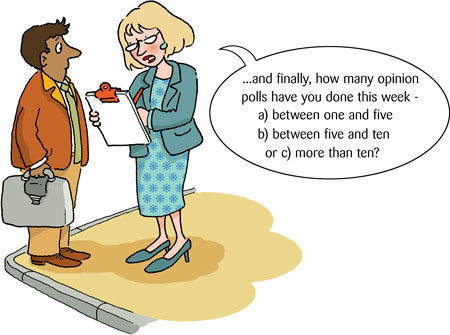
Social science that is concerned with finding out what people do can make use of both obtrusive and unobtrusive methods. Social science that is concerned with finding out what people think – their own understandings of their situations, or their opinions about an issue – has to engage with people directly. Social science research is therefore dependent on getting people to take part in various activities aimed at eliciting simple yes/no answers all the way through to providing detailed, discursive reflections on people’s activities.
It’s not only social scientists working in universities who engage with people in this way. Opinion polls, for example, depend on people answering questions, usually over the phone. Increasingly, all sorts of organisations make use of online surveys to collect information about people's opinions on certain issues'. Thomas Osborne and Nikolas Rose (1999) suggest, in fact, that the rise of opinion polling in the twentieth century is an example of social science actively shaping the phenomena it sought to investigate. For them, by applying survey methods, for example to the investigation of political opinion, social scientists can be seen to help expand the opportunity for the differentiated ‘voice’ of ordinary people to be heard in the public realm. At the same time, opinion polling requires people to take a certain stance on issues if they want to be heard.
In a similar vein, it has been suggested that social science contributes to the development of what has been called ‘the interview society’. According to this idea, the proliferation of the interview in popular culture is another aspect of the democratisation of opinion (Atkinson and Silverman, 1997). This refers to the claim that interviews have become central to how we make sense of who we are. It is a practice that shapes the expectation that people can reveal their motivations and authentic self to expert interviewers, whether this is a journalist, a therapist or detective or, indeed, a social science researcher. This argument holds that qualitative social science methodologies have helped to enact social worlds by shaping a new model of what it is to be a person – a model in which the central idea is that we are all potential informants with something meaningful to say about ourselves and the world around us when interviewed.
Expressing an opinion
In the film ‘Social science, poverty and participation’, an important dimension of the tradition of social science research associated with Townsend was the insistence on defining poverty in relation to accepted norms of what was required to take part as a member in society.

As you watch the following film, ‘Townsend and definitions of poverty’, try to spot the relationships between how poverty is measured (or described), how it is defined (or understood) and the impact of Townsend’s work (or how it helped to enact the social world in new ways).
Transcript: Townsend and definitions of poverty
[MUSIC PLAYING]
Townsend’s definition of relative poverty was radical when he first proposed it, although it has now become more widely accepted. This is how Townsend defined poverty in his 1979 study, Poverty in the United Kingdom: A Survey of Household Resources and Standards of Living (1979):
Individuals, families and groups in the population can be said to be in poverty when they lack the resources to obtain the types of diet, participate in the activities and have the living conditions and amenities which are customary, or at least widely encouraged or approved, in the societies to which they belong.
This definition has informed policy making around poverty and social exclusion in a number of national and international contexts. As you saw in the film, it is an example of social science informing and shaping public debate and policy making, or of helping to enact social worlds.
The key point of Townsend’s definition is the emphasis it places on the ‘customary’ and ‘approved’ understandings of diet, amenities and living conditions required to participate. Just what activities this involved, and what resources were required to support participation, were not meant to be arrived at independently by the social scientist, reasoning about these things from a distance. This means that social science research into poverty and social exclusion is not just about investigating the lives of particular groups of poor or excluded people. It is also about developing methods to gauge the views of the population at large about these matters and, specifically, establishing a consensus about what are ‘necessities’ in particular places and times.
What do people need to participate?
The tradition of research that Townsend helped to develop now informs a great deal of social science investigation into poverty. Broadly speaking, this tradition informs an approach that defines poverty or deprivation in terms of the enforced lack of necessities, where the definition of these necessities is determined by surveying public opinion.
Research using this approach involves two steps. The first step requires asking a broad range of people which things they think of as ‘necessities’, that is, the sort of things everyone should be able to have access to and not do without. The second step is to establish which people do not have access to these necessities.
This approach to investigating participation as a key criterion of poverty and social exclusion depends on people participating in social science practices themselves.
In 2010, the largest ever social science project on poverty and social exclusion started: the Poverty and Social Exclusion (PSE) project based at the University of Bristol and involving social scientists from several other UK universities.
One part of the PSE project is the ‘Necessities of Life’ survey. You might want to spend a few minutes taking part in this survey yourself by visiting the PSE website.
Remember that you are being asked for your opinion – there isn’t a ‘right’ answer that you should try to identify.
Try to keep an eye on how the questions are implicitly asking you not just what resources or amenities you think people need, but also about your views on what sorts of activities people should be able to participate in as members of society.
When you have completed the survey, return to this section of the course. The PSE Necessities of Life survey, and the larger tradition of social science research on poverty of which it is one part, illustrate two important dimensions of how social science helps to enact social worlds:
- As you have seen in the ‘Social science, poverty and participation’ film, this approach has played an important role in informing how poverty is understood as a public issue, and how it is addressed as a policy problem. This approach to defining and measuring poverty has influenced the development of official measurements of poverty and social exclusion in the UK, in the European Union and by the United Nations.
- The survey you have just taken part in exemplifies the idea that social science can shape the social worlds it investigates. It is a simple example of a broader process by which social science methodologies, deployed by academics, by governments and by commercial organisations, have contributed to the process in which people are expected to be opinionated.
Conclusion
This course has introduced the topic of participation in order to develop your appreciation of how social science helps to enact social worlds.
You have seen how social science investigation of participation ranges from work that focuses quite narrowly on forms of political participation, such as voting, to broader understandings of participation, such as belonging to clubs or churches, or just engaging in ordinary routines of family life. You have also seen how social science depends on people being involved in the generation of evidence and data.
The course began by defining enactment as having two aspects: informing public debates and shaping social worlds. You looked at how social science has helped to enact social worlds using the example of social science research on poverty. Poverty is, of course, an issue that is highly contested and controversial, not least in terms of its definition, and so this example of social science research also underscores the degree to which social science descriptions and understandings are always caught up with issues of evaluation.
You have seen that social scientists have played an important part in transforming the meaning of poverty, how it is measured, how it is judged, and what is done about it. By developing understandings of poverty that emphasise participation in social life, social scientists have influenced how poverty is described – how data are collected and interpreted. Fundamentally, in changing how poverty is described and understood, social scientists have had considerable influence in informing public debates about the extent and causes of poverty, and also in shaping policies aimed at alleviating poverty. In short, social science has played an important role in enacting debates and policies about poverty.
The emphasis on people participating in social science has been an important part of the process of social science enactments of poverty – by taking part in survey research that helps to define benchmarks of basic necessities.
Throughout this course, you have seen that the ways in which social science describes social processes – through methodologies such as surveys, for example – and the ways in which social science explains social processes – using concepts and theories – are always related to the ways in which social science informs debates and shapes outcomes (how it helps to enact social worlds).
In this course, you have learnt:
- how and why social scientists investigate participation
- how participation is described and understood by social science in terms of particular evaluations of the importance of certain activities
- that participation is crucial to social science definitions of public issues such as poverty, inequality and social exclusion
- that social science depends on various forms of participation by ordinary people to generate data and evidence and to contribute to the development of explanations and interpretations.
Take the next step

If you enjoyed this course, why not explore the subject further with our paid-for short course, Media, politics and society?
References
Further reading
Acknowledgements
This free course is an adapted extract from the course DD206 The uses of social science, which is currently out of presentation.
Except for third party materials and otherwise stated (see terms and conditions), this content is made available under a Creative Commons Attribution-NonCommercial-ShareAlike 4.0 Licence.
The material acknowledged below is Proprietary and used under licence (not subject to Creative Commons Licence). Grateful acknowledgement is made to the following sources for permission to reproduce material in this free course:
Cover image Chris Potter in Flickr made available under Creative Commons Attribution 2.0 Licence.
Course Image: © shaunl/istockphoto.com
Figure 2: www.understandingsociety.ac.uk/
Figure 3: Copyright © John Rensten/Getty Images
Figure 4: Copyright © Peter Macdiarmid/Getty Images
Figure 7: © unknown
Every effort has been made to contact copyright owners. If any have been inadvertently overlooked, the publishers will be pleased to make the necessary arrangements at the first opportunity.
Don't miss out
If reading this text has inspired you to learn more, you may be interested in joining the millions of people who discover our free learning resources and qualifications by visiting The Open University – www.open.edu/ openlearn/ free-courses.