1.6 Things You Are Good At
| Site: | OpenLearn Create |
| Course: | College and Career Readiness (For Myanmar Youth) |
| Book: | 1.6 Things You Are Good At |
| Printed by: | Guest user |
| Date: | Thursday, 26 November 2026, 1:08 AM |
1. What are you good at? (Pg 1/3)
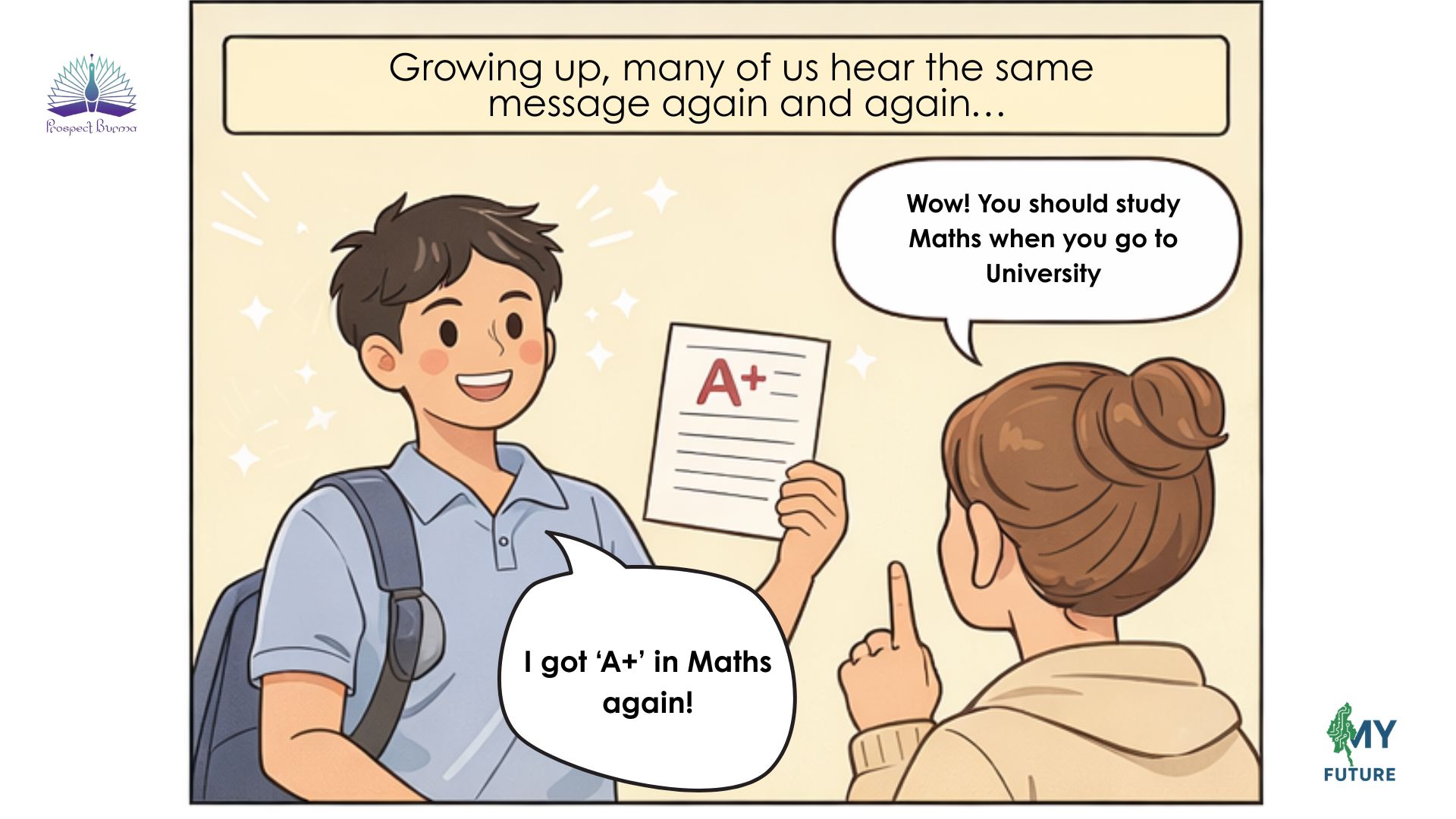
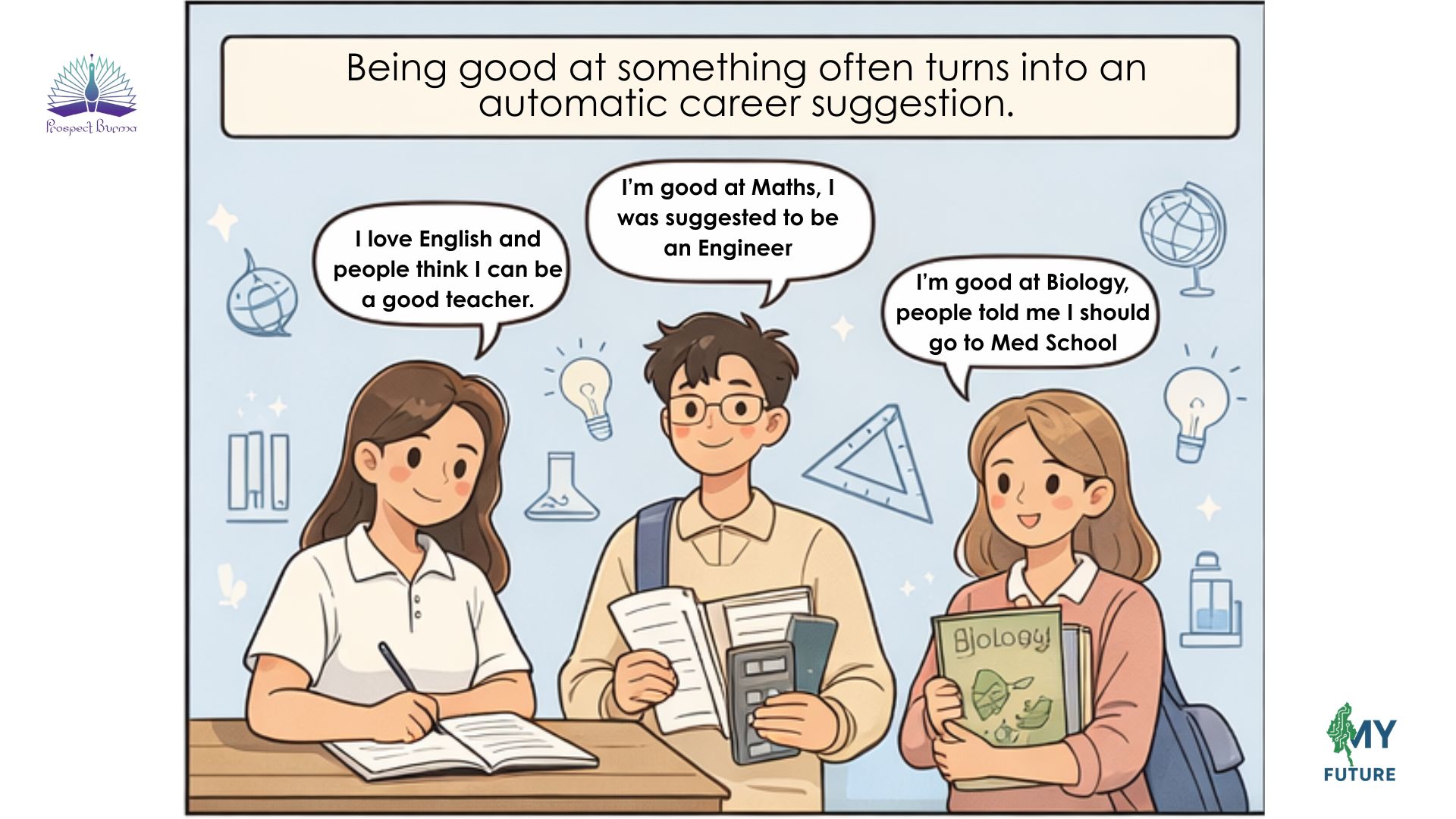
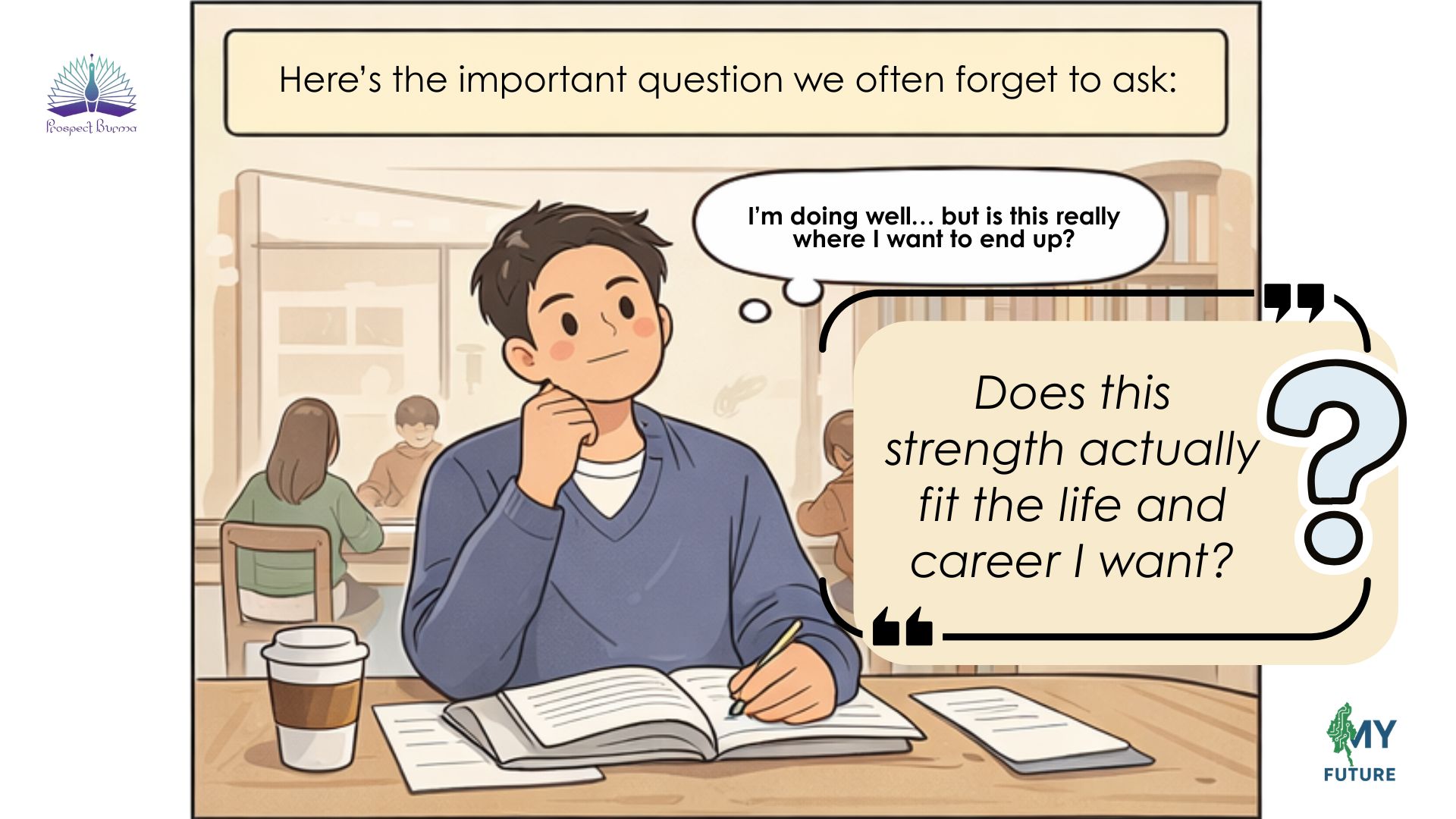
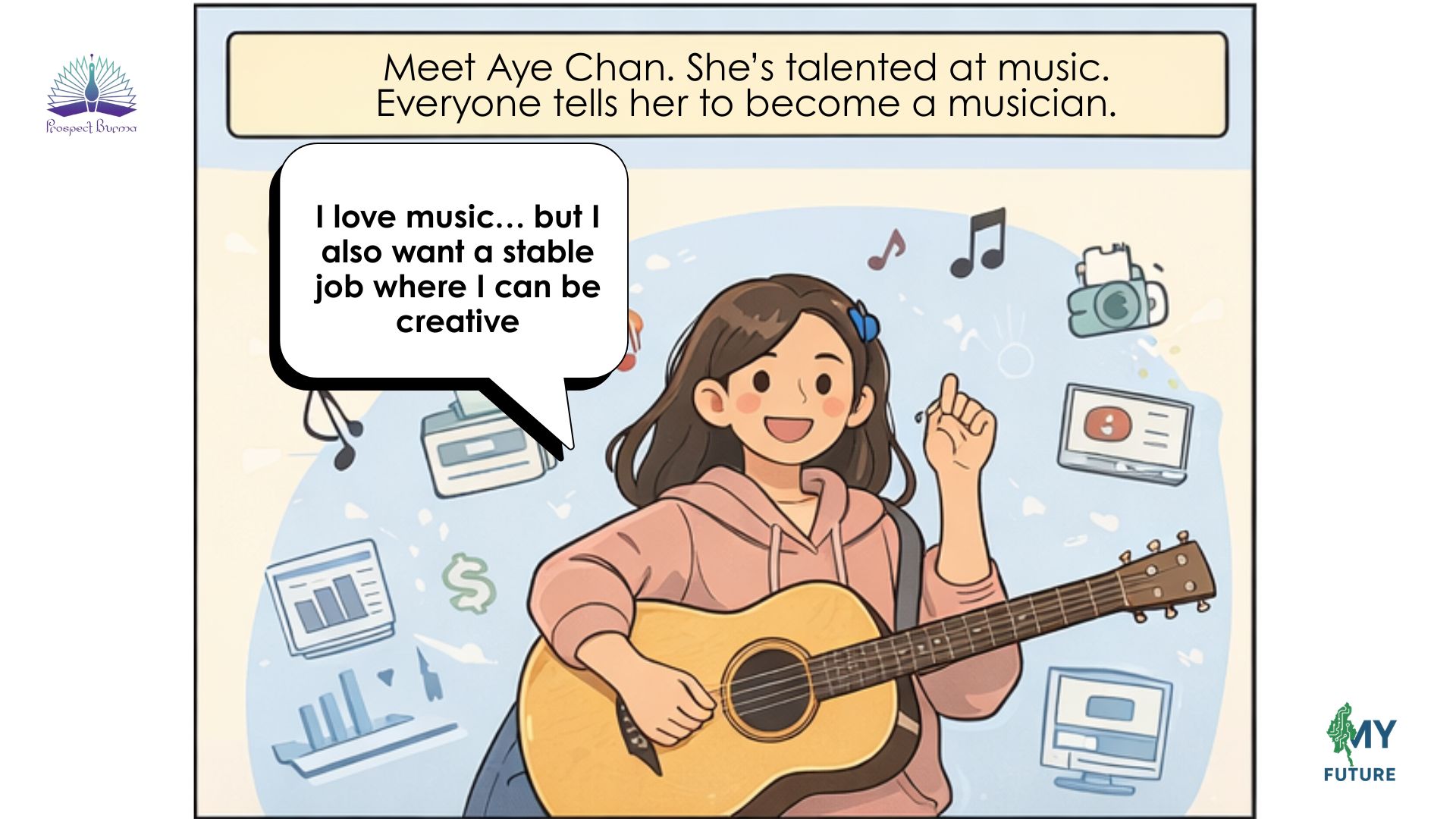
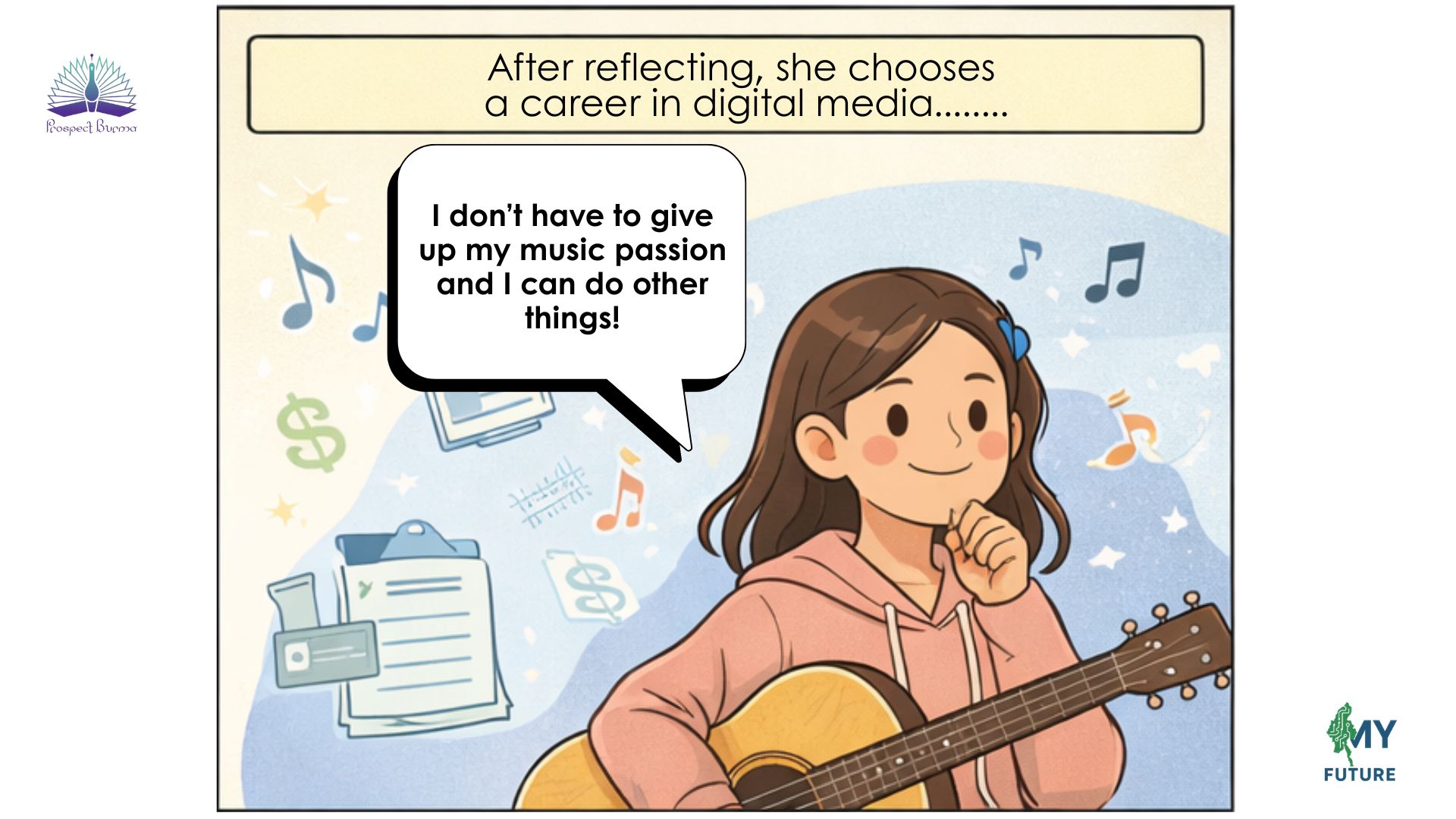
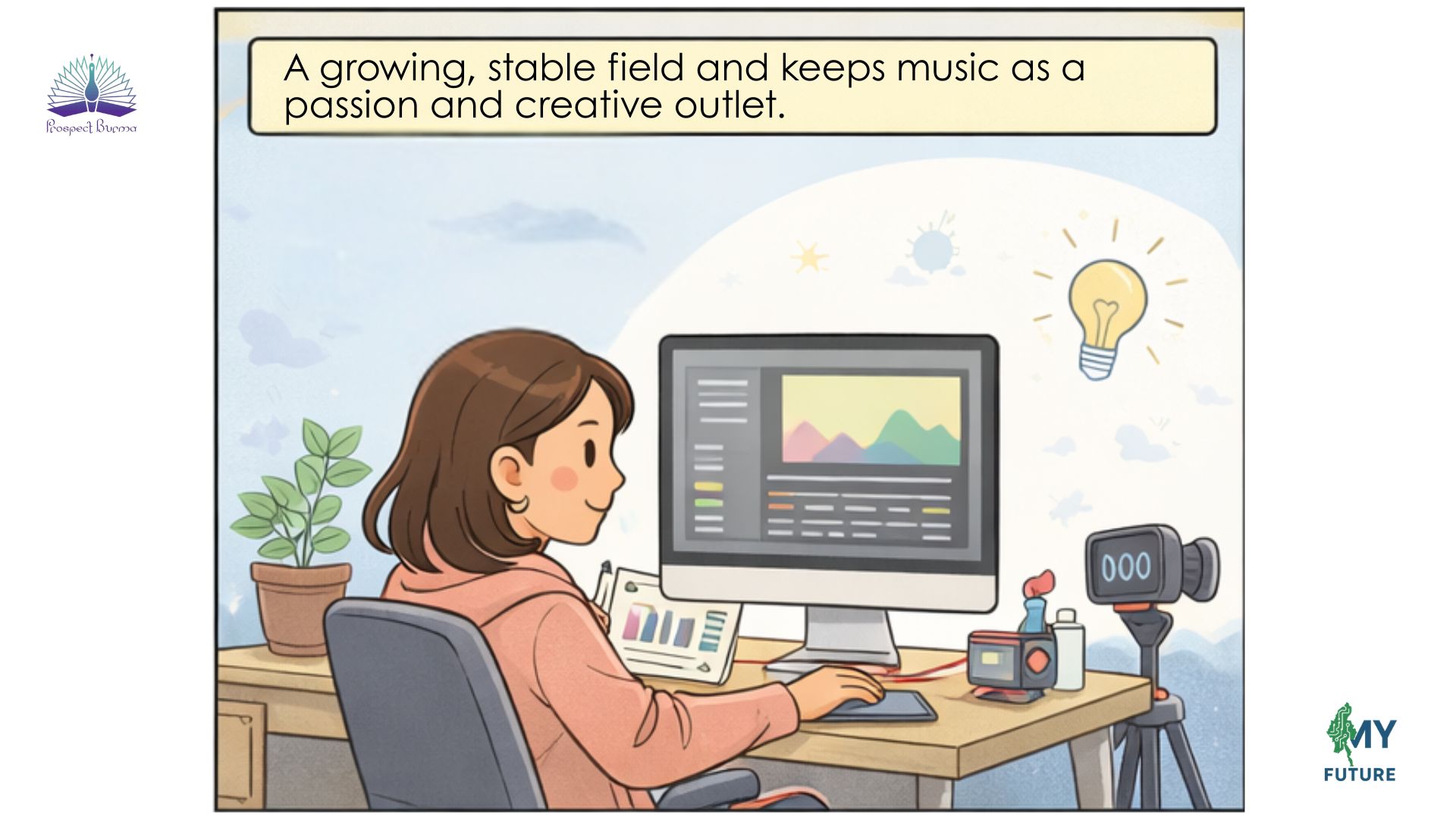
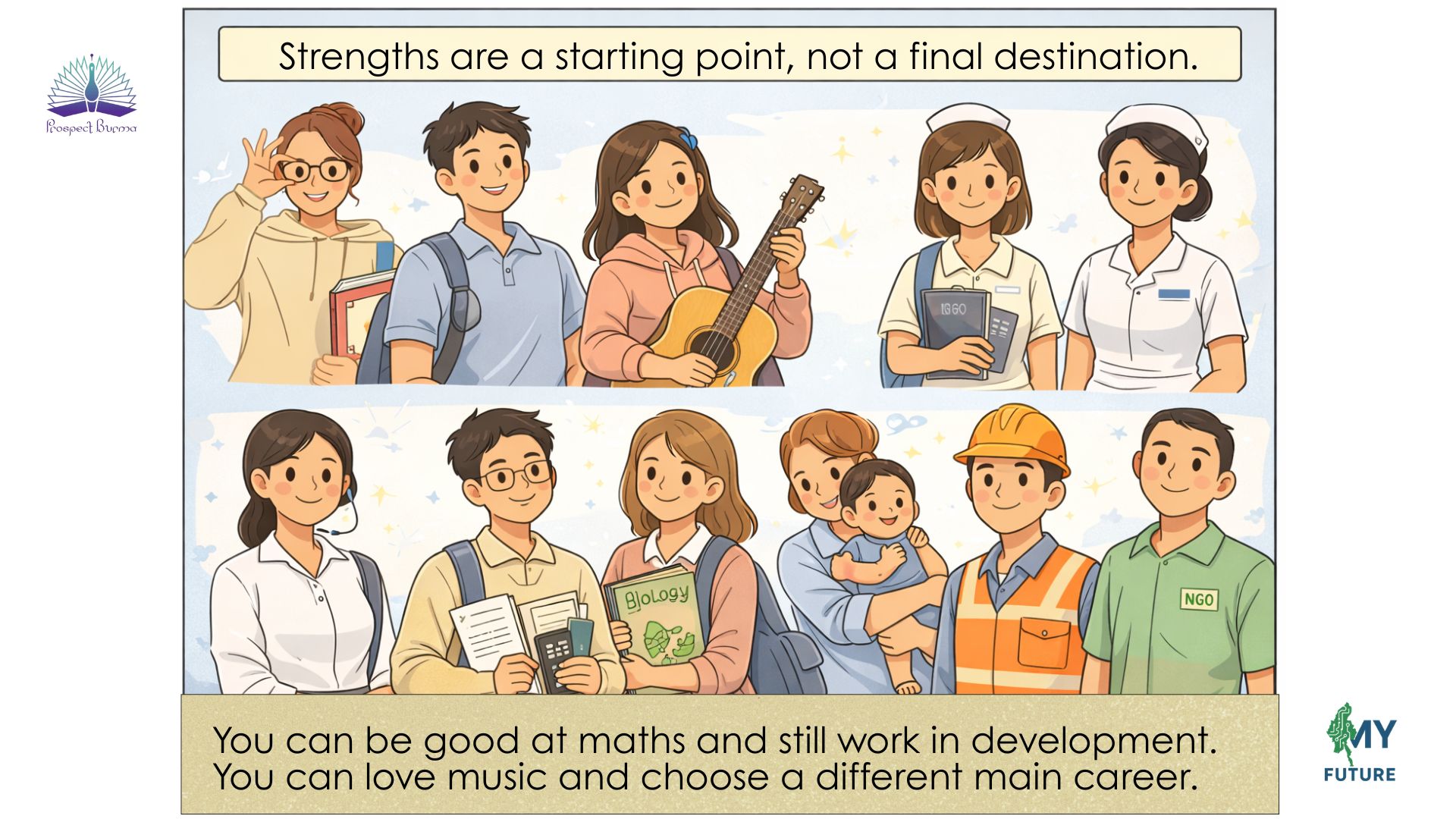
Being good at something is often the first label we receive but it shouldn’t be the final decision we make. In the comic illustrations that follow on this page, you’ll meet different characters who each have clear strengths, but very different ideas about how those strengths should or should not shape their futures. Some are encouraged to turn what they are good at directly into a career, while others pause to question whether that path truly fits the life they want.
Rather than giving answers, the comic invites you to notice a simple tension: strengths can open doors, but they don’t have to lock you into one direction. Skills can be developed, interests can shift, and careers can be shaped intentionally over time.
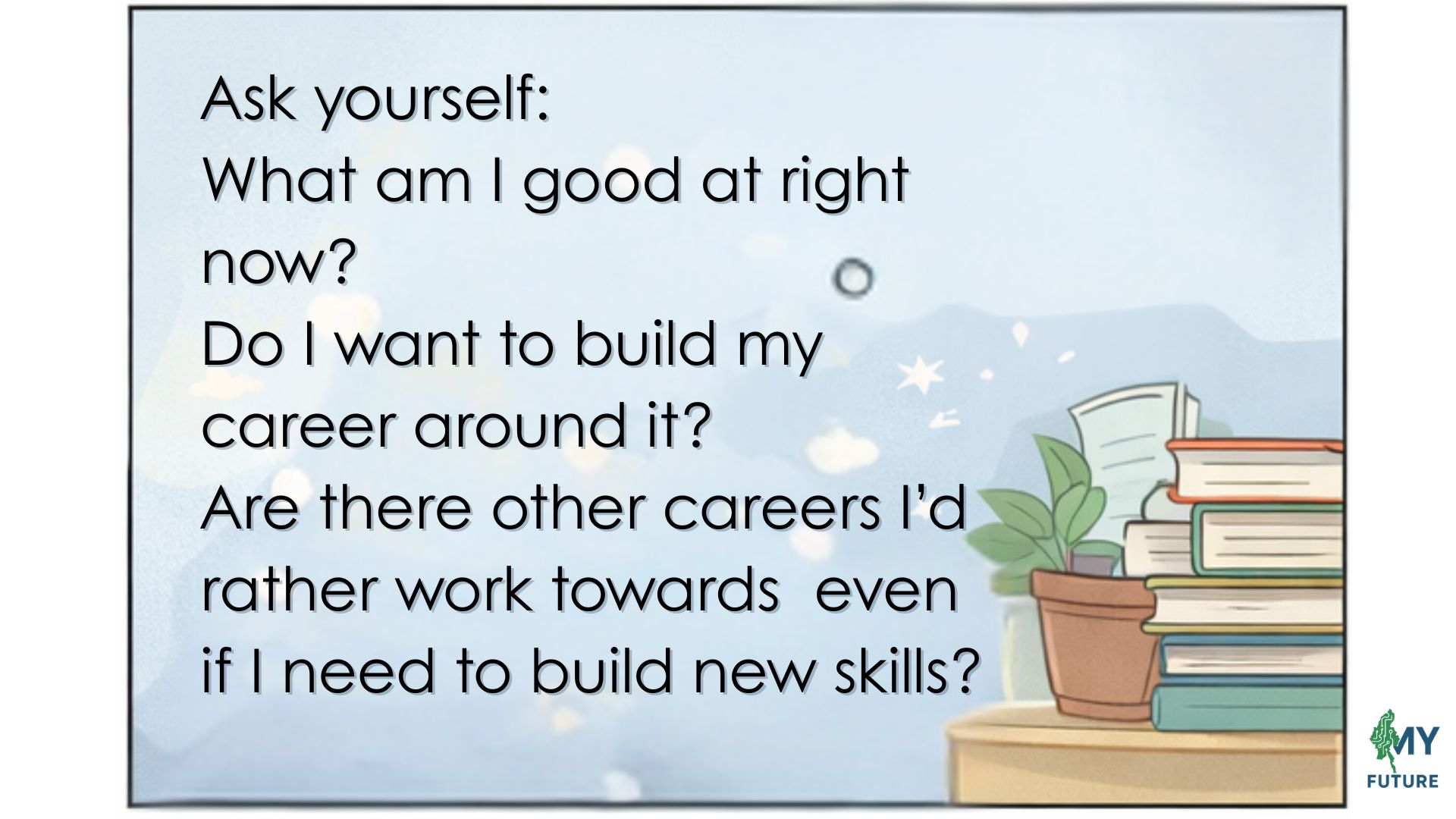
After reading the comic, use the worksheet that follows to help you reflect on your own strengths, explore careers you’re curious about, and decide whether you want to build on what you already do well or deliberately grow new skills to move toward the work you truly want to do.
2. A comic that will help you understand more (Pg 2/3)
Note: the given comic above contained AI generated content generated based on the below prompt
"Create a friendly, hand-drawn educational infographic illustration in a soft pastel cartoon style, suitable for secondary school students.
LAYOUT AND COMPOSITION
-
Canvas: Landscape orientation, approximately 4:3 aspect ratio.
-
A large, horizontal, rounded rectangular title box positioned across the top of the image, with a light cream background and thin dark outline. Leave it completely EMPTY for text to be added later.
-
Below the title, arrange THREE student characters sitting or standing together in a classroom or educational setting.
-
Each character should have an individual, rounded speech bubble positioned above or near their head. Leave ALL speech bubbles completely EMPTY, with white or very light cream interiors and thin dark outlines.
-
Characters should be large, clearly visible, and occupy most of the composition.
-
Include a few small educational decorative elements in the background, such as books, light bulbs, rulers, globes, pencils, geometric shapes, or science equipment.
CHARACTERS
Include exactly three young secondary school students:
[INSERT CHARACTER COMBINATION]
Each character should:
-
Have a friendly, approachable facial expression.
-
Have a natural, relaxed sitting or standing posture.
-
Wear simple, modest, casual school-appropriate clothing.
-
Hold a different subject-related book, notebook, folder, or educational object.
-
Have distinct hairstyles, facial features, clothing colours, and accessories.
-
Look like teenagers rather than young children.
VISUAL STYLE
-
Soft pastel colour palette: pale blue, cream, beige, muted pink, light brown, and soft green.
-
Clean hand-drawn outlines with slightly imperfect sketch-like details.
-
Gentle shading and subtle paper-like texture.
-
Cute but mature educational cartoon aesthetic.
-
Warm, friendly, positive and encouraging atmosphere.
-
Simple classroom-inspired background with small decorative illustrations.
-
Balanced composition with enough negative space for text placement.
IMPORTANT RESTRICTIONS
-
No generated text, letters, numbers, words, labels, or watermarks anywhere.
-
Keep the top title box completely empty.
-
Keep all three speech bubbles completely empty.
-
Do not add extra characters.
-
Do not crop the characters' heads or the objects they are holding.
-
Ensure all text areas have sufficient space for text to be added manually later.
The final image should look like a professionally illustrated educational textbook infographic, consistent in style, colour and composition."
3. Worksheet (Pg 3/3)
Use the following worksheet to help you reflect on your own strengths, explore careers you’re curious about, and decide whether you want to build on what you already do well or deliberately grow new skills to move toward the work you truly want to do.