Unit 2: Senior Learners and the Concept of Wellbeing
| Site: | OpenLearn Create |
| Course: | Learning Languages with Senior Learners 1_2024 |
| Book: | Unit 2: Senior Learners and the Concept of Wellbeing |
| Printed by: | Guest user |
| Date: | Tuesday, 6 October 2026, 7:38 AM |
Description
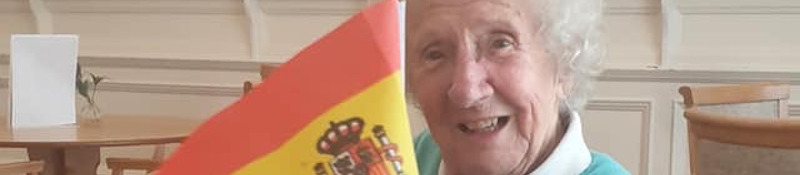
1.0 Introduction to Unit 2
In Unit 2, the focus will be on senior learners and the concept of wellbeing. Key questions you will find answers to in Unit 2:
- Who are our learners?
- What are the standards of care for senior learners?
- What is wellbeing?
- What are the advantages of learning when you are older?
- Which factors should be remembered for effective practice in different care settings?
Who are our learners?
1.1 Older People in the United Kingdom
In this activity you will find out more about the older population of the UK.
When reading our fact sheet Older People in the United Kingdom consider the following question:
- Which five key aspects have you found about the older population of the UK and why are these aspects important?
Take a note of your answer in your learning diary. Then compare your points with those listed in the model answer.
Alternative task: If you are not living and working in the UK, do an internet search to find out more about older people in your own country. Share five key aspects about the older population in your country in the Forum.
Who are our learners?
1.2 Dementia and Quality of Life
As you will have found out in the fact sheet in the previous activity, of the people in care homes in the United Kingdom, 70% have dementia or severe memory problems. In this activity you will learn about the impact of these conditions on people’s quality of life.
When watching the video by Alzheimer’s Research UK on dementia below, take notes in your learning diary to answer these questions:
- What is dementia?
- How does it impact the brain and its cognitive functions?
Watch the video from Alzheimer's Research UK (opens in new tab).
If you would like to watch this video with closed captions, please switch these on in the YouTube player by selecting this icon 
The Types of Dementia
Experts have established that dementia in itself is not a condition but a collective term for a group of symptoms that occur when brain cells stop working properly with specific types that can be identified.
Explore the relevant information on the Alzheimer's Research UK (opens in new tab) website to find out about the seven commonly accepted types of dementia.
Based on the information you are gathering from
the website and what you found out in the previous activity, complete
the table
()
(downloadable Word document) by
selecting at least two key facts on the different types of dementia.
Save the table for your own learning diary and compare your answer with our model answer.
The Stages of Dementia
In addition to different types of dementia, experts have established that in the course of the illness progressing seven specific stages can be identified. The dementia.org website provides a useful overview of these stages.
Step A
Read the information on the Stages of Dementia (opens in a new tab) and make notes in your learning diary on the key characteristics of each stage.
Compare your answer with our model answer.
Step B
The German painter Carolus Horn (1921-1992), who suffered from dementia himself, illustrated the impact of the condition on his perception and capacity of expression in his paintings. An example is his four paintings of the Rialto Bridge in Venice, one of his favourite motifs.
Explore the four paintings on slides 36-46 in Through the eyes of Alzheimer's (opens in a new tab) and describe the changes Horn visualises as the illness progresses. Note that picture A was painted when the artist was in full health.
Then, compare your thoughts with our model answer.
Who are our learners?
1.3 Impact of Older People's Wellbeing Issues on your own Work Context
To finish part 1 of Unit 2, you will now consider the impact of wellbeing issues on people you are working with and caring for.
Answer the following question and make notes in your learning diary:
- What activities become more difficult for the older people with whom you are working and what impact does this have on their wellbeing?
2.0 The Standards of Care in the UK
According to the fact sheet in Activity 1.1 (Unit 2), 400,000 older people are living in care homes in the UK. In 2015, more than 870,000 people in the UK used domiciliary care, based on information from the United Kingdom Homecare Association Ltd.
How these people are cared for is defined by set standards of care, which vary across the four UK nations. However, there are still a number of common features. One of these is the Concept of Wellbeing. Wellbeing is central to the care standards across the UK. But what is “wellbeing”? What does it entail? Does wellbeing reflect what your learners need and want?
Complete Activities 2.1 and 2.2 in Unit 2 to find out more.
The Standards of Care in the UK
2.1 Wellbeing as a Care Standard
The four UK nations have different standards of care. Select below the information relevant to the nation in which you work and find out more on the Concept of Wellbeing as a care standard.
Note down answers to the following questions:
- What are important regulations of wellbeing as a care standard?
- How is wellbeing described?
- What should I look out for?
Finally, compare your answer with the model answer.
Scotland:
The Care Inspectorate is the regulatory body and the regulation of the independent health care sector sits with Healthcare Improvement Scotland.
Read the Health and Social Care Standards to find out about the care standards for wellbeing in Scotland.
England:
The Care Quality Commission is the regulatory body.
Read the National Institute for Health and Care Excellence (NICE) guideline [NG32] Older people: independence and mental wellbeing to find out about the care standards for wellbeing in England.
Wales:
The Care and Social Services Inspectorate Wales is the regulatory body.
Read The Strategy for Older People in Wales 2013 – 2023 to find out about the care standards for wellbeing in Wales.
Northern Ireland:
The Regulation and Quality Improvement Authority is the regulatory body. Read The Quality Standards for Health and Social Care to find out about the care standards for wellbeing in Northern Ireland
.
Alternative Task: If you do not live and work in the UK, research the role of the concept of wellbeing in your own country. Summarise your key findings in the Forum.The Standards of Care in the UK
2.2 Sharing Your Views on Wellbeing in Care
In this activity you will discuss with your fellow students what you consider are the keys to wellbeing in care based on your own professional experience and what you have learned so far.
Go to the Unit 2, Activity 2 strand in the Forum (opens in a new tab) and write a contribution of 100 to 150 words in response to the following questions:
- In your experience, what is the relationship between wellbeing and medical intervention in care settings?
Read the contributions of the other students and comment on at least one. Your tutor will be moderating the discussion.
3.0 Advantages of Learning in Older Age
In the past, senior learners have often been viewed in terms of deficits: their hearing or sight might not be as good as in their youth. Information may not be recalled as easily, and mobility might be restricted. Old age was often equated with the loss of abilities.
Nowadays, senior learners are viewed in terms of competencies rather than deficits. This means that each person’s ageing process is very individual and while some abilities may be reduced, others are increased. While the speed of information uptake and its processing may have declined together with hearing and sight, the actual learning capacity has not declined. Some of the lost abilities may also be compensated by others such as world knowledge and experience, problem solving skills, very focused learning, as well as increased accuracy.
Complete activities 3.1 and 3.2 to find out more.
Advantages of Learning in Older Age
3.1 The Amazing Fertility of the Older Mind
In this activity you will find out why it is never too late to learn something new and how to approach learning in older age. In his work, David Robson, a science journalist specialising in the extremes of the human brain, body and behaviour, has explored the fertility of the older mind and overcoming of stereotypes of older people through learning.
When reading the article by David Robson, 'The Amazing Fertility of the Older Mind' make a note of the things that are new to you and even surprising in the text.
Then compare your answer with the model answer.
Advantages of Learning in Older Age
3.2 The Benefits of Learning a Language in Older Age
The article you studied in the previous activity highlights the immense potential of learning in older age. But out of all the things people could learn, why should you learn a language in older age?
Recent research has highlighted unexpected benefits of learning languages in older age. Dr Thomas Bak, a cognitive neuroscientist from the University of Edinburgh, points out some of these benefits.
Listen to an interview on Radio Scotland, Brainwaves: Dr Thomas Bak on Radio Scotland where he presents some findings of his research on bilingualism and brain health and answer the following questions:
- How do our assumptions about monolingualism and bilingualism affect the way we view language learning?
- Why is language learning beneficial, particularly in older age?
- What impact can language learning have on neurodegenerative diseases such a dementia?
Compare your thoughts with those in the model answer provided.
4.0 Learning in Care Settings
In the previous section of Unit 2 you considered the benefits of learning in older age. In order to optimise this learning, also in a care setting, it is important to create an environment that is conducive to learning. This is what you are going to focus on in this section.
Lingo Flamingo director Robbie Norval produced a guide document outlining the environmental factors that influence learning in older age with a specific focus on care settings.
When reading the ‘Environmental Factors’ document make notes in your learning diary of any aspects listed there that are particularly relevant for creating a productive learning environment in your own context.
Compare your notes with our model answer.
5.0 Unit 2 Tutorial
You are invited to attend the Unit 2 online tutorial, where you will meet your tutors and fellow students to discuss the concept of wellbeing in connection with language learning in older age and begin planning your own language learning activity.
This is an overview of the programme for the Unit 2 online tutorial:
b) What is a person-centered approach to social care? Why do your environment and the context matter when you are learning? To prepare for this aspect of the tutorial, read pages 9-12 of this document: Person Centred Thinking with Older People.
c) What are criteria for good practice in social care?
- In Unit 1 you started collating criteria for good practice in social care. Bring your criteria to the tutorial.
- To further prepare for this aspect of the tutorial reflect on the standards for social care you have engaged with in this unit and consider whether these really capture what you personally believe are suitable criteria for good practice in social care.
As preparation for this tutorial...
- think about which language/s you would like to try learning with your learners.
- think about an individual learner whom you could start your language learning journey with as a first step.
- discuss some options for learning a language together with this learner.
- come up with a first small language learning activity you would like to try out with your leaner. This should be just a short and easy activity, for example learning how to greet another person in the language you are learning. The activity could also start with reminiscing using an object like a photograph of washing drying on a washing line: you could talk about what that reminds your learner of, you could name the clothing on the washing line in the other language as a final step.
In the further engagement section of this unit you will find two guest lectures by Thomas Bak and Brittany Blankinship who work in the centre for Neuroscience Studies at the University of Edinburgh. You can listen to their thoughts and ideas to help you prepare for this aspect of the tutorial.
To help you with your language choice and prepare your language learning activity, you can engage with some of the many free language learning resources available, eg.
- Scots Language and Culture
- The Open University offer a range of free language courses - see the full catalogue:
-
There are also free apps you could use such as Duolingo, Memrise, Quizlet, Busuu.
-
You may also find inspiration on Youtube, Spotify, iTunes or work with a free online course on edX.
6.0 Application and Reflection
The full impact of the Covid-19 pandemic on older adults will only be determined in the future. However, Alzheimer Europe are already expressing concerns at this stage that Covid-19 has led to increased marginalisation of older adults and are highlighting risks such as loneliness, social isolation, elder abuse and ageism. One of their recommendations is to increase physical and cognitive activities as therapeutic measures to counteract some of these risks.
In Unit 2 you have explored the challenges and benefits of learning a language in older age, and you focused on the optimal learning environment and the concept of wellbeing.
In this Application and Reflection section complete activities 6.1 and 6.2 to apply what you have learned in Unit 2 to your own care setting.
Application and Reflection
6.1 Application Task
In the Unit 2 Application Task you will consider how you could use a language learning activitiy to increase the wellbeing of your senior learner/s and plan this activity.
To achieve this, go through steps A to E.
Step A: Select one person in your care environment for whom you will develop a language learning activity. Make some notes in your learning diary with important background information on this person. Which language/s do they know or speak? Have they travelled to other countries? Have they got relatives who live abroad? Also, consider which health issues this person is facing, and how these impact on their wellbeing.
Step B: Develop an idea for a language learning activity you would like to try out with this senior learner.
You could, for example, consider:
- Here’s How People Greet Each Other Around the World by using body language
- How To Say ‘Hello’ In 21 Different Languages
- Introducing yourself and starting an exchange in different languages
Step C: How would you ensure you use a person-centered approach for this learning activity? How would this activity increase the wellbeing of your learner? Look back over the 'Environmental Factors' in Activity 4.0 and consider in which setting you could try this activity out with your learner: Would you need good lighting? A quiet environment? How could you achieve this?
Step D: Post a description of your learner, your planned learning activity, and the environmental factors you considered in the Unit 2 Forum. Read and comment constructively on at least one post by a fellow student.
Step E: In the light of your peers' comments on your own planned learning activity, consider if you would like to make any changes to your plan. Note down why or why not.
To help you with your planning have a look at our model answer
6.2 Reflection Task
In the Unit 2 Reflection Task, you will put your plan for a language learning activity into action and reflect on the successes and challenges of the activity together.
Step A
Try out the planned activity with your learner in your care setting. You might want to gather some feedback from your learner about the activity as well, which you can bring to the course and share with your fellow students.Step B
Write a reflective account of 250 or more, explaining what you did with your learner and why, highlighting the successes and challenges you encountered when applying what you have learned in terms of language learning, wellbeing and external factors. Refer to the criteria for good practice in social care which you have developed yourself and then discussed in the tutorial. It may also be helpful to consider these questions:
- What do you think worked particularly well in your care setting?
- Is there anything you would do differently if you were to repeat this activity?
- What feedback did your learner give you on the activity?
- What are the next steps for your learners?
- How will you provide further opportunities to practise and reinforce the new language?
Please note: Your account should be more than a description of your teaching activity. Give reasons for your planning and compare what you had planned with the reality of putting the plan into action considering why you might have had to divert from your plan, why certain aspects might have worked well and others didn't. Reflection is a vital element of successful learning and teaching. Post this on the Forum.
Step C
This final step in activity 6.2 is specifically designed for you to contribute to the collaborative research project between The Open University and Lingo Flamingo. Each unit’s section on application and reflection will include this activity, which requires you to reflect on embedding language learning with senior learners in your care practice and context; the impact this has on you as a carer as well as the elderly person/people you care for and whom you undertake the language learning with, and finally the impact of this intervention on your wider professional context.
In your Reflective Learning Log, make notes capturing your reflections during the study and application of content of this unit on the following aspects, which will be particularly important for the research project:
- your own learning journey applying the skills you are learning in this course in your care context, in particular:
- your motivation and confidence as you go through the course
- whether your relationships with your learners are changing due to the language learning
- any impact this learning has on your opinion of good care practice
- any views colleagues, your learners and/or families have shared regarding the language learning activities
- your observations on you senior learner(s)’ learning journey (the individual as well as the group), particularly:
- on their motivation for participating in this learning
- the impact the learning has on their overall confidence and participation in the sessions and the learning group (if there is one)
- aspects of how they learn and engage (for example you could share some relevant incidents during the language learning sessions and other examples)
Please note: This part of the application and reflection is NOT assessed and is primarily a tool for you to feed into our research whilst encouraging you to think more closely about your own learning journey and the wider impact of the language learning activities. Your tutors will read your entry and provide some brief comments, although the main focus here are your own insights and reflections.
7.0 Community Link: The Language Hub in Glasgow
In many cities, language cafés and hubs are becoming increasingly popular, and you can find a wide range of different languages on offer for these. These are gatherings where people interested in a particular language come together to practice speaking this language together, independent of their level of proficiency. You’ll often even find native speakers at such language cafés.
An interesting example is the Language Hub social enterprise in Glasgow's West End. This hub for all things to do with languages caters for children as well as adults and offers a wide range of services from language classes in a variety of languages for young and old, language translation services, a multilingual library, a café for informal languages events and a community events space where many of the Hub's events are taking place.
Would you be interested in attending a Language Hub like this?
8.0 Further Engagement
If you would like to find out more about language learning and dementia you can listen to the guest lectures of Dr Thomas Bak and Dr Brittany Blankinship, who will provide answers to the following questions:
i) Does speaking more than one language influence dementia onset?
ii) What happens if a multilingual develops dementia?
iii) Can dementia patients learn a new language?
Thomas Bak Guest LectureBrittany Blankinship Guest Lecture
Here is some of Thomas Bak’s research:
- Alladi, S., Bak, T.H., Duggirala, V., Surampudi, B., Shailaja, M., Shukla, A.K., Chaudhuri, J.R., Kaul, S. (2013) ‘Biligualism delays age of onset of dementia, independent of education and immigration status’, American Academy of Neurology, vol. 81, pp. 1-7.
- Alladi, S., Bak, T.H. (2014) ‘Can being bilingual affect the onset of dementia?’, Future Neurol. Vol. 9, no. 2, pp. 1-3.
- Alladi, S., Bak, T.H., Mekala, S., Rajan, A. , Chaudhuri, J.R. , Mioshi, E., Krovvidi, R., Surampudi, B., Duggirala, V., Kaul, S. (2015) ‘Impact of Bilingualism on Cognitive Outcome After Stroke’, Stroke [Online] Available at https://www.ahajournals.org/doi/full/10.1161/STROKEAHA.115.010418, Accessed 5 February 2025
If you would like to find out more about wellbeing in older age you can read the following articles:
- Delle Fave, A., Bassi, M., Boccaletti, E.S., Roncaglioni, C., Bernardelli, G., Mari, D. (2018) ‘Promoting Well-Being in Old Age: The Psychological Benefits of Two Training Programs of Adapted Physical Activity’, Frontiers in Psychology, vol. 9, pp. 1-13.
- Lamers, S.M.A., Westerhof, G.J. ;Bohlmeijer, E.T., Ten Klooster, P.M., Keyes, C.L. M. (2011) ‘Evaluating the Psychometric Properties of the Mental Health Continuum-Short Form (MHC-SF)’, Journal of clinical psychology, vol.67, no.1, pp.99-110.
- Park, D.C. and Reuter-Lorenz, P. (2009) The Adaptive Brain: Aging and Neurocognitive Scaffolding. In: Neuropsychological Review, p. 173-196. https://www.ncbi.nlm.nih.gov/pubmed/19035823 (Accessed 5 Feb 2025)
- Raz, N. (2009) Decline and Compensation in Aging Brain and Cognition: Promises and Constraints. In: Neuropsychological Review, p. 411 – 414 https://www.ncbi.nlm.nih.gov/pmc/articles/PMC2809780/ (Accessed 5 Feb 2025)
If you want to learn more about how language learning and role play can help learners 'shed their ego' and overcome language learning anxiety, read the article by Bärbel Brash and Sylvia Warnecke "
()
".
9.0 References
Age UK (2019) Later Life in the United Kingdom 2019 [Online]. Available at https://www.ageuk.org.uk/siteassets/documents/reports-and-publications/later_life_uk_factsheet.pdf (Accessed 16 August 2025).
Alzheimer Europe (2020) Older adults are experiencing increased marginalisation due to the COVID-19 pandemic, 3 August [Online]. Available at https://www.alzheimer-europe.org/news/older-adults-are-experiencing-increased-marginalisation-due-covid-19-pandemic (Accessed 16 August 2025).
Alzheimer’s Research UK (2016) What is dementia? [Online]. Available at https://www.youtube.com/watch?v=HobxLbPhrMc&feature=youtu.be (Accessed 16 August 2025).
Alzheimer’s Research UK (n.d.) Types of dementia [Online]. Available at https://www.alzheimersresearchuk.org/dementia-information/types-of-dementia/?gclid=Cj0KCQjwuJz3BRDTARIsAMg-HxWiqHKKC4CenNnjsg5GRGiwWtYIOH8wlDBRXsAnRLPobvjh710IUuIaAgD1EALw_wcB (Accessed 16 August 2025).
BBC Radio Scotland Brainwaves (2018) Dr Thomas Bak, 19 August [Online]. Available at https://www.bbc.co.uk/programmes/b09pz108 (Accessed 16 August 2025).
Ciolli, C. (2020) Beyond the Handshake: How People Greet Each Other Around the World. AFAR 8 April [Online]. Available at https://www.afar.com/magazine/beyond-the-handshake-how-people-greet-each-other-around-the-world (Accessed 16 August 2025).
Dempster, M., Scots Language Café photo [Online]. Available at https://twitter.com/DrMDempster/status/1060136921974915072/photo/1 (Accessed 16 August 2025).
Dempster, M. (n.d.) Mind yer Language? How we talk English an how we talk Scots, YouTube Channel [Online]. Available at https://www.youtube.com/channel/UCO7FYItwawDAH3_CCDGFjhQ (Accessed 16 August 2025).
Department of Health, Social Services and Public Safety Northern Ireland DHSSPSNI (2006) The Quality Standards for Health and Social Care [Online]. Available at https://www.health-ni.gov.uk/sites/default/files/publications/dhssps/the-quality-standards-for-health-and-social-care.pdf (Accessed 16 August 2025).
Healthcare Improvement Scotland(n.d.). [Online]. Available at http://www.healthcareimprovementscotland.org/ (Accessed 16 August 2025).
Healthcare Improvement Scotland (n.d.) Health and Social Care Standards [Online]. Available at https://www.gov.scot/binaries/content/documents/govscot/publications/advice-and-guidance/2017/06/health-social-care-standards-support-life/documents/health-social-care-standards-support-life/health-social-care-standards-support-life/govscot%3Adocument/health-social-care-standards-support-life.pdf (Accessed 16 August 2025).
Lingo Flamingo (n.d.) [Online]. Available at https://www.lingoflamingo.co.uk/about (Accessed 16 August 2025).
Lyons, D. (2017) ‘How To Say ‘Hello’ In 21 Different Languages’ Babbel Magazine, 5 July [Online]. Available at https://www.babbel.com/en/magazine/how-to-say-hello-in-10-different-languages (Accessed 16 August 2025).
Macdonald, K. (2017) Scots dialects 'as good as a second language', BBC News, 3 November [Online]. Available at https://www.bbc.co.uk/news/uk-scotland-41844216 (Accessed 16 August 2025).
Maurer, K. (2001) „Wie aus Wolken Spiegeleier werden“. Alzheimer und Kunst [Online]. Available at https://www.werkhaus-krefeld.de/wp-content/uploads/2011/09/Alzheimer_und_Kunst.pdf (Accessed 16 August 2025).
Mele, Rosi (2020) Overcoming anxiety. In: Language Learning with Senior Learners. OpenLearn Create.
Mele, Rosi (2020) Setting the scene. In: Language Learning with Senior Learners. OpenLearn Create.
Mele, Rosi (2020) A practical example. In: Language Learning with Senior Learners. OpenLearn Create.
National Institute for Care and Health Excellence (2015) Older people: independence and mental wellbeing NICE guideline [NG32] [Online]. Available at https://www.nice.org.uk/guidance/ng32 (Accessed 16 August 2025).
NHS Information Centre for Health and Social Care (2010) Survey of Carers in Households 2009/10.
Robson, D. (2017) ‘The amazing fertility of the older mind’. BBC Future, 28 August [Online]. Available at https://www.bbc.com/future/article/20170828-the-amazing-fertility-of-the-older-mind (Accessed 16 August 2025).
Scots Language Café(2020) [Online]. Available at https://twitter.com/thescotscafe (Accessed 16 August 2025).
Skills for Care. (2024). The state of the adult social care sector and workforce in England [Online]. Available at https://www.skillsforcare.org.uk/Adult-Social-Care-Workforce-Data/Workforce-intelligence/publications/national-information/The-state-of-the-adult-social-care-sector-and-workforce-in-England.aspx (Accessed 16 August 2025).
Teixeira, M.I. (2019) ‘18 common gestures around the world.’, Lingoda, 9 May [Online]. Available at https://blog.lingoda.com/en/the-basics-of-body-language-for-language-learners/ (Accessed 16 August 2025).
Thompson, S. (2017) ‘Cultural Differences in Body Language to be Aware of’, Virtual Speech, 25 August [Online]. Available at https://virtualspeech.com/blog/cultural-differences-in-body-language (Accessed 16 August 2025).
Verywellmind.com (2024) The 7 Stages of Dementia: What to Expect [Online]. Available at https://www.verywellmind.com/the-7-stages-of-dementia-symptoms-and-what-to-expect-6823696 (Accessed 16 August 2025).
Warnecke, S. (2020) Participation at many levels. In: Language Learning with Senior Learners. OpenLearn Create.
Welsh Government (2013) The strategy for older people in Wales 2013 to 2023 [Online]. Available at https://www.gov.wales/sites/default/files/publications/2019-06/the-strategy-for-older-people-in-wales-2013-2023.pdf (Accessed 16 August 2025).
Acknowledgements
Every effort has been made to contact copyright holders. If any have been inadvertently overlooked the publishers will be pleased to make the necessary arrangements at the first opportunity.
Grateful acknowledgement is made to the following sources:
Unit 2 image: Supplied by Rosi Mele, Lingo Flamingo
Unit 2, Prof Thomas Bak guest lecture: Presentation recording supplied by Prof Thomas Bak, The University of Edinburgh
Unit 2, Dr Brittany Blankinship guest lecture: Presentation recording supplied by Dr Brittany Blankinship, The University of Edinburgh