4 The governance of Scotland
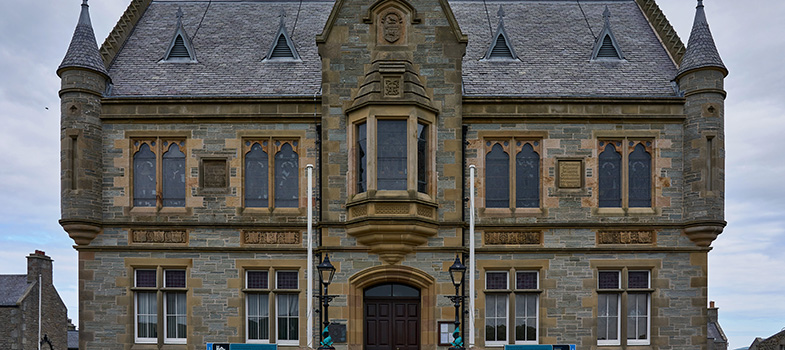
Councils in Scotland are an elected sphere of government, along with the Scottish and UK Parliaments.
It is important for prospective candidates to understand the relationship between the different governments and parliaments that contribute to the governance of Scotland because, ultimately, this impacts how councils are financed and what they do.
Community councils are also a part of the governance of Scotland, although they have limited powers and budgets, and very few require contested elections.
There will probably be one or more community council(s) operating in the electoral ward you may choose to stand in, so you should take some time to find out how many there are and what areas they cover.
The following video has more information about community councils (Improvement Service, 2018).
Transcript
UK Parliament
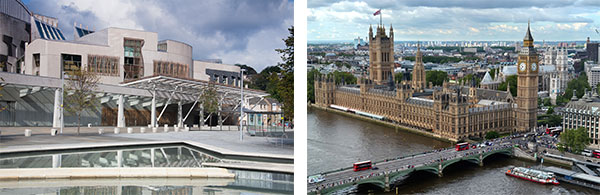
The UK Parliament is the supreme legislative body of the United Kingdom and comprises three parts:
- Sovereign (Monarch)
- House of Commons (650 elected MPs)
- House of Lords (appointed members).
It possesses legislative supremacy, holding ultimate authority and retaining power over reserved matters across the UK. Its functions include passing laws and public expenditure, as well as scrutinising the UK Government.
The UK Parliament sets its budget, which determines the size of the block grant allocated to Scotland through the Barnett Formula (Keep, 2026). This grant forms the largest portion of the Scottish Government’s funding and is adjusted based on changes in spending on comparable services in England. While Scotland has devolved tax powers, UK budget choices directly shape the resources available for Scottish public services and policy priorities.
The Scottish Parliament was established in the UK Parliament’s Scotland Act 1998 and was given the power to make laws on a range of issues known as devolved matters. The UK Parliament retains the power to make laws for Scotland on reserved matters.
UK Government
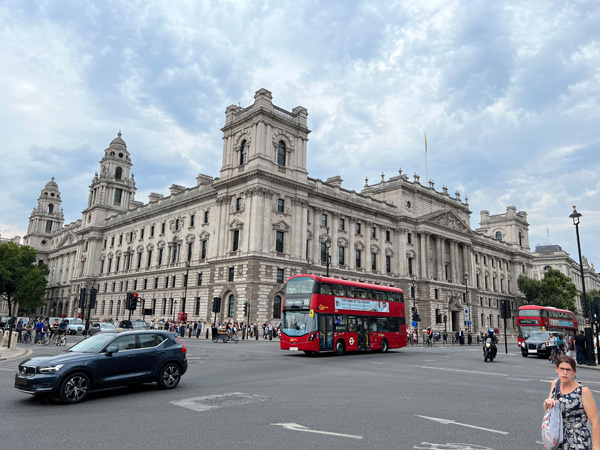
Comprising the Prime Minister, Cabinet and junior ministers, the UK Government has executive power and delivers national policies through introducing legislation, managing public services and overseeing taxation at the UK level.
It relies on parliamentary approval for laws and spending, and is accountable to MPs and Lords. Its authority is limited in areas that have been devolved to the Scottish Parliament, Welsh Parliament/Senedd Cymru and Northern Ireland Assembly.
The Scottish Parliament and the Scottish Government
Watch the following video describing the Scottish Parliament and Scottish Government, and the relationship between the two bodies:
Transcript
The Scottish Parliament is the law-making body in Scotland for devolved matters. It comprises 129 Members (MSPs) directly elected by the people of Scotland. The powers and duties of the Scottish Parliament are set out in legislation passed by the UK Parliament.
The Scottish Parliament is responsible for making laws and holding ministers to account. The Scottish Government, led by the First Minister, runs the country by developing policy and implementing legislation in areas that are devolved to Scotland.
Local government is a devolved issue and therefore falls within the legislative competence of the Scottish Parliament..
Local government’s position in Scotland and the UK
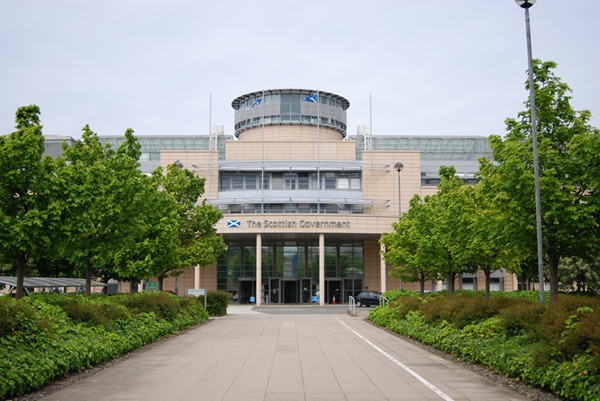
Local government in Scotland operates in a ‘multi-level governance’ environment. As covered previously in the section ‘What do councils do?’, councils in Scotland are public bodies created by UK legislation, whose functions and powers are conferred by Acts of the UK and Scottish Parliaments.
As covered in ‘An overview of local government finance’, councils are also in a dependent financial position. The decision taken each year by the Scottish Parliament on the Local Government Finance Settlement has a substantial and direct impact on councils’ overall budgets, influencing the level of services that they are able to deliver. While the Scottish Parliament has devolved tax‑raising powers, the size of its overall budget – and, consequently, the funding available to local government – is itself affected by spending decisions taken by the UK Parliament. As a result, councils’ financial position is shaped by decisions made at both devolved and reserved levels of government.
While councils depend on decisions taken by the Scottish and UK Parliaments, the dependency can be reciprocal. Both Parliaments rely on councils to deliver many statutory functions and public services that are essential to achieving national policy objectives. Where local and national priorities align, councils play an important role in shaping national policy objectives into effective local delivery,
There is regular, ongoing dialogue between the respective spheres of government across a whole range of policy issues, and councillors can be involved in discussions with central governments about the local implications of national policies.
3.2 Long-term trends