Background – Healing Classrooms as a global strategy

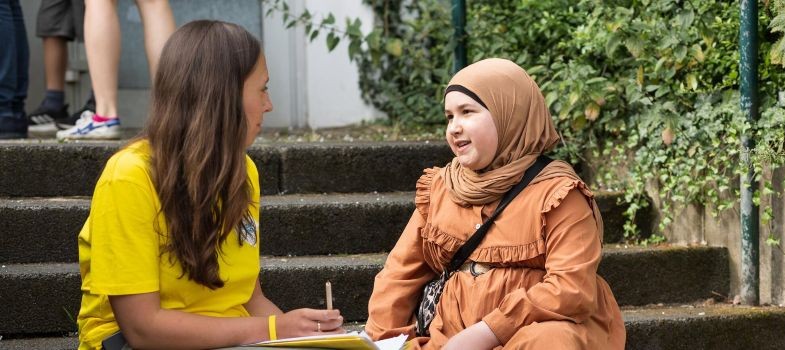
The IRC’s Healing Classrooms Approach – built on 30 years of education in emergencies experience and a decade of research and field testing – offers children a safe, predicable place to learn and cope with the consequences of conflict and displacement.
Unlike many education programmes that focus solely on teaching academics, the Healing Classrooms Approach builds children’s social-emotional skills as well as their capacities to learn. This approach is based on research that shows social-emotional learning programmes improve students’ life skills, behavior and academic performance.
To help teachers, school personnel and communities create Healing Classrooms, the IRC:
Supports and trains teachers to establish safe, predictable and nurturing environments.
Creates and provides teaching and learning materials to build students’ academic and social-emotional skills.
Connects parents and caregivers with schools.
The Healing Classrooms Approach originated in 1997. It was the brainchild of IRC staff in the CRRD (Crisis Response, Recovery and Development) team who saw a need for robust teacher training for educators in refugee camps as a key method to help children to heal.
The Healing Classrooms Approach is based on the fact that children who do not feel safe cannot learn. Their brains are stuck in survival mode, and they are focusing on monitoring potential threats above all else. In order for children to make friends, to progress in their studies and to heal from any trauma they have experienced, they need to be in safe spaces where there are trusted adults they can seek out if they need support.
Here in the UK, Healing Classrooms training sessions have been running since 2022 and educators across all ages from early years foundation stage (EYFS) to university have taken part. IRC's team of former primary and secondary school teachers have adapted Healing Classrooms to ensure it fits our country context and the needs of educators here in the UK.
Healing Classrooms are spaces where children and youth can develop across these five areas – click on each number to learn more.
Meet the team