

What is trauma?
Trauma is a common consequence of witnessing or experiencing something shocking, dangerous or life-threatening.
Trauma jeopardises our brain health which can manifest into difficulties learning new content, controlling behaviour, remembering key information, regulating emotions and more. Trauma can be especially damaging to the brains of children as they are still developing.
Later in this unit, you will explore the specific impacts trauma and toxic stress can have on a child and how it can affect their ability to concentrate and learn.
Creating Healing Classrooms to welcome refugee children can give them a safe space to recover, settle and begin to learn. Children are incredibly resilient, but they need trusted adults and communities to help them get back on track with their learning, personal development and thinking of their new future in the UK.
| Ability to form and maintain healthy relationships and trust. |
| Ability to focus, concentrate and learn. |
| Sense of control and autonomy. |
| Sense of belonging and community. |
| Sense of self-worth. |
Trauma can impact a child significantly as shown in the list above. Schools can be ideal places to help a child’s recovery, but they can also be places where trauma is worsened if trauma-informed care is not embedded in a school.
Next, you will review common risk factors that can hinder a child’s recovery and common protective factors which can support them to heal.
Risk and protective factors to recovery
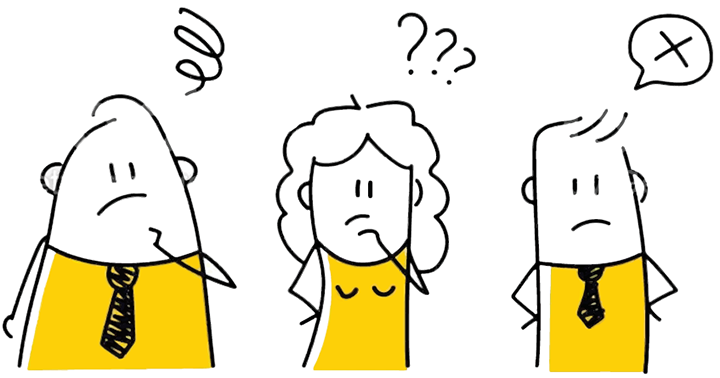
Various factors determine how well a child will cope with trauma and how quickly they might recover.
Those factors can include their family situation and support networks (such as local religious or community centres), their financial situation, the services they are able to access, their opportunities to participate in their new community, the language support they can access, mental health support available to them, accessibility of healthcare and any pre-existing health issues.
Consider how your school or organisation can help to reduce the risk factors your students are facing. This could include signposting families to services, accompanying families to appointments, reaching out on their behalf to access support, utilising school funding to support their children, ensuring good English language support, providing opportunities for friendships within school, and using interpreters when necessary.
You can review common risk and protective factors in the following table:
| Risk factors | Protective factors |
|---|---|
| Lack of language support (no English tutor, no translated documents, no interpreter used in meetings). | Opportunities for relationship building. |
| Limited support during transition to new school. | Engaging parents/caregivers. |
| Punishment-based strategies to improve behaviour (e.g., detention, shouting, withdrawal from activities). | Programmes to meet learning gaps and talents. |
| Environment not inclusive of various cultures/religions. | Use of interpreters (online or in-person). |
| Neglecting other factors which can be a target for discrimination (race, sexuality, religion, SEND, etc.). | Continued support throughout the year. |
Immediate trauma response
During a dramatic event, our brains go into survival mode. The primitive brain takes over, and our responses are involuntary. How a person responds during a traumatic event may leave them with feelings of shame or helplessness, especially if they have the freeze or flight response.
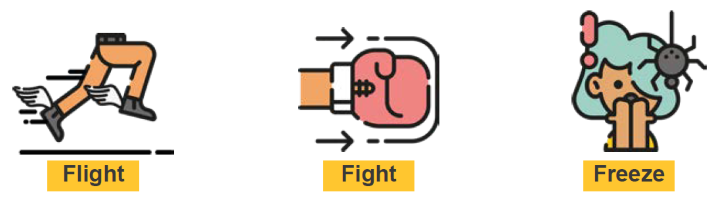
They may feel like they let the trauma happen to them or others by not leaving, helping others in the moment or fighting but it is important to know that we have no control over our immediate trauma responses.
It can be helpful for students to know this information in an age-appropriate way and can help them process feelings of guilt or shame based on their response during a traumatic event.
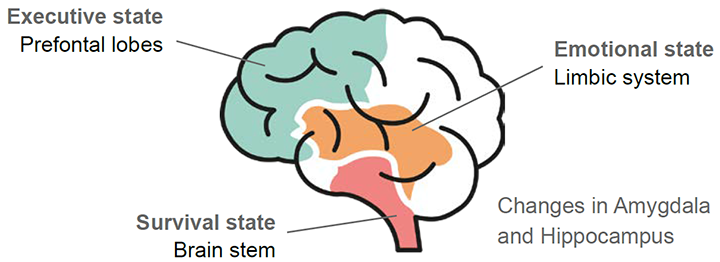
 Task 1: Long term impacts: What is toxic stress?
Watch this video about toxic stress.
While you are watching, consider how toxic stress impacts on a child’s healthy development.
Has exploring the topics of trauma and toxic stress changed the way you might view and respond to your students’ behaviours? If so, how?
Make some notes in the text box below.
Comment
An educator with knowledge of toxic stress and the impacts it can have on a child's brain development can have a better understanding of why a student may be behaving the way they are.
This can help the educator act from a place of compassion and empathy rather than going straight to behaviour management strategies which can sometimes cause further harm and re-traumatisation.
Poem – Baytna (our home) by Mohamad Alrefaai