The Triple Trauma Paradigm
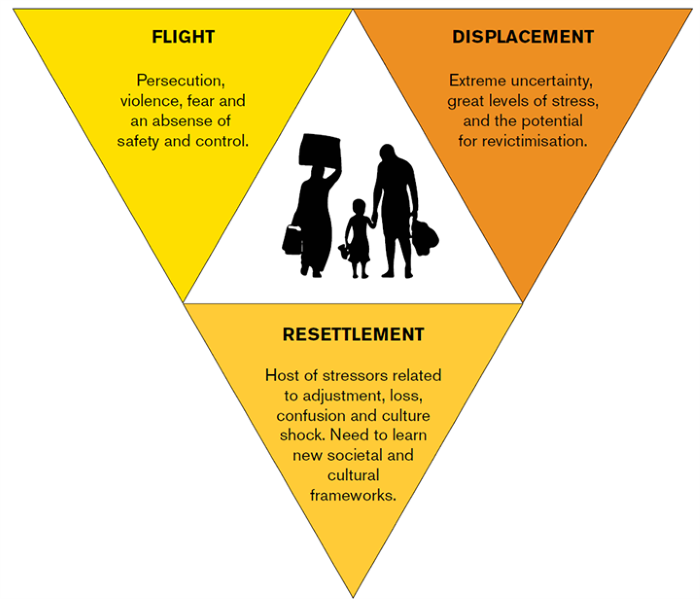
The Triple Trauma Paradigm is a tool to help you better understand what families may have experienced and the various traumas they may have survived in order to get to a safe country. It can help you to better understand the potential needs of families and the students you teach.
It is not to suggest that all refugees have had the same experiences, as every person has their own story and their own responses to what they have experienced.
Unfortunately, many refugees around the world will never reach the stage of resettlement or the chance to return to their country and live in safety. In many cases, displacement is protracted – the average duration of displacement is known to be 20 to 25 years – and generations of families are born and live their whole lives in refugee camps and settlements.
 Task 3: Traumatic experiences
Part 3
Watch this video of Habib and how his lived experience of forced displacement fits into the Triple Trauma Paradigm.
Reflect on the challenges Habib faced upon arriving in the UK and how the various adults in Habib’s life provided him support when he needed it most.
Comment
This 3-part activity highlights the various traumas an individual may experience during the arch of displacement (flight, displacement, resettlement). Keep these potential experiences in mind when working alongside refugee students and families to help you better contextualise their responses, behaviours and actions.
Also keep in mind that every person has their own story and their own reactions to what has happened to them. Having this knowledge can help educators better understand and support their students.
Trauma and toxic stress for refugee and asylum-seeking people