
Psychosocial support as a route to healing
Psychosocial support (PSS) is a core component of trauma-informed care. Trauma-informed care is a framework that recognises the impact of trauma, and psychosocial support provides the essential emotional, social, and psychological assistance needed for healing and recovery after a traumatic event. The Healing Classrooms Approach prepares educators to provide PSS in their settings.
Psychosocial support (PSS) is a crucial component of trauma-informed care, as it addresses the mental, emotional, social, and spiritual needs of individuals who have experienced trauma.
Psychosocial support can be both preventive and curative.
It is preventive when it decreases the risk of developing mental health problems. It is curative when it helps individuals and communities to overcome and deal with psychosocial problems that may have arisen from the shock and effects of crises.
These two aspects of psychosocial support contribute to the building of resilience in the face of new crises or other challenging life circumstances (Papyrus Project, 2023).
“A lot of psychosocial support may seem like common sense because it is… our relationships can help us to stay well.”
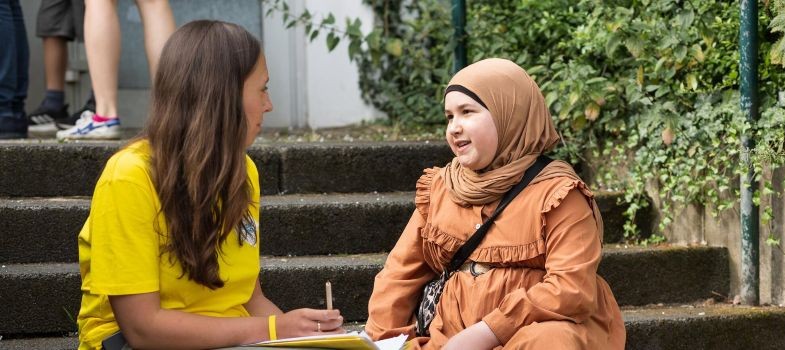
Psychosocial support can be achieved by teachers, social workers, family members and friends – including adults and children. A school football club could be an example of psychosocial support where young people can have fun together, build their self-worth, celebrate wins and build relationships within the team.
The psychosocial support framework
“PSS is a process of facilitating resilience within individuals, families and communities.”
- Not everyone who has experienced traumatic events needs specialised mental health care.
- Good quality psychosocial support can help most people to recover.
- Classrooms which are healing spaces can provide this effectively.
- A lot of what you will already be doing is trauma informed.
 Task 7: Intervention pyramid
1. Look at the intervention pyramid diagram below.
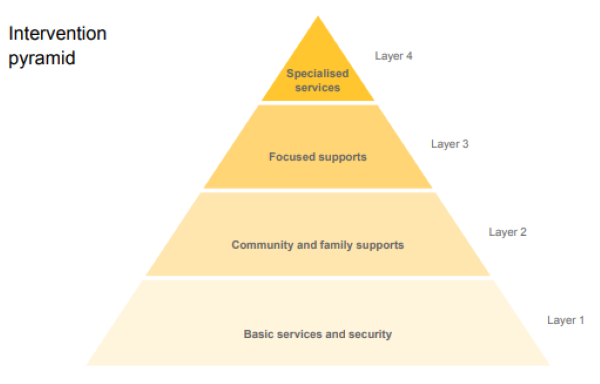
2. Using the drop-down menus below, try to match the suggested strategies with the correct layer of support on the intervention pyramid.
Comment
The Psychosocial Intervention Pyramid can help educators to see the value in everyday activities to help resettle refugee students. For example, a group activity which allows for relationship building, a school that is safe and nurturing, a teacher who takes the time to build a relationship with a new student. Most students only need these simple things in order to heal along with time to feel stable in their new setting.
Examples of psychosocial support in school
Click on each of the tiles below to learn how former trainees on the Healing Classroom programme have implemented psychosocial support in their schools.
“PSS aims to help individuals recover after a crisis has disrupted their lives and to enhance their ability to return to normality after experiencing adverse events.”
The Social GRACES Framework