
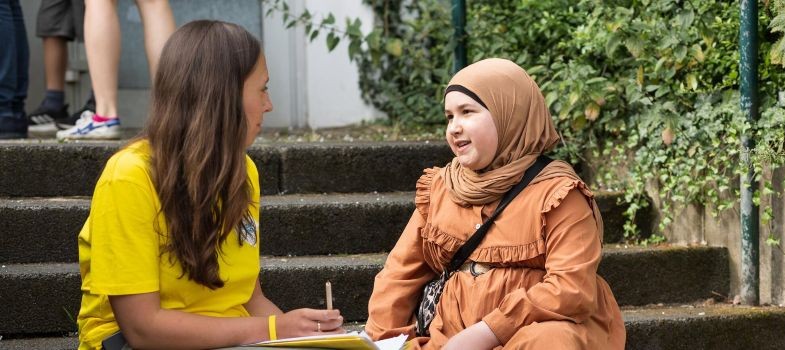
Preparing a Safe Place to Land
Why do students need a safe place to land? Click on each number to learn more.
| Brains that are stuck in survival mode (constantly monitoring threats) cannot focus and learn. |
| Students who feel safe, welcome and understand what’s expected of them can finally begin to settle and start to learn. |
| School needs to be safe spaces where there are no sudden surprises and everyday follows a clear routine. |
 Task 9: Put yourself in their shoes
JJ Bola helped you to explore some of the challenges that newcomer refugees may face in their communities and wider society.
As a teacher, you may already be aware of the specific challenges refugee students may face in school, especially if they are new to the language and if they have experienced gaps in their education or negative experiences of schooling in the past.
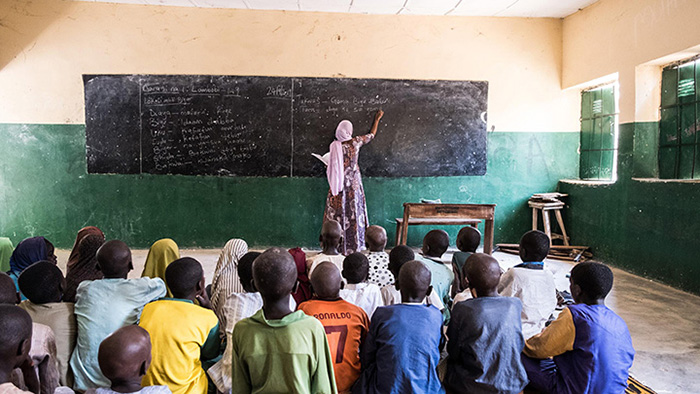
- Imagine you are a child who has had to flee the UK because a sudden war has broken out. Your family are one of the lucky few to be chosen for resettlement through the UNHCR and you find yourself entering this classroom on your first day of school. Imagine you don’t speak the language, and you have never visited this country before.
- List five things that the school, staff and pupils could do to Prepare a Safe Place to Land for you and your family. For example, offering a translator when meeting with you and your parents.
Comment
Now that you have taken the time to consider what it might be like to be a refugee student in a new country, a new school with a new language and culture, take a moment to reflect on the support your school already provides.
Refugees are often seen as numbers rather than individuals and can often feel like they have no control over their lives or futures. Rebuilding feelings of self-worth and control over their daily lives and choices is vital. Most importantly they need to be welcomed calmly into their new community.
You will now review some tried-and-tested strategies to help prepare a safe place to land in your school.
Poem – Refugee by JJ Bola