
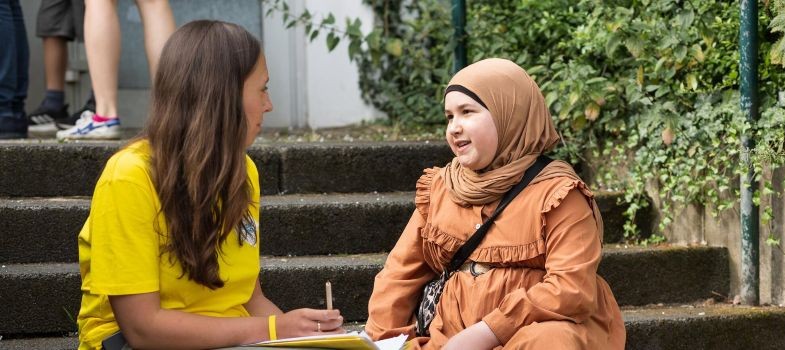
Building a unified class
Step 1: In pairs, children draw around each other’s hand. Then, they decorate the hand with drawings and words to show who they are.
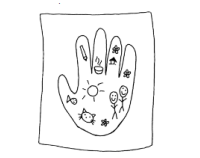
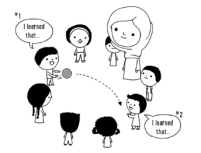
Step 2: Children can present their hands in pairs, thinking about what they share and what they have learnt from each other.
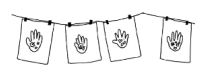
Step 3: Create a washing line display or wall display and use this as a conversation starter about differences, similarities and shared experiences in a circle.
An easy place to start is to ask – what is similar about all the hands? For example, they have fingers, they are similar shapes. Students may focus on how many students talk about foods people enjoy or the ways in which they have fun.
Then move on to differences: make a list on the board or a big piece of paper as you do this to help guide a final discussion.
| What do you notice about the hands? |
| What is most interesting to you? |
| Why do you think we drew hands instead of faces or eyes? |
| What can we achieve with our hands? For example, applauding, high fiving, building things, holding hands, dancing, helping someone. |
Use everything you have discussed and the hands themselves to make a beautiful display in your classroom and take a moment to reflect on the new things you have learnt about your students.
 Task 14: Case study – Amara from Addis Ababa, Ethiopia
Now you have had time to familiarise yourself with the strategies, take a moment to read through the following case study and choose three strategies that you believe would be most appropriate to support this specific student.
Complete the table below justifying each strategy you chose and how it could help that specific individual.
Amara from Addis Ababa, Ethiopia
Age: _________________ (Choose an age group that you work with)
Amara arrived in your school recently after a harrowing journey from Ethiopia with her father.
Her family came on a boat from Libya to Italy to arrive in Europe and it took five tries before they safely got to Italy with four of the boats sinking. Her mother was kidnapped in Libya, and she hasn’t heard from her for two years.
Amara has just recently been accepted as a refugee in the UK and despite everything that the family is going through, she is determined to do well at school.
You notice however, that she is struggling to make friends and, in many ways, behaves like an adult rather than a child.
How can you help Amara to become a part of your school community?
| Chosen technique | How I would use it | How it could help |
Comment
Amara would benefit most from techniques that facilitate relationship building.
Her school should seek to better understand the family's situation and any roles she is taking on in the household in the absence of one of her parents.
Extra-curricular activities and group work could help immerse her in her new community and make her feel a part of the school while helping her to get to know her peers in the classroom and across different year groups.
The International Rescue Committee provides a wide range of assistance for refugees and vulnerable Ethiopian communities as the country faces escalating conflict, climate change and desert locusts. Various conflicts across the country are disrupting lives and preventing humanitarian organizations from delivering crucial aid. Ethiopia is heading toward its sixth consecutive failed rainy season, which would prolong a drought already affecting 24 million people. Find out more about IRC's work in Ethiopia [Tip: hold Ctrl and click a link to open it in a new tab. (Hide tip)] .
As you explored in Unit 2, a person’s identity including their culture and religious beliefs influences how they move through the world, how they experience trauma and how they may find routes to heal.
Next, you will review two complementary theories – cultural competence and cultural humility.
Recommended strategies for building a community for learning