1 An overview of local government in Scotland
I mean ask yourself now, do you know how much your council spends? Do you know all the activity it covers? Do you know what relationships it has with external organisations? Do you know what the political complexion is? Would you know how to operate between officers and councillors?
Did I know the answer to those? When I went into the council I had some assumptions – big fat assumptions – which probably turned out to be largely inaccurate. Getting that understanding is very important.
If you're thinking about standing as a councillor, you should make yourself as aware as you possibly can of the wider role and what you’re going to have to actually do when you get appointed.
Scotland’s 32 councils were created by the Local Government etc. (Scotland) Act 1994. The 32 councils are ‘unitary’ local authorities, which cover all areas of local government responsibility and replaced the previous regional and district councils in 1996. As such, each council has a wide range of responsibilities, including providing education services, supporting economic development, maintaining roads and much more.
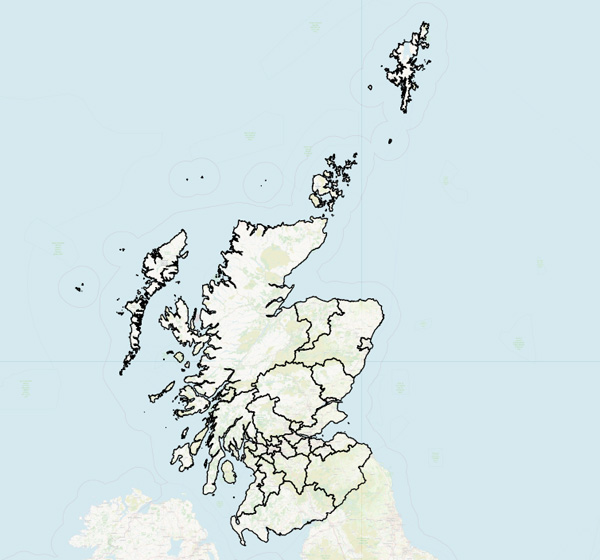
While Scottish councils carry out mostly similar functions and services to one another, there are vital differences that bring about different challenges:
- Councils in Scotland range in geographical size from 23 square miles (Dundee City Council, n.d.) to 10,226 square miles (The Highland Council, 2026).
- Populations for which councils are responsible range from 22,000 (Orkney Islands Council) to 650,000 (Glasgow City Council) (National Records of Scotland, 2025).
- Unsurprisingly, given the vast differences in the geographical size and populations, councils can have vastly different budgets, ranging from around £120 million (Orkney Islands Council) to £2.2 billion (Glasgow City Council) (Scottish Government, 2025).
- On average, a council in Scotland has 38 councillors. The councils for Clackmannanshire, East Renfrewshire and Midlothian have the fewest (18); Glasgow City Council has the most (85).
Wards
Councils are divided into wards for electoral purposes. Each ward is designed for electoral parity, with legislation requiring wards to have ‘as nearly as may be’ the same number of electors per councillor (Local Government Boundary Commission for Scotland, 2014).
In mainland councils each ward will elect three or four councillors. Councils with Island communities – Argyll and Bute Council, Comhairle nan Eilean Siar, North Ayrshire Council, Orkney Islands Council, Shetland Islands Council, and The Highland Council – can have wards with between one and five councillors. While most candidates live in the ward in which they are standing for election, this is not a requirement.
While councillors have a responsibility to ensure the interests of their ward are fed into the policy and decision-making processes of the council, they are expected to take decisions in the best interests of the whole council area. If elected, this is a tension that you will need to balance: on occasion you may view a decision as being right for the council as a whole but not in the best interests of your ward.
Introduction