
3.2 Long-term trends
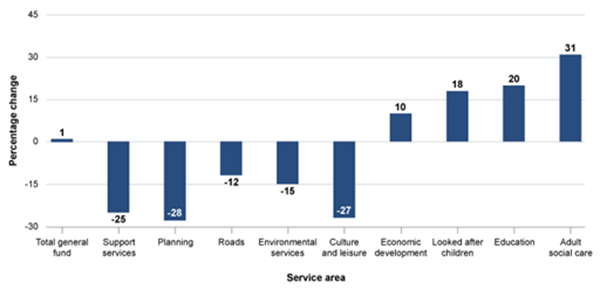
Data from the Local Government Benchmarking Framework (LGBF) [Tip: hold Ctrl and click a link to open it in a new tab. (Hide tip)] (Improvement Service, n.d.) shows long-term trends that demonstrate a significant shift in the way councils have spent their budgets since 2010/11:
- adult social care: up 31%
- education: up 20%
- economic development: up 10%
- culture and leisure: cut 27%
- planning: cut 28%
- support services: cut 25%.
These trends point to a prioritisation of statutory services like education and social care, while discretionary services such as culture and leisure have faced deep cuts (LGBF, n.d.). This highlights the challenges facing councillors when it comes to setting a balanced budget. The need to prioritise the budget for the two biggest areas of council spending (education and social care) will have a major impact on funding for services that communities also rely on, and which can often be more visible (e.g. roads, parks or leisure spaces).
The Accounts Commission highlighted the budget pressures that councils are facing despite increased funding, with a revenue budget gap of around 3.4% of total revenue budgets in 2025–26 (Audit Scotland, 2025). This pressure is mostly due to:
- inflation and rising energy costs
- annual pay settlements and higher employer National Insurance contributions
- growing demand for social care and education.
With councils forecasting further gaps in years to come, their ongoing financial health will be challenging. Without significant fiscal reform or new revenue sources, councils will remain under pressure to make difficult trade-offs between statutory obligations and discretionary services.
3.1 Sources of funding