
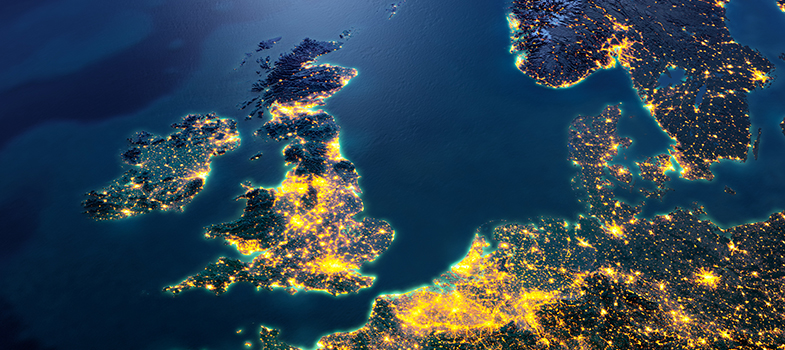
The UK Government and Parliament
Westminster
Let’s start with two of the most famous buildings and addresses in the UK, if not the world.

Although there’s a close relationship between what happens in both places, they have different roles and responsibilities: one is where the head of the UK Government lives and works – the authority that is accountable to the UK Parliament, runs public departments and agencies, and proposes new laws, policies and taxes; the other is where the UK Parliament meets – the body that we elect people to, and which debates the issues of the day.
This relationship (albeit with different roles and responsibilities) is replicated in the other governments and parliaments of the UK.
Parliaments and governments
We have designed the following card-sorting activity to help you understand how parliaments and governments are formed and what they do. Let’s find out the differences between parliaments and governments. For this, you have to drag each card and drop it to the correct category.
The UK is a parliamentary democracy. Because a monarch is head of state, it is a constitutional monarchy.
The Westminster Parliament is made up of the House of Commons and the House of Lords (and the monarch). Parliament’s role is to:
- represent the people of the UK
- check and challenge the work and spending of the UK Government
- make and change laws
- debate current issues
- set taxes.
The House of Commons
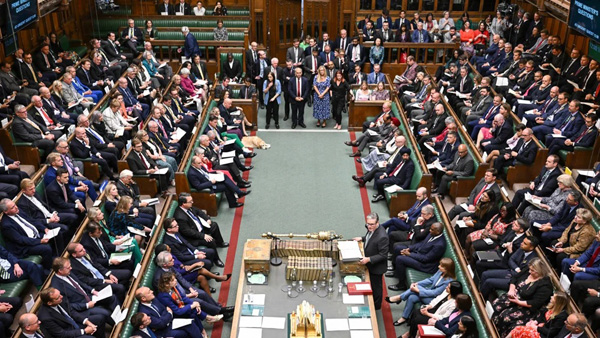
The House of Commons is the democratically elected house. It has 650 members (MPs) who are elected by the public. The most recent general election to elect members was in July 2024.
The House of Lords
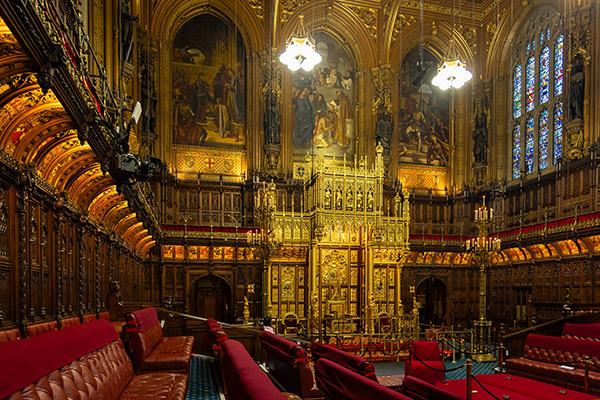
The House of Lords is the non-democratically elected house where members are appointed by the monarch on the advice of the Prime Minister. Members of the House of Lords are sometimes referred to as peers. The 800 members often have active careers in business, culture, science, sports, academia, law, education and health. Most members are appointed for life.
The state opening of Parliament
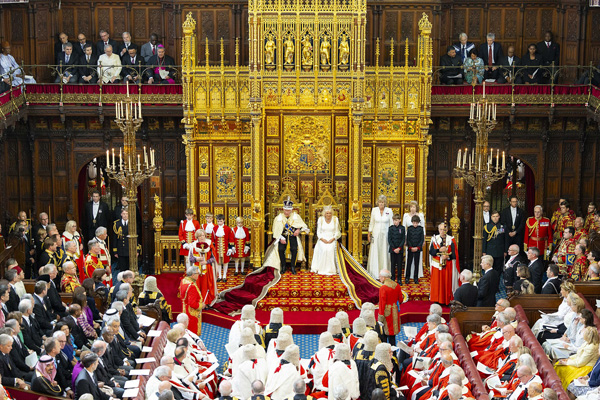
The UK Government is made up of MPs and peers (in the House of Lords) who command the confidence of the House of Commons. They are accountable to Parliament, run public departments and propose new laws to Parliament.
The UK Government is led by the Prime Minister and includes a Cabinet made up of Secretaries of State who lead individual departments such as the Treasury, Work & Pensions and the Foreign Office. Government departments are staffed by civil servants.
So we now have a sense that a government and a parliament are different bodies: a government is responsible for running public services and departments, and proposes new laws, policies and taxes; a parliament is made up of members elected by the people, holds government to account, debates the issues of the day and votes to approve laws, policies and taxes.
On some policy issues the UK Government and Parliament continues to be the authority for all parts of the UK (England, Scotland, Wales and Northern Ireland).
For many policy issues, the devolved governments and parliaments in Scotland, Wales and Northern Ireland are responsible for making and changing laws, setting some taxation, and debating issues for their nations. Therefore, on those issues, the UK Government and Parliament are only directly responsible for England.
Points to ponder