Unit 5: Creative Ageing - Opportunities and Outlook
| Site: | OpenLearn Create |
| Course: | Learning Languages with Senior Learners 1_2024 |
| Book: | Unit 5: Creative Ageing - Opportunities and Outlook |
| Printed by: | Guest user |
| Date: | Tuesday, 6 October 2026, 10:14 AM |
Description
Table of contents
- 1. Introduction
- 2. Inter-generational Language Learning
- 3. Using Role Play for In-the-moment Experiences
- 4. The Power of Music in Language Learning Sessions
- 5. Non-verbal Communication for Engaging Seniors in Learning
- 6. The Five Pillars of Healthy Ageing
- 7. Bilingualism and Dementia in Social Care
- 8. Visual Arts and Creative Language Learning
- 9. Attending the Online Tutorial
- 10. Application and Reflection
- 11. Community Links
- 12. Further Engagement
- 13. References
- 14. Acknowledgements
Introduction to Unit 5
In this unit you will engage with creative ways to continue learning with senior learners. You will be introduced to cross-generational work, role-play, music, non-verbal communication and other innovative ideas. Specifically, you will learn about:
- language learning in inter-generational settings- role-play as an example of in-the-moment work
- the power of music for language learning sessions
- non-verbal communication for learning with seniors
- language and cultural diversity for creative ageing
2.0 Inter-generational Language Learning
This first activity focuses on inter-generational language learning.
Step A
To start with, watch a video featuring an interview with the primary teacher Francesca Boyle from St Winning’s Primary in North Ayrshire. (If you would like to watch this video with closed captions, please switch these on in the YouTube player by selecting this icon  ) She speaks about the work she has been doing with her pupils that led to her winning the Scottish Education Award in 2017 in the ‘Making Languages Come Alive’ category. With this prize Francesca and her pupils were awarded for their innovative collaboration with Lingo Flamingo.
Please note: Francesca mentions 1+2 in the interview. 1+2 is the name of the language policy introduced by the Scottish Government in 2012.
When watching the video, take notes in your learning diary specifically on what the children taught the care home residents and the strategies they used when teaching their session.
How does Francesca describe the impact of the inter-generational session on the care home residents?
Then compare your notes with our model answer.
Step B
Are there any ideas or strategies presented in the video which you might want to try out in a language learning session?
How could you extend this way of intergenerational language learning to include storytelling elements? Either develop a concrete idea for a short teaching sequence or mention some more general thoughts on storytelling in care work sessions.
3.0 Using Role Play for In-the-moment Experiences
In the previous activity, you saw that language learning can be used to overcome some age boundaries. In this activity, you will consider how language learning can also be used to reinvent yourself, to ‘shed your ego’.
Step A
Do you like role-plays? Have you tried playing in an online role-playing game such as Dungeons and Dragons? Watch this video, "Dungeons and Dragons explained", which tells you about the game and how you play it. (If you would like to watch this video with closed captions, please switch these on in the YouTube player by selecting this icon  )
)
What do you consider are the advantages of role-playing activities in learning situations? What advantages are there for using this in learning with senior learners in a care setting? Think also back to “in-the-moment-experiences” you encountered in Unit 4. Take notes in your personal learning diary and then compare these with our model answer.
Step B
Now watch the video Italian Passport, in which Rosi Mele, Lingo Flamingo Development Manager, speaks with Eleanor Chapman and Florence Oulds to find out how they used a Dungeons-and-Dragons-style role-play with Eleanor’s Lingo Flamingo learner group. This video has three parts:
- Italian Passport Part 2. In the second part of the video, Eleanor and Florence explain and show the resources she used with her learner group: (
- Italian Passport Part 3. In the third part of the video, they discuss the impact of the role-play on the learners and consider how best to prepare learners for a role-play.
- Watch the three parts of the video and make notes on
- how she explained the game to her learners,
- what effect playing this role-play game had on the learners.
Consider how you could use a Dungeons-and-Dragons-style role-play game with your learner/s. Develop a concrete idea for a short teaching sequence and bring it along to the next online tutorial.
4.0 The Power of Music in Language Learning
You have already heard that music is a powerful ‘tool’ when working with senior learners and people with dementia. There are many instances when this fact has even made it into the news. In this activity you will work your way through four steps that introduce you to ways in which music can be used when working with people with degenerative brain diseases. Throughout this activity, make notes in your learning diary about aspects you are taking away to apply in your own care setting.
Step A
1. Read this inspiring article about Teddy Mac, the Songaminute man and watch Teddy in action with his son in the video "Quando Quando Qando | The Songaminute Man | Carpool Karaoke". (If you would like to watch this video with closed captions, please switch these on in the YouTube player by selecting this icon  )
)
2. Now find out why music is such an effective means to engage people with Dementia in this article by Catherine Loveday: 'Why singing may help people with dementia', from the University of Westminster in The Conversation.
What do you think is the central message about the power of music in this article?
Compare your notes with our model answer.
Step B
In the UK, there are a number of initiatives that focus on using music to support people with dementia. We have selected two examples for you, which you might feel inspired by. Follow the links to the initiatives below and take some notes on activities you come across there which you might want to replicate in your own setting.
The Memory Spinners group at Scottish Opera and specifically the section on spinning songs, an inter-generational project
Community Champion Sabrina Findlay and her music therapy for people with Dementia: Pride of Reading: Vocal coach helps improve lives of dementia sufferers and mental health patients
Step C
And finally, think again about using music in your own care setting and how you can link music and languages to provide engaging communal learning experiences.
1. First of all, read some important advice on music and dementia by Dementia.uk and take a note in your learning diary of at least three central pieces of advice you are going to apply when using music in your care settings.
2. Now think about linking music with language learning. The Fluent in 3 Months website provides excellent advice on how to use music effectively in language learning in their article ‘Learning Language through Music’. Again, take notes of key points in your learning diary.
3. Finally, think about your own setting, for example the famous songs in the language you are learning with your senior learners or melodies from the culture you are teaching. Then plan how you could incorporate this in a language learning activity. Then compare your idea with ours in the model answer.
5.0 Non-verbal Communication for Engaging Seniors in Learning
In Unit 4 you looked at what language is and how people use it to communicate. But communication is not just about words. In fact, many researchers agree that most of our communication is non-verbal: "How much of our communication is non-verbal?"
Many people living with dementia struggle with words. They may find it difficult to understand words or to remember the word they would like to use in a particular situation. In this activity you will consider what happens if that barrier is removed and think about how you could use non-verbal communication to engage and learn with senior learners.
In this activity you will learn about the ‘adaptive interaction’ concept developed by Dr Maggie Ellis who is a Fellow in Dementia Care at the University of St Andrews. Maggie Ellis and colleagues developed this method of using non-verbal communication as an alternative way for facilitating connection with people with advanced dementia.
Step A
Listen to three audio excerpts in which Maggie speaks about how she came to work with people with dementia, how she developed a research programme Computer Interactive Reminiscence and Conversation Aid (CIRCA) and what the results of this project were. Finally, she speaks about her second project Living in the Moment and its results.
Listen to the three audio excerpts and note down the main findings from her research.
Audio 1: Background to Maggie Ellis’s research
Audio 2: CIRCA project and its results
Audio 3: Living in the moment project and its results
Compare your answers with our model answer.
Step B
In this second step, think about how you could use non-verbal communication with your learner/s in the language learning setting. Develop a concrete idea for a short teaching sequence inspired by Maggie Ellis’ work and also relating to what you have learned about body language and non-verbal communication in Unit 2. Bring this along to the Unit 5 online tutorial.
6.0 The Five Pillars of Healthy Ageing
When you read the topic of this Unit, you might have wondered what creative ageing might look like.
Step A
What do you think is the secret to ageing well? Note down first ideas in your personal learning diary.
Step B
Dr Jitka Vseteckova, a Senior Lecturer in Health and Social Care at the Open University, established that while some of our ageing process is linked to genetic predispositions, the majority of it is connected to lifestyle decisions that are made throughout our lives. She has identified five areas to concentrate on in ageing well and labelled these the five pillars of ageing well: nutrition, hydration, physical, social and cognitive stimulation. You can read key findings and watch videos related to her research: "Five pillars of ageing well".
Watch the video on the role of cognitive stimulation in healthy ageing and note down 3 key findings in your personal learning diary. Compare your notes to our model answer.
In her lectures, Jitka recommends learning a language as one way of helping our brain to keep its plasticity. But learning a language is not just useful for your own health. Research suggests that bilingual and multilingual skills of care workers will become even more important for people living with dementia in the future.
7.0 Bilingualism and Dementia in Social Care
The ageing population in the UK includes a significant increase of people in their older age from Black and Asian minority ethnic (BAME) communities. These are often first-generation migrants who came to the UK between the 1950s and 70s from Commonwealth countries, and are now reaching an age where developing a neurodegenerative disease like dementia is more likely.
The All-Party Parliamentary Group on Dementia’s report Dementia does not discriminate points out that, in comparison to the whole UK population, there is a significantly higher proportion of members of BAME communities expected to develop dementia over the next 30 years. According to this report, this is because high blood pressure, diabetes, stroke and heart disease, which are risk factors for dementia, are more common in these communities. But are care workers and care homes ready for this change in their resident population?
1. Read the article ‘Bilingualism and dementia: How some people lose their second language and rediscover their first’ in The Conversation. When reading takes some notes of information you can find in the article on the following aspects:
- What impact does this have on the quality of their lives and their sense of identity
- What role can bilingual care workers play to support bilingual people with dementia
2. Now compare your notes with our model answer.
8.0 Visual Arts and Creative Language Learning
Creativity and engaging with visual arts can offer people with dementia the possibility of
- enjoying themselves
- increasing their sense of self-worth
- enabling them to communicate and express themselves beyond words
- stimulating their brains and senses
In this activity we want to introduce you to an example of a creative way of using visual arts for teaching languages in a mini lesson in Spanish about Surrealism, in this case the Spanish painter Joan Miro’s work. At the same time, learners can compare Miro’s work with paintings from their own cultural context. Here learners can engage in a multitude of ways:
- learn and speak single words as well as entire sentences
- learn about culture
- discuss paintings
- compare views and ideas
Mini Lesson in Practice
This activity focuses on the practical application of the Visual Arts and Creative Pathways. It is designed to inspire and offer ideas about how to incorporate creative activities into language learning activities. It offers a practical and simple example of how to create a multisensory lesson.
Lesson Objectives
- Vocabulary: Colours and shapes + textures
- Art as a way to engage students in a creative way
- Introduction of a cultural and linguistic aspect
Mini Spanish Art Lesson Structure
The session is divided into 2 parts:
- Introduction to colours and shapes through tactile and visual cues
- Non-writing exercises based on matching
ACTIVIDAD 1: Colours
For this activity you will need:
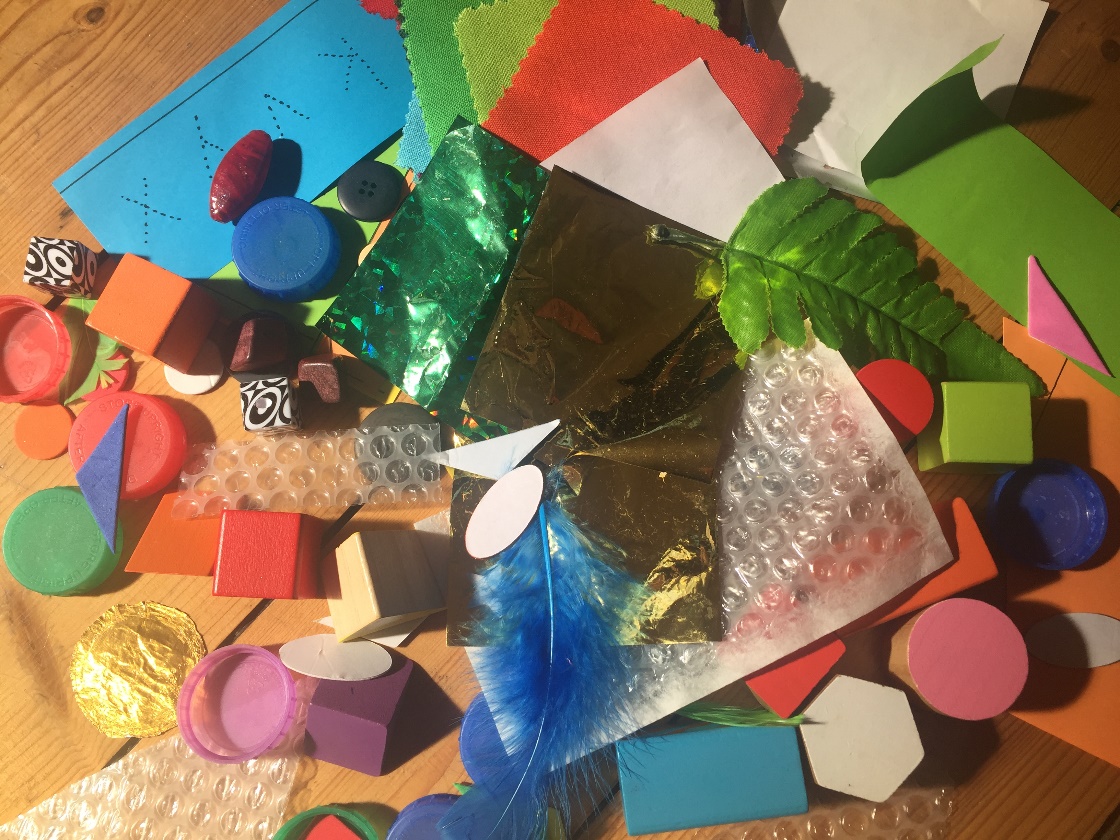
- Flashcards, coloured cardboard, activity coloured cards, and/or colour scarfs or fabrics, bean bags, soft balls, balloons or any domestic object you can bring to the class. Make sure you add a variety of textures, colours and shapes (this can be cut-out magazine paper). Make sure they are big enough, easy to handle and safe.
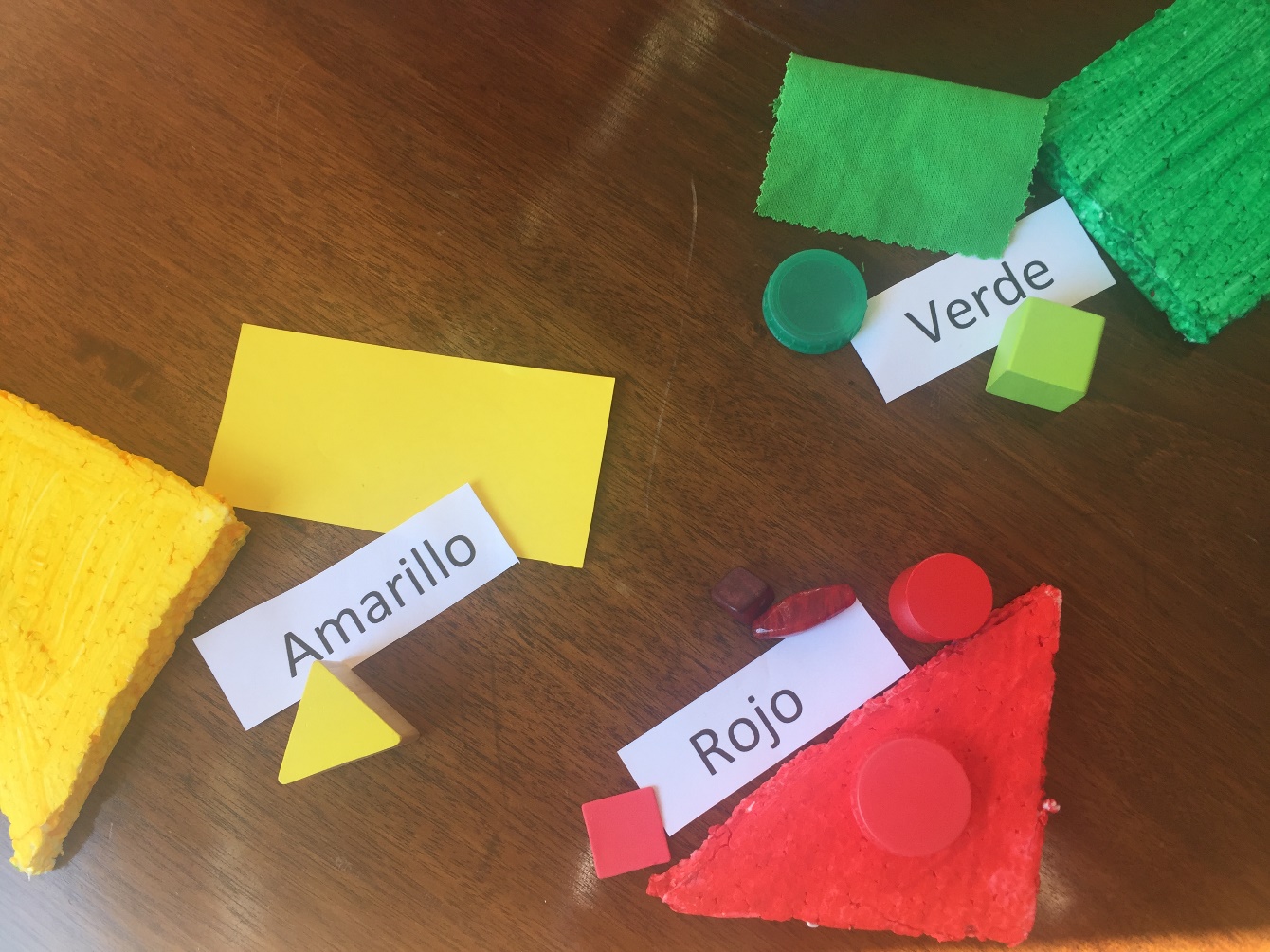
- Signage: Name of the colours written or printed in the target language in a large font and blue tag.
- Identify significant objects and their colours available in the room and make sure you add them to the lesson at the end.
Start by asking your students:
- What is your favourite colour?
- Repeat the name of the colour in the target language.
- Show the students the objects and name the colours and give it to them. Slowly progress into more complex structures:
- Esto es rojo. (This is red.)
- Este globo es rojo. (This ball is red.)
- El rojo es mi color favorito/preferido. (Red is my favourite color.)
ACTIVIDAD 2: Shapes and Colours
- Ask students to draw a shape: line, circle, triangle, square, etc. Or let them choose objects with those shapes. Repeat vocabulary and write it down on a whiteboard, if possible.
- Identify all the forms, shapes and colours available, but not more than 5. USE THE OBJECTS/PLAY WITH THE MATERIALS
- Alternatively, you can work on a more structure and contained activity that will lead you to the exploration to Joan Miró’s painting.
Example:
Print several copies of the given flashcards, divide the class into small groups, give them a couple of the matching flashcards (words and shapes). Mix them and ask students to match the shapes with the sentences. You can even start by folding the card with letters leaving only the word that defines the colour and let them identify only the colour before moving on to the next stage. OR print your own works and bring different shaped-objects to match
Exploring Joan Miró’s work
ACTIVIDAD 3: Words into Practice
Begin by asking students if they like art. You can show them a few examples and simply ask them if they like them.
Here some ideas for you:
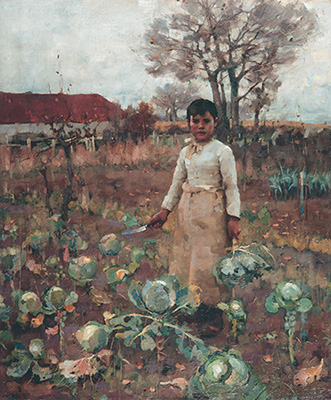
James Guthrie, A Hind’s Daughter (1883)

Sir Edwin Landseer, The Monarch of the Glen (1851)
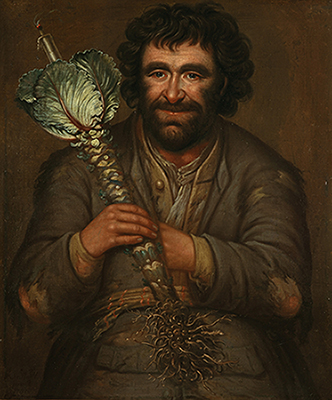
Richard Waitt, The Cromartie Fool, (1731).
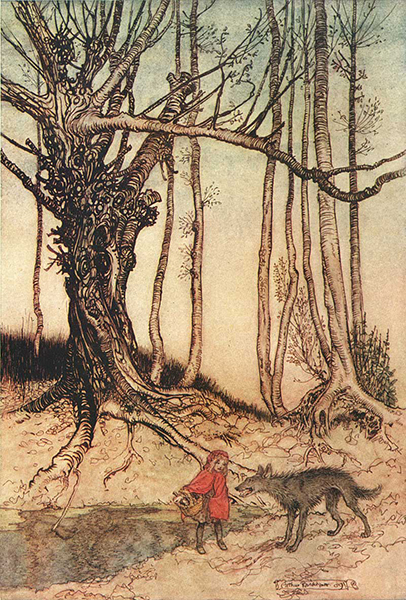
Arthur Rackham, Little Red Riding Hood (1909)
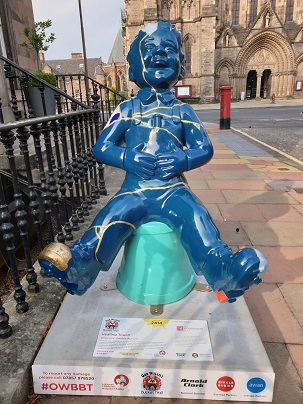
Oor Wullie
2. Introduce your learners to Joan Miró i Ferrà (April 20,1893 – December 25,1983) was a world-renowned Spanish Catalan painter, sculptor, and ceramist who was born in the sea port city of Barcelona.
3. Based on the previous activities, work on the exploration of Joan Miro’s work.
OPTION 1
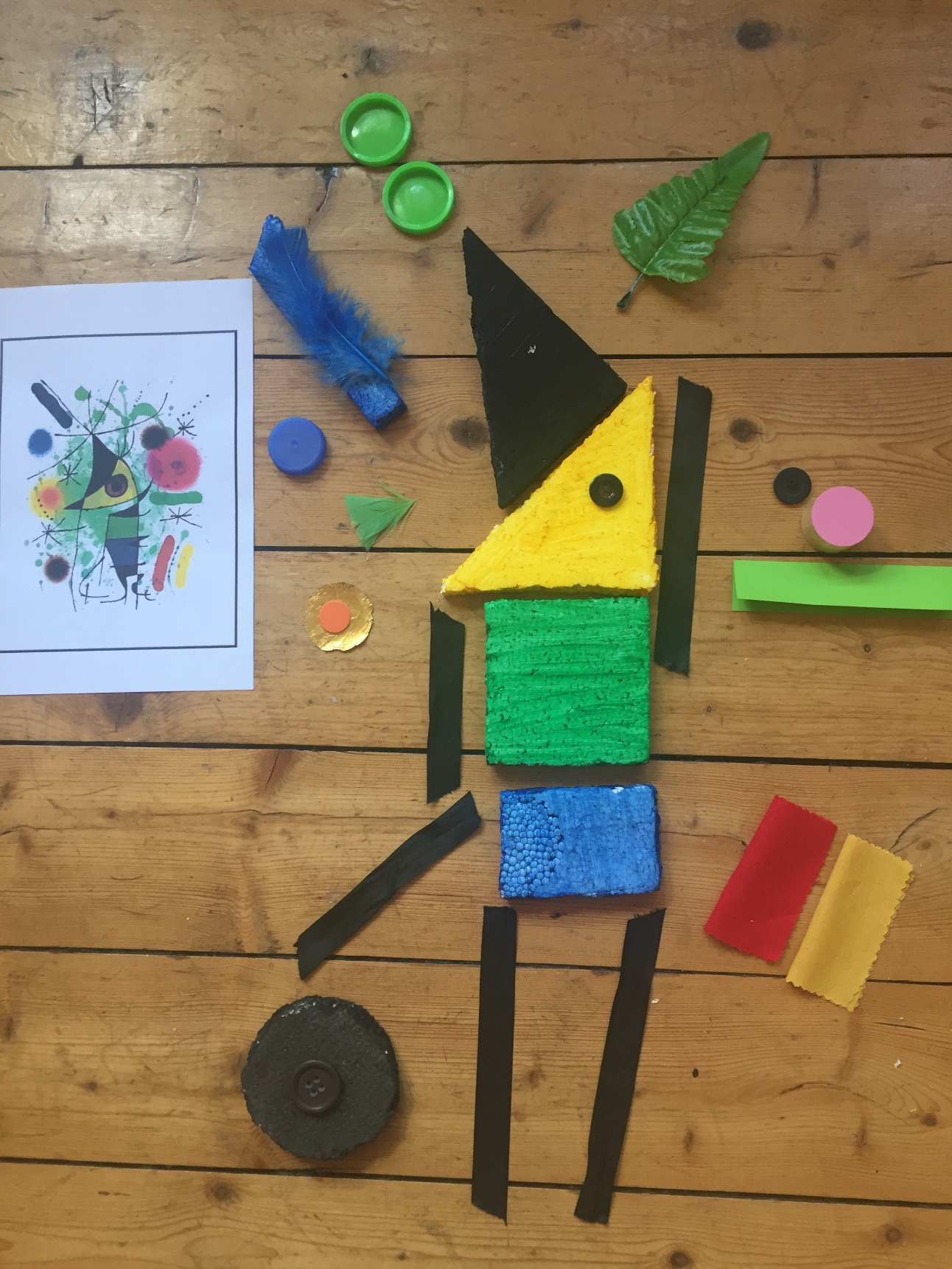
Show learners the Joan Miro’s ‘The Singing Fish’ or any available picture by Miró that you would like to explore, but make sure you have previously covered the basic vocabulary. Please do not reveal the title of the painting yet!
Ask learners to describe the painting, and if they can, name some objects/shapes and their colours in the target language, for example: Hay una línea roja. Hay una línea amarilla. Un triángulo negro… (Note: You may need to work on simpler structures)
Ask them what they think it is, or what they see. If they get a bit confused with the image/painting, reassure them that they do not have to give a right answer. Let students make sense of the picture and talk through it in English. Give them the title to offer a clue.
Work on the description and repeat vocabulary in the target language. Point to elements in the painting. Use a magnifying glass.
Then get the learners to recreate the painting with the shapes you provide in the different colours themselves. Ask them to lay a shape on the table and if they can, give the name of the shape and the colour in the target language. Ask them to recrate the painting this way as best they can. See the images below as an example.
OPTION 2
Joan Miro The Garden
You follow the same steps as in Option 1 but this time combine these shapes and colours with some other sensory materials (e.g. using scents, scented candles or essential oils).
At the start of the activity, teach students some basic words related to the garden in the target language – again you can use an image of a garden and label elements of the image in the target language.
Tell learners the title of the painting even at the start and work on the painting from that perspective, taking into account students’ needs.
You can also talk/try out briefly other surrealist techniques as, for example, explained in the article by Neil Stevenson "5 creative exercises from the Surrealists".
9.0 Attending the Online Tutorial
You are invited to attend the Unit 5 online tutorial, where you can meet your tutors and fellow students and discuss creative ways of continuing to learn a language with your senior learners.
Refer to your study planner for the date, time and access link to the Unit 5 tutorial.
This is an overview of the programme for the Unit 5 online tutorial:
- Presentation and discussion of your planned creative activities for your language learning group (Please bring along any inter-generational, role-play, music, visual art and/or non-verbal communication activities you have prepared in Unit 5 so far).
1. Take some time to familiarise yourself with the Zoom software here, in advance of your online tutorial. This link will also provide information on how to check that your computer has the minimum system requirements to run Zoom.
2. To ensure you have the best possible experience during the online tutorials, we advise you to use a headset with microphone to avoid interference and any background noise. This is the same type of headset you would use for any online conferencing; you do not have to buy an expensive headset to use Zoom.
There is no expectation that participants use the camera during the live tutorial sessions. Yet, we do welcome all who are keen to use this tool as it supports engaging and interactive tutorial experiences.
10.0 Application and Reflection
In Unit 5 you have considered creative ways to continue language learning with senior learners and considered activities that use multi-sensory approaches to language learning (cross-generational, role-play, visual art, music and/or non-verbal communication activities). For the Unit 5 application and reflection, you will plan a session for your language learner or language learning group that uses a multi-sensory approach to learning; you will try this out and reflect on its successes and challenges.
Step A
As a starting point for your application and reflection, and to provide you with some more ideas, please check the activities in Rosi’s Starter Pack for Carers. The pack contains engaging language activities and materials which you can adapt to suit your own purposes. Alternatively, feel inspired by the materials and develop your own accordingly.
Step B
To support the reflection on your practice, revisit the work you did in Unit 1, activity 6, where you developed criteria for good social care practice and considered the skills you already had at the start of the course and those you thought you needed/wanted to develop in order to enhance the quality of care in your context.
Now look back at your notes and ideas from this activity in Unit 1 and reflect on your learning journey throughout this course, specifically in the context of ‘good practice in social care’.
In your Reflective Learning Log make notes to capture:
- the skills you have developed since you started the course,
- any new/other criteria for good practice in social care you developed during your course study,
- and any skills you feel you still need to develop (further).
Incorporate insights from this reflection in your planning of the language learning activity for the Unit 5 application task.
Step C
In your own time, continue planning your chosen creative language learning activity, adding more detail where required.
To ensure that your language learning activity meets the needs of your senior learners, we suggest you use the
()
(Word document download) to help with your planning, because it helps you develop a suitable structure and pace for the activity you are planning for your care context. In the template, also incorporate important elements of your planned activity such as:
- The creative aspects and approach you will use in this activity
- The optimal learning environment for this activity
- The resources/materials you want to use for the activity
- The vocabulary items you want to use
- Any cultural information you want to convey
- What you will do and what the senior learner/s will do
- How you want to establish the success of the activity
Step D
Try out the planned activity with your learners. You might want to gather some feedback from your learners about the activity as well, which you can bring to the course and share with your fellow students.
Step E
Write a reflective post in the Forum (250 words or more) about the successes and challenges of this multi-sensory learning experience, also in view of teaching a language using a creative approach from the arts.
These questions might help you focus your reflection:
- What was the activity you had planned?
- Why had you planned this particular activity?
- Which materials and energisers did you try out? Why these?
- On reflection, how did the activity work? What went well, what did not go as planned? - What would you differently next time and why?
- What was your learner/s' feedback?
- What are the next steps for your learner/s?
- How will you provide further opportunities to practise and reinforce the new language?
To help you with your reflective account, have a look at our model answer.
Then post your reflective account together with an overview of the planned activity you produced in Step A, and where appropriate the materials you used, in the Forum.
Read and comment constructively on at least one post by a fellow student.
Step G
A)
Once you have tried out your language learning activity and shared it with your peers, it will be useful to think about what you have learned from sharing your experience and ideas with your fellow students. You might want to note down some key points in your Reflective Learning Log. Some aspects for reflection you may want to consider:
- Is there any teaching idea you want to try out in your own setting?
- What aspects of your fellow students' teaching worked well?
- Where did your peers see problem areas , and why did they think this was problematic?
- Where do the group's reflections coincide with yours, where do they not?
- Were there any posts you particularly agreed or disagreed with and why?
B)
This final step in activity 10.0 is specifically designed for you to contribute to the collaborative research project between The Open University and Lingo Flamingo.
In your Reflective Learning Log, make notes capturing your reflections during the study and application of content of this unit as well as the course overall on the following aspects, which will be particularly important for the research project:
- your own learning journey applying the skills you are learning in this course in your care context, in particular:
- your motivation and confidence as you go through the course
- whether your relationships with your learners are changing due to the language learning
- any impact this learning has on your opinion of good care practice
- any views colleagues, your learners and/or families have shared regarding the language learning activities
- your observations on you senior learner(s)’ learning journey (the individual as well as the group), particularly:
- on their motivation for participating in this learning
- the impact the learning has on their overall confidence and participation in the sessions and the learning group (if there is one)
- aspects of how they learn and engage (for example you could share some relevant incidents during the language learning sessions and other examples)
Please note: This part of the application and reflection is NOT assessed and is primarily a tool for you to feed into our research whilst encouraging you to think more closely about your own learning journey and the wider impact of the language learning activities. Your tutors will read your entry and provide some brief comments, although the main focus here are your own insights and reflections.
11. Community Links
Step A
As you will have seen throughout this course, providing quality care requires a comprehensive skills set, and yet you may, at times, be unsure of whether you are doing ‘the right thing’. Maybe the training you received was more task-focussed and covered the basics, such as manual handling and safeguarding. You may not consider yourself to be a linguist, a teacher, and maybe English is not your first language.
However confident you may be feeling in your role as a carer, we want to encourage you to link with local initiatives and develop some ideas how you can take your language teaching work beyond your own care setting to create an even bigger impact with your expertise, for example in-between learning with your senior learner/s. This will be a good way of continuing the momentum you started in doing this course. You could do the following:
-
Explore the Dementia in Scotland magazine published by Alzheimer Scotland since spring 2011.
Start by scanning the last three or four issues and take some notes in your learning diary of initiatives, people, ideas that inspire you.
-
Now watch six short videos featuring interviews - Meet the winners from Scotland’s Dementia Awards 2017. Also, have a look at the nominated initiatives for the six awards here.
Take some notes while watching the videos on the focus of the initiatives presented, how these came about and any impact these initiatives have had.
-
Finally, search for Dementia-friendly initiatives in your area (or beyond) and find out about the work they do. You can make a start by finding out what is going on in your local area through the Alzheimer Scotland website: You may also want to have a look at these initiatives:
Have you found any initiative that inspired you? Did you see any initiative you think you could link up with as a carer or care worker? Was there any initiative that you feel could benefit from a language-angle?
- If you have come across other initiatives that you feel would be suited to doing some language-and-culture-related work with you, please mention this and say what kind of work you could envisage doing together.
Step B
This is a community initiative in Glasgow run by native speakers of Spanish who have moved to Glasgow and are keen to introduce people in the city to the Spanish language as well as the cultures in Spanish-speaking countries across the world where they have come from. The activities of La Biciteca are aimed at children and families. They involve outdoor learning and incorporate storytelling, drama, puppet making and many other creative activities. The little library of children’s books in Spanish also travels around Glasgow’s primary schools and nurseries and has generated a lot of interest since it was founded in 2015.In autumn 2017, La Biciteca relaunched and the mobile library was created from some pieces of wood, a bicycle and paint.
1. Watch this video of the work La Biciteca is doing. This video shows some storytelling with puppets at a summer festival in Glasgow.
2. Take notes in your learning log of how they present Spanish language and culture in their sessions.
- Do the La Biciteca members ‘teach’ language as such?
- What tools/props do they use for their sessions?
Compare your answer to our model answer
3. As a second step, watch the video again and think about the following questions:
- Are there any ideas or strategies presented in the video which you might want to try out in a language learning session with your senior learner/s?
- How could you use this way of storytelling in your teaching?
Either develop a concrete idea for a short teaching sequence or mention some more general thoughts on storytelling in care work sessions. Then compare your answer with our model answer.
12.0 Further Engagement
Inter-generational experiences of dementia (2018) Alzheimer Scotland [Online] Available at Dementia in Scotland.
Find out more about the work of Maggie Ellis by:
Brash, Bärbel and Warnecke, Sylvia (2009), ‘Shedding the ego: Drama-based role-play and identity in distance language tuition’. Language Learning Journal, 37(1) pp. 99–109.
Sauer, A. (2014) ‘5 Reasons Why Music Boosts Brain Activity’, Alzheimers.net [Online] https://www.alzheimers.net/why-music-boosts-brain-activity-in-dementia-patients
Dementia and the policy landscape in Scotland: Publications by the Scottish Government around Dementia http://www2.gov.scot/Topics/Health/Policy/Dementia
Read up about Scotland’s National Dementia Strategy since 2010 on the Alzheimer Scotland website https://www.alzscot.org/campaigning/national_dementia_strategy
Find out more about Joan Miro the artist and his works.
Unit 5 References
Alzheimer’s Society (2017) Internet Sensation ‘Songaminute Man’releases first album for World Alzheimer’s Day [Online]. Available at https://www.alzheimers.org.uk/news/2018-05-03/internet-sensation-songaminute-man-releases-first-album-world-alzheimers-day (accessed 24/08/2025).
Alzheimer Scotland (n.d.) Magazine – Dementia in Scotland [Online]. Available at https://www.alzscot.org/about-us/dementia-in-scotland-magazine/ (accessed 24/08/2025).
AlzheimerScotland (n.d.) [Online] Available at https://www.alzscot.org/ (accessed 24/08/2025).
Alzheimer Scotland (n.d.) Dementia friendly communities [Online]. Available at https://www.alzscot.org/our-work/dementia-friendly-communities (accessed 24/08/2025).
Alzheimer Scotland (n.d.) Dementia Friends Scotland [Online]. Available at https://www.alzscot.org/our-work/dementia-friendly-communities/dementia-friends-scotland (accessed 24/08/2025).
Bilingualism and dementia: how some patients lose their second language and rediscover their first (2019) The Conversation, 11 November [Online]. Available at https://theconversation.com/bilingualism-and-dementia-how-some-patients-lose-their-second-language-and-rediscover-their-first-126631 (accessed 24/08/2025).
Dementia UK (2017) Music therapy [Online]. Available at https://www.dementiauk.org/music-therapy/ (accessed 24/08/2025).
Emma (2020) The Most Famous Italian Hits. Superprof blog [Online]. Available at https://www.superprof.co.uk/blog/famous-italian-songs/#Chapter_intermission-how-to-memorise-italian-songs (accessed 24/08/2025).
Furmage, G., Crae, R. (2017) VIDEO: Meet the winners from Scotland’s Dementia Awards 2017, The Sunday Post, 22 September [Online]. Available at https://www.sundaypost.com/fp/1video-meet-winners-scotlands-dementia-awards-2017/ (accessed 24/08/2025).
House of Commons (2013) Dementia does not discriminate. All-Party Parliamentary Group on Dementia [Online]. Available at https://www.alzheimers.org.uk/sites/default/files/migrate/downloads/appg_2013_bame_report.pdf (accessed 24/08/2025).
Jordan, K. (2017) Pride of Reading: Vocal coach helps improve lives ofdementia sufferers and mental health patients, Berkshire Live, 14 October [Online]. Available at https://www.getreading.co.uk/news/reading-berkshire-news/pride-reading-vocal-coach-helps-13757620 (accessed 24/08/2025).
Lewis, B. (n.d.) Learning a Language Through Music:Here’s How It’s Done, Fluent in 3 months[Online]. Available at https://www.fluentin3months.com/learning-a-language-through-music/ (accessed 24/08/2025).
Loveday, C. (2016) Why singing may help people with dementia, The Conversation, 31 August [Online]. Available at https://theconversation.com/why-singing-may-help-people-with-dementia-64383 (accessed 24/08/2025).
The Open University (2020) Italian Passport, Parts 1, 2 and 3. Language Learning with Senior Learners [Online]. Available at https://www.open.edu/openlearncreate/mod/resource/view.php?id=236036 (accessed 24/08/2025).
The Open University (2020) Maggie Ellis, Parts 1, 2 and 3. Language Learning with Senior Learners [Online]. Available at https://www.open.edu/openlearncreate/mod/resource/view.php?id=236030 (accessed 24/08/2025).
Scotland’s National Centre for Languages SCILT (2017) OU Course Unit 1. Interview with Francesca Boyle, YouTube, 15 September [Online]. Available at https://www.youtube.com/watch?v=HollXYdKB1U (accessed 24/08/2025).
Scotland’s National Centre for Languages SCILT (n.d.) A 1+2 Approach [Online]. Available at https://scilt.org.uk/A12ApproachtoLanguageLearning/tabid/1715/Default.aspx (accessed 24/08/2025).
Scottish Opera (n.d.) Memory Spinners. For people living with dementia [Online]. Available at https://www.scottishopera.org.uk/join-in/memory-spinners/ (accessed 24/08/2025).
The SongaminuteMan (2016) Quando QuandoQuando | TheSongaminute Man |Carpool Karaoke, YouTube, 4 August [Online]. Available at https://www.youtube.com/watch?v=9UQ5mjFzHTA (accessed 24/08/2025).
The Wee Spanish Mobile Library (n.d.) La Biciteca. Familias en Glasgow [Online] Available at https://www.youtube.com/watch?v=PH6wEbDQgr0 (accessed 24/08/2025).
Stevenson, N. (2016) ‘5 creative exercises from the surrealists’, Ideo, 6 December [Online] Available at https://www.ideo.com/blog/5-creative-exercises-from-the-surrealists (accessed 24/08/2025).
University of Texas (n.d) How much of communication is nonverbal? [online] Available at https://online.utpb.edu/about-us/articles/communication/how-much-of-communication-is-nonverbal/ (accessed 24/08/2025).
Vox (2018) Dungeons and Dragons, explained, YouTube, 14 June [Online]. Available at https://www.youtube.com/watch?v=2PEt5RdNHNw, (accessed 24/08/2025).
Vseteckova, J. (2019) Five Pillars of Ageing Well, OpenLearn, 2 April [Online]. Available at https://www.open.edu/openlearn/health-sports-psychology/mental-health/five-pillars-ageing-well. (accessed 24/08/2025).
Acknowledgements
Every effort has been made to contact copyright holders. If any have been inadvertently overlooked the publishers will be pleased to make the necessary arrangements at the first opportunity.
Grateful acknowledgement is made to the following sources:
Unit 5 image: Supplied by Rosi Mele, Lingo Flamingo
Unit 5, Activity 3, step b: video recordings Italian Passport 1, 2 and 3: Supplied by Rosi Mele, Lingo Flamingo
Unit 5, Activity 5, step a: audio recordings 1, 2 and 3: Supplied by Dr Maggie Ellis, University of St Andrews
Unit 5, Activity 8, ACTIVIDAD 3: Words into Practice: Images in Option 1: Supplied by Dr Soledad Montanez, The University of Glasgow
Unit 5, Activity 10, step a: Rosi's Starter Pack for Carers: Supplied by Rosi Mele, Lingo Flamingo
Unit 5, Activity 11, step b: Video "La Biciteca Maryhill Park": Supplied by Dr Soledad Montanez, The University of Glasgow