

5.6 Mapping who has power and influence
Transcript
Now that we’ve thought more about what influencing is, let’s look at who are the key stakeholders and audiences we want to influence.
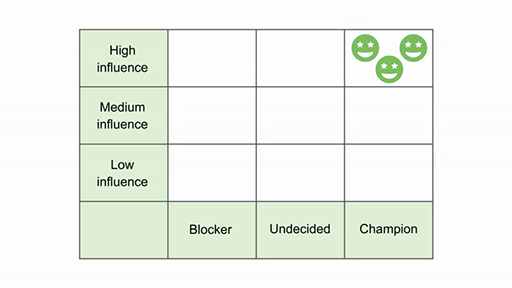
Power mapping is a tool which can help to identify who to influence, who you could reach out to for support, and who you could work with and alongside. These will be individuals or organisations who have an interest or concern about the problem or issue you are campaigning on. They may have decision-making power on the issue or be influential people, organisations or groups. You should also include the people who will ultimately benefit from the change you want to achieve.
Watch the video above to see how a simple power map matrix can help you analyse all the relevant stakeholders in relation to your change goal and objectives.
 Activity 5.3: Power mapping
Use the power mapping tool below to help you think more critically about, and prioritise, who you need to engage to achieve your change objectives. It will help you identify who are your supporters, or champions, who are the blockers and who is still undecided on your issue, and how influential they are.
Remember to consider those people or stakeholders who may potentially be negatively affected by the change as well as people who may be in overlooked or marginalised groups in society, in this particular context, or on this issue. This is a time to ensure that you have considered everyone. And it is also a chance to consider the ‘unusual suspects’, i.e. those people or groups who might not naturally be on your radar but who would have an interest in the change issue.
The more specific you can be the better. So, for example, don’t just include ‘media’ but specify whether you are referring to the press, TV, radio or other media, perhaps even specific media outlets, newspapers, even named journalists if certain individuals are particularly relevant to the issue you are working on.

| Blocker | Undecided | Champion | |
|---|---|---|---|
| High influence | |||
| Medium influence | |||
| Low influence |
5.5 Illustration of spheres of influence

