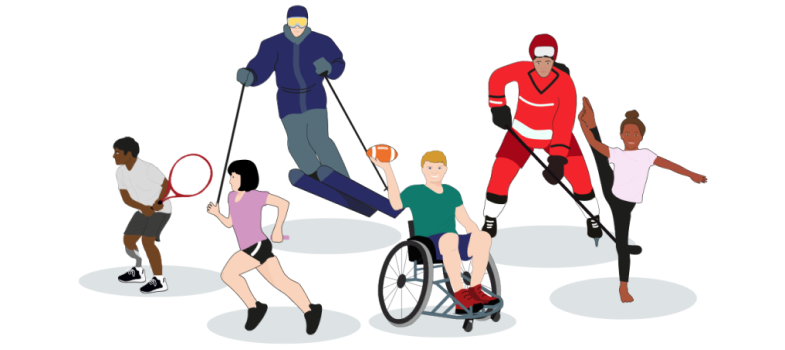
Agreeing behaviours for everyone in your sport

Because peoples’ beliefs and values are different, a framework describing agreed standards of acceptable behaviour is needed.
Creating codes of conduct can achieve this and help your organisation to develop a good safeguarding culture, but what should these codes of conduct include?
 What should be included in a code of conduct?
a.
Never engage in bullying behaviour. Challenge any form of bullying behaviour among children or adults.
b.
Communicate in a positive way with children that is right for their age.
c.
Do not use personal social media accounts to communicate with children or make comments about a child.
d.
Never humiliate children or adults.
e.
Never hurt, or threaten to hurt, an athlete or player physically, sexually or emotionally.
f.
Never exploit an athlete or player for personal or financial gain.
g.
Provide opportunities for all athletes or players, including children, to share in decisions which affect them.
The correct answers are a, b, c, d, e, f and g.
Answer
All the statements above are typical of those that should be included in a code of conduct.
Creating codes of conduct for your organisation will make sure that risks can be better identified. For example, when you see behaviour that your code of conduct identifies as unacceptable, then action can be taken to stop this behaviour and hold people accountable.
 |
| Who do codes of conduct apply to? |
Everybody in your organisation should know, understand and sign-up to your code of conduct. Nobody, for any reason, is an exception. |
In the next section, we discover how a code of conduct could have helped prevent the members of a Women’s Under-20 (U20s) Netball team being harmed by different forms of abuse.
How do beliefs and values influence your approach to safeguarding?