

1.6 People as activists: making change happen
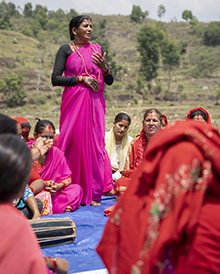
When we talk about change in this course, we are talking about people acting to make a positive difference in their communities, their organisations or in wider society.
Such activism is any action with social consequences. You may well have already taken part in actions like these in your community. It often involves coming together with others who have similar values and ideas in social movements, faith groups, women’s groups, youth groups, queer groups, neighbourhood associations, trade unions, or village savings and loan groups. We call this collective action.
Acting collectively
Activists come together to resist repression and attacks on human rights. They can provide vital feedback to state decision-makers in shaping legislation and exerting pressure for reform of existing laws to meet people’s needs, even where restrictions to the activities of civil society organisations and individuals undermine the ability for people to speak out. By coming together individuals can add to and make louder the voice they have through traditional political channels such as democratic elections, where they exist.
Activists can also challenge regimes as in the popular uprisings and demonstrations seen in many countries in recent years. Such momentous protests often lead to a backlash or crisis or a period of uncertainty. They do not always achieve the change they aim for right away, but they are an important signal that change is necessary.
But whilst most of the day-to-day efforts of activist groups are less dramatic than the overthrow of governments, they do play an important role in the change trajectory of most societies.
Movements have coalesced in different parts of the world against racist policies, police brutality, and the legacy of colonialism, and for reparations, civil rights and racial justice. They have strived for women’s rights and the rights of gender and sexual minorities, for reproductive rights, rights to land and inheritance, protection from sexual harassment and gender-based violence, and the rights to freedom of expression and self-determination.
Movements have formed in protest over environmental destruction, from the climate crisis to big infrastructure projects that threaten to displace people from their homes. Many of these have been led by Indigenous communities and by young people, coming together to exert their collective power.
Factory workers, state employees, university students and small-scale farmers have long realised that organising collectively will give them the bargaining power they need to get better conditions for themselves and others.
Groups like trade unions, producer associations, cooperatives and small business associations can win fairer wages, prices or working conditions for their members. People also have some power as consumers of products and services and can effect change through their decisions on what to buy.
Alliances and coalitions of groups can influence international policies such as banning landmines, gaining access to medications and vaccines, and making trade fairer. Many lobby government for greater state regulation or other measures to limit the excessive and often hidden power of business interests.
Acting locally
Activists also work locally, pushing authorities to install street lighting, bike lanes or clean water, pave the roads or invest in schools and clinics. Community groups often run services themselves such as public education programmes on everything from hand washing to labour rights.
In conflict-affected eastern Democratic Republic of Congo, Community Protection Committees made up of six women and six men elected by their villages identify the main threats to villagers and implement actions to mitigate them. When people are forced to flee renewed fighting, they help people get organised in new refugee camps.
Responding to opportunities and trends
The factors that cause people to step forward to campaign for change can be many and varied.
Some of these factors are political, economic, social, technological and environmental longer-term trends. For example: migration, urbanisation, climate impacts, demographic changes between younger and more ageing populations, awareness of issues through social and traditional media. They also include more sudden shifts that may occur within countries or globally, what we call critical junctures, for instance spiralling consumer prices, extreme floods, wars, and the sudden fall of governments or regimes. These critical junctures can provide windows of opportunity for people to take action and push for a change. They may also constitute threats that call for resistance.
1.5 So what is change?

