

1.8 Three views on change
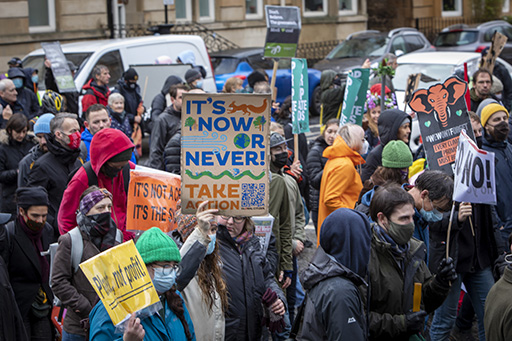
To provide some illustration of different kinds of change read these three brief case studies.
They each vary by level of change – personal, local and global; by who are the drivers of the change – individuals, communities and movements; by what type of change they are addressing – attitudes, policies, behaviours; and by how they are making change happen – through the use of digital technology, through protest, and through quiet activism.
Each of these examples is making an important contribution to making change happen on climate change and environmental degradation.
By looking at the three we can sharpen our awareness of the different ways in which change can and does happen.
Case study 1: Protecting the forest from loggers
Born in rural Odisha, India, Jamuna Tudu grew up in a family which planted tree saplings on their land as there was no existing forest there. She married in 1998 and moved to another village 100km away where there was a lush forest she could see from her new house. However, when shown the area she was shocked to see how ravaged the forest was. It was being stripped of trees by illegal logging by the local mafia. She couldn’t stand seeing the trees cut down and resolved to do something about it.
Jamuna tried to gather the women of the village to protect the forests but many were fearful of the mafia, and her family were resistant too. She managed to persuade five women who shared her passion for forest conservation to join her. Together they formed the Van Suraksha Samiti. They set up patrols of the forest area and tried to scare away the loggers. They would confiscate saws and hide them in the village which led to attacks. It became clear there was cooperation between the police and the mafia. Despite the dangers, more women found the courage to come forward and joined Jamuna and the others in defending the forest. They established new traditions such as planting saplings on the birth of a baby or on marriage.
Jamuna realised the need to go beyond her village and help save the forests of nearby villages. She convinced them to take action against the illegal loggers too. Today, 10,000 women across 300 villages work together to stop the cutting down of the forests. She says, ‘As long as we live, we dedicate ourselves to protecting forests and planting new saplings.’ Jamuna’s determination and courage has been recognised through several prestigious awards.
Case study 2: School Strikes for climate
Frustrated by the unwillingness of people to acknowledge and take action on the climate crisis and the lack of leadership and change from policy makers, the then 15 year old Greta Thunberg began to sit with a placard outside the Swedish parliament every Friday in August 2018. Then, in the three weeks leading up to the Swedish election, she sat there every school day, demanding urgent action. The media picked up on this and as news spread, more young people in her town joined her in the school strikes, and others organised actions outside local parliaments and town halls around the world.
Vanessa Nakate was 22 at that time and worried about the impacts of the climate crisis on agriculture and livelihoods in Uganda where she lived. Concerned about the lack of public awareness of the causes and impacts of the crisis, and by its absence from the school curriculum, she organised Uganda’s first youth strike in January 2019, initially joined only by her siblings as many of her fellow students were too nervous to join, afraid that they might face arrest. She continued her protest each week, often alone, standing outside the Ugandan parliament.
Initially ignored or dismissed by many, her message grew on social media as she shared images of her strikes on Twitter. In late 2019 she was invited to join other youth activists at COP25 in Madrid and used her attendance to highlight the lack of African voices and experiences in international coverage of the climate crisis. Vanessa is now an important voice in the youth strike movement and has founded the Rise Up Movement to amplify African perspectives on climate change. Increasingly, the term MAPA (Most Affected People and Areas) is being used to help focus climate activism on the needs of communities that contributed the least and which suffer the most from climate crisis.
#FridaysforFuture is part of that hopeful global movement that has forged a consensus for climate action amongst many young people. In November 2019, 4 million people took part in school strikes across the world.
Case study 3: Historic legal victory for climate justice in France
The French government, among others, has been very vocal about the climate crisis on the international stage over the past few years, making commitments at summits including the Paris agreement on reducing carbon emissions in 2015. Like most governments of wealthy and industrialised countries who pollute the most, the French government has failed to take these commitments seriously.
In December 2018, four French NGOs; Notre Affaire à Tous, The Nicolas Hulot Foundation, Greenpeace France and Oxfam France launched legal action against the French State for non-compliance with its climate obligations, its lack of climate ambition, and endangering the fundamental rights of French citizens. In just a few weeks, more than 2.3 million people signed the petition supporting the action – the largest in French history on any issue. Social media influencers were key and a video clip accompanying the launch had 14 million views on Facebook, and 1 million on YouTube.
On February 3rd, 2021, a French court ruled that the State’s inaction on climate change is illegal and that it is at fault for failing to take sufficient measures in line with its legal commitments. It also recognised the harm done to the environment because of France’s climate inaction. This sets an important legal precedent. It leaves the government open to compensation claims from French citizens who have suffered climate-related damage, such as flood victims or farmers and winemakers. On December 31, 2022, the deadline given by the court for the French State to act to limit its greenhouse gas emissions expired. The plaintiffs in the case are pushing for a financial penalty beginning in 2023 to force the State to act.
The case is part of a growing global movement to take legal action to force governments, and others, to act on climate change. The French case was inspired by a similar case in the Netherlands which ordered the government to ramp up its emissions reduction target. In Colombia, 25 young people got Supreme Court recognition of the need to act against deforestation, and in favour of climate protection. In Pakistan, a farmer’s son obtained recognition of the right to life and of access to food in the face of climate change.
 Activity 1.4: Looking at change through different lenses

After reading the three case studies, think about the following questions.
- What different factors brought about the changes in the three case studies?
- Who were the changemakers and what role did they have?
- At what levels did change take place (personal/household/community/national/global)?
- Was the change sparked by a sudden event and/or is it part of a wider shift or trend?
- Which aspects were planned, deliberate change and which were more spontaneous, unpredictable or even unintended?
- Were there any groups negatively impacted, and any who may have resisted the change?
- What long-term or more widespread changes do these case studies suggest might occur as a result?
Add your thoughts to the free text box, in the Make Change Happen Plan or in your own notebook about how change happens based on this exercise.
1.7 What drives a changemaker?

