

3.8 Forms of power
Now let’s look more closely at the second framework.
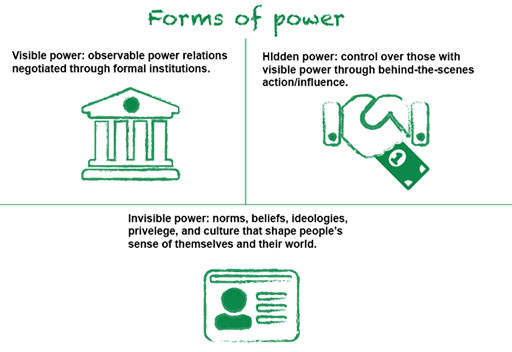
The forms of power we are referring to are: visible power, hidden power and invisible power. The relative importance of each changes with context.
- Visible power – this is power which is visible in public spaces or formal decision-making. It relates to observable power negotiated through institutions. So, this might refer to political bodies, such as legislatures, government bodies, local assemblies, or consultative forums and the way they work. It can also relate to the way decision-making works in our own organisations. This is the form of power that dominates discussions in the media – the to and fro of formal politics. It includes formal policy, regulatory and budgetary processes. It can also refer to rules and laws in society, and the authorities responsible for upholding these including the police, the military and the justice system.
- Hidden power – control over those with visible power through behind-the-scenes action/influence. How does money (e.g. campaign finances or bribery) shape political action/inaction? Who is lobbying whom? Who decides who gets invited to the meeting, or gets to speak? Who frames the discussion and sets the agenda? What gets onto the agenda and what is kept off? Whose views are judged ‘unhelpful’? How does individual gain affect the choices and actions of different individuals?
- Invisible power – this refers to aspects in society that shape people’s view of the world and their place in it, and includes norms, beliefs, ideologies, privilege, and culture. It often defines what is seen to be right and wrong, acceptable or normal. Invisible power can be used to create consensus, to empower people but can also be used to dominate others. It determines how we treat each other, whether some groups are systematically privileged or excluded, and whether groups are targeted as ‘the other’ on the basis of their gender, ethnic background, class, religion, or other identity.
Now we will apply this framework to understanding the change process in the Chiquitanos case study:
Victory for the Chiquitano people required a profound change in invisible power, transforming their definition of who they were, as their self-identification as Indigenous became more prominent. With that came growing organisation and the ability to understand and confront the hidden power that, for example, prevented Chiquitanos from participating in formal politics or even entering the town square. Only then were they able to attain visible power, both at local and national level.
3.7 Four expressions of power

