

4.5 ‘Nothing about us, without us’
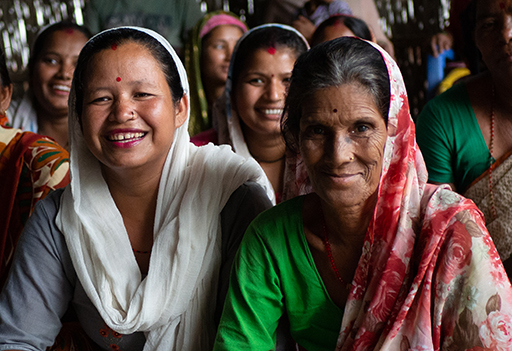
As we have seen in these two case studies, one of the great advantages of working collectively with others is that you are more likely to make a change that is the right change for more people.
Take your lead from those for whom you want to bring about change. You should never simply assume that the change you are seeking matches the aspirations and needs of the community. By listening to and looking at the change issue together you are more likely to create solutions and a change that sticks. Act in solidarity with people rather than on their behalf.
As a changemaker you may be part of, or working directly with people or groups who are marginalised or excluded in society. If so, follow the rule: ‘nothing about us, without us’, i.e. propose or decide nothing without their active leadership in the decision-making process.
Bringing in diverse voices and perspectives provides a depth and breadth of experience on your change issue. It can also help to offset the unconscious biases and assumptions that we all naturally have and that we explored in Unit 1. Actively including those with different gender and sexual identities, racial or ethnic identities, religions, classes, migration statuses, ages, and with diverse physical and mental capabilities is important, remembering that within each of these groups there are people whose experiences intersect with those of other groups, so they may experience inequality in multiple ways.
If you are not directly affected by the change issue, you need to be clear about your role, and how you will work with and support people who are. This means helping to make space for the voices of others, and being very careful not to crowd them out.
Community organising
Community organising and activism enables a group of people to turn its resources into the power to make change happen. The first question a community organiser might ask is not ‘what is my issue’ but ‘who are my people’ – who is my constituency. It is about the people with a particular problem mobilising their own resources to solve it.
However, communities, of whatever form, will have their own power dynamics and inequalities. Many of the forms and expressions of power we reviewed in the last unit may exist within them. It is important as changemakers to recognise that no one person can claim to ‘represent’ all people within a community. Working with the community to address power differences and inequalities will need a careful approach.
The principles that many community organisers hold close to their hearts are:
- that power is shared
- that community effort is based on equal partnership and open dialogue – active listening and reflection are key
- that change is also based on individual and community transformation – ‘power within’ and ‘power with’ leading to ‘power to’.
As always when working with people, cooperative and collaborative behaviours and modes of working are the most effective approaches. Bringing people together around an issue takes time and decision-making is often complex and can be slow. Being able to work with others is dependent on your ability to build and maintain trust. It is the essential glue which will help you identify and fully realise the strengths of each person in your group or each party in an alliance and to reach agreement on the strategies and tactics to use. Consensus has to be constructed with care and different interests within the group need to be dealt with in an open and transparent way. Establishing clear roles, plans and ways of working together will help avoid confusion and hopefully engage and keep people motivated.
Basing the collaboration on a shared vision and commitment to deliver good change can go a long way. You may need to make compromises to your vision of change to accommodate others’ views but it will also mean that you will have a greater chance of moving forward.
4.4 How working with others achieves change

